-
Joburg Remembers Too: From Gaajah to Burdah

From a family Gaajah in Florida North to the chorus of the Burdah at Houghton Mosque, Joburg’s dhikr carries both intimacy and grandeur. This Rabiʿ al-Awwal, in Heritage Month, I was reminded that memory does not belong to Cape Town alone. It stretches wider — across towns, valleys, mosques and homes — carried in the…
-
The Prophet in Our Veins: On the Scent, Sound, and Song of Cape Devotion

Rabi al-Awwal has entered our skies. In Cape Town, remembrance is not reserved for the minbar — it pulses in the scent of rosewater, in quiet salawāt whispered in traffic, and in songs sung without instruments. This reflection explores three threads of Prophetic remembrance — as a guide in our struggles, a wellspring of longing,…
-
Between Distance and Closeness: Walking the Path of Al-Fātiḥah

Al-Fātiḥah is not only recited — it is lived. This reflection invites the reader to walk each verse across the terrain of the body, mind, and heart. From the right brain’s imagination to the atria of the heart, the Opening Chapter becomes a sacred map of presence and return. Inspired by a teaching from Shaykh…
-
The Legend of the Silver Tree

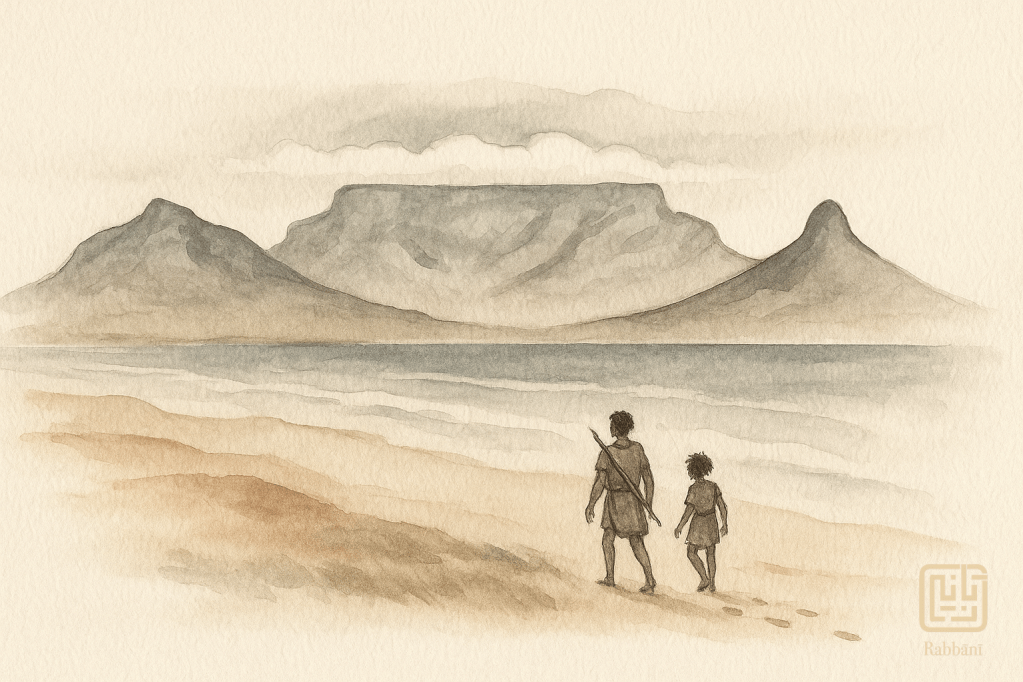
“Not brought by botanists. Not named by settlers. But gifted by a porcupine, Planted by Gubi and Nori, Rooted in fire, story, and seed.” A tale passed down through generations — from mother to child, from silence to word. Set beneath Table Mountain, this is the story of the Silver Tree, the river Camissa, and…
-
Tamat: A Sacred Completion, A Living Beginning

Tamat is more than a graduation. It is a celebration of the living Qur’an — a covenant of sound, presence, and tradition, carried from Hadramaut to the Cape. From children in medoras and sorbaan to processions through District Six, this ritual reminds us that knowledge is not an ending, but a beginning. This post honours…
-
Scroll of the Sorbaan & Medora – Worn in Sound, Washed in Meaning

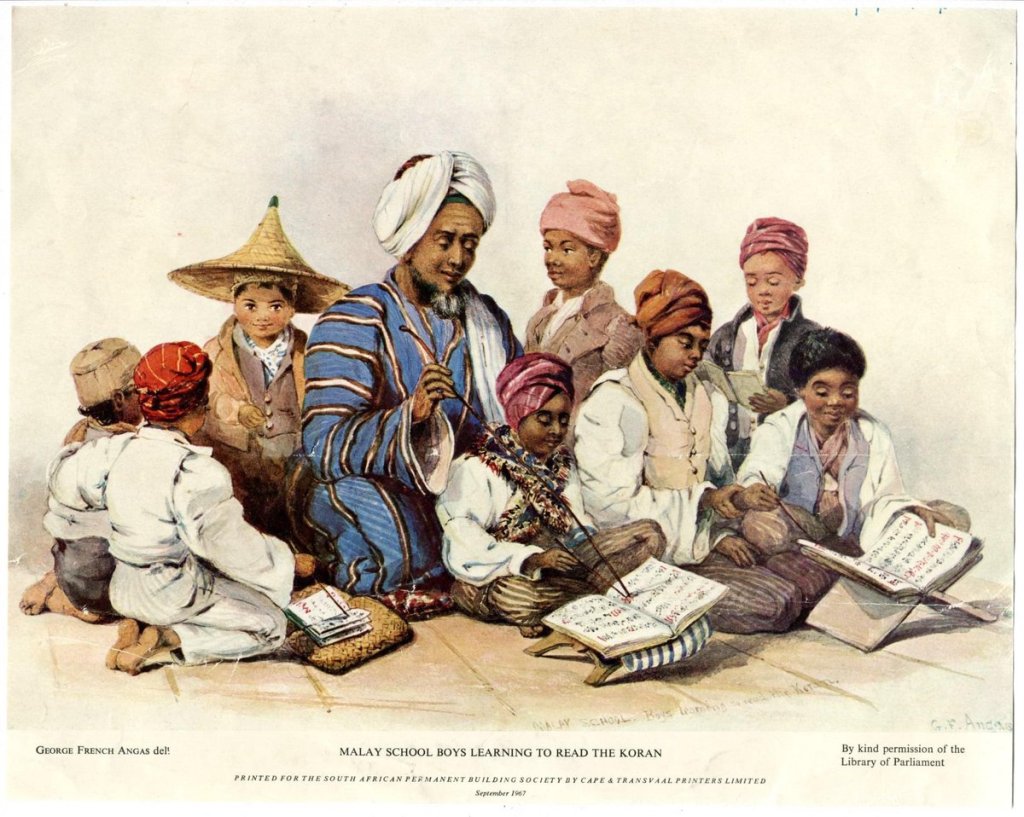
A Cape Qur’anic remembrance: children once walked the streets of Bo-Kaap and District Six, dressed in sorbaans and medoras, reciting the final verses of the Qur’an. This was the Tamat — not memorised, but recited with presence. A covenant, a celebration, and a sacred procession into the heart of memory.
-
From Chains to Qur’an: The Cape’s First Pilgrim and My Bloodline

Born into slavery, Hadjie Gasanodien — also known as Carel Pelgrim — became the first Cape Muslim to complete the Hajj. His story, buried in fragments of memory and history, unfolds through love, loss, literacy, and legacy. This is a personal journey to reclaim a forgotten ancestor and sacred lineage.
-
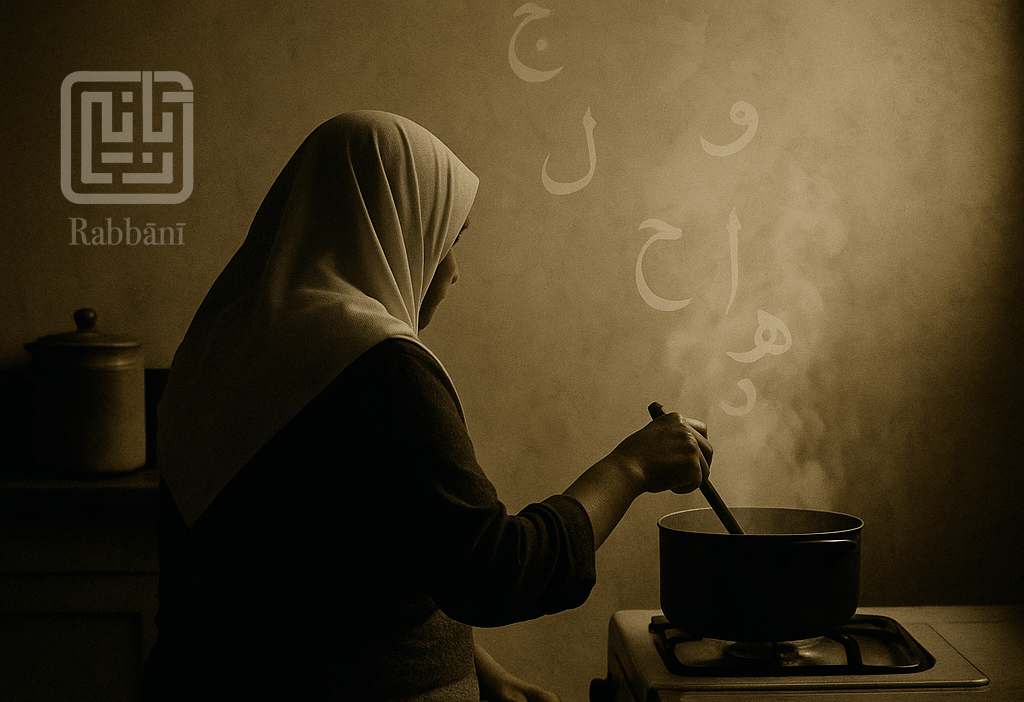
Unseen Table

Adli Yacubi’s poem “Unseen Table” serves as a devotional meditation on the Divine, blending rhythmic verses reminiscent of Qur’anic language with Arabic calligraphy. It reflects on the attributes of God, providing a resonant space for spiritual connection amidst the chaos of the world, encouraging readers to embrace a quiet invocation of prayer.
-
The Womb of Mercy: Unveiling the Secret of Bismillah

The content emphasizes the significance of mercy in the Islamic faith, particularly as expressed in the phrase “Bismillah” at the beginning of actions and the Qur’an. It explores the concept of mercy as intrinsic to existence, linking it to creation, relationships, and the womb. Ultimately, it advocates for a life guided by compassion and divine…
-
When the Conqueror Steals the Tongue

Ngũgĩ wa Thiong’o’s warning — “Take away our language and we will forget who we are” — echoes in the Cape’s own history. Kaaps, Arabic-Afrikaans, and the Ratib al-Haddad are more than words; they are living archives of faith, resistance, and belonging. When empire tries to sever the tongue, we stitch the seam back together…