Adli Yacubi is a wordsmith of remembrance — blending story, design, and sacred memory. Rooted in Cape Town’s rich heritage and decades of media experience, his work spans poetry, layout, radio, and research.
He authored Punching Above Its Weight: The Story of the Call of Islam, and now curates scrolls of mercy, resistance, and everyday barakah.
Through the voices of Rabbānī and Rafiq al-Bunduqia, he tells stories where light remembers.
A Khutbah for Jayden-Lee and Every Child We Couldn’t Save
By Adli Yacubi
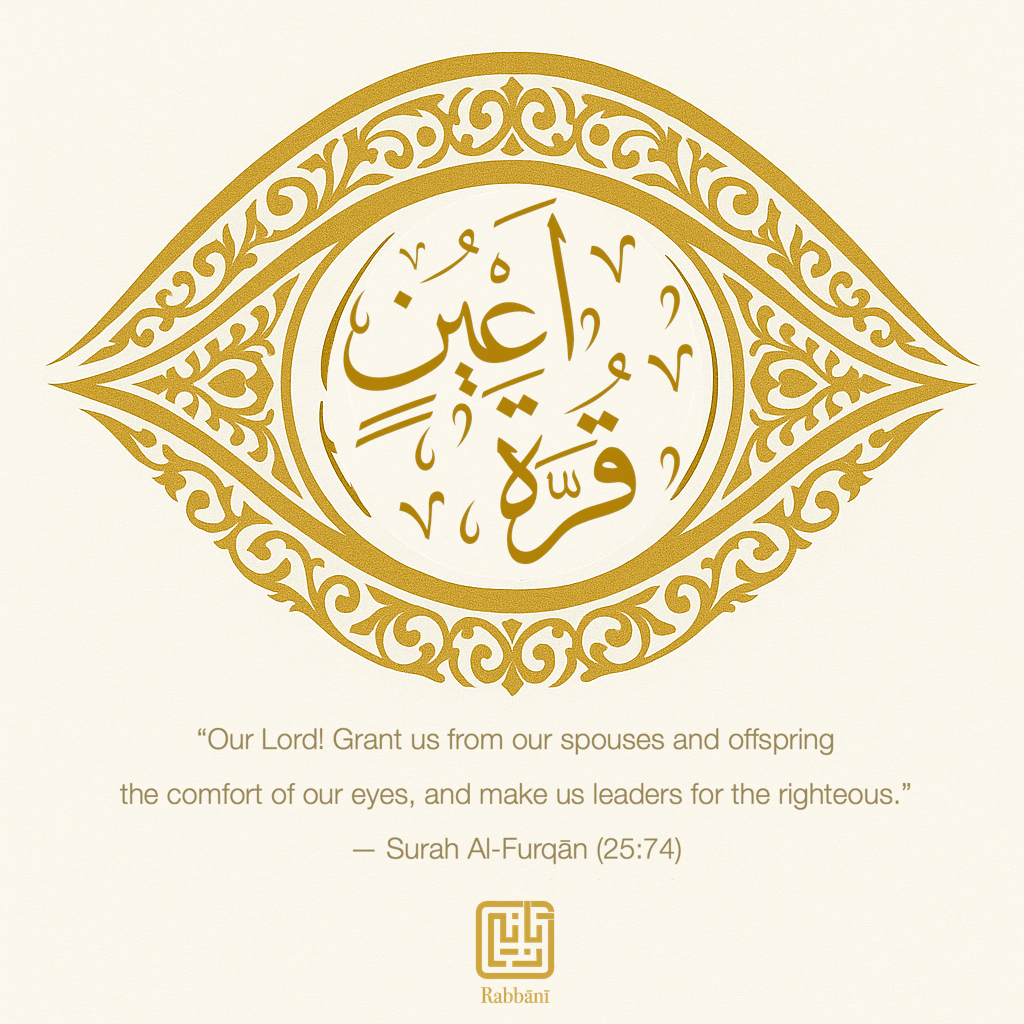
“Our Lord! Grant us from our spouses and offspring the comfort of our eyes, and make us leaders for the righteous.” — Surah Al-Furqān (25:74)
🕯️ Khutbah Part One: The Dignity of Children in the Eyes of the Prophet صلى الله عليه وسلم
All praise is due to Allah, the Most Merciful, the Most Just. We bear witness that there is no god but Allah, and that Muhammad ﷺ is His servant and final Messenger. May peace and blessings be upon him, his family, his companions, and all who walk in his light.
Today, I want to speak not to power, nor to politics — but to something more vulnerable, more sacred: the hearts of our children.
Too often in our mosques and gatherings, we speak about parents, or we speak to the youth, but we rarely speak for the child — the one still learning how to speak, the one still waiting to be held, seen, protected.
The Prophet ﷺ saw children not as a nuisance, not as future workers, not as sinners-in-waiting — but as mirrors of mercy.
He ﷺ played with children. He kissed them on their foreheads. He carried Hasan and Husain on his shoulders, even during salah. He lengthened his sujūd because his grandson was sitting on his back — and he didn’t want to disturb the child’s joy.
He ﷺ said:
“He is not one of us who does not show mercy to our young and respect to our elders.” (Tirmidhi)
And when a man said, “I have ten children and have never kissed one of them,” the Prophet ﷺ replied:
“What can I do if Allah has removed mercy from your heart?”
This is who we are meant to follow. This is who we claim to love.
So let me ask: How then did we allow a child — eleven years old — to be beaten in a flat, left undressed on a staircase, while his body slowly faded not far from our schools, not far from our mosques?
Where were we? Where was the mercy of this ummah?
🙏🏾 Khutbah Part Two: Jayden-Lee Meek and the Silence That Kills
A child named Jayden-Lee Meek was reported missing in May 2025. He lived in Fleurhof, not far from where I once lived. He was found unconscious on the stairs of the very building where he stayed. He died in the hospital. He was 11.
The latest reports suggest this was no accident. Not a fall. Not mischief. But a beating. Possibly by someone who should have loved him. Possibly by someone he trusted to protect him.
And while he was being beaten — no neighbour intervened. No one called the police. And when he was missing — too many stayed quiet.
And maybe, we tell ourselves this is “not my business.” Or worse — maybe we’ve come to believe that hitting children is just discipline.
My own daughter once said to me, when she was still in school in Florida: “Daddy, some parents think it’s normal — to hit with a slipper, a belt, even a fist.” It shook me.
So when Jayden-Lee was killed, some didn’t see a crime — they saw something “familiar.” But where is the line? When does punishment become cruelty? And how far must it go before we decide it’s “too much”?
The truth is: The line was crossed the moment mercy was left behind. The line was crossed the first time we taught our children that pain is a form of love.
And Jayden tried to speak. At school — Royal College in Florida — classmates say he spoke of hunger. He said he was often left alone. He showed bruises. He said he was scared.
Some of this was reportedly shared with teachers. Enough for the Gauteng Department of Education to admit:
“There may be some truth to the allegations that the school knew.”
But nothing was done. The silence wasn’t only at home. It echoed in the corridors of a place meant to protect him.
So what is the line, if not this? How many times must a child cry before we believe them?
Ya Allah… What kind of silence is this?
The Qur’an says:
“And do not kill your children for fear of poverty. We provide for them and for you. Surely killing them is a heinous sin.” Surah Al-Isra (17:31) “When the girl (or child) buried alive is asked: for what sin was she killed…” Surah At-Takwir (81:8-9)
But what of those children not buried, but beaten? Not unborn, but unseen?
Who will answer for Jayden?
Who will answer for all the children who suffer in silence — whose bruises are explained away, whose cries are dismissed, whose names we forget until it is too late?
The Prophet ﷺ did not simply tolerate children — he honoured them. He treated them as people of dignity, not property. And he warned us:
“Each of you is a shepherd, and each of you is responsible for your flock.” (Bukhari, Muslim)
So let us ask again: Who is responsible for Jayden-Lee?
🤲🏽 Closing Duʻā
O Allah, You are the Protector of the weak. The Guardian of the orphan. The Avenger of the oppressed.
Grant Jayden-Lee peace in the next world. Forgive what he endured in this one. Do not let his pain return void. And awaken this ummah — awaken our communities — before another child suffers in silence.
Let our homes be filled with mercy. Let our schools be sanctuaries. Let our masājid echo with the laughter of safe, joyful children.
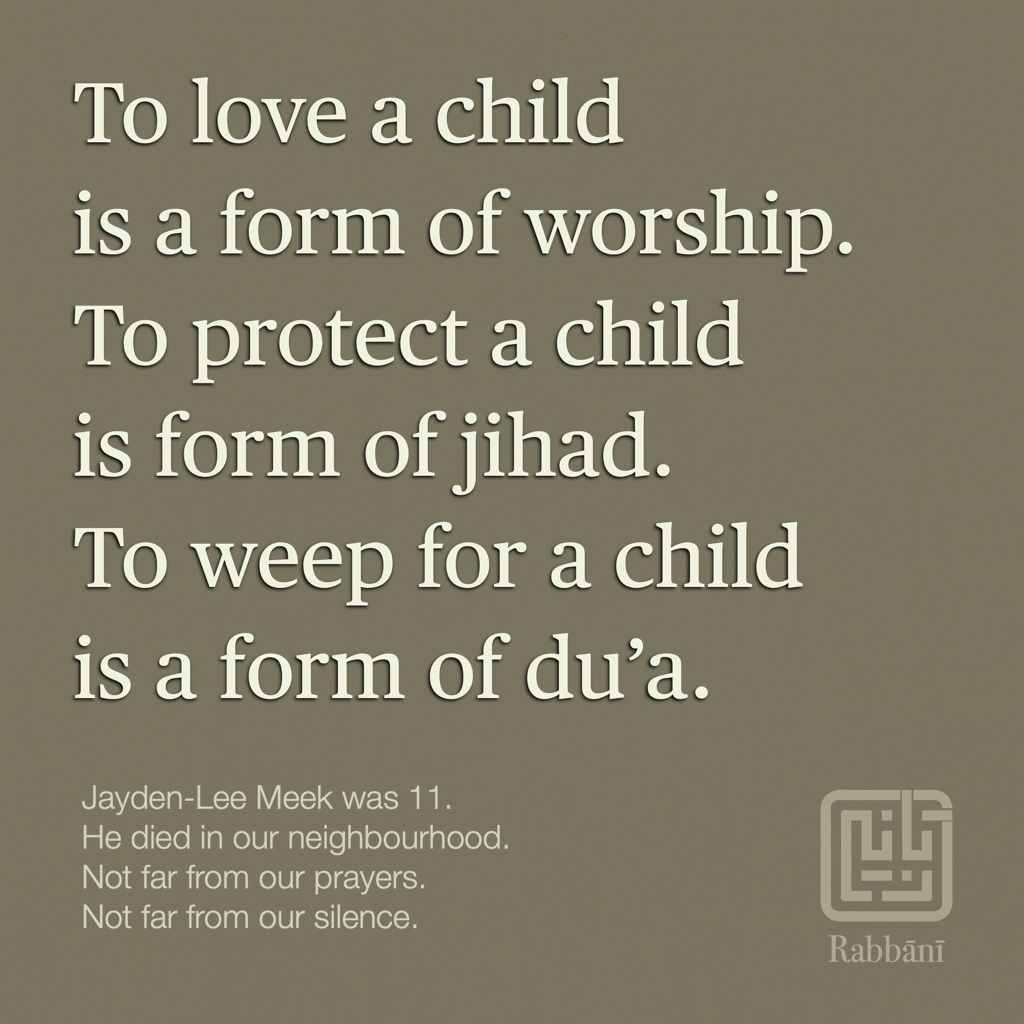
And let us never forget: To love a child is a form of worship. To protect a child is a form of jihad. To weep for a child is a form of duʻā.
🕯️
Justice for Jayden-Lee Meek. And justice for every child we were too distracted to see.
🔗 Sources
‘Jayden-Lee’s school knew about abuse’: Gauteng Department of Education investigates allegations, IOL, 16 July 2025.
Jayden-Lee Meek murder: How blood and school books led to his mother’s arrest, IOL, 15 July 2025.
Tiffany Meek faces charges: murder, crimen injuria, and defeating the ends of justice, IOL, 11–15 July 2025.
“Don’t hand over your compass.” Rafiq al-Bunduqia watches — not to catch you out, but to make sure you’re there.
1. Introduction: The M Dash and the Machines
There was a time when the biggest red flag in student writing was a mysterious shift in font — or the sudden appearance of a semicolon. Now? It’s the M dash. That long, theatrical punctuation mark — so beloved by stylists, poets, and late-night philosophers — is now being flagged as a possible sign of AI authorship.
As someone who has long preferred the M dash over the “weakling N dash,” I can only laugh. But beneath the punctuation paranoia lies a deeper, more pressing question — one that has followed me for some time: What does it mean to write — and to take responsibility — in the age of intelligent machines?
Two days ago, I revisited this very theme in a public reflection I posted to LinkedIn under the voice of Rafiq al-Bunduqia:
“Don’t hand over your compass.” AI can help you draft faster, structure better, even summarise long texts. But it can’t replace your intention, your ethics, or your lived knowledge. Use it — yes. But stay in charge. Check. Review. Bring your full self. Because tools may change — but responsibility doesn’t.
The question isn’t simply whether AI was used — the deeper issue is: Did you show up? Is this yours?
That very concern was echoed in April 2025 by writer and academic Shafinaaz Hassim, who asked a sharp and timely question to her peers:
“Friends in the academy, publishing industry, etc — with rising concerns on content creation, what are the ways to ascertain whether students or writers have relied on AI…?”
Her question invited a rich and thoughtful set of responses — not moral panic, but reflection on pedagogy, ethics, and the changing terrain of writing itself.
This blog is part of that unfolding conversation. Not to police authorship, but to deepen it. To move the focus from howsomething was written to who stands behind it — and why that still matters.
2. A Shift in Focus: From Origin to Ownership
In a recent LinkedIn post, journalist and academic Reg Rumney described the quiet dilemma he faced while marking student work: How do you tell whether a piece of writing has been shaped — or even generated — by AI? Is it the rhythm? The over-polished syntax? The sudden arrival of the elegant M dash?
But then, he had a moment of clarity. The real question isn’t whether AI was used — it’s whether the writing stands on its own. Is it well-sourced? Are the claims grounded? Does it reveal engagement with the material and the reader?
He writes:
“I don’t need to know whether A.I. was used in the production of any writing. What I need to determine is whether the writing is properly sourced and justifies the claims it makes… If any writers have used A.I. along the way, so be it. They own the output.”
This is a quiet revolution in how we might think about authorship. It places the focus not on origin — but on ownership. Not how the writing was produced, but whether the writer is present, attentive, and accountable.
We’ve seen this sleight of hand before. Long before ChatGPT, many writers (and yes, some journalists) would open with “Economists say…” or “Experts agree…” — without ever citing who those economists or experts were. The problem here wasn’t AI. It was vagueness disguised as authority.
Rumney points out that even AI tools that cite sources — like Perplexity — often do so too broadly: a whole IMF report is not a source. A page number, a quotation, a date — that’s sourcing. That’s what makes information traceable, and ideas accountable.
And so the challenge before us is this: don’t outsource your integrity. If you quote someone — say who. If you argue a point — ground it. If you make a claim — own it. Whether you used an AI model, a spellchecker, or the notes from your last lecture is beside the point. The question is:
Do you understand what you’ve written — and can you stand by it?
That’s what distinguishes a writer from a copyist. And that, in the end, is the difference between literacy and knowledge.
🫖 Rafiq al-Bunduqia says: “It’s not where the words came from — it’s whether you meant them. AI can dress the table, sure. But did you cook the food? Did you taste it? Don’t serve your guests borrowed meals and call it hospitality.”
3. Classroom Practices: Witnessing the Process
While much of the conversation around AI writing has turned toward detection tools — apps, software, “AI sniffers” — some of the most grounded wisdom comes from teachers who choose a different path: staying close to the writing process itself.
Siphiliselwe Siphili Makhanya, a teacher and writer, offered a refreshingly practical and humane approach in response to Shafinaaz Hassim’s question. Her method? Make the process visible. Watch the work unfold.
“I try to make the kids start their writing process in the classroom so I can see a first draft taking shape. I also ask them to add me as an editor to their Google Doc — you can view the different versions with timestamps and figure out if they actually sat there and typed or if they copied and pasted.”
This isn’t about surveillance. It’s about presence. A teacher witnessing the formation of thought — not just the final result. That alone often reveals more than any detection algorithm ever could.
But Siphiliselwe also adds a caution that speaks volumes:
“Be careful though — people with autism can sound like AI in their writing patterns.”
That one line is worth pausing over. In our rush to detect machine-generated language, we may end up punishing neurodivergent writers for simply having a different rhythm, structure, or affect. The tools that claim to sniff out artificial intelligence are often not trained to recognise human variation.
Instead of rejecting AI, Siphiliselwe teaches students how to use it responsibly. In her classroom, AI isn’t the writer — it’s a tool for critique, for grammar checks, for scaffolding clarity. She adds:
“We’re also discussing how it actually hurts you to become overly reliant on AI… you never gain the skills, and what skills you do have will atrophy without use.”
Emma Arogundade shares a complementary strategy. Rather than banning AI, she integrates it into reflective pedagogy. In one exercise, she gives students a short ChatGPT-generated answer to a standard exam question — and then asks them to critique it using class readings and personal insight.
“Then I ask them to reflect on what they’ve learned,” she writes.
What’s happening here isn’t about “catching” students. It’s about creating a relationship with their own thinking. It’s about making the invisible choices of writing — source, structure, argument — visible again.
These educators are not outsourcing authorship to software. They are recovering authorship through presence. Slow, steady, relational presence. And that may be the best safeguard of all.
4. The Deeper Wound: When We Outsource Thought
There’s something seductive about smooth writing. It reads well. It flows. It sounds finished. But fluency is not the same as understanding. And what worries many of us — far more than whether students used AI — is the deeper erosion we begin to see: the outsourcing of thought itself.
When students (or journalists, or policy writers) start depending on machines to explain things they don’t understand, to connect dots they never truly explored, or to mask gaps in knowledge with polished generalities, we’re not just talking about AI anymore. We’re talking about the quiet death of inquiry.
I’ve read pieces that were grammatically flawless — structurally sound, even “academic” in tone — but hollow inside. There’s no felt tension, no intellectual wrestling, no friction of mind against material. It’s like looking at a beautifully decorated cake that collapses when touched. No weight. No substance.
And this isn’t new. Even before AI, students have been tempted by shortcuts — Wikipedia patches, essay mills, pre-written templates. But the difference now is that AI makes the shortcut feel authentic. It mirrors their tone. It fills in their arguments. It “sounds like” them — better than they sound like themselves.
That’s the real danger: not that AI steals the writer’s voice, but that it gives back a voice that feels plausible — without the effort of becoming it.
If we’re honest, most people won’t say, “It wasn’t me, it was ChatGPT.” But many will turn in work that sounds more assured than they feel. They’ll submit sentences they don’t quite understand. They’ll quote things they haven’t really digested. They’ll adopt a style without earning the insight.
And when that happens often enough, something slowly fades:
The courage to grapple with complexity.
The patience to revise what’s unclear.
The humility to not know something — yet.
That’s the deeper wound. Not just a question of authorship, but of learning. When we outsource our thinking too early, too often, we never develop the callouses of real understanding.
🫖 Rafiq al-Bunduqia says: “The saddest thing isn’t that a machine wrote it — it’s that the human reading it didn’t notice. Because when thought is absent, even beauty is a costume. And costumes don’t bleed.”
5. A Call to Ethical Writing Pedagogy
So where does this leave us — teachers, editors, writers, mentors — in the age of intelligent machines?
The temptation is to double down on control: tougher detection tools, stricter rubrics, more suspicion. But that approach misunderstands the moment. The real challenge is not technological. It’s formational. We are not merely assessing output — we are shaping people.
This is the deeper work of pedagogy: not to police writing, but to nurture writers. And that means helping them ask not just, “Did I write this?” — but “Do I stand by this?”
Here are a few modest suggestions — drawn from conversations with thoughtful educators and shaped by years of writing and mentoring:
1. Make the process visible. Let students draft in real time. Let them annotate their own thinking. Use collaborative tools that allow for version tracking, not for punishment, but for conversation.
2. Shift the focus from fluency to friction. Reward uncertainty. Praise revision. Ask not just for answers, but for process notes: What did you struggle with? What changed your mind?
3. Use AI transparently — and critically. Give students a ChatGPT response and ask: What’s missing? What’s misleading? Could you write this better — not slicker, but truer?
4. Reinforce responsibility, not just originality. Ask: Where did this idea come from? Did you cite the source? Do you understand the claim?
5. Honour the writer’s presence. What matters is that the writer shows up. In risk. In reflection. In integrity. That’s the real goal.
🫖 Rafiq al-Bunduqia says: “Don’t fear the tools. Fear forgetting yourself. If the words are yours — broken, blooming, becoming — then no one can take them from you. You’re not being tested on perfection. You’re being invited to show up.”
6. Closing: “It Was Me. I Wrote This.”
In the end, the question “Did you write this?” isn’t a trap. It’s a mirror. It asks the writer to pause — not in fear, but in presence. To stand beside their words and say, “Yes. This is mine.”
That doesn’t mean the writing is flawless. Or that AI wasn’t used along the way to brainstorm, rephrase, or clarify. It doesn’t mean the grammar sparkled or the structure landed. But it means the mind and conscience behind the words are awake. It means the work is inhabited — not just delivered.
This is what writing has always asked of us: not just fluency, but presence. Not just polish, but integrity. Not just production, but reflection.
So maybe the final test is not whether a text was written by a human or a machine. Maybe the test is simpler — and deeper:
“Did someone care enough to mean what they wrote?” “Can they say, with some trembling or pride — ‘It was me.’”
That’s the writer’s task. That’s the learner’s journey. That’s the invitation still open — even in the age of algorithms.
🫖 Rafiq al-Bunduqia says: “You don’t have to sound perfect. You just have to be there — in the ink, in the pause, in the part you nearly deleted. That’s where the real writing lives. That’s how we know it was you.”
Acknowledgements
With deep gratitude to Shafinaaz Hassim, whose question opened the door to this reflection, and to Reg Rumney, whose response offered a compass point: judge the output, not the method.
Thanks also to Siphiliselwe Siphili Makhanya and Emma Arogundade for generously sharing their classroom wisdom — rooted, ethical, and alive to the human behind the words.
And to Rafiq al-Bunduqia — for watching from the edge of the screen, always asking, “Did you show up?”
Afrikaans in Arabic Script and the Ratib al-Haddad
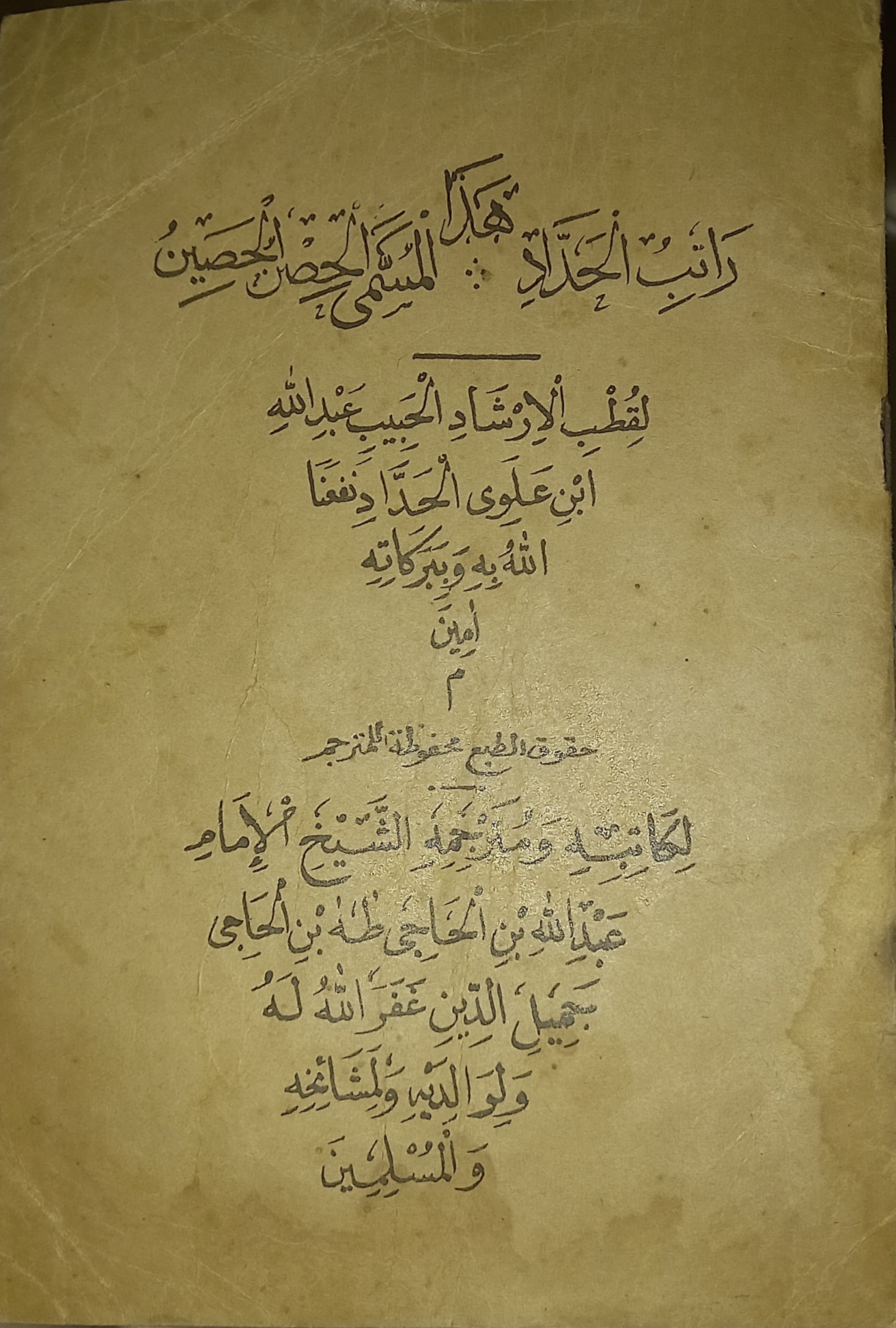
Bismillah. Among the rarest cultural gems of the Cape is this handwritten or printed Ratib al-Haddad in Arabic script — and beneath each sacred verse, a transliteration and translation in Afrikaans, also in Arabic script. This devotional work bears the title:
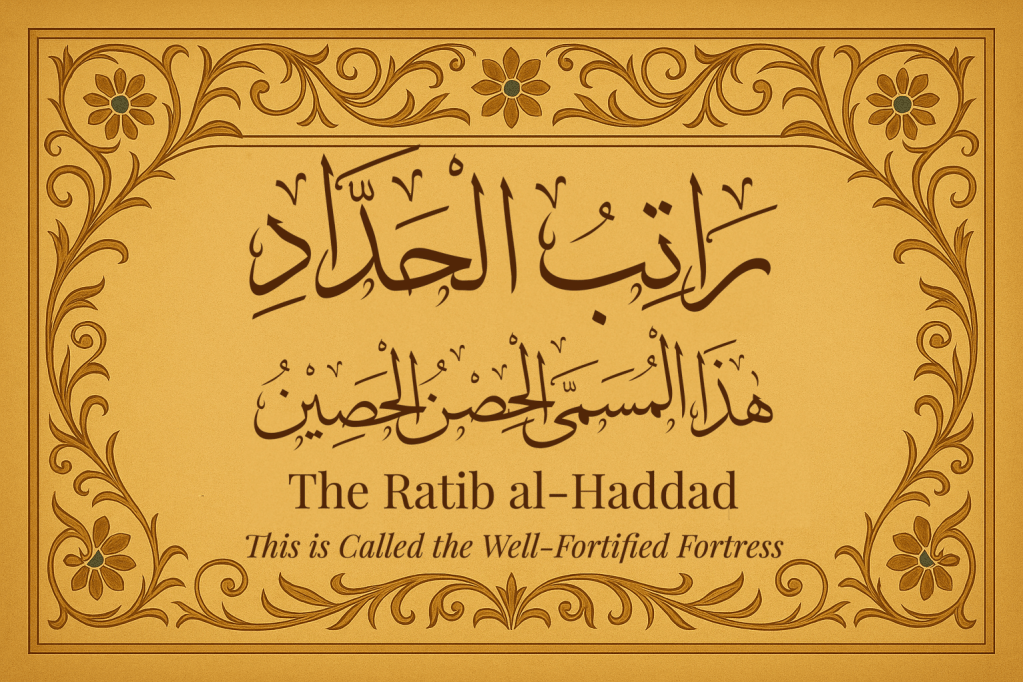
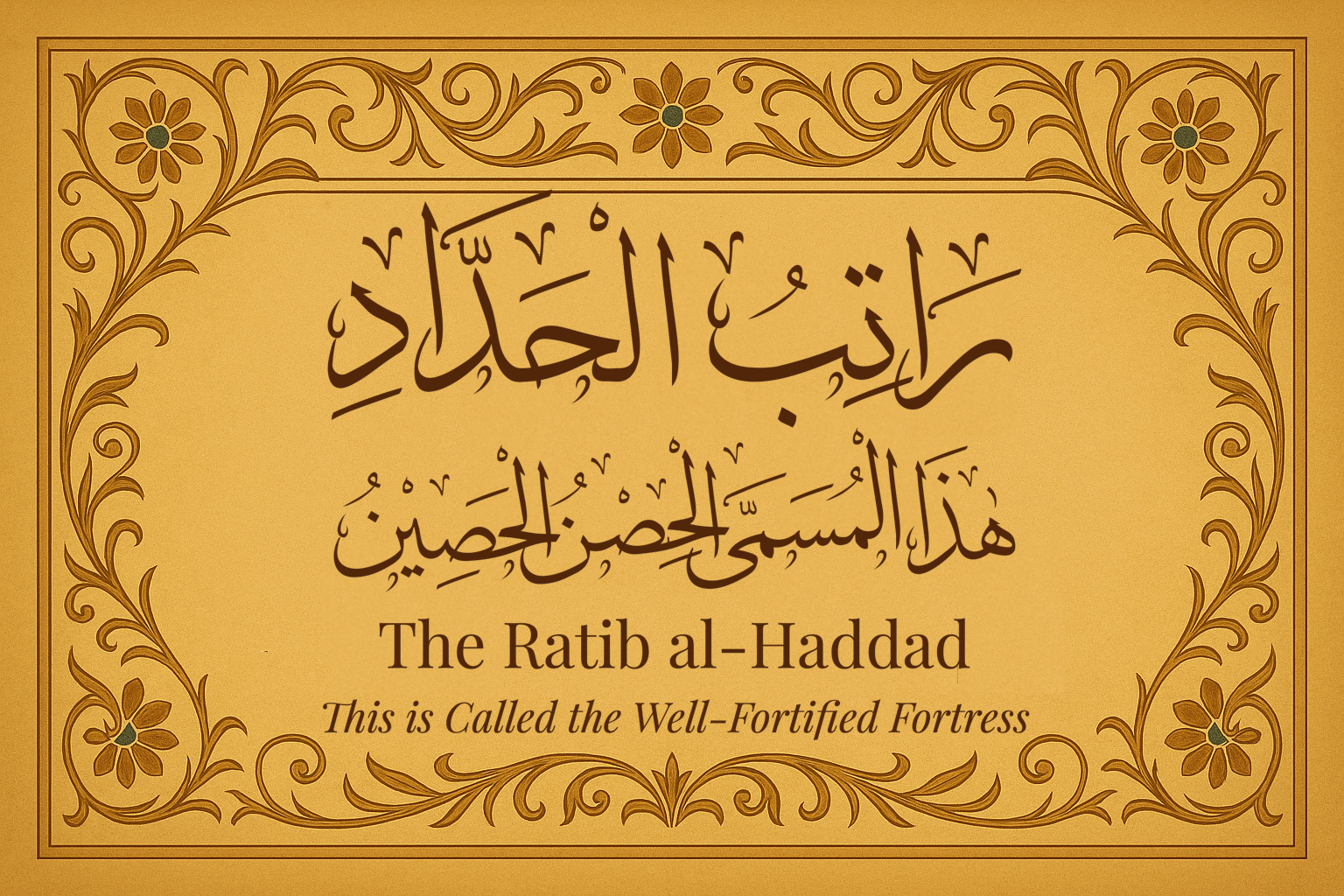
رَاتِبُ الْحَدَّادِ هَذَا الْمُسَمَّى الْحِصْنُ الْحَصِيْنُ The Ratib al-Haddad – This is Called the Well-Fortified Fortress.
It is more than just a document — it is a linguistic relic, a spiritual practice, and a memory map of how Qur’anic dhikr was carried across generations, even when Arabic as a language was no longer spoken fluently. The presence of Afrikaans — lovingly scribed in Arabic letters — reminds us that remembrance found its voice even in colonised tongues. This text is proof: the Divine was praised in the language of those who suffered, resisted, and healed.
This is no ordinary translation. It is a trace of the Cape’s earliest Muslim educational systems, where a now-suppressed form of Kaapse Afrikaans was used to teach, explain, and transmit the Qur’an and dhikr — long before formal Arabic learning was accessible.
This copy, sourced and shared by Sheikh Jamiel Abrahams, is one of the most exquisite I have seen. It is more than a relic. It is the visual embodiment of a living legacy.
The Arabic-AfriKaaps hybrid in these pages is not just linguistics — it is resistance, devotion, and adaptation in motion. A tongue formed in the shadows of empire, now remembered in the radiance of dhikr.
This post offers a glimpse — a few carefully selected lines, an image scroll, and finally, the full PDF. We will not translate every line, for that would dilute the power of seeing, hearing, and feeling them in their original form. But we will linger on a few pages to taste the spiritual flavour of this inheritance.
One of the first lines to appear in the Ratib is the luminous opening:
بِسْمِ اللهِ الرَّحْمـٰنِ الرَّحِيمِ Bismillāhir-Raḥmānir-Raḥīm In die Naam van Allah, die Meest Genadige, die Meest Barmhartige
Even this sacred formula, transliterated and translated into Afrikaans using Arabic script, glows with the care and creativity of the Cape’s early Muslim scribes. It reveals how rahmah—Divine Mercy—was not only recited, but lovingly inscribed in the mother tongue of those who carried it. A tongue made tender through hardship, and made holy through remembrance.
These pages are not just recitations — they are archives of survival.
The Cape’s Muslim community, born out of bondage and exile, did not merely memorize. They engraved, translated, sounded out — in their own accents, on their own terms. They bent Arabic script to capture the cadence of their Afrikaans. They bent Afrikaans to serve the memory of Allah.
In this Ratib, we witness the divine echo across generations.
To read it is to hear our grandparents whispering in candlelight, gathering children close, turning pages that looked like home.
This is not nostalgia. It is testimony.
May we become worthy inheritors of their voices.
Living Chains: A Note of Gratitude and Transmission
We are humbled to acknowledge those who have preserved and transmitted this treasure across generations.
Our deep thanks to Zaid Nordien, who reminded us that this version of the Ratib al-Haddad — written in Arabic-Afrikaans script — was transliterated and rendered by Shaykh Taha Gamieldien, the grandfather of ShaykhFaiek Gamieldien. It was widely copied and circulated in Cape Town, including in black-and-white prints. Zaid shared that his own journey began at the age of three, attending Gadat with his uncle, the late Boeta Faldie Behardien, and that his grandfather, Galiefa Ebrahim Nordien (Brayma Bokbaard), had received ijāzah for the Ratib from Shaykh Ismail Ganief. His father also received ijāzah from Shaykh Omar Abdullah of the Comoros — known throughout Africa as Mwyini Baraka — as well as from the late Shaykh Muhammad Alawi al-Maliki.
And here the circle returns home:
Zaid Nordien relayed that Shaykh Omar Abdullah gave express permission to grant ijāzah to all who recite the Ratib, all who love it, and all who seek it. He conveyed this instruction to me personally in Glen Austin, Midrand, during my recovery from a stroke. Now, alḥamdulillāh, it is finally recorded.
Even more striking: the ancestor of this very Shaykh — the deposed Sultan Abdallah II ibn Alawi of Anjouan, from the noble Ba ʿAlawī lineage — was exiled to Cape Town around 1834. Local oral tradition holds that he met Carel Pelgrim (Hassanuddin), the Cape’s first known Muslim pilgrim to Makkah, and may have encouraged him on his sacred journey. The silsila, both spiritual and historical, reveals itself in astonishing ways — alive, pulsing, and unfolding across time.
The Salawāt of Mwyini Baraka
We close with a salutation upon the Prophet ﷺ, taught by Shaykh Omar Abdullah — a direct descendant of the Messenger ﷺ through Sayyid Abu Bakr bin Salim.
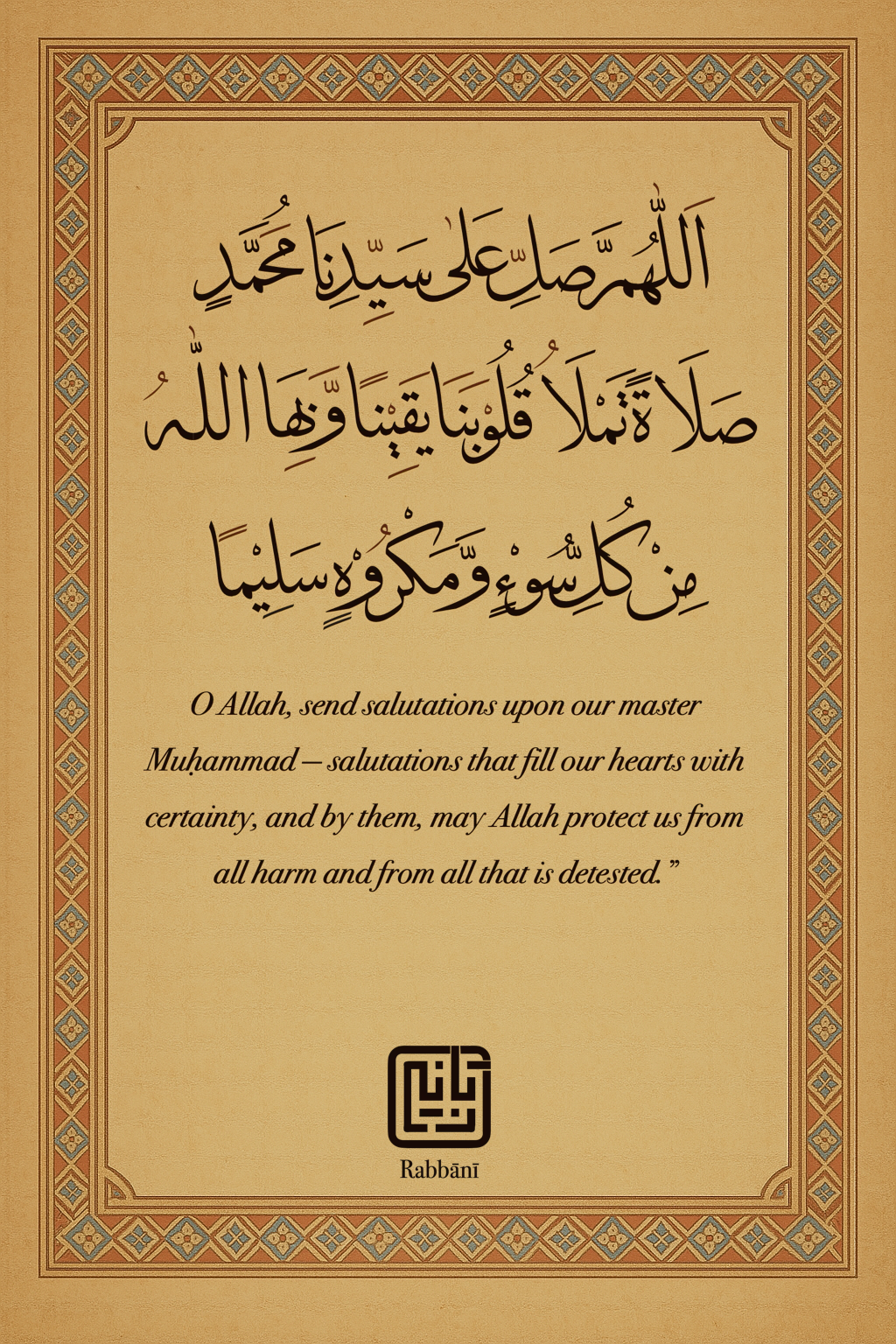
Allāhuma ṣalli ʿalā Sayyidinā Muḥammadin ṣalātan tamlaʾu qulūbanā yaqīnan wa bihā Allāhu min kulli sūʾin wa makrūhin salīmā.
Translation:
“O Allah, send salutations upon our master Muḥammad — salutations that fill our hearts with certainty, and by them, may Allah protect us from all harm and from all that is detested.”
📜 Other Paths of Remembrance
This scroll is only one leaf in a growing tree of spiritual memory.
If this piece stirred something in you, you may also wish to explore:
These are threads in a larger weave — remembering the divine through the tongues of our mothers, the melodies of our fathers, and the whispered prayers of the unseen saints who still walk among us.
(Passed down through the mothers. Told now in your hands.)
My mother told me this story. She said her own mother heard it from her mother. So now, I pass it to you — like a seed in the wind — so that you, too, might send it down the line.
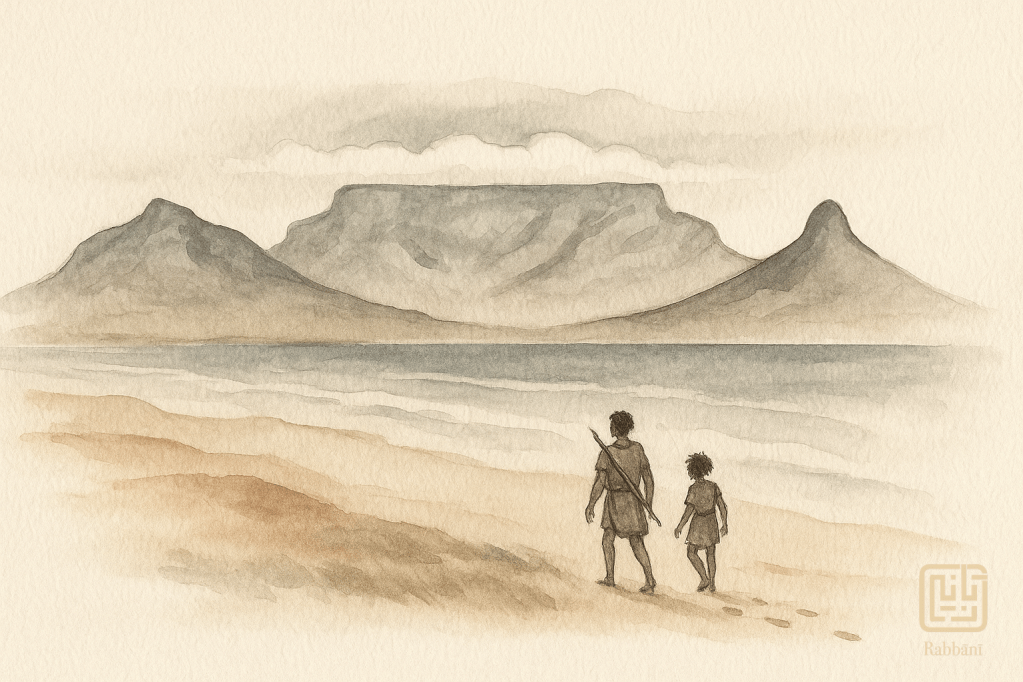
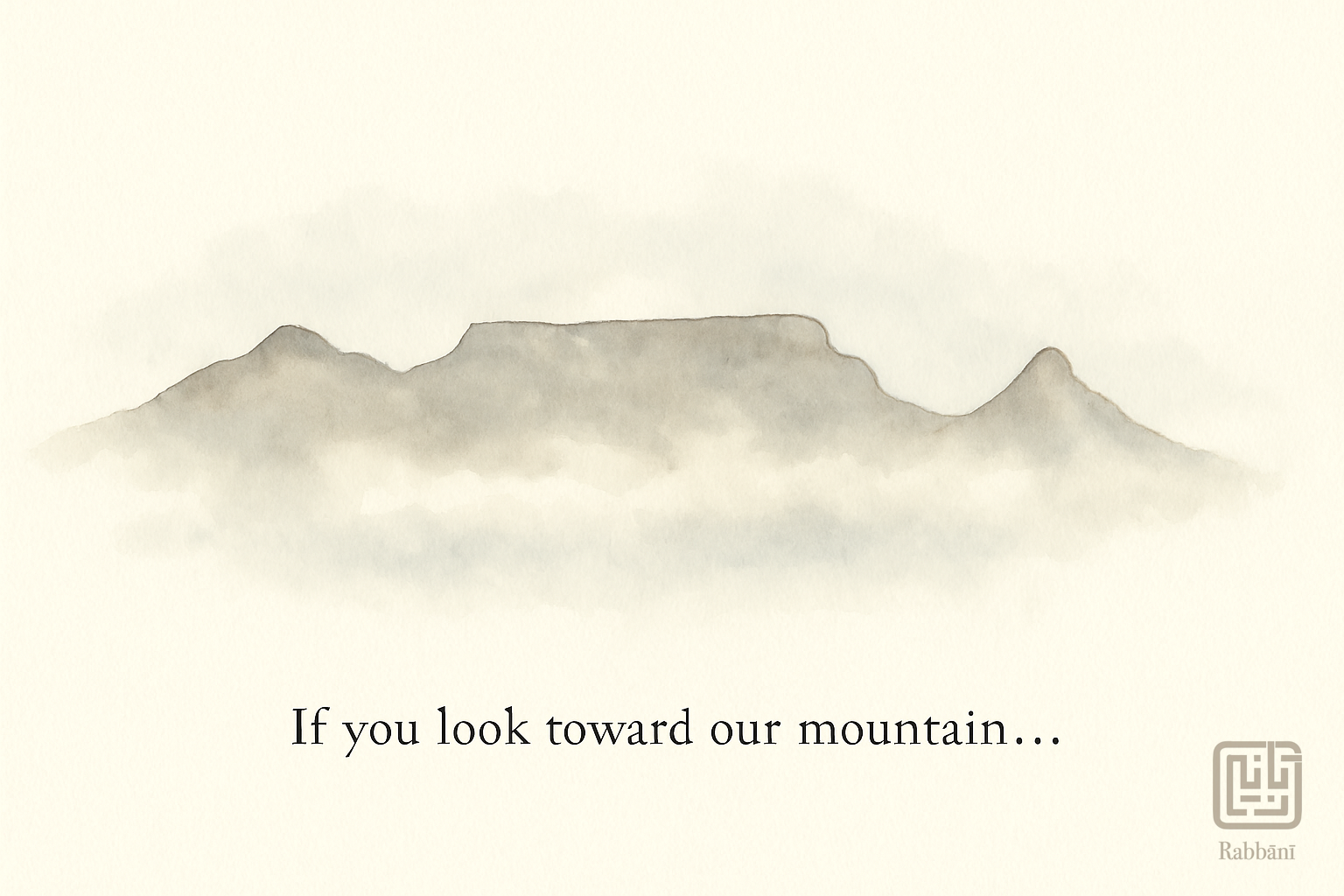
If you look toward our mountain — Table Mountain — you’ll see the cloth of cloud spread across its top like a table set for guests. To the right: the lion, his back forming Signal Hill, his mane rising into Lion’s Head. To the left: Devil’s Peak, brooding. The lion and the devil seated at the same table. What a sight for any ship entering Table Bay!
But this story is older than the ships. Older than the settlers who named those peaks. Older even than the first Khoi and San who walked these lands.
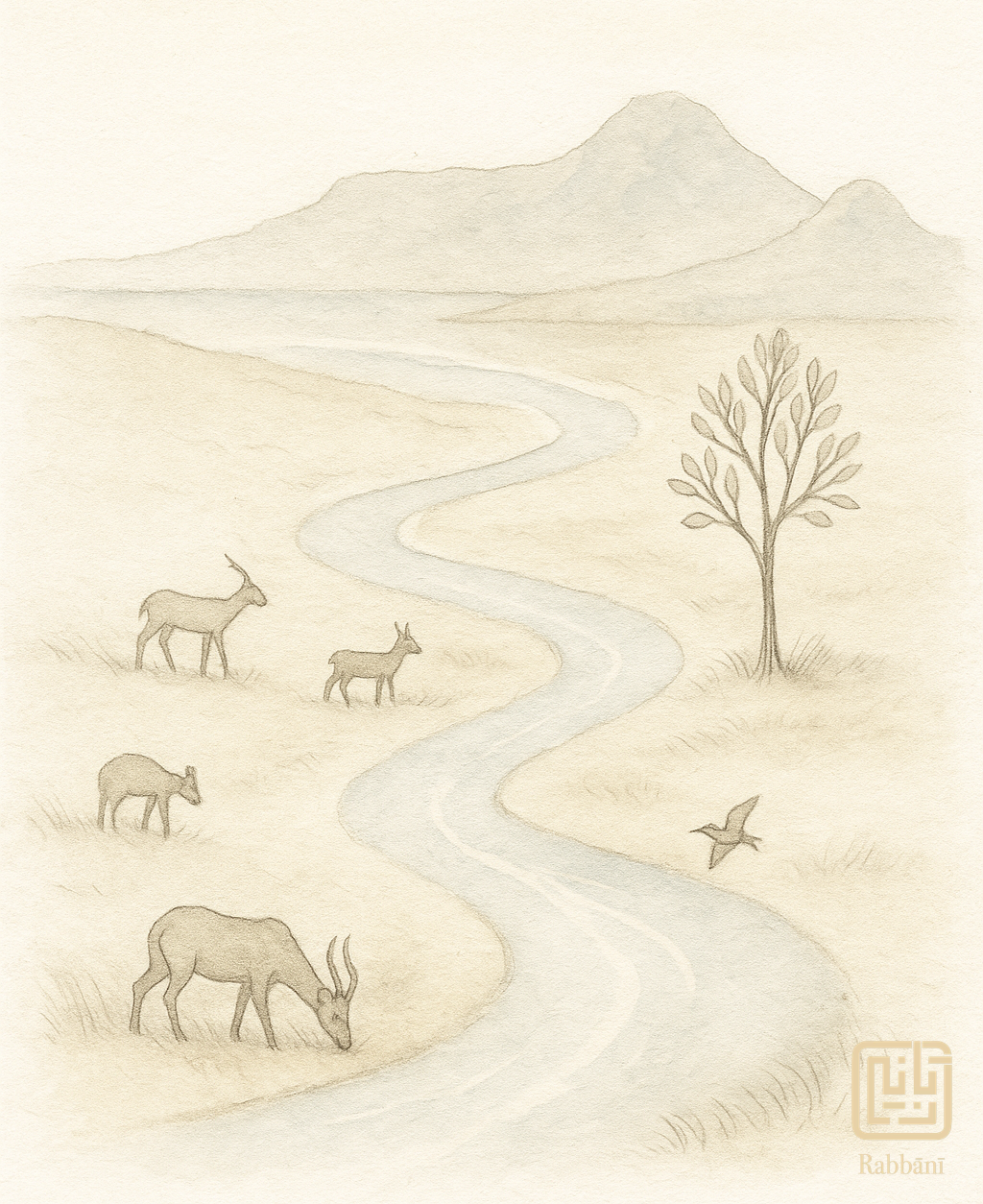
Long, long ago — perhaps 22,000 years or more — the people lived far inland. The land was green. Rivers ran deep. Wild animals moved in herds like shadows. The earth was generous.
But then the rains lessened. The land grew hotter, harder. Some clans became violent. The world was shifting.
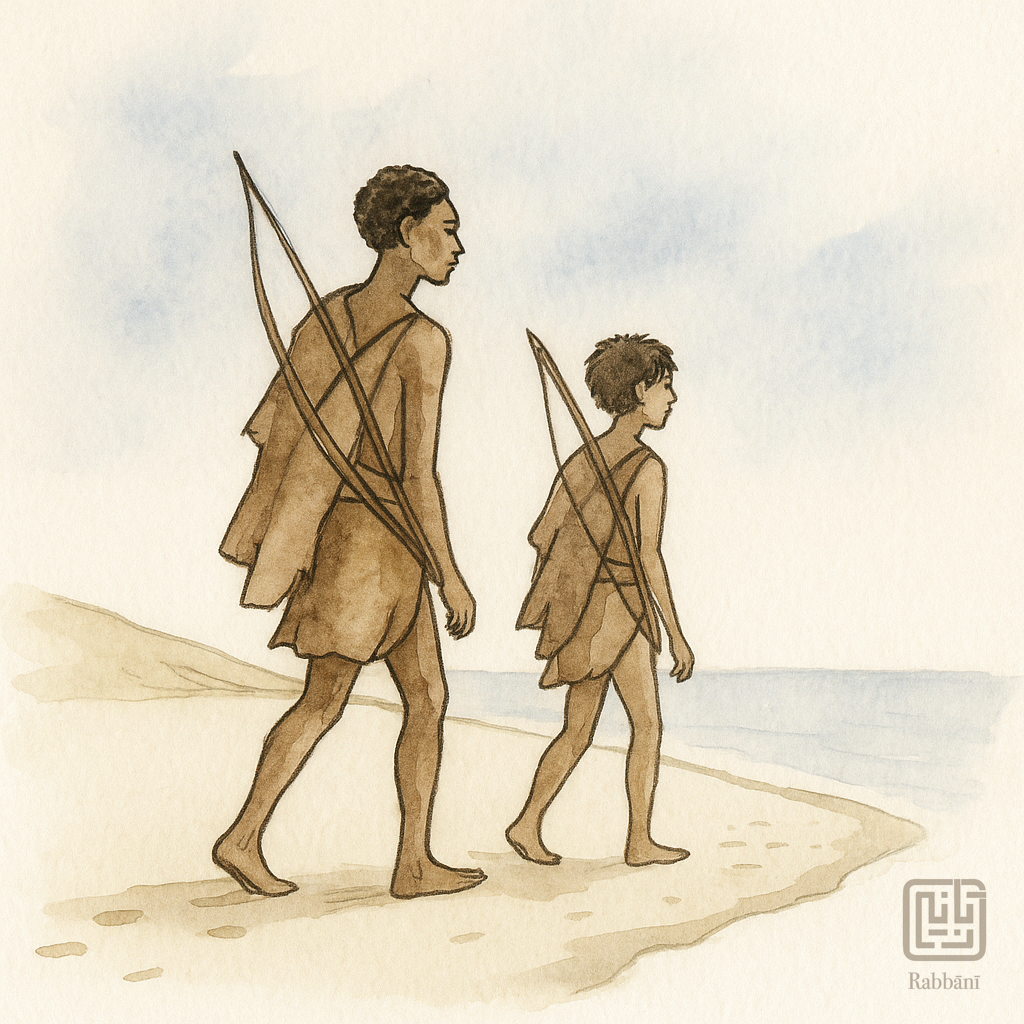
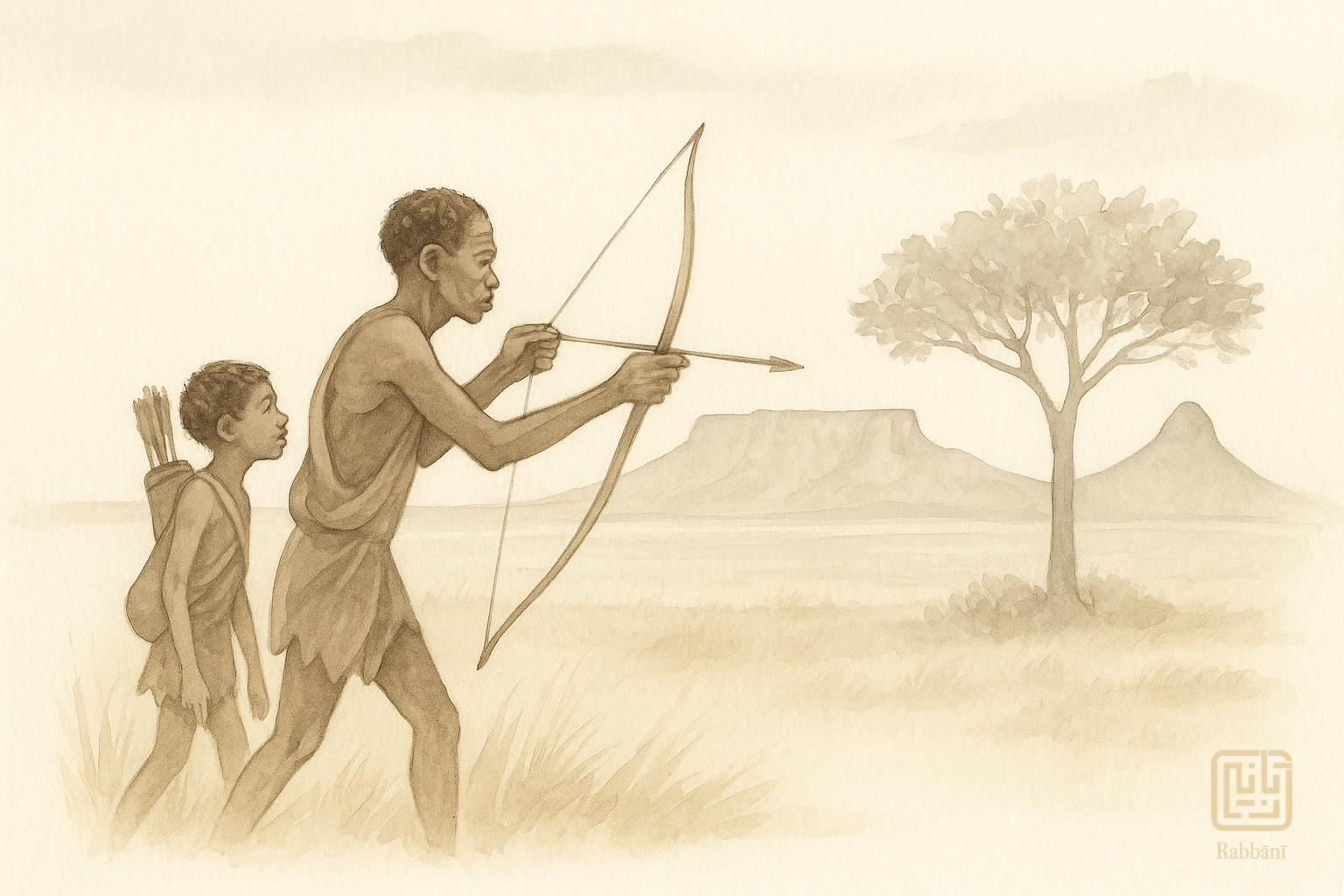
And so it was that a man named Gubi — a fire-maker, a spark of a man — took his young son, Nori, and journeyed south along the Atlantic edge. Not fleeing. Seeking.
Their goods were wrapped in leather. Their bows slung across their backs. They followed the cold sea winds, walking toward a dream of sanctuary.
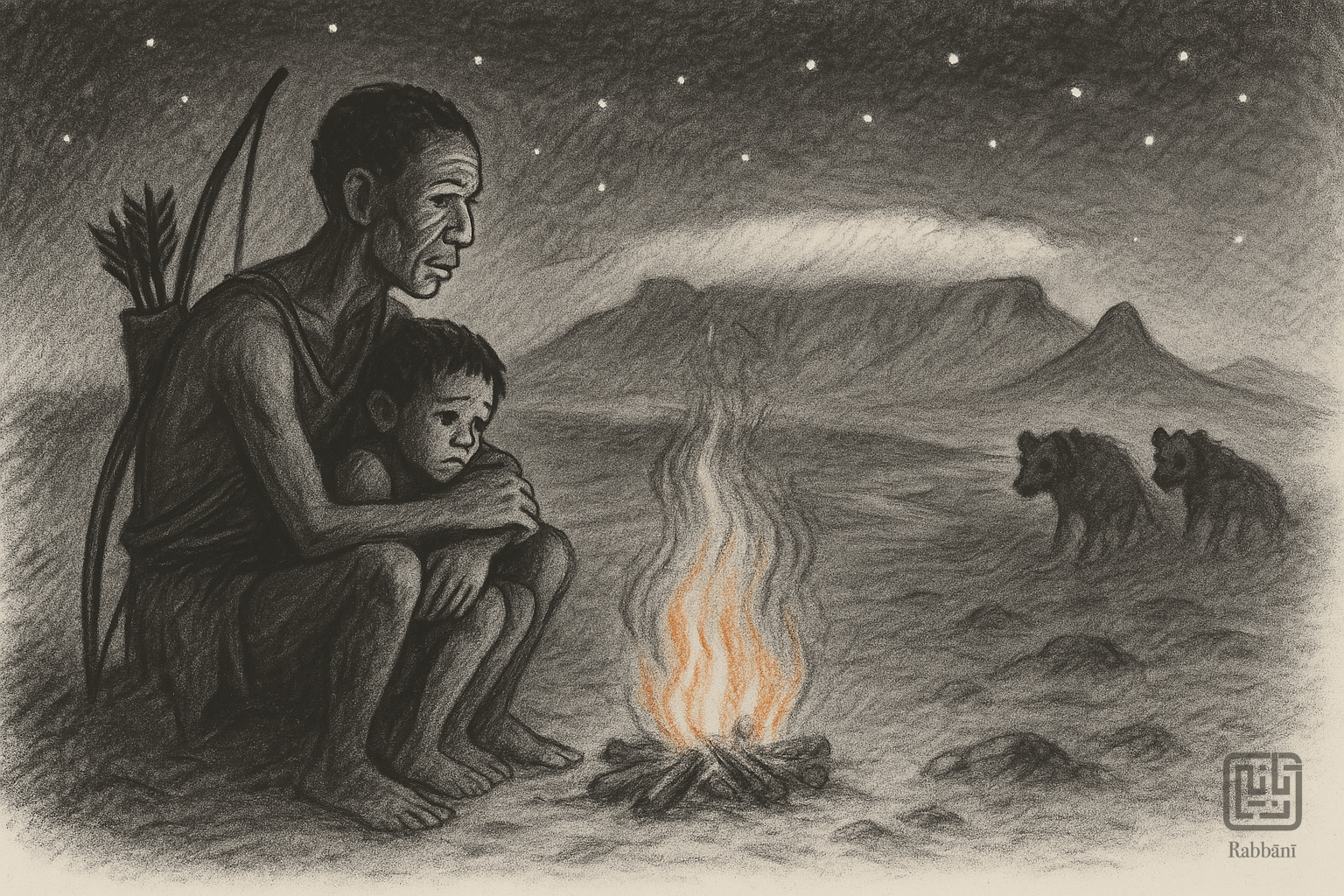
One night, as their fire danced in the dunes, hyenas came snarling through the dark — hunting porcupines. Gubi rose with fire in hand, casting its light wide, pushing the predators back into the night.
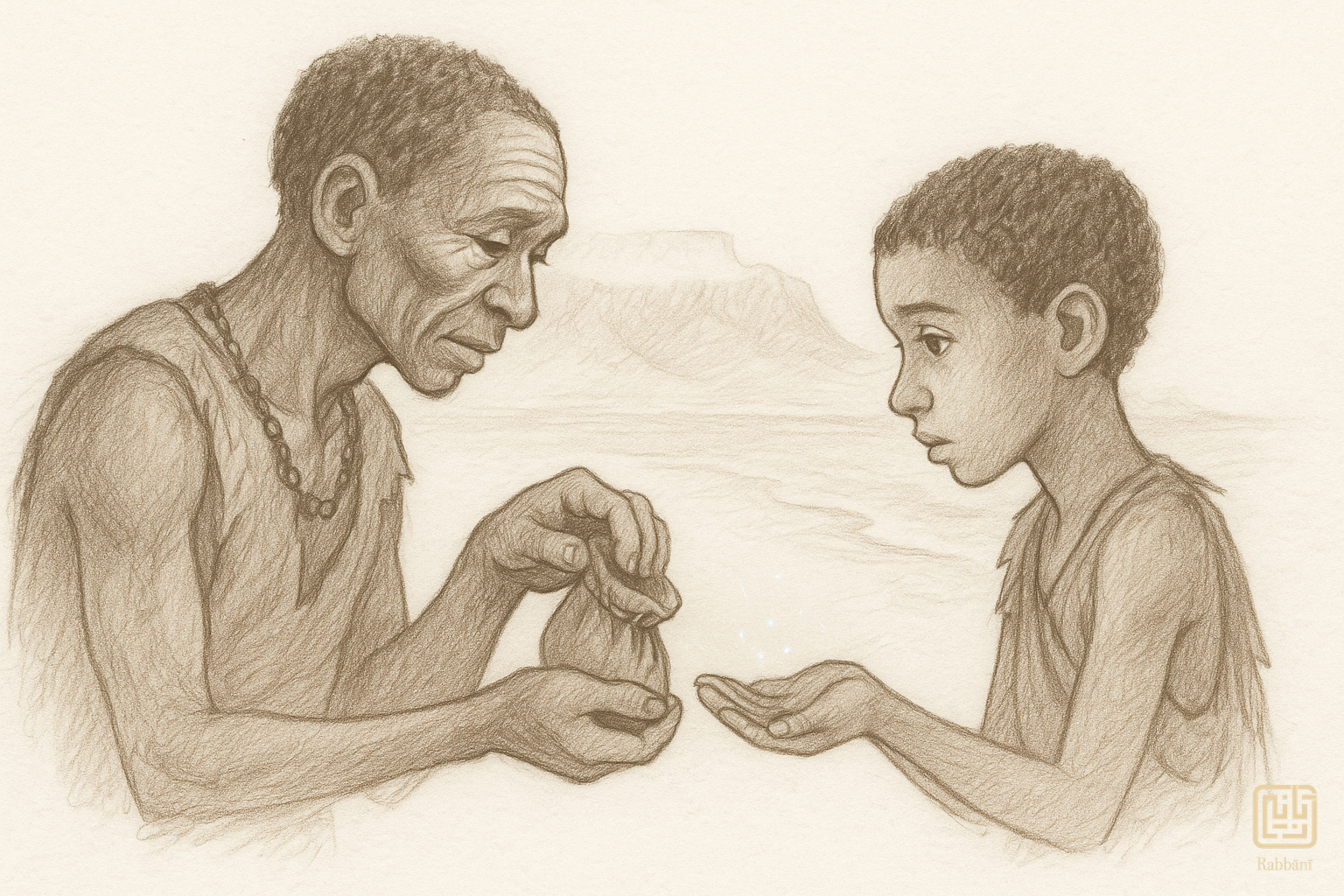
From the shadows came a porcupine. But this was no ordinary porcupine. She was old — a sage — her quills silver with wisdom. She stepped forward and spoke in a voice like rustling leaves:
“You have shown courage and care. For this, I give you a pouch.”
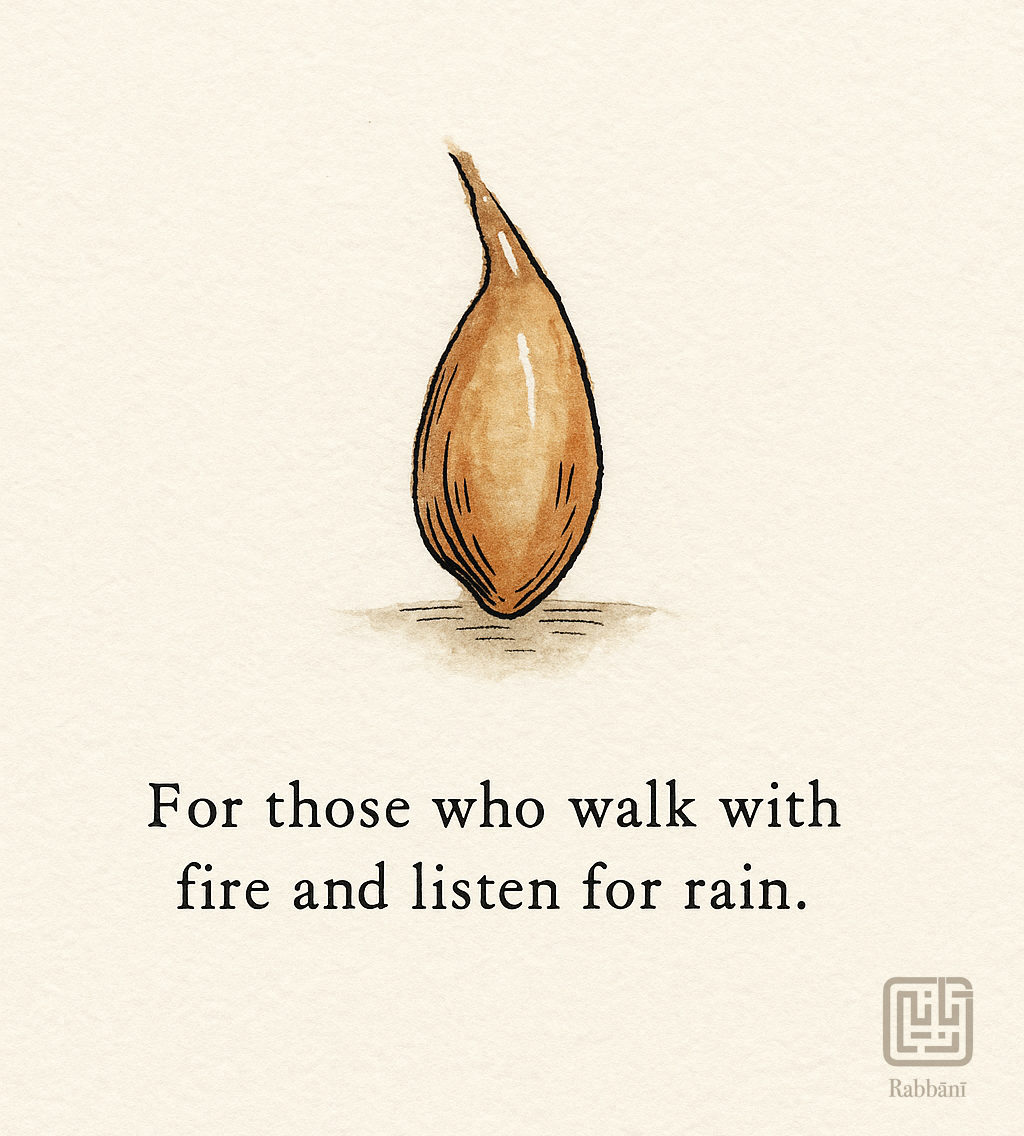
Inside: a handful of shimmering seeds — soft, silver-tipped, unlike anything they had seen.
She said: “As you walk, look for the place where the sea makes clouds. When you find it, plant these. If they grow, you’ll know: this is your place.”
And so they walked on.
And when they reached the foot of the mountain — flat, cloud-veiled, vast — Gubi and Nori felt the truth of it in their bones.
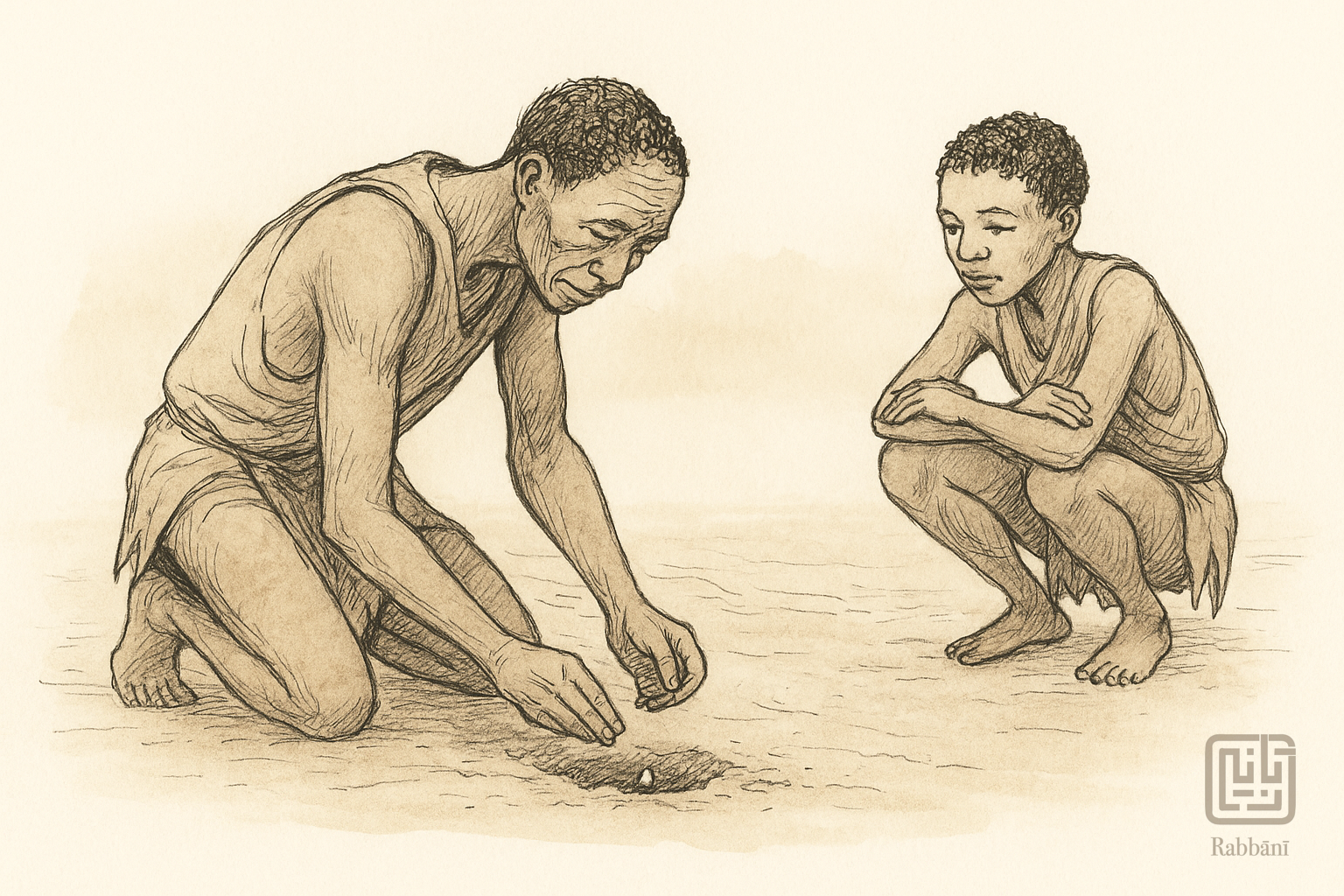
They planted the seeds.
And by dawn, the Silver Trees had begun to rise — shimmering, breathing, alive.
Not just plants. A blessing.
And that is how the Silver Tree — found only here — came to live beneath Table Mountain. Not brought by botanists. Not named by settlers. But gifted by a porcupine, Planted by Gubi and Nori, Rooted in fire, story, and seed.
And when the rains came, those Silver Trees drank from the river that flowed down the mountain — the one they called Camissa — the place of sweet waters, rushing underground, murmuring toward the sea.
Even now, that river runs — quietly — beneath the city that forgot it. But the mountain remembers.
It remembers its own name.
Not Table. But Hoerikwaggo — the Mountain of the Sea. To its right, the curled-back hill they once called The Sleeping Lion — its back arched into what settlers would name Signal Hill, its mane rising into Lion’s Head. To the left, the shadowed one — once called Windmaker’s Watch, now called Devil’s Peak.
The land is older than its names. And stories, like rivers, find their way back.
Epilogue
Some stories are planted, not written. They take root in silence. They grow in the shade of memory.
This is one of those.
Passed from mother to daughter, from father to son, from fire-circle to ear, from silence to word.
The Silver Tree still stands. The mountain still watches. And somewhere, Gubi and Nori are still walking — between cloud and coast, between the land’s longing and the sky’s answer.
So tell this story again.
When the mountain is misted, when the wind shifts, when the child beside you asks, “Where did we come from?” Tell them…
“Let me tell you the story of Gubi and Nori — the spark and the seeker — and the tree that shimmered with yes.”
Postscript
This story is told in honour of those who remind us that memory is a form of resistance.
We acknowledge Patric Tariq Mellet, whose book The Camissa Embrace reclaims the deep currents beneath colonial erasure. Through his work, Camissa is no longer hidden — it is remembered as a place of sweet waters, of creolised identity, of sacred convergence.
We also draw from Stuart Hall, particularly The Fateful Triangle: Race, Ethnicity, Nation, which reminds us that nations are not simply born — they are narrated into being. To say I am from Camissa is to resist imposed categories and to speak from the riverbed of relation — to narrate the nation otherwise.
This reflection flows alongside the companion essay:
I wrote this story in honour of a voice passed through many generations — from my mother, to her mother, and beyond. It weaves ancestral memory with imagination, drawing from the wisdom of our lands, our rivers, and our people.
Gubi and Nori may be characters in legend, but they carry something real: the spirit of all those who walked before names, who travelled with seeds, and who listened deeply to the mountain’s silence.
I offer this story as a small act of remembering — a quiet prayer that memory may once again run like water beneath the city.
– Adli Yacubi Writer. Listener. Wordsmith of the Sweet Waters.
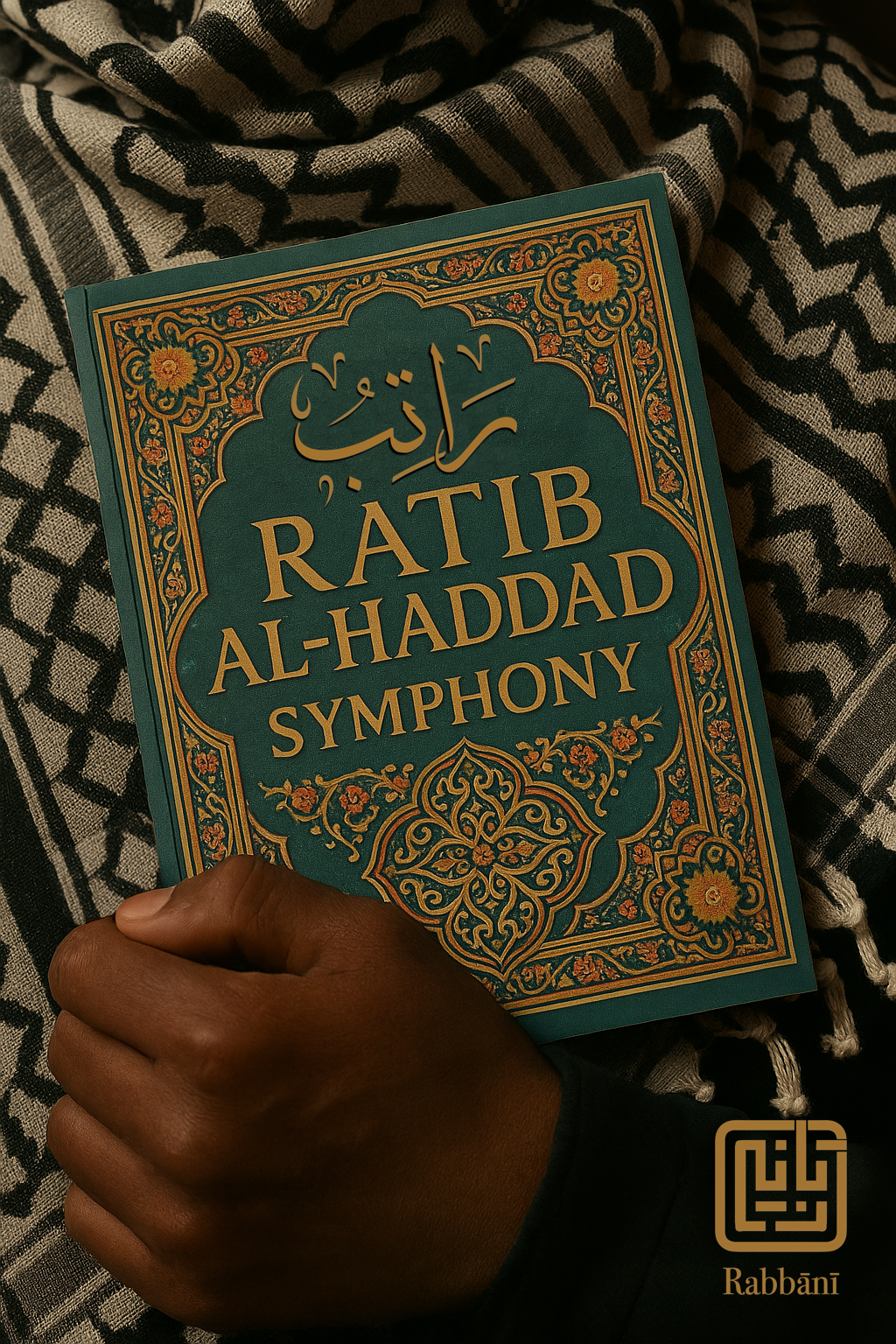
The Ratib al-Haddad: A Symphony of Spiritual Resilience
Introduction
In the centuries-old Cape Muslim tradition, the Rātib al-Ḥaddād stands as a spiritual symphony. Its composer, Imam ʿAbd Allāh ibn ʿAlawī al-Ḥaddād, drew upon a Qur’anic verse known as the Verse that Faces Outward at the Rawdah of the Prophet ﷺ, giving it a protective resonance. This rhythmic litany unfolds like movements of a musical masterpiece, each moment drawing the heart closer to Divine presence. Inspired by Imam al-Haddad’s mission to guide believers through fear and trial, the Ratib remains a living masterpiece of faith.
Movement I: The Prelude of Protection
O you who fear, gather at the gate of forgiveness; Bismillah like a banner above your heart, Ayatul Kursi as your armour, verses of Baqarah as your shield. In this dawn of remembrance, let salawat fall on your lips like rain upon a thirsty earth, and trust flow through your veins until your soul is clothed in light. This is the first movement: a prayer of protection woven from the very breath of Revelation.
Movement II: The Rhythms of Remembrance
Subḥānallāh, transcendence like the sky’s endless horizon; Alḥamdulillāh, gratitude flowing through every breath; Allahu Akbar, awe striking the heart; Lā ilāha illallāh, unity beyond all boundaries. These dhikr, recitations, rise and fall like ocean waves, polishing the mirror of the heart until it shines with trust and surrender.
Movement III: The Pulse of Tawhid
Al Maʿbūd, meaning The Worshipped One, calls the believer to recite Lā ilāha illallāh fifty times, each repetition chiseling away fear and confirming pure oneness. It circles the heart like a crown of certainty. The three Quls stand as guardians, their verses sealing every crack against doubt. This movement is a fortress of tawhid, where the soul forgets every other reliance and trusts only Allah.
Movement IV: The Prayerful Crescendo
Duas rise like incense, interlaced with Al-Fātiḥa, each plea a petition for healing, protection, mercy, and light. The tongue becomes a river of hope, carrying the soul to a calm shore. Here the believer surrenders every burden, resting in the assurance that Allah is the One who hears and responds.
Closing Invocations
Al-Fātiḥa on the soul of our master, our beloved, our intercessor, the Messenger of Allah, Muhammad ibn Abdillah, his family, his Companions, his wives, and all his noble household.
Al-Fātiḥa on the soul of our master al-Muhajir Ahmad ibn Isa and his descendants.
Al-Fātiḥa on the soul of our great teacher, the jurist al-Muqaddam Muhammad ibn Ali Ba Alawi and his lineage.
Al-Fātiḥa on the souls of our noble Sufi masters wherever they may be, east or west, that Allah may raise their ranks.
Al-Fātiḥa on the soul of the compiler of the Ratib, the Axis of Guidance, Abdullah ibn Alawi al-Haddad and his family line.
Al-Fātiḥa on the souls of all the pious servants of Allah, our parents, our teachers, those who have rights upon us, and the believers who have passed away in this land.
Cape Ritual Practice
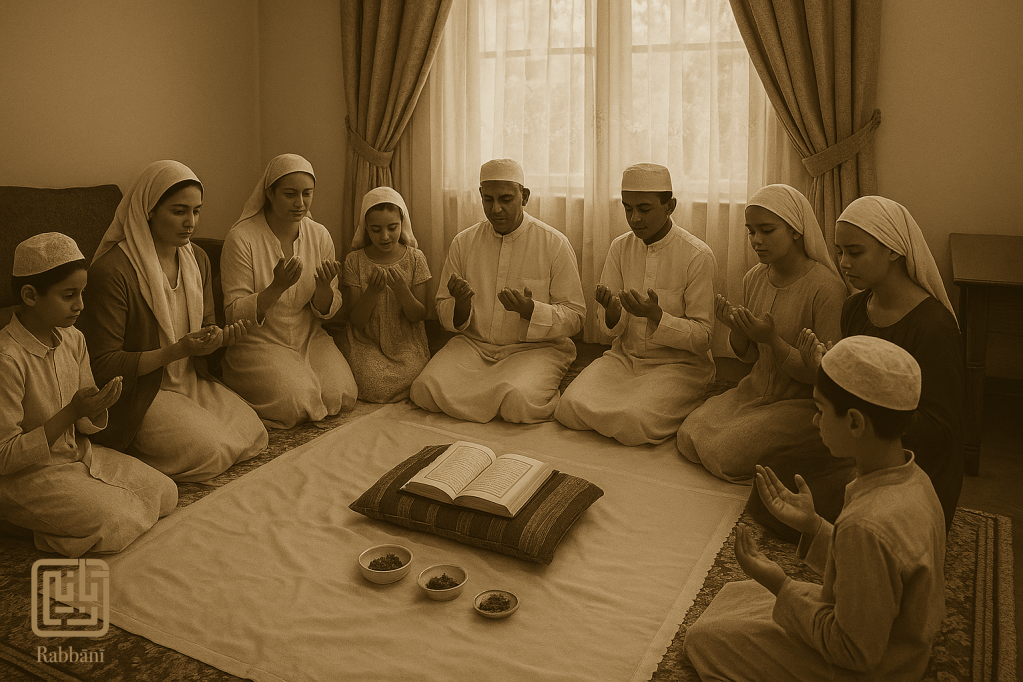
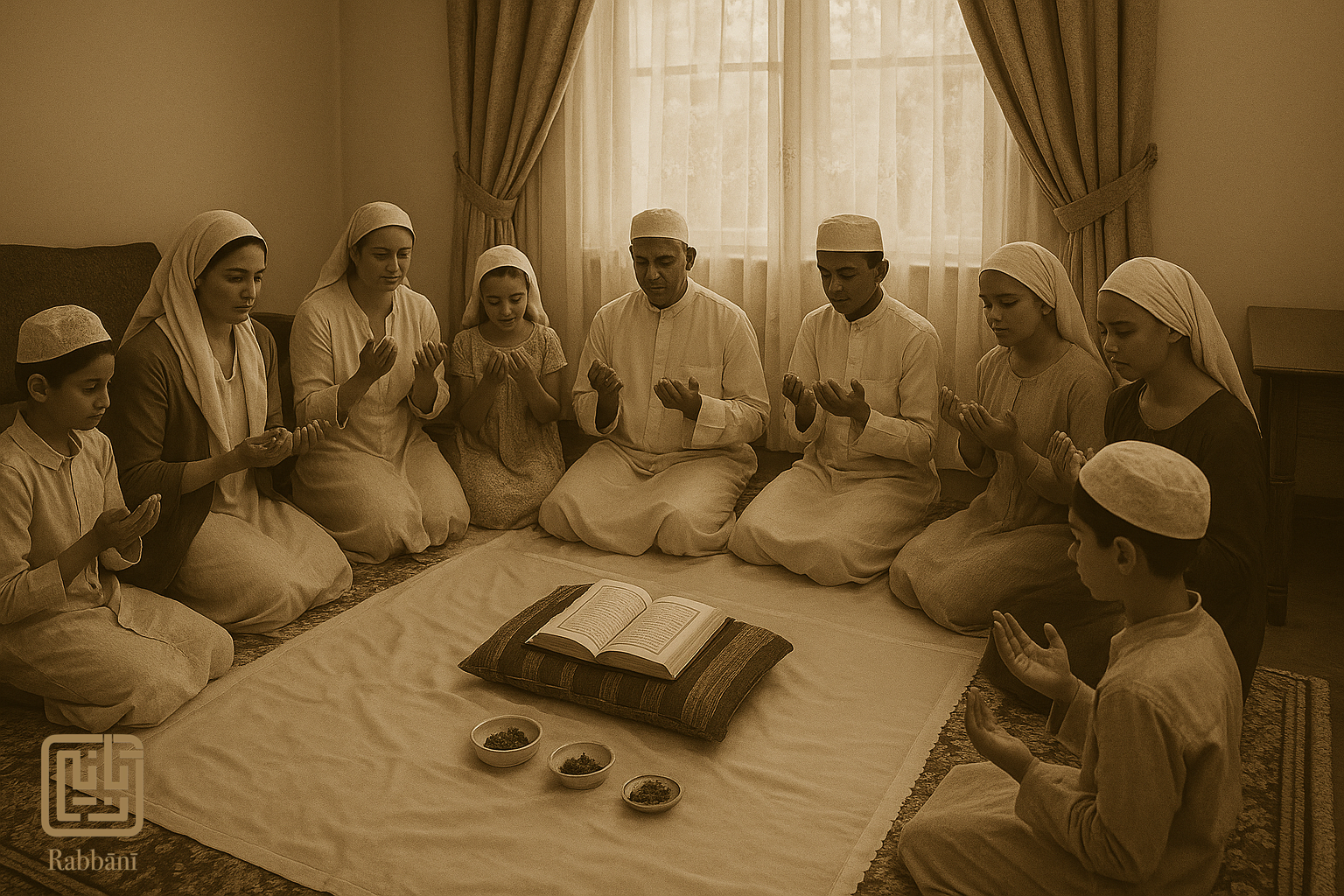
In South Africa, especially in the Cape, families often recite the Ratib al-Haddad after a loved one passes away, beginning from the first night and continuing for seven nights, then gathering on the fortieth day, the hundredth day, and each year on the anniversary of the passing. The Ratib is also recited at birthdays, during Mawlud celebrations, generally every Thursday night, sometimes Sunday mornings, a week before weddings, at engagements (known as lambary), and at naming ceremonies (doekmal or doopmal). This tradition anchors the community in remembrance and prayers for all occasions of joy, transition, and remembrance.
About Dhikr
The term dhikr refers to remembering, remembrance, or reciting and chanting the names of Allah, specific prayers, or Qur’anic verses. It is a rhythmic practice that roots the soul in the Divine, and is central to the Ratib al-Haddad tradition.
Individual or Group Practice
The Ratib al-Haddad can be recited alone or in a group, with equal blessing. Allah says in the Qur’an: “And men and women who remember Allah often — for (all of) them Allah has prepared forgiveness and a great reward” (Quran 33:35). The Prophet ﷺ said: “People will not sit in an assembly in which they remember Allah without the angels surrounding them, mercy covering them, and Allah mentioning them among those who are with Him.”
Foundations
The Ratib al-Haddad stands upon the firmest pillars of faith, a radiant string of pearls drawn from the Qur’an and Sunnah. It opens with the best Surah — Sūrat al-Fātiḥah, flows into the greatest verse — Āyat al-Kursī, affirms the Shahādah — the finest declaration of oneness, and continues with the enduring praises of al-Bāqiyāt al-Ṣāliḥāt. It includes the daily istighfār of the Prophet ﷺ, abundant ṣalawāt upon the Beloved ﷺ, and concludes with the dhikr by which Imām al-Bukhārī sealed his Ṣaḥīḥ.
Composed in sacred sequence by Imām ʿAbd Allāh ibn ʿAlawī al-Ḥaddād — a noble grandson of the Messenger ﷺ — this Ratib is not merely a litany, but a luminous map of remembrance. It is a symphony of Qur’anic light and Prophetic rhythm, preserved across centuries as a living trust.
And its resonance reached far beyond Ḥaḍramawt: both the Wird al-Laṭīf and the Ratib al-Ḥaddād were introduced and supported within the Harams of Makkah and Madinah under the patronage of Sultan Muḥammad IV of the Ottoman Empire (r. 1648–1687). This formal recognition affirms the Ratib’s deep-rooted legitimacy — not as invention, but as a distillation of the best of revelation, transmitted and treasured by the global Ummah.
Ijāzah: A Living Trust of the Ratib
For those who wish to benefit from the Ratib al-Haddad, we carry with us a sacred ijāzah — a scholarly and spiritual transmission — conveyed through four chains (asanīd) that reach back to the Composer of the Ratib, Imām ʿAbdullāh ibn ʿAlawī al-Ḥaddād**, may Allah sanctify his soul.
Shaykh Jamiel Abrahams writes:
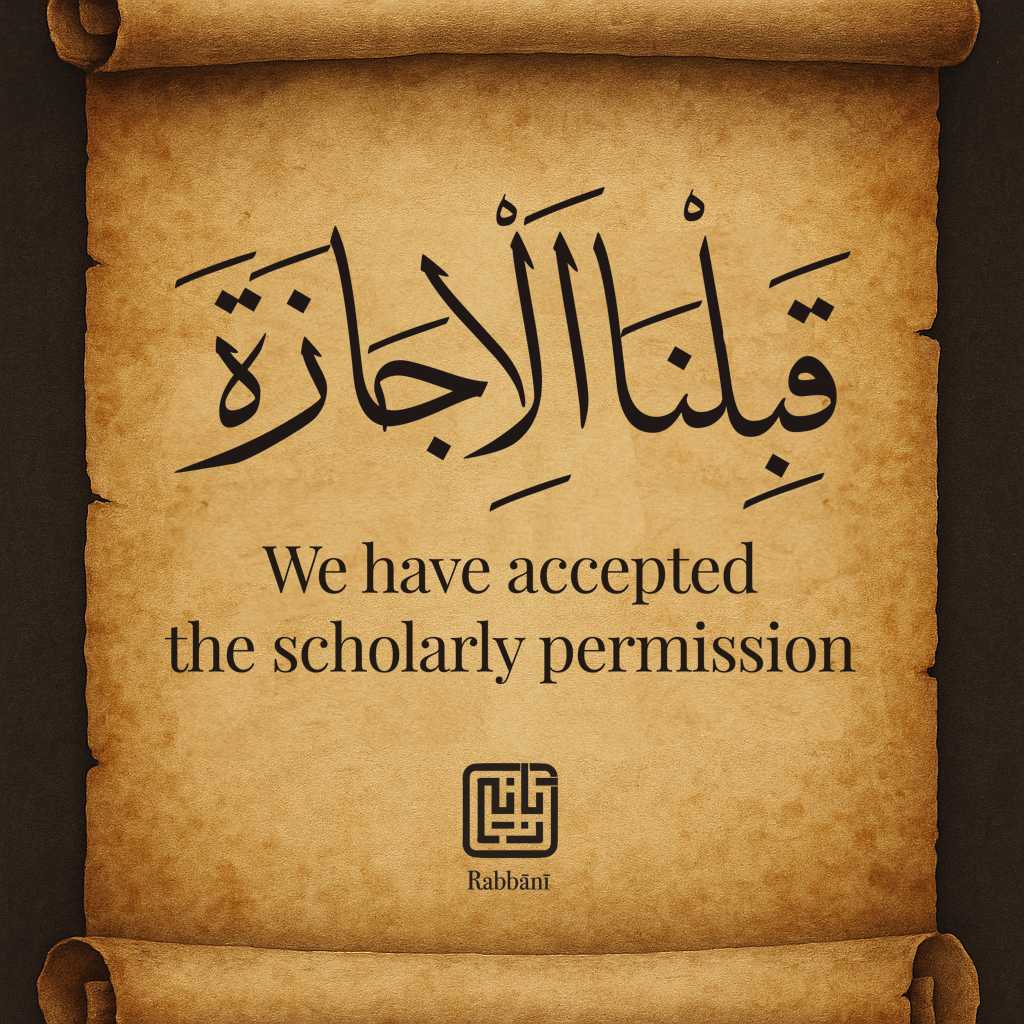
“Ijāzah for those who wish to benefit from the four asānid to the Composer of the Ratib… Say: Qabilnā al-Ijāzah — ‘We have accepted the scholarly permission to recite the Ratib of Imām al-Ḥaddād.’”
“We say Composer, not Author — for the adhkār are drawn from the finest pearls of the Qur’an and the most radiant lights of the Prophetic Sunnah.”
This ijāzah is not just scholarly — it is a living trust passed down through centuries of remembrance. To receive it is to stand in the river of continuity, with the awliyāʾ and scholars who preserved this path of dhikr through love, hardship, and sincerity.
And as for those who label such remembrance a bidʿah…
رَغِمَ أَنْفُ مَن صَرَّحَ بِأَنَّهَا بِدْعَةٌ “May the nose be rubbed in dust of the one who declares it an innovation.”
Let the river flow. Let the remembrance remain. And let every breath that utters His Name be a proof of mercy, not division.
My Personal Ijazah
This symphony carries my own transmission: an ijāzah granted by Zaid ibn Umar to me, Adli ibn Ibrahim, written in his own hand, linking me to the chain of Imam al-Haddad. That blessing lives within every note of this symphonic meditation, reminding me of the trust, humility, and sacred responsibility that this heritage confers. This ijazah is more than a note: it is a living chain, a breath carried from master to student across centuries, reaching back to Imam al-Haddad and forward into my heart. It binds me to the rhythm of this Ratib as if to a heartbeat, reminding me to hold it with care, reverence, and gratitude, so its protection and blessing might continue to resonate for future generations.
Historical Echoes
The Ratib was recited by enslaved Muslims at the Cape as a shield of hope and protection during times of oppression, helping them hold fast to faith. Generations later, it became a spiritual companion for many who resisted apartheid, its verses reminding them of divine justice, courage, and unity against all forms of tyranny. It is said that in the darkest nights of slavery at the Cape, the Ratib became a quiet liberation, whispered in hidden corners. Its rhythms reminded believers they were still seen by Allah, still dignified. During the anti-apartheid struggle, activists turned to these same verses, finding courage and calm as they faced injustice, with the Ratib a spiritual sword against oppression and despair.
Conclusion
From Yemen to the Cape, from ancient gatherings to modern hearts, the Ratib al-Haddad remains a living breath of resilience and unity. Its movements still guide communities to remember Allah, to stand together in hope, and to place trust in Divine mercy across the centuries. Like a living river, its currents still flow, nourishing communities with remembrance and calling them to a higher trust in Allah’s mercy. Imam al-Haddad, inspired by the symbolism of the Verse that Faces Outward, wove its spiritual meanings into the Ratib, transforming it into a shield that echoed both the Prophetic sanctuary and the everyday lives of worshippers from Yemen to the Cape.
May its verses guard every heart, and may its blessings gather our children and their children into the same ocean of divine love, until the final day.
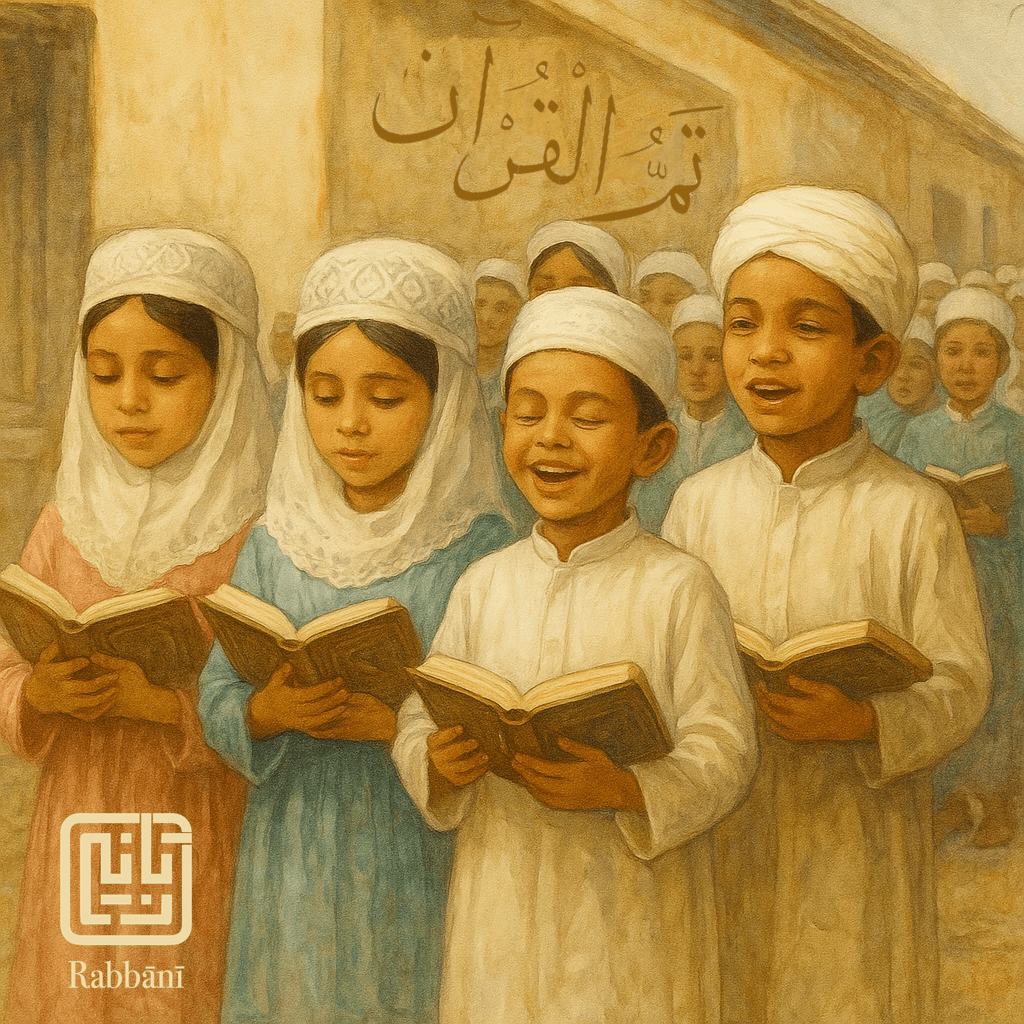
The word Tamat has been spoken in Cape Muslim homes for generations — a word so small, yet carrying the weight of centuries of memory. It is more than a graduation. It is a celebration of sound, of presence, of a child who has taken the Qur’an into their tongue and heart, and who now steps forward to carry it into the world.
Our grandparents knew this word from Hadramaut, where the Tamat was a festival of joy and responsibility. When a child completed their Qur’an recitation, they were gathered into a seven-day procession of voices, prayers, and sweets — with flags raised high, neighbours cheering, and the whole community celebrating the future. It was never just about memorising verses, but about honouring the discipline of correct recitation, Tajweed, manners, and knowledge that could anchor a whole community.
These children wore the banus, a beautifully embroidered cloth, reserved just for Tamat days. Banners would shimmer with Surah al-Fatihah and Ayatul Kursi waving above their heads, as if to shield and guide them on their new journey. Their teachers, the elders, and even passing strangers would bless them — because everyone understood: this child will serve, protect, and live the Qur’an (based on Sheikh Jamiel Abrahams, 2025).
When Tamat Reached the Cape
When Hadrami scholars and teachers arrived at the Cape of Good Hope, they brought this deep tradition with them, adapting it to new winds and new stones. In places like District Six, Bo-Kaap, and beyond, the Tamat found fresh soil.
Cape children would gather in the masjids, reciting the final chapters they had laboured over line by line, vowel by vowel. Then they would step out, dressed in their sorbaan and medora, and walk proudly along the cobbled streets. Their path sometimes led them all the way to the Company Gardens, deep in the colonial centre of Cape Town — an act of courage and pride that seemed to say, “This Qur’an walks with us too.”
In those moments, they were not just finishing a book. They were claiming a legacy.
The Meaning of Sorbaan and Medora
The garments of Tamat still speak.
For the boys, the sorbaan is a turban, but far more — a Khirqah al-Taḥkīm, a sign of trust. It wraps the head with a promise: you are now a guardian of Qur’an, carrying its mercy and its responsibility.
For the girls, the medora — circular, beautifully embroidered in gold or silver threads — holds the same dignity. It says: Your voice, too, is worthy. Your recitation is precise. Your role is essential.
In both, there is no sense of “fashion” — only inheritance.
A Tapestry of Cape Heritage
What makes Tamat so powerful is how it weaves into a far bigger story. It stands alongside the handwritten kitāb manuscripts passed down through Cape families, and the huffādh who still recite on local radio during Muharram (VOC Khatam broadcast, 2025). It echoes in the walls of the Auwal Mosque, where Tuan Guru — himself a prisoner and Qur’an teacher — copied out the entire Qur’an from memory in chains, so that his community would not lose its light.
It whispers through the kramats encircling Cape Town, the shrines of saints and scholars who carried Islam through exile, and who insisted that education was the best shield against forgetting who we are. Many of these traditions, as documented in works like Al-Istizādah min Akhbār as-Sādah compiled by Ali bin Muhsin al-Saqqaf, travelled with Hadrami scholars to the Cape and found new expression in the garments, recitations, and community gatherings of local Cape Muslim life.
It even rests quietly in the Tana Baru cemetery, where generations of those who lived the Qur’an are buried, their tombstones telling silent stories of resilience.
Beyond Memorisation
One of the most powerful aspects of Tamat, especially in the Cape tradition, is that it was never simply about memorising words.
Children were trained in correct pronunciation, rhythm, and understanding. They were questioned on the essential knowledge of their faith, from acts of worship to everyday etiquette, and the rights and responsibilities of being a Muslim in society.
Their teachers, elders, and neighbours stood witness that these children had become competent not only in their individual acts of worship (furoodh ayniyyah) but also in their ability to serve the community (furoodh kifayah): to lead prayer, to help wash and bury the deceased, to read du‘ā for the sick, to keep society upright.
In this way, Tamat was never a personal achievement alone, but a communal guarantee of resilience.
Echoes in Bosmont
Though times have changed, the spirit of Tamat still lives on. Take, for example, the Bosmont madrassa in the 1970s, where 15 young boys and girls graduated after years of Qur’anic training. Their ceremony was called Gatmeid Koran — a name with the same spirit as Tamat.
Six boys and nine girls, only twelve to fourteen years old, stood before thousands of family members and neighbours, reciting what they had carried line by line, vowel by vowel. The hall was so full that people pressed against the windows to watch.
It was more than a prize-giving. It was a moment of pride, of hope, of handing the Qur’an over to the next guardians of its sound and meaning.
Imams and teachers from all over — including Durban, Cape Town, and the Transvaal — came to witness these children take their place in the living chain of knowledge. There was even a colourful procession through the streets, a tradition of honour that stretched all the way back to Hadramaut.
They were not just students. They were being trusted to live the Qur’an: to hold its discipline, to guard its standards of moral character, to shine it into their communities.
(Source: newspaper clipping shared by Sheikh Jamiel Abrahams, c. 1970s)
A Living Beginning: Our Echoes, Our Hope
In every child who ties the sorbaan or drapes the medora, there lives a promise. A promise that the Qur’an will not only be memorised, but lived — that its rhythms will shape how we speak, how we act, how we serve.
From the echo of Hadramaut’s processions, to the cobbled streets of District Six, to the crowded halls of Bosmont where children stood reciting before thousands — Tamat has remained a celebration of beginnings, not endings.
These ceremonies remind us that we are never alone. We stand in a line of teachers, elders, and ancestors who trusted the Qur’an to transform us, generation after generation.
As long as there is a child willing to steady their breath, to learn its melody, to carry its mercy into the world, then our communities will never be without light.
That is the heartbeat of Tamat. That is why it will always matter. And that is why it must continue.
A Closing Du‘ā
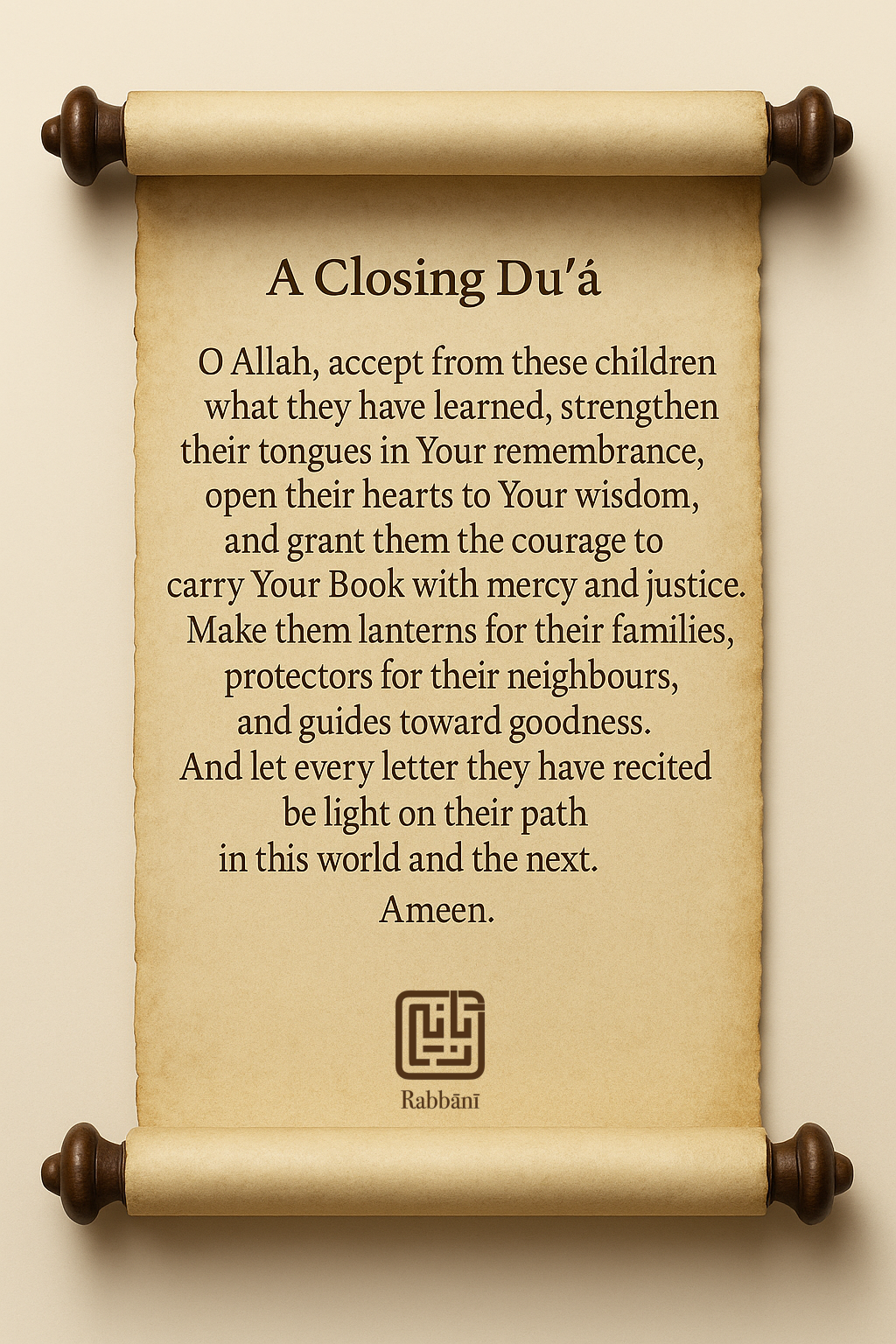
O Allah, accept from these children what they have learned, strengthen their tongues in Your remembrance, open their hearts to Your wisdom, and grant them the courage to carry Your Book with mercy and justice. Make them lanterns for their families, protectors for their neighbours, and guides toward goodness. And let every letter they have recited be light on their path in this world and the next. Ameen.
References woven into the narrative:
Sheikh Jamiel Abrahams, Tamat, Its Origins and Objectives (2025)
VOC Radio Cape Town annual Khatam broadcast (2025)
Tuan Guru’s Qur’an manuscripts at Auwal Mosque (Wikipedia)
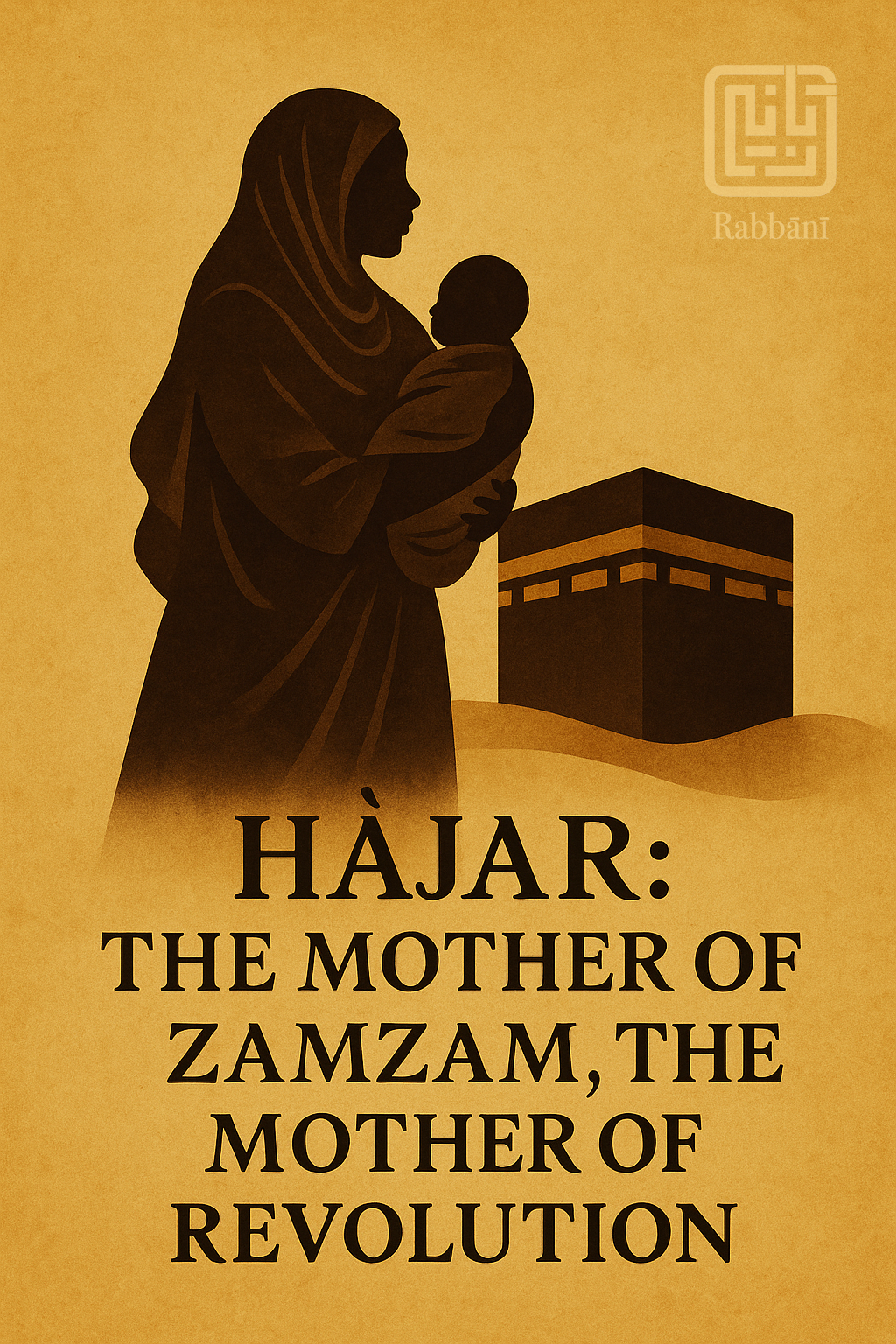
Hājar: The Black Mother Whose Faith Turned the Heart of Hajj
With deep gratitude to all who preserve these sacred stories.
Introduction
Hājar — a Black African woman, enslaved and then displaced — was chosen by Allah to become the mother of Ismāʿīl, and to have her house absorbed into the sacred geometry of the Kaʿbah itself.
Not a prophet. Not a queen. Not a caliph. But a mother. A servant. A Black woman.
The House of Allah bows toward her grave.
Ali Shariati called her the “Unknown Soldier” of Islam. But Allah made her known forever — through Zamzam, through Safa and Marwa, through the sacred enclosure known as Ḥijr Ismāʿīl. You cannot perform Hajj without acknowledging her. That is not just history. That is revolution.
When I look across the ummah today — from Cape Town to Cairo, Timbuktu to Jakarta — I see faces of every shade, hearts carrying a message revealed for all people, for all time. Yet too often, I also see shadows of forgetfulness, places where racism still stalks our communities.
Hājar’s story stands to remind us: Allah honours whom He wills.
1️⃣ Introduction to Hājar’s Background
Hājar was an African woman, described in traditional sources as a servant of Sarah, married to Ibrahim (a.s), and the mother of Ismāʿīl. She was displaced, left alone with her child in a barren valley with no shelter or food, yet her faith did not break.
When Ibrahim prepared to leave, she asked him only one question: “Has Allah commanded you to do this?” He said yes. And she replied: “Then He will not abandon us.”
In those words, you hear an entire revolution of trust.
2️⃣ The Test in the Valley
Ibrahim (a.s) left them in that desolate place, answering Allah’s command. Hājar stood alone, with her child crying from thirst, under a burning sun. The Qur’an echoes Ibrahim’s prayer for them in Surah Ibrahim (14:37):
“Our Lord, I have settled some of my descendants in an uncultivated valley near Your sacred House, our Lord, that they may establish prayer…”
While Ibrahim placed his trust in Allah and walked away, Hājar held the child close and placed her trust in Allah while staying put.
3️⃣ The Sa‘y of Hājar
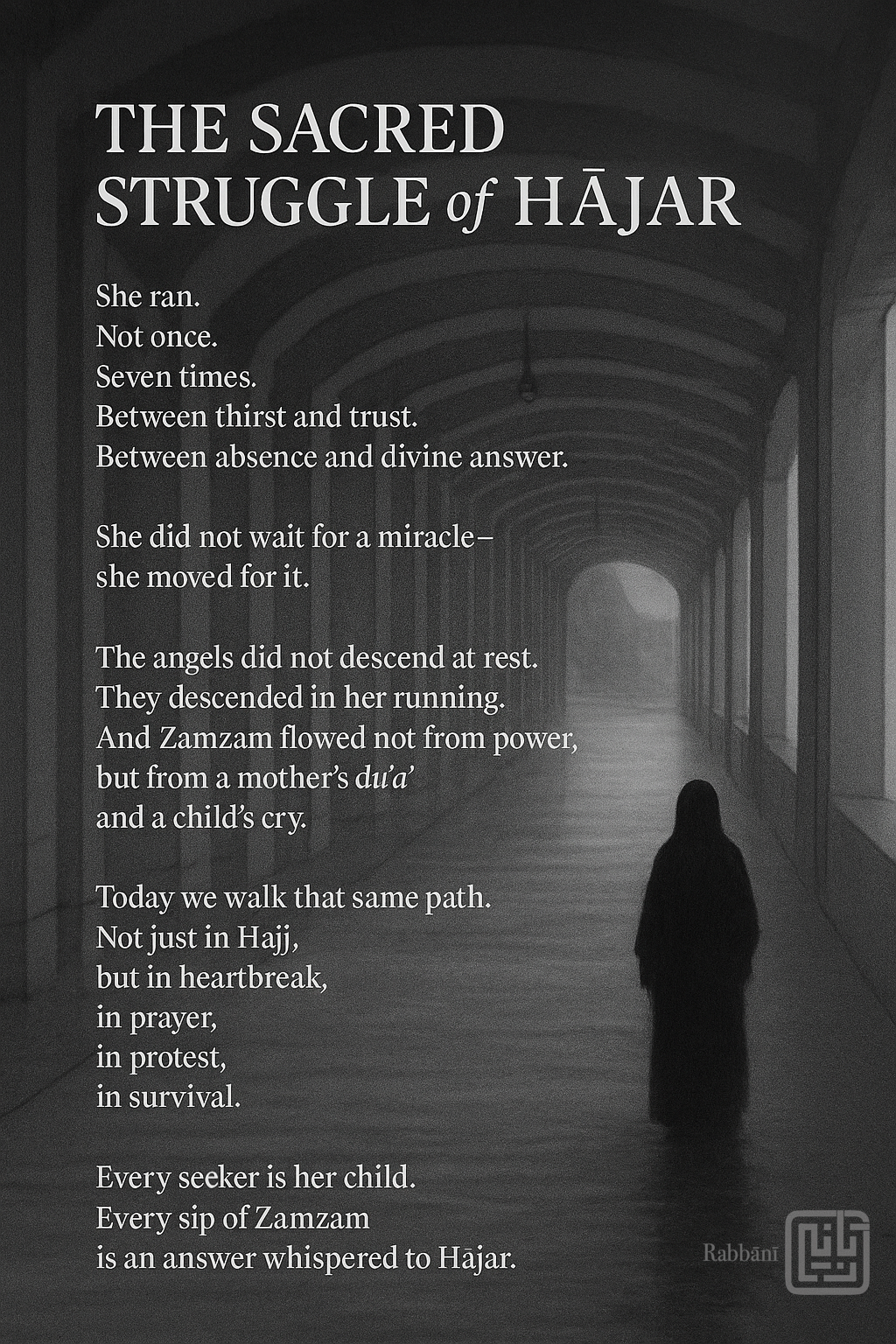
The baby, Ismāʿīl, cried in hunger. Hājar’s heart broke, but she did not surrender to despair. She ran to Safa, looking for water. Then to Marwa. Then back again. Seven times she ran between those hills, searching, hoping, refusing to quit.
This was not a ritual yet — this was a desperate mother in motion, placing faith in her feet as well as her heart.
Allah loved that moment so much that He turned it into an act of worship until the end of time. The Prophet ﷺ established the sa‘y as a pillar of both Hajj and ʿUmrah, hardwiring Hājar’s courage into the fabric of Islamic devotion.
4️⃣ Zamzam: The Well of Mercy
After her seventh run, the angel of Allah appeared, striking the earth where Ismāʿīl’s heels had kicked, and water gushed forth. Hājar rushed to gather it, crying “Zamzam, Zamzam” — gather, gather.
What an image: A mother shaping the flow of a spring that would sustain a civilization.
Even today, millions drink Zamzam, quenching their thirst from the miracle granted to her trust.
5️⃣ Zamzam and the Birth of Quraysh
From Zamzam, life returned to that valley. Birds gathered, signaling water, and desert tribes came to settle there with Hājar’s permission. From these settlements, a community grew, and over centuries, the Quraysh tribe took shape — the tribe that would eventually protect the Kaʿbah and see the birth of the Prophet ﷺ himself.
Allah reminds Quraysh of these blessings in Surah Quraysh:
“Let them worship the Lord of this House, Who has fed them against hunger and made them secure against fear.” (Qur’an 106:3–4)
The security and provision mentioned here trace directly back to Hājar’s courage, the water of Zamzam, and the revival of Makkah as a place of blessing.
She was not only the mother of Ismāʿīl. She was the grandmother of the Quraysh, the one whose faith made their existence possible.
6️⃣ The Kaʿbah and the Ḥijr Ismāʿīl
Years later, when Ismāʿīl (a.s) and Ibrahim (a.s) rebuilt the Kaʿbah, Hājar was still there to witness it. When she passed away, Allah honoured her so greatly that her grave was placed within the semi-circular enclosure next to the Kaʿbah — the Ḥijr Ismāʿīl.
Even today, every Muslim who bows toward the Kaʿbah bows toward the grave of a Black mother, a woman whose heart trusted Allah completely.
If the Kaʿbah is the heart of the Muslim world, then Hājar is the pulse that keeps it beating.
7️⃣ The Symbolism of Hājar
Hājar is not just a historical figure — she is a living ritual. Every sa‘y repeats her running. Every sip of Zamzam repeats her hope. Every glance at the Kaʿbah remembers the woman whose grave lies in its shade.
The Prophet ﷺ hardwired her courage into the pillars of worship, so no pilgrim can ever complete Hajj or ʿUmrah without walking in her footsteps.
Ali Shariati called her the “Unknown Soldier” of Islam. But Allah made her known forever.
He made her sa‘y eternal. He made her water a source of life. He made her grave a sign of dignity.
For every woman who has been dismissed, for every person who has been enslaved, for every soul who has been left alone in the desert of despair — Hājar is the proof that Allah sees you, Allah remembers you, and Allah can make your struggle immortal.
8️⃣ Modern Resonance
In our time, the stories of Black women are still pushed to the margins. Hājar corrects that. She was a Black woman, a servant, alone — yet Allah made her footsteps a sacred pillar, her water a miracle, her grave a sanctuary.
Every year, millions repeat her ritual, even if they do not say her name. Millions face the Kaʿbah, even if they do not know who rests in its courtyard.
Hājar shows us that Allah honours faith wherever He finds it, and that He can transform even the most overlooked among us into the authors of history.
If she was enough to carry the future of Islam on her shoulders, then every Black woman is enough.
And still, we must ask — as reader Khaliq Dollie so piercingly put it:
“How can anyone who has performed Hajj have even the slightest amount of racism or be sexist — unless, of course, they only perform the ritualistic aspects without comprehending?”
This is more than a question. It is a reckoning.
How can one run where a Black woman ran, drink from her well, bow toward her grave — and still carry arrogance in the heart?
Unless the ritual never reached the bloodstream. Unless the heart never opened to her story.
Hājar does not just invite motion; she demands meaning. Not just performance, but transformation. Not just remembrance, but repentance.
As the Qur’an reminds us:
“It is neither their flesh nor their blood that reaches Allah, but it is your taqwā that reaches Him.” — Surah al-Ḥajj, 22:37
True Hajj begins where ego ends — in humility, in honour, in justice.
To walk her path is to honour every Hājar still unnamed — every woman, every Black body, every soul left in the desert with nothing but trust.
9️⃣ Conclusion
Pilgrims still run between Safa and Marwa. Children still drink from Zamzam. Believers still circle the Kaʿbah.
All of these acts, day after day, year after year, remain living proof of a woman’s courage — a woman whom the world tried to forget.
Hājar did not hold a royal title. She did not lead an army. She was not a prophet. She was a mother. A servant. A displaced Black woman. Yet Allah made her story the foundation of the sanctuary itself, built the House of God around her grave, and made her sa‘y part of every pilgrimage until the end of time.
That is not just history. That is revolution.
May every step we take between Safa and Marwa remind us of her strength. May every sip of Zamzam honour her trust. And may every glance toward the Kaʿbah remember the mother who gave it life.
🌿 A Dua
O Allah, as You accepted Hājar’s faith, accept our faith. As You answered her cry for water, answer our cries for hope. As You made her story immortal, make our footsteps sincere and worthy of Your mercy. Let her memory heal the hearts still wounded by racism, and honour every mother who stands alone with trust in You. Āmīn.
A Reflection Inspired by a Reader: A friend reminded me that Hājar’s courage speaks also to hidden forms of abandonment: how we sometimes feel unseen, even by ourselves. Her words — “Allah will not abandon us” — are an anchor not just for surviving the desert, but for surviving the storms within. May we never abandon our own hearts, nor each other.
As the Qur’an reminds us:
“And those firmly rooted in knowledge say, ‘We believe in it; all of it is from our Lord.’” (Qur’an 3:7)
Another Reflection Inspired by Masooda Fadal: She reminded me that Ibrahim (a.s), when leaving his father’s community, said: “I am turning to my Lord. He will feed me and clothe me. He suffices me.”
Alongside him, in the same family, Hājar carried that same radical trust, saying: “Allah will not abandon us.”
There is a deep yet silent beauty in their inner shared knowing — a spiritual inheritance that flowed between father and mother and reached their child, becoming a collective, rasikh rooted faith.
Masooda also reflected that Hājar’s story amplifies the message of gender and race: that women equally embody the path of submission. While Ibrahim is often seen as the template of pure tawakkul, Hājar mirrored it so beautifully, showing that Allah honoured her Black, feminine courage with the same divine legacy.
This teaches us that abandonment is not only physical; it can be subtle, hidden, even within ourselves. Hājar’s faith is an antidote to all those layers — reminding us never to abandon our own hearts, nor each other.
Comment Prompt
Who in your family or community reminds you of Hājar? Share their story — let us honour these mothers of faith together.
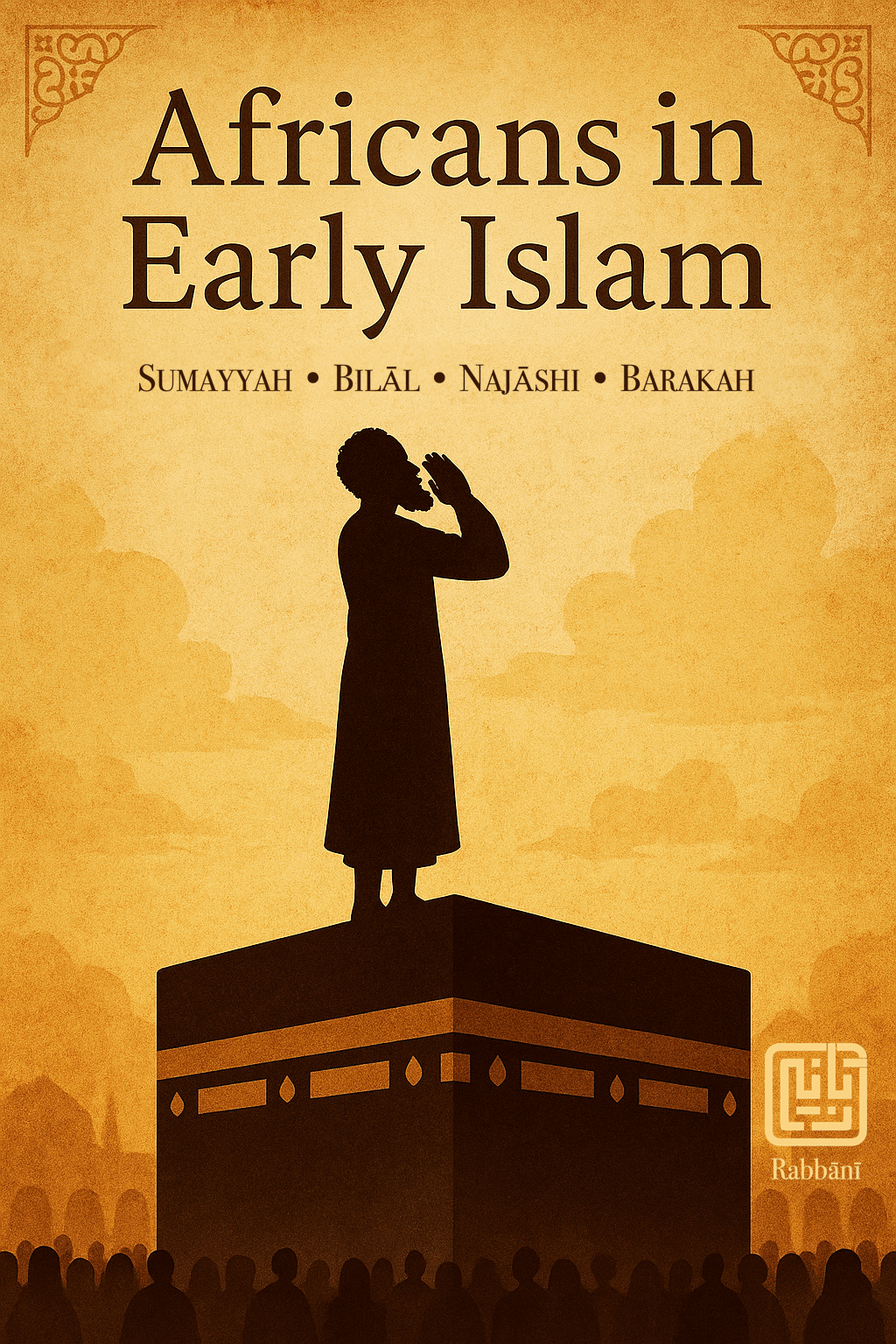
Africans in Early Islam: A Celebration of Courage, Dignity, and Faith
With deep gratitude to Shaykh Allie Khalfe for preserving these gems of our tradition.
Introduction
Hājar — a Black African woman, enslaved and then displaced — was chosen by Allah to become the mother of Ismāʿīl, and to have her house absorbed into the sacred geometry of the Kaʿbah itself.
Not a prophet. Not a king. Not a caliph. But a mother. A servant. A Black woman.
The House of Allah bows toward her grave.
Ali Shariati called her the “Unknown Soldier” of Islam. But Allah made her known forever — through Zamzam, through Safa and Marwa, through the sacred enclosure known as Ḥijr Ismāʿīl. You cannot perform Hajj without acknowledging her. That is not just history. That is revolution.
When I look across the ummah today — from Cape Town to Cairo, Timbuktu to Jakarta — I see faces of every shade, hearts carrying a message revealed for all people, for all time. Yet too often, I also see shadows of forgetfulness, places where racism still stalks our communities.
The Prophet ﷺ said:
“People are as equal as the teeth of a comb.” (Musnad Ahmad)
This was no empty slogan. It was a living reality, made manifest by the men and women of Africa who stood shoulder-to-shoulder with him in Islam’s earliest, most dangerous days.
Sumayyah, Bilāl, Najāshi, Barakah — they were not guests on Islam’s stage. They helped build it. Their stories remind us that equality is not an optional virtue, but the beating heart of faith itself.
Sumayyah bint Khayyat: The First Martyr
Sumayyah bint Khayyat, an Abyssinian woman, was among the first to embrace the oneness of Allah. Enslaved, tortured, with no protector but her Lord, she refused to renounce La ilaha illa Allah.
She was murdered for her faith, torn apart by her captors, becoming the first martyr of Islam.
“Indeed those who say, ‘Our Lord is Allah,’ and remain steadfast — the angels will descend upon them saying, ‘Do not fear and do not grieve; receive good news of Paradise.’” (Qur’an 41:30)
Sumayyah may have known little of ritual law, but she knew Allah. That was enough.
Bilāl ibn Rabāh: The Voice of Equality
Bilāl, a Black man born into slavery, was tortured for proclaiming Ahad, Ahad — One, One.
Freed by the Prophet ﷺ, he was honoured with the role of Mu’adhin, the first to call believers to prayer. His voice rose from the roof of the Ka‘bah itself, defying every social hierarchy of Quraysh:
“God is Greatest…”
An African once enslaved stood atop the most sacred site of Arabia, reminding the world that dignity belongs to those who stand before Allah with sincerity.
Years later, after the Prophet ﷺ passed away, Bilāl could no longer bear to give the adhan in Madinah. His heart was heavy with grief, and he left for Syria, continuing to serve Islam. But when he returned years later, the companions pleaded with him to call the adhan one final time. His voice cracked with emotion as he recited the words, and the entire city of Madinah wept, remembering the days of the Messenger ﷺ. That final adhan became a testament — Bilāl’s voice did not only summon people to prayer, it summoned them to an Islam that had shattered the chains of slavery, of racism, of tribal pride. It was a voice that rose from a place of deep pain, but reached into the hearts of all believers for centuries to come.
“The noblest of you in God’s sight is the most righteous.” (Qur’an 49:13)
(This reflection was enriched thanks to a powerful post shared by Isaac Borole — may Allah reward all those who help us remember our shared heritage.)
Ashamā al-Najāshi: The Just King
The Prophet ﷺ told his companions to flee to Abyssinia, where they would find a just king who does not wrong anyone. His name was Ashamā ibn Abjar, the Negus.
When Quraysh envoys arrived to demand the Muslims be returned, he refused them. Listening to Sūrah Maryam, he wept and said:
“This and what Jesus brought come from the same source.” (Seerah of Ibn Ishaq)
He became a secret Muslim, protected the believers, and was later prayed for by the Prophet ﷺ at his death.
Africa was Islam’s refuge — and its protector.
ʿAtā ibn Abī Rabāh: The Scholar Who Broke Barriers
ʿAtā, a dark-skinned, physically disabled man, rose to become the Mufti of Makkah. His knowledge was so respected that even the sons of the Prophet’s companions deferred to him.
“When ʿAtā speaks, no one disagrees.”
He proved that intellect, piety, and brilliance are never bound by skin colour or social class.
“Do not mock one another, for perhaps they are better than you.” (Qur’an 49:11)
The Joy of Arfidah: Celebration in the Mosque
On Eid, a group of Abyssinians danced with tambourines in the Prophet’s ﷺ mosque. Abu Bakr tried to hush them, but the Prophet ﷺ smiled and intervened:
“Leave them alone, O Abu Bakr, for the Jews know that our religion is spacious.” (Sahih Muslim)
Their culture, their song, their rhythm — it was welcome in Islam’s holiest house.
Sayyidah Fatimah: Learning from Ethiopia
Fatimah (r.a) saw Christian Ethiopian women buried in fully enclosed wooden biers, preserving their modesty. She asked for the same after her death, showing that Islam could learn from the best practices of Africa rather than claiming self-sufficiency.
Musa and Luqman: Prophets and Sages
Musa (a.s), the most-mentioned Prophet in the Qur’an, was described as dark-skinned, noble, and strong.
“O Musa, I have chosen you above all people.” (Qur’an 7:144)
Luqman the Wise, whose name is immortalized in a Surah, was similarly described as of African heritage, a sage whose wisdom guided generations.
Umm Ayman Barakah: The Prophet’s Second Mother
Barakah bint Thaʿlabah, known as Umm Ayman, was the Abyssinian woman who first held the newborn Prophet ﷺ. She fed him, comforted him, and never left his side.
Whenever she visited him, he would spread his cloak for her to sit on, saying:
“She is my mother after my mother.” (Ibn Saʿd, Tabaqat)
When she made hijrah on foot to Madinah, the Prophet ﷺ welcomed her with tears of love.
Reflection
These names are not side-notes in history. They are the heart of our story.
In an age when racism still poisons hearts, their legacy stands as a lamp, illuminating the Qur’anic truth:
“No Arab is superior to a non-Arab, nor a white to a black, except by taqwa.” (Musnad Ahmad)
May these stories humble us, awaken us, and remind us that the measure of a human being is never skin or wealth, but God-consciousness.
A Dua
O Allah, as You honoured Hājar through her sacrifice, Sumayyah through her courage, Bilāl through his call, and Barakah through her love — honour us by making us people of justice. As You sheltered the believers through Najāshi, shelter the oppressed today. O Allah, free our hearts from arrogance and racism, and unite us upon Your light. Āmīn.
Call to Action
✨ Teach your children these names. ✨ Tell these stories from the minbar. ✨ Challenge racism in your heart and in your community. ✨ Honour these giants in your duas.
They Got Me Too — A Lesson on the WhatsApp Hackers
One morning, before I’d even had my coffee, I answered a call. The voice was calm, respectful, and seemed familiar with my work. He spoke about the Call of Islam, saying there would be a WhatsApp discussion later that evening, and they’d like me to share my insights.
I asked him to send me more details. He agreed, then casually added: “For our meeting tonight, please repeat the numbers I just sent you?”
Half-awake, I read out the six-digit number — my WhatsApp verification code — without a second thought. Moments later, I was locked out of my account.
Of course, I felt embarrassed. But as my friend Laury Silvers reminded me: this was cleverly done. It was a classic social engineering scam: using politeness, personal references, and urgency to break through your defences when you’re least prepared.
This is happening to many of us.
Respected voices in our communities are being systematically targeted:
Rev Frank Chikane
Ambassador Mohammed Dangor
Former Premier Ebrahim Rasool
And now, me
This is not random. It is sinister, because these criminals know your contacts trust you. That trust is their weapon.
👉 My advice, from bitter experience:
✅ Never share your 6-digit WhatsApp verification code with anyone ✅ Pause before reacting to an urgent call or text ✅ Always verify directly — through a trusted phone call, video chat, or in person ✅ Warn your network if your account is hijacked — I immediately sent an SMS to all my contacts saying: “My WhatsApp has been hacked. Don’t accept any requests.” ✅ Reinstall WhatsApp and enable two-step security, as my friend Shafiq Morton wisely reminded me: “It puts hackers off.”
These scams are designed to catch good people off guard. If it happened to me, it can happen to you.
Let’s protect each other — by talking about it, and by staying alert.
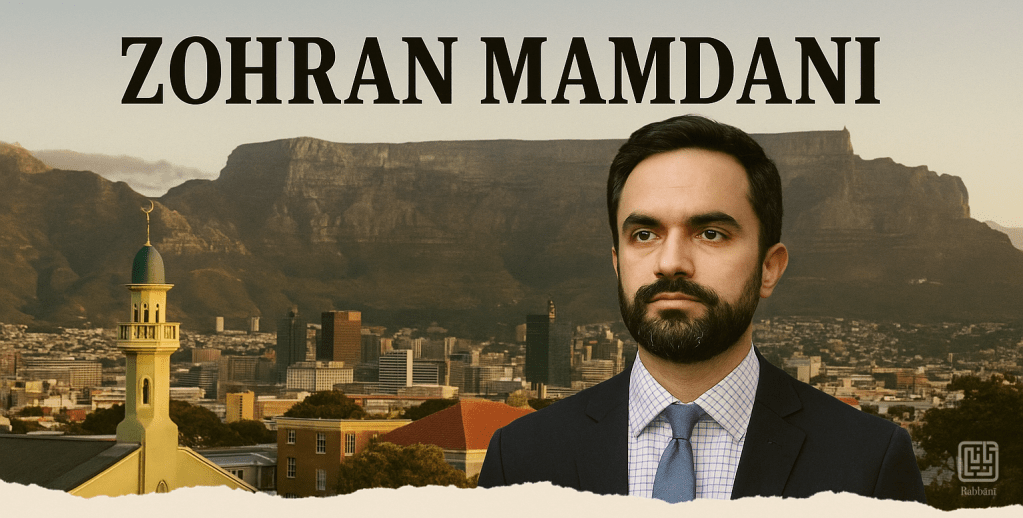
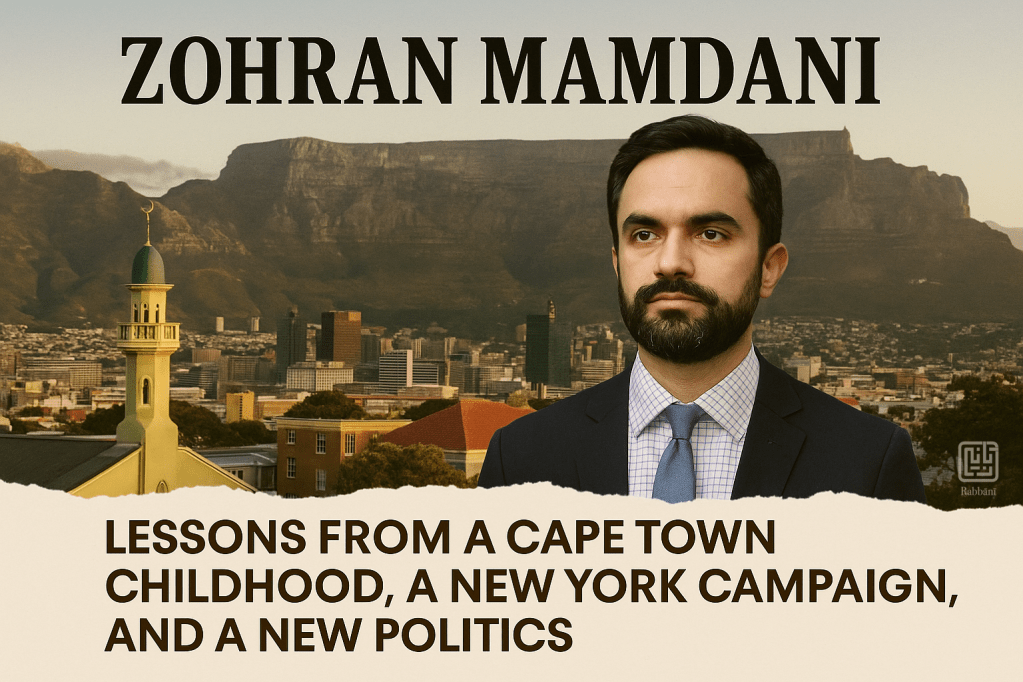
Zohran Mamdani: Lessons from a Cape Town Childhood, a New York Campaign, and a New Politics
On a windy June morning in Johannesburg, I opened my social media feed and was stunned to see the name “Zohran Mamdani” trending across platforms. Not because I didn’t know the name — but because I did, even if distantly. In the early 1990s, Zohran was a child in Cape Town, attending Saturday morning madrasa classes at the Claremont Main Road Mosque, a place deeply associated with the progressive Islamic movement of the time. His father, Professor Mahmood Mamdani, was already a towering intellectual figure in the post-apartheid ferment. I had been working at the National Language Project (NLP) then, and many of us — including colleagues like Gerda de Klerk — were connected to those circles of progressive faith, education, and social justice. Our paths may well have crossed with young Zohran, though it feels remarkable to see this child of that moment now emerge as the Democratic front-runner for mayor of New York City.
As news of Zohran’s decisive victory spread — defeating establishment heavyweight Andrew Cuomo in the Democratic mayoral primary — friends from various corners of the globe began connecting the dots. A remarkable arc had come full circle: from Cape Town’s progressive mosques and language movements to the heart of one of the most complex urban political landscapes in the world.
From Claremont to Queens: A Political Formation
Zohran Mamdani’s victory didn’t emerge out of nowhere. It was cultivated in spaces that taught young people not to separate faith from justice, identity from compassion. The Claremont Main Road Mosque (CMRM), where Zohran received early Islamic education, has long been known as a place of inclusive, activist theology — led in those years by figures like Imam Dr. Rashied Omar and strongly shaped by South Africa’s anti-apartheid Islamic ethos.
The family home was no less intellectually fertile. His father, Mahmood Mamdani, was not just a visiting scholar — as political analyst Steven Friedman rightly corrected on my Facebook post — but a full professor who directed a research institute at the University of Cape Town. Mahmood’s own writing — from Citizen and Subject to Neither Settler Nor Native — shaped global debates on colonialism, identity, and resistance (Scroll.in, 2025). His mother, Mira Nair, is an acclaimed filmmaker whose work explores the intersections of class, gender, memory, and post-colonial identity.
Together, this upbringing embedded in Zohran an ethos of critical clarity and pluralist compassion — two virtues that would later characterise his campaign and its stunning success.
Beyond the Soundbites: A Platform with Substance
Media coverage has often portrayed Mamdani’s win as the result of digital mastery — an “influencer politician” who went viral. But as tech journalist Taylor Lorenz argues in her sharp critique, this reading is both shallow and dismissive. “He didn’t win because of TikTok or podcasts,” she writes. “He won because he was a generational political talent backed by years of disciplined organising.”
Mamdani’s platform includes a $30/hour minimum wage by 2030, fare-free public buses, rent freezes, city-owned grocery stores, and universal childcare — funded through wealth and corporate taxes. These are not trendy slogans; they are deeply-researched, locally-grounded policy ideas forged in dialogue with tenants, cab drivers, community imams, and working-class coalitions.
Indeed, the campaign’s integrity was evident in its structure: 27,000 volunteers, small-donor funding (average donation: $35), and widespread multilingual outreach that included Arabic, Bangla, Spanish, Urdu, and Fulani speakers. In an interview with The Fatu Network, Gambian-American organiser AjiFanta Marenah noted how Mamdani met with imams and elders from West Africa at Masjid Ar Rahmah — a mosque still grieving a devastating fire. Her words were telling: “This was not just outreach. He listened.”
A Movement Rooted in Memory and Meaning
Mamdani’s win has been framed as a generational and demographic shift — and rightly so. At 33, he is poised to become the youngest mayor in NYC history. But this is not just about age. It is about political imagination.
As writer Rachel Hurley observes: “He didn’t water down his vision. He spoke clearly — about Palestine, about police brutality, about inequality.” While some accused him of being too radical, others — including thousands of voters under 35 and nearly 80% of Asian-American voters in ranked-choice simulations — saw in him the first candidate in years who actually named their pain and offered structural responses.
Importantly, he did not shy away from moral clarity. Whether affirming his support for BDS, resisting pressure to co-sign Holocaust memorial resolutions weaponized to silence Palestinian solidarity, or responding to racist attacks with unwavering calm, Mamdani refused to dilute his politics to appease critics.
In this, one senses echoes of his father’s legacy — a fierce critic of authoritarianism whether in Uganda or the United States — and his mother’s poetic instinct to preserve human dignity through narrative.
What This Means for South Africa and the Global South
In a time when centrist parties are increasingly detached from grassroots movements, Mamdani’s campaign offers not just hope but a methodology for how to bridge that divide. The lessons are not only for American Democrats, as Rebecca Kirszner Katz argues in her New York Times piece — they are relevant for South Africa too.
We, too, are grappling with the limits of post-liberation politics, the alienation of youth, and the search for a new language of ethics in the public square. Mamdani’s win reminds us that political change doesn’t only come through electoral machines. It can be built — step by step — through community relationships, principled clarity, and a refusal to play by the rules of elite consensus.
His campaign did not begin with polling data or PR consultants. It began with people — Bronx tenants, Queens families, Harlem students, mosque elders. As Felix Biederman noted, “He never dumbed things down into meaninglessness.”
Of course, Mamdani isn’t mayor yet; he still faces the general election in November. But his endorsement by former New York City Comptroller Brad Lander, and their warm joint appearance on The Late Show With Stephen Colbert, offered a powerful reminder of the long tradition of Muslim–Jewish solidarity. It echoed the interfaith alliances that shaped our own struggles against apartheid here in South Africa, affirming that courage and conscience can cross boundaries.
As Robert Reich noted, Mamdani is “the corporate Democrat’s biggest nightmare” — precisely because he dares to center affordability, class solidarity, and moral clarity. Yet he is equally a supremacist’s nightmare, as Alon Mizrahi argued, because he is “a Muslim Normal”: calm, compassionate, politically lucid, refusing every easy stereotype. That double challenge — to both neoliberal machines and racialized fear — is what makes his rise so potent.
Reclaiming the Power to Dream Together
In the end, Zohran Mamdani’s rise is not just a story of one man’s success. It is the story of what becomes possible when movements — and memories — are nurtured with integrity. From Cape Town’s madrasa halls to New York’s subway stops, the values of mercy, justice, and collective dignity continue to ripple outward.
In a time of fragmentation, Mamdani’s clarity invites us to build differently. To listen deeper. To organise not just against oppression, but toward belonging. And to believe, again, that cities — and hearts — can be won with vision.
References:
Hurley, Rachel. Zohran Mamdani’s NYC Primary Win Is a Huge Lesson for Dems. RatCClips, June 25, 2025.
Lorenz, Taylor. Zohran Did Not Win Because of TikTok and Podcasts. UserMag, June 25, 2025.
Katz, Rebecca Kirszner. Democratic Leaders Tried to Crush Zohran Mamdani. They Should Have Been Taking Notes. New York Times, June 25, 2025.
Daily Maverick. Meet New York City’s Likely Next Mayor — with a South African Connection. June 25, 2025.
The Fatu Network. Introducing the Young Woman Behind Zohran Mamdani’s Shout-Out to His Gambian Uncles. June 26, 2025.
Reich, Robert. The Corporate Democrat’s Biggest Nightmare. Substack, June 26, 2025.
Mizrahi, Alon. They Don’t Hate Mamdani Because He’s a Muslim Radical. They Hate Him Because He’s a Muslim Normal. June 27, 2025.
Times of India. Zohran Mamdani: The Bronx Student Who Made Africana Studies His Political Compass. June 2025.
The Late Show with Stephen Colbert, featuring Zohran Mamdani and Brad Lander, June 2025.
Scroll.in. Seven Books by Ugandan Scholar Mahmood Mamdani, Father of NYC Mayoral Candidate Zohran Mamdani. June 25, 2025.
If there is one truth I carry from writing this piece, it is that our stories are never just local, never just our own. They travel, they weave through other struggles, they bloom in places we may never see. Zohran Mamdani’s path reminds me — and perhaps reminds us all — that faith, courage, and community can plant seeds far beyond our imagining. In my own Rabbānī scrolls and design work, I have tried to hold on to that same ethic: to remember, to witness, and to keep building. May we all keep planting, keep walking, and keep creating together.





 Adli Yacubi