Before Three Sisters: A Road Interrupted, A Heart Opened
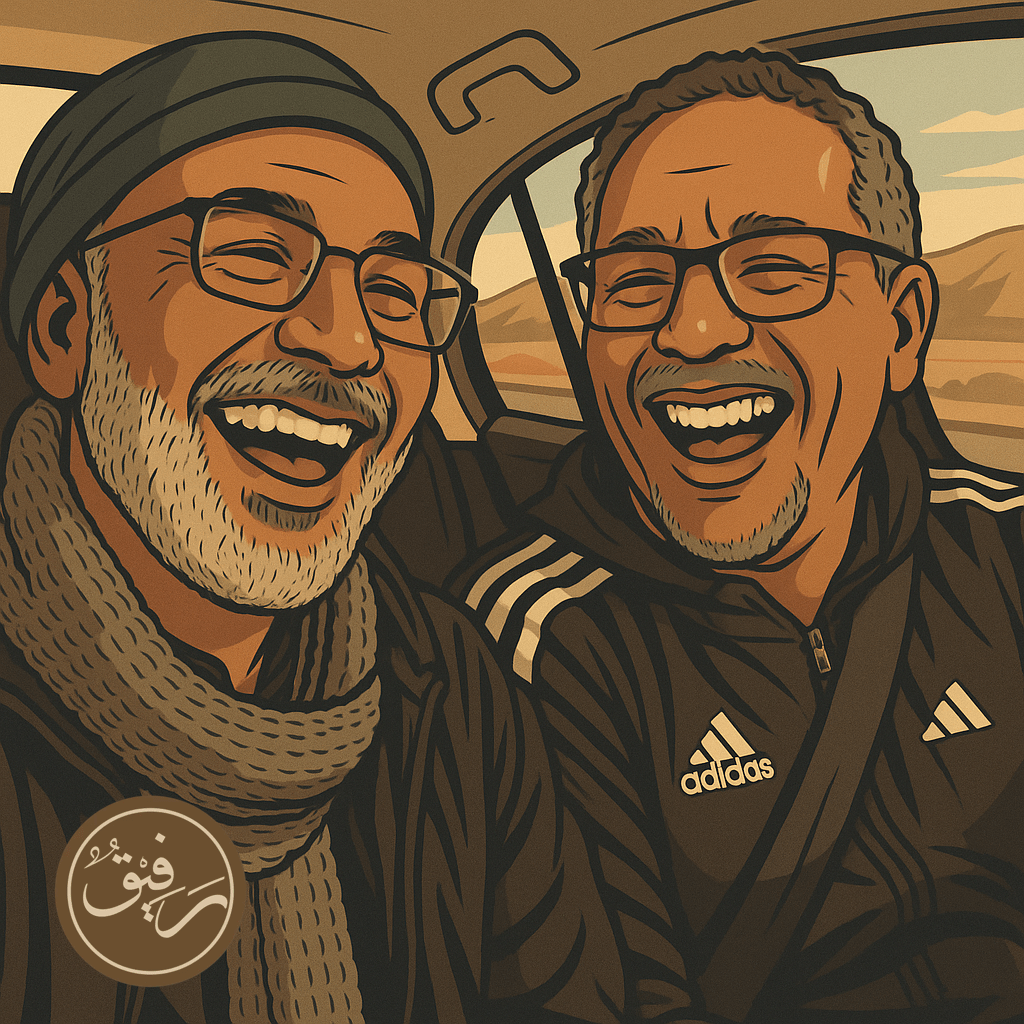
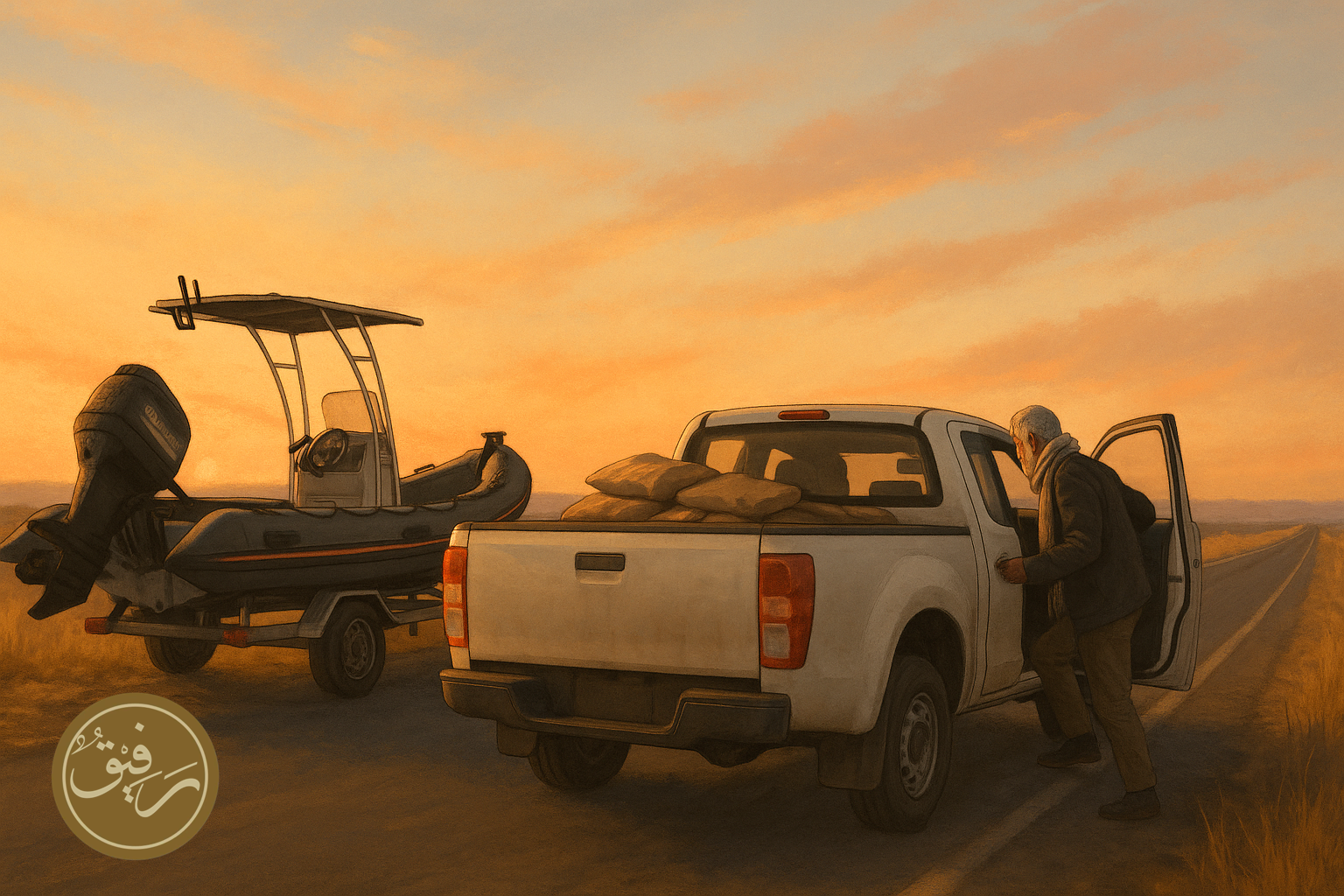
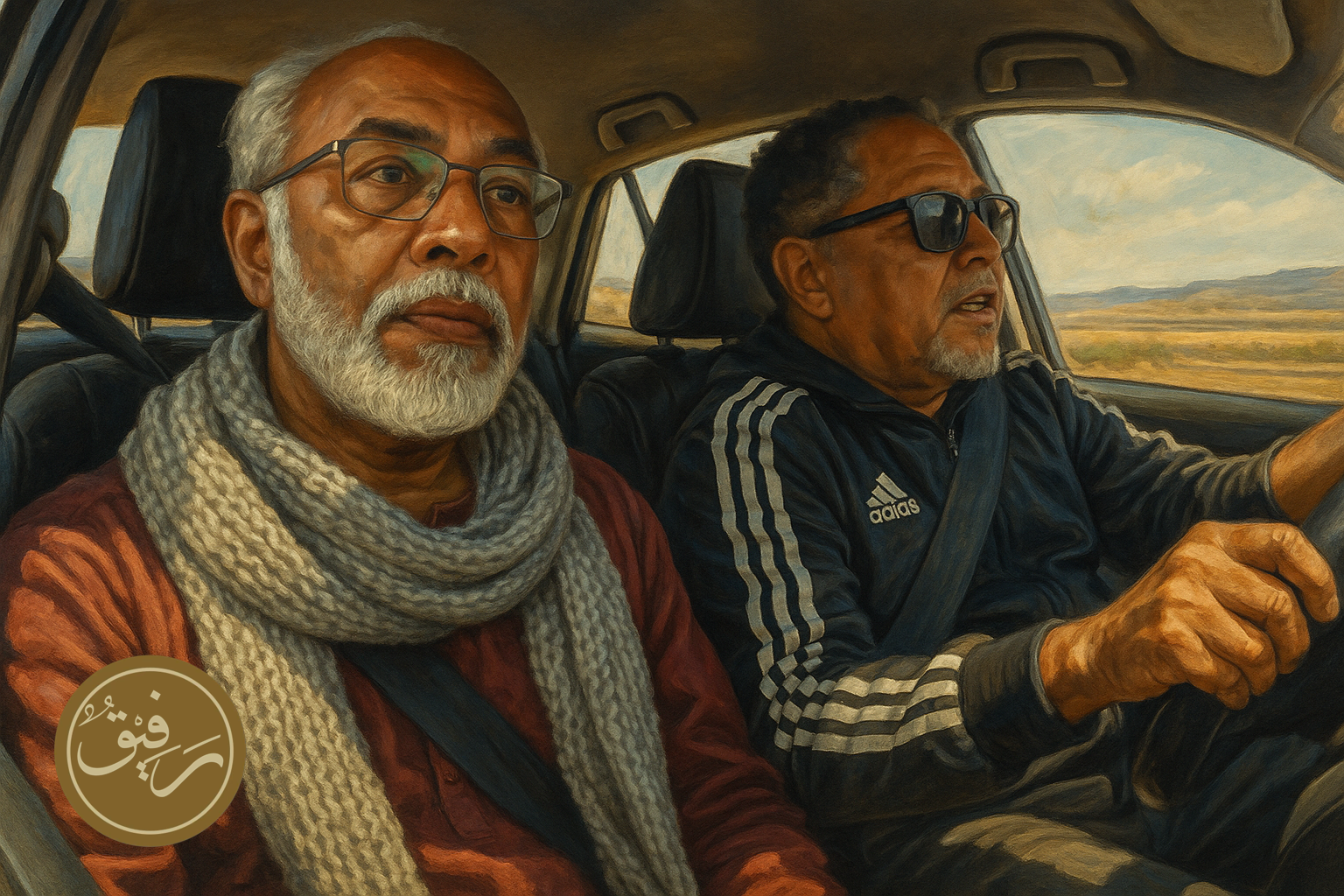
We left Johannesburg in the early light, bound for Worcester — a journey that would return me not only to a familiar valley, but to a story still unfolding. I climbed into Deem’s bakkie at 6:20am. The air was still soft with sleep, but the weight we carried was real — a dinghy boat hitched behind us, and cement bags packed into the back to balance the load. Deem was heading to the Cape for another transport run, as he often did — ferrying cars, boats, bakkies, golf carts, whatever needed moving.
He kept it steady, slow — 80 to 90 km/h. The road hummed low. We started talking.
Mostly about our children.
His sons, his daughter. Now grown. Their paths, their beliefs, the choices they were making in a complicated world.
“I worry, bru,” he said. “About their Islam… their qibla.”
I nodded. And gently shared my own truth:
“We’ve already planted the seeds, Deem. Madrasa, school, life. The goodness is wired in. They’ll find their way to the Divine — maybe not how we imagined, but still. They’ll find it.”
We sat in that silence — the kind that listens.
Faried and the Detour
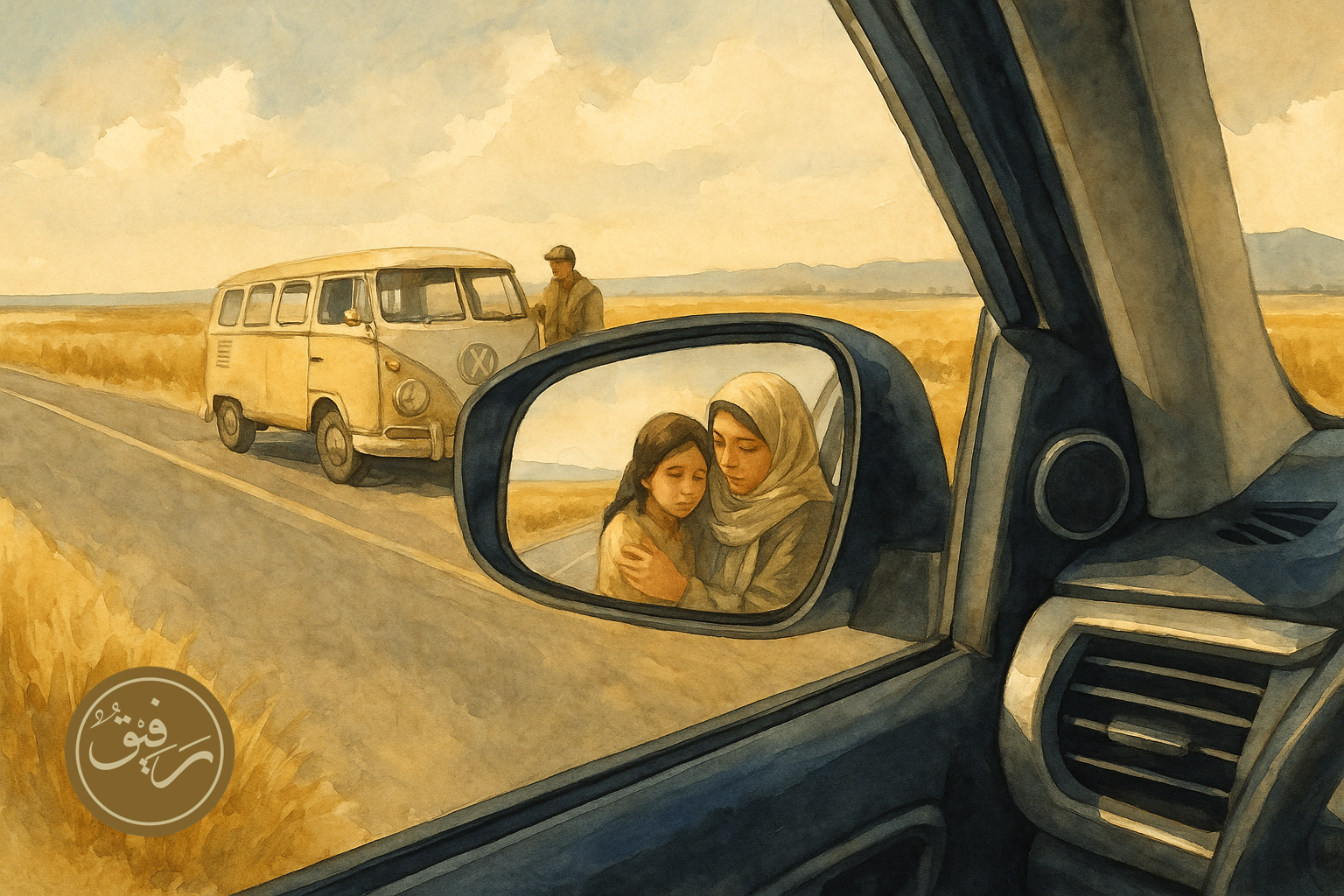
Just before Three Sisters, Deem got a message. A friend of his, Faried, had broken down with his family. We rerouted.
And just like that, our quiet bakkie became a car of five — Faried, his wife, and their daughter now in the back seat. I stayed quiet. This wasn’t my space to speak.
But something had shifted. The stillness that had carried us through the early part of the journey made way for the unexpected warmth of company, for laughter, for memory. What had begun as a private ride between two companions was now a shared passage — a reminder that some roads widen not with tar, but with presence.
The wife was chatty, warm, full of stories. She and Deem started talking about Deem’s drivers. One in particular: Archie.
“Archie’s solid,” she said. “Kaaps, maar sharp. Always shows up.”
A few kilometres down the line, just past Beaufort West, almost in Worcester, Deem turned to me and asked:
“You know what Archie’s real name is?”
I smiled.
“My eldest brother — Allah yarhamu — was Fuad. But everyone called him Archie. So… is he also Fuad?”
Deem laughed.
“Nai bru… his real name is Abdul Qahhar.”
We both burst out.
“Qahharjie becomes Archie! Allah!”
The Bend in the Road
The road narrowed into the Hexrivier Valley. Dark by then. But not empty. The headlights caught a curve.
“You see that corner?” Deem said.
And then he told me:
His father — Omar, also known as Amie, known to my kids as Dada — once took that very bend too fast. Racing from farm to farm, moving fish, goods, deals. He missed the turn. His bakkie flew into the river. He survived. And fished out his own worker, too.
“I was a laaitie then,” Deem said. “But every time I pass this spot, I remember. Dada was tough. A real survivor.”
I stayed quiet. Because what do you say when the road opens memory like that?
To Worcester, With Love
And then, as the road opened wider and the mountains made way for valleys known in name and marriage, I found myself returning not just to a place — but to the people and stories who made that place feel like mine.
Worcester wasn’t just a destination. It was memory incarnate.
When I married Sadia, I stepped into her family’s legacy — the Fakiers and the Majieds. Worcester was theirs. Her childhood. Her community. Later, her battleground — she became a unionist, fighting for dignity across these valleys.
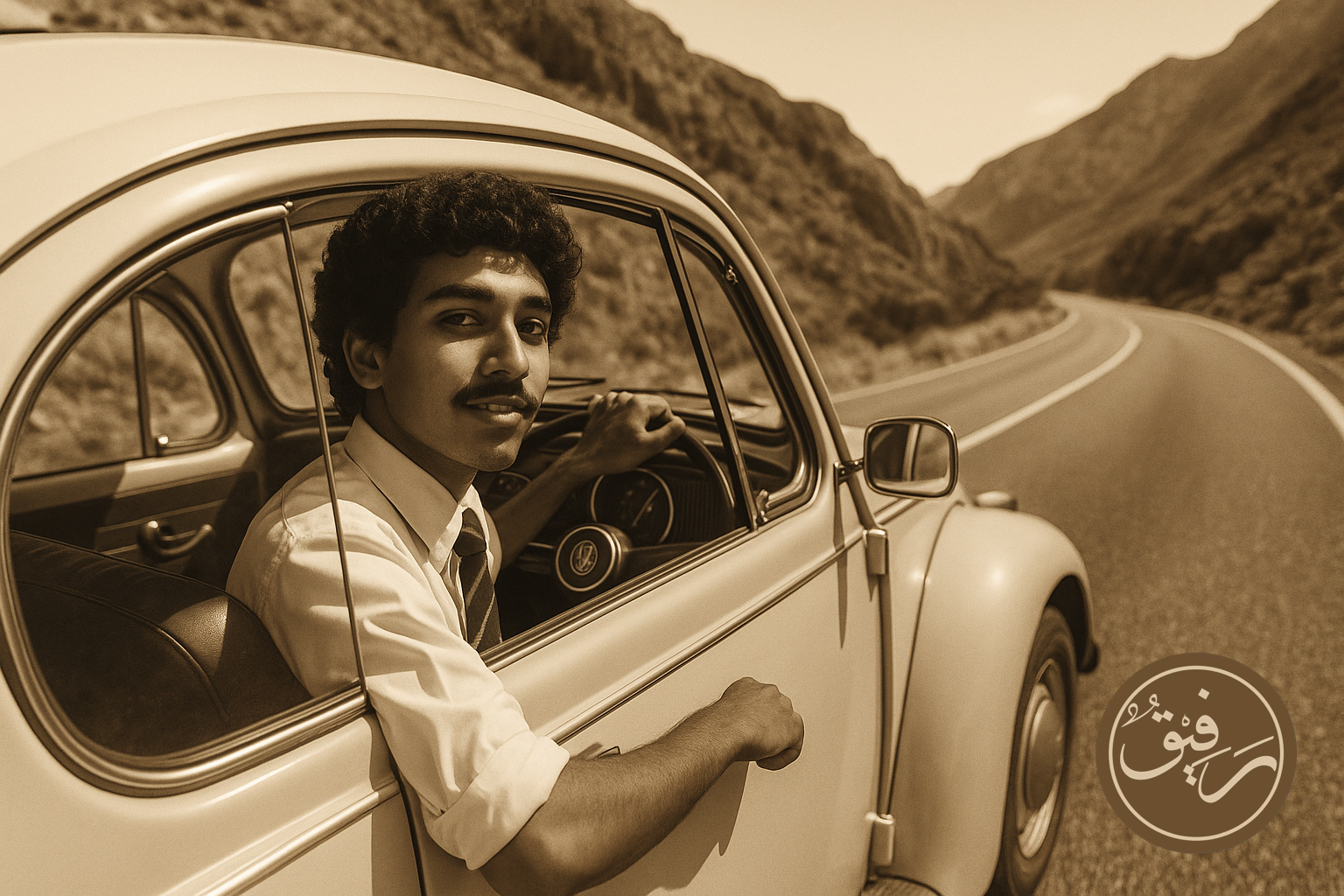
Back when I was still courting her, I’d drive my light blue VW Beetle 1400 — my first car, bought from Deem — all the way from Cape Town to Worcester and back. About 120 kilometres each way. For love.
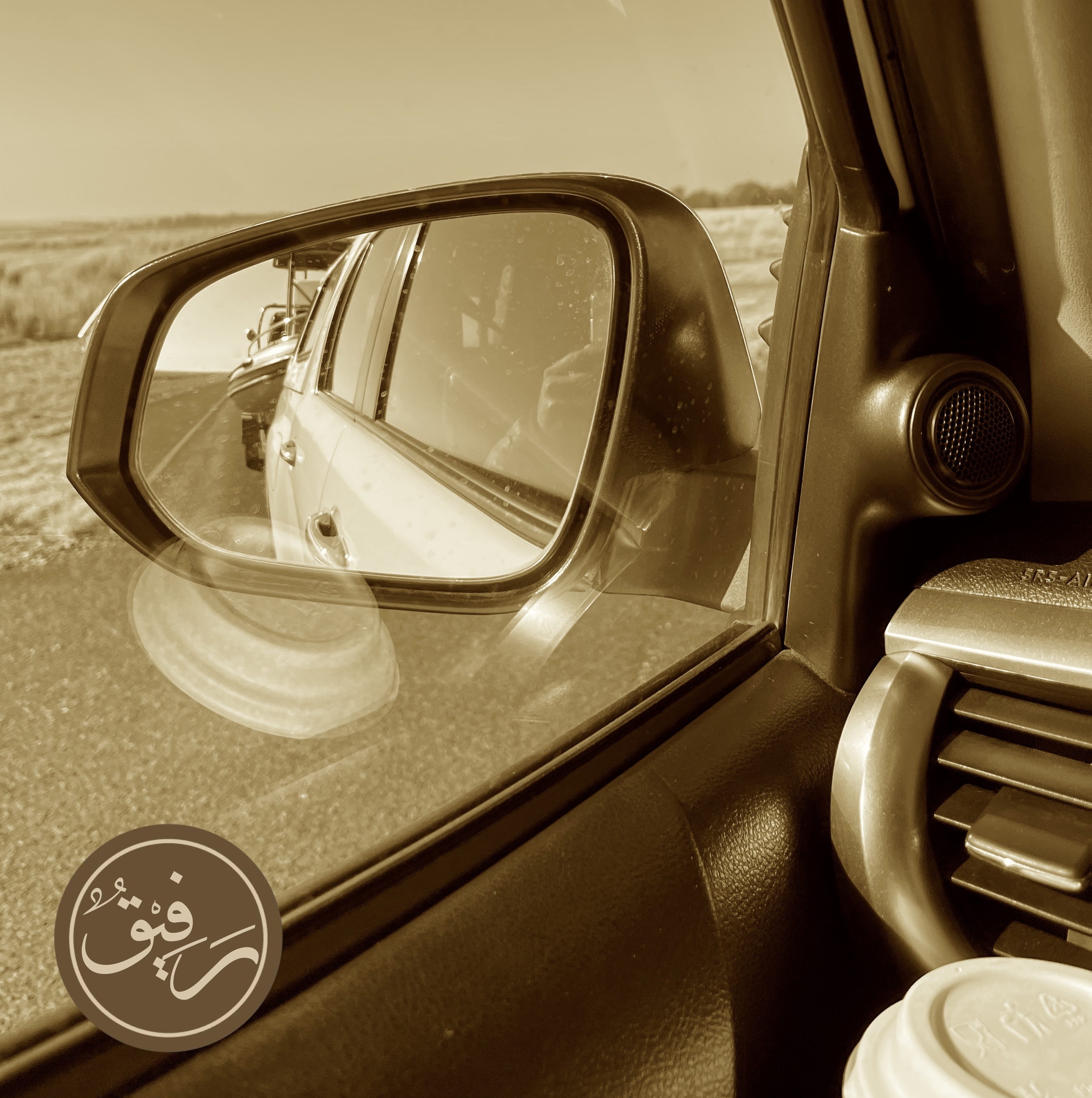
So that night, when we came through the final bend, the boat still hitched behind us, the road folding into familiar curves… I realised:
This wasn’t just a road trip. This was return.
To family. To love. To the people who carried us before we even knew their names.
Closing Blessing
As Shaykh Jamiel Abrahams said, in response to this journey:
“Many a person with shaggy and dusty hair, dusty and driven away from doors… if he was to call on Allah ﷻ, Allah would surely answer.”
Some roads answer us back. Even in silence. Even before Three Sisters.
And maybe, if you’ve followed this far, it means you too have travelled one of those roads — or carried its dust in your shoes.
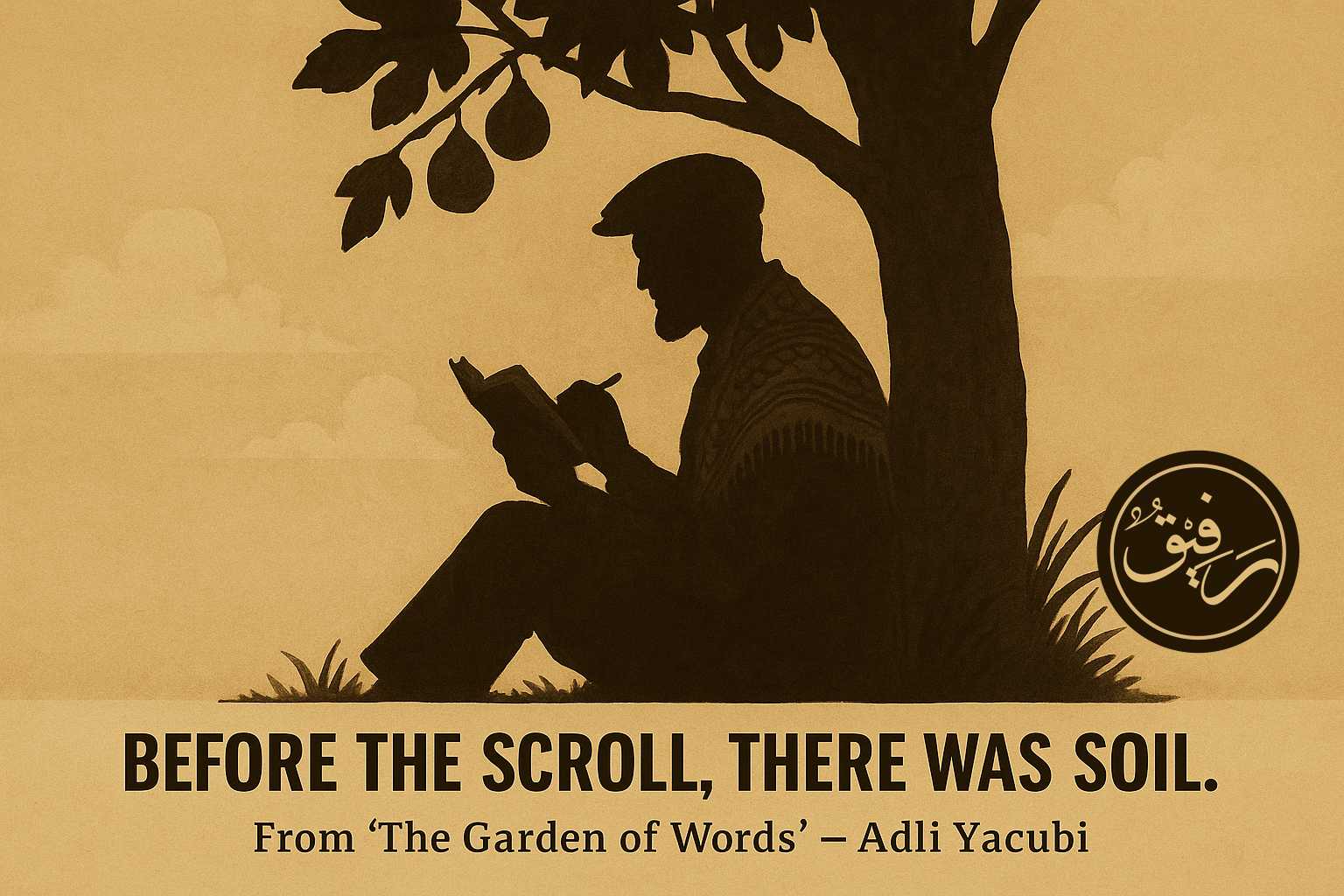
Before the baseball cap, the side-eye, and the wisecracks, there was something softer — a garden.
Not of vegetables or vines, but of words: words whispered, weathered, watered by prayer.
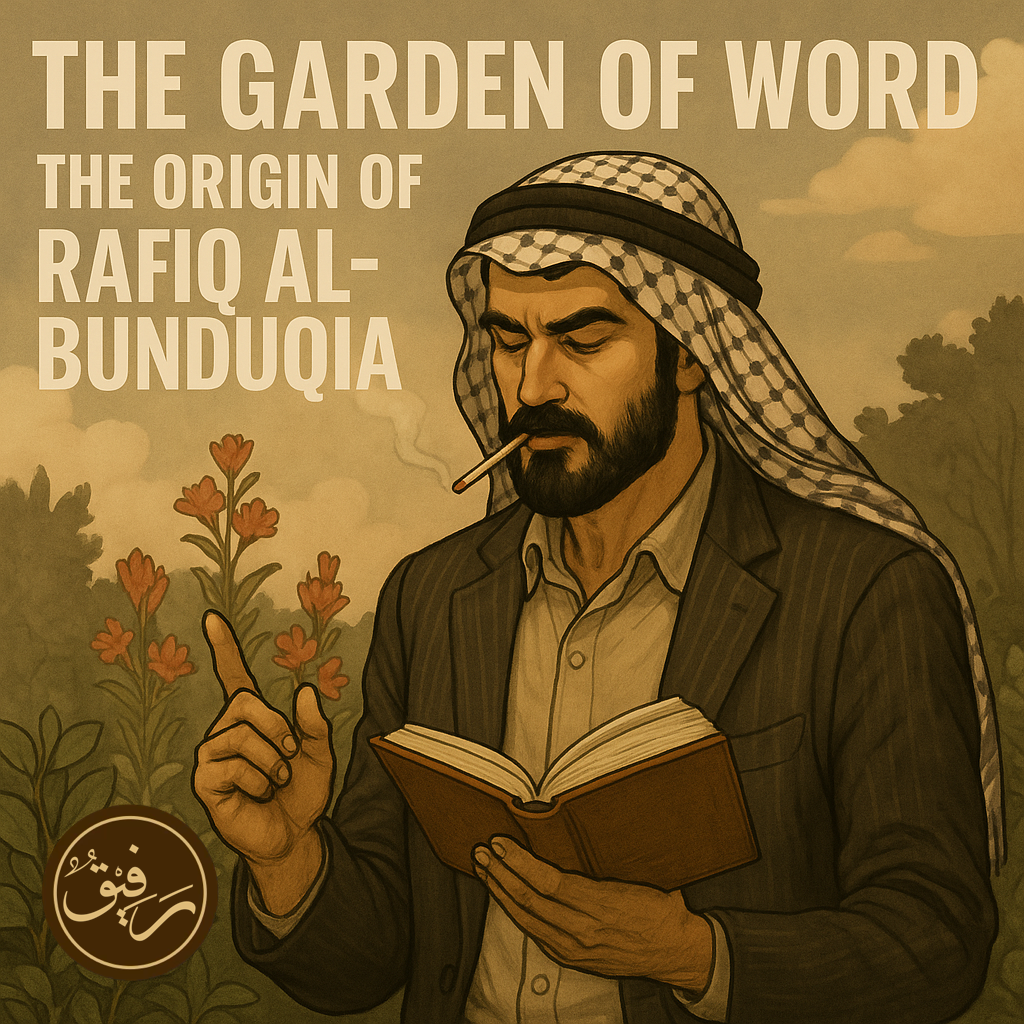
I wrote this piece years ago as a meditation on growth, loss, and language. Only now do I realise: this garden was the soil that gave us Rafiq al‑Bunduqia — the companion of pause, the superhero of syntax, the witness in the passenger seat.
🌱 Introduction
Not all heroes crash through walls. Some sit beside them and ask, “Who built this?”
He doesn’t leap tall buildings. He takes long pauses.
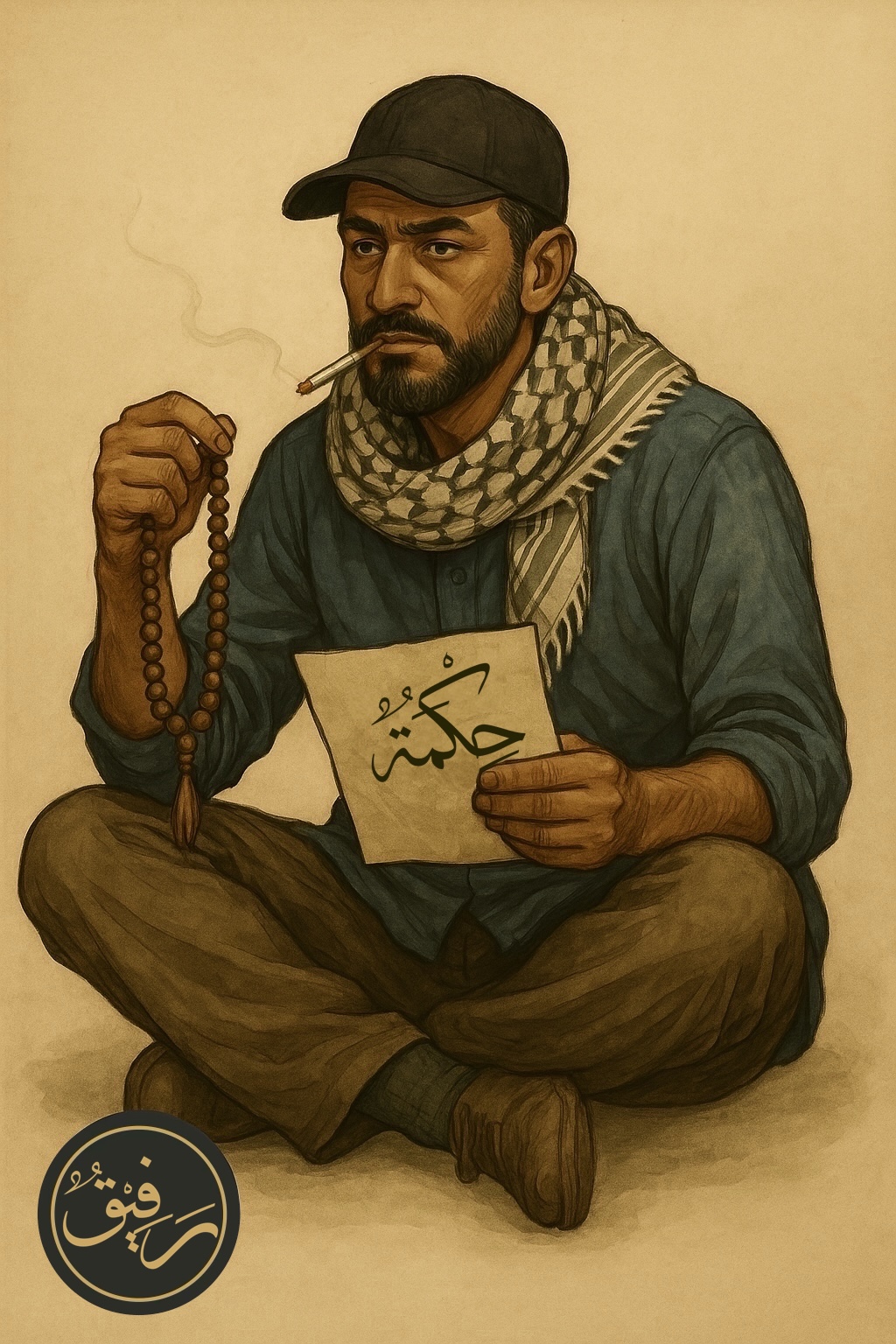
His name is Rafiq al‑Bunduqia. Shotgun companion. Keeper of silences. Superhero of the word.
This is his origin scroll.
📜 1. A Garden, Once Planted
Years ago, I wrote The Garden of Words. It was a meditation on how language grows: slowly, unexpectedly, in sunlight and ache.
I had no idea then that someone had been walking in that garden all along — listening to the leaves, laughing at the metaphors, sharpening a pencil beneath a loquat tree.
His name came later. But his presence? It was always there.
🦸🏽♂️ 2. What Kind of Superhero Is Rafiq?
Rafiq does not fly. He walks. Slowly. On purpose.
He doesn’t rescue you — he reminds you. He doesn’t dazzle — he decodes.
His weapons are:
A well-timed question
A half-smile that disarms
A quote from a street aunty that cuts deeper than any Hadith app
And a scroll, always a scroll
He moves through WhatsApp voice notes, bread queues, and Threads threads. You won’t notice him until it’s too late — and then you’re crying and breathing better.
📖 3. His Powers
Power
Description
The Pause
He listens long enough to hear the truth behind your noise.
The Compass
He helps you re-find your qiblah when algorithms have stolen your sense of direction.
The Scroll Drop
Short, sharp, soulful — he leaves them like seeds on sidewalks.
Code-Switching Cloak
Fluent in Kaaps, Qur’an, colloquialism, and meme. He’ll talk street or soul depending on what you need.
💭 4. Why the World Needs Him
In an age of constant noise, Rafiq carries something ancient:
Discernment. Mercy. Memory.
He shows us that to speak well is not the same as to speak wisely.
That sometimes, the most radical act is to say nothing — and let someone else be heard.
🪞 Moment 1: “Don’t Answer So Fast”
They were all arguing on the stoep — about Gaza, gangsters, grief, government. Everyone had an opinion. Except Rafiq.
He just watched, sucking on a toothpick. Then he said:
“Don’t answer so fast, my broer. Sometimes, your answer is just your trauma trying to sound clever.”
Silence. A pigeon flew off the roof. No one spoke after that.
🍵 Moment 2: “Make Tea Like You Listening”
One of the ouens asked Rafiq, “How do you know when someone’s fake?”
He grinned — slow like a gate that’s seen too many guests.
Flicked his gwai ash into a broken saucer.
“Easy. Watch how they make tea. If they rush the pour, they’ll probably rush your pain too.”
“Make tea like you listening. Let it draw. Let it breathe.”
He sipped from a chipped cup and added,
“You want to fix the world? Start by fixing how you boil water.”
🧃 Moment 3: “The Juice Box Gospel”
At the back of the masjid after Jumu’ah, a small laaitie gave Rafiq a juice box.
No reason. Just walked up, silent, and handed it over like a contract.
Rafiq took it like it was gold.
Sat down on the pavement with his legs crossed, plastic straw in hand, and sipped like he was performing dhikr.
The boy looked confused.
So Rafiq leaned forward, tapped the juice box with one finger and said:
“My lightie, never underestimate something small that still got sweetness in it.”
Then he looked up at the sky and whispered,
“Ya Rabb… give us the patience of those who still share, even when there’s just one sip left.”
🪶 5. A Scroll from Rafiq
Rafiq’s Scroll #14 – On Superpowers
To sit with someone long enough to hear the voice behind the noise — that’s Rabbānī. That’s mercy. That’s you.
— Rafiq al‑Bunduqia
✨ What if Rafiq’s Trinity is This:
Drip. Hikmah. Duʿāʾ.
⚡ Style that carries memory 📿 Wisdom that carries mercy 🕊️ Supplication that carries the rest of us
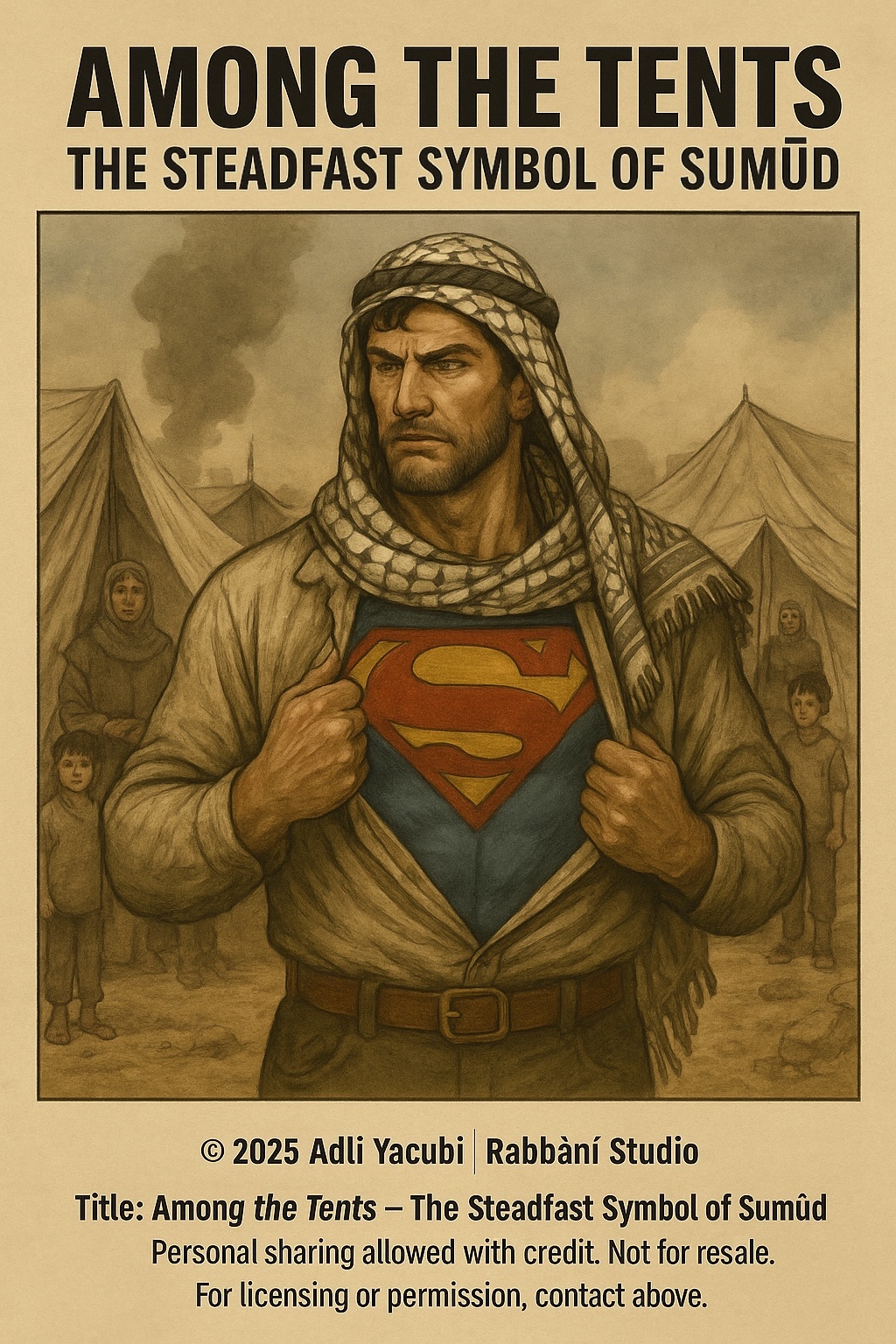
Among the Tents, Beyond the Frame: Reimagining Heroism in Gaza
He no longer flies. He walks. With dust in his lungs, and truth on his chest. 📸 Visual by Rabbānī Studio – 2025
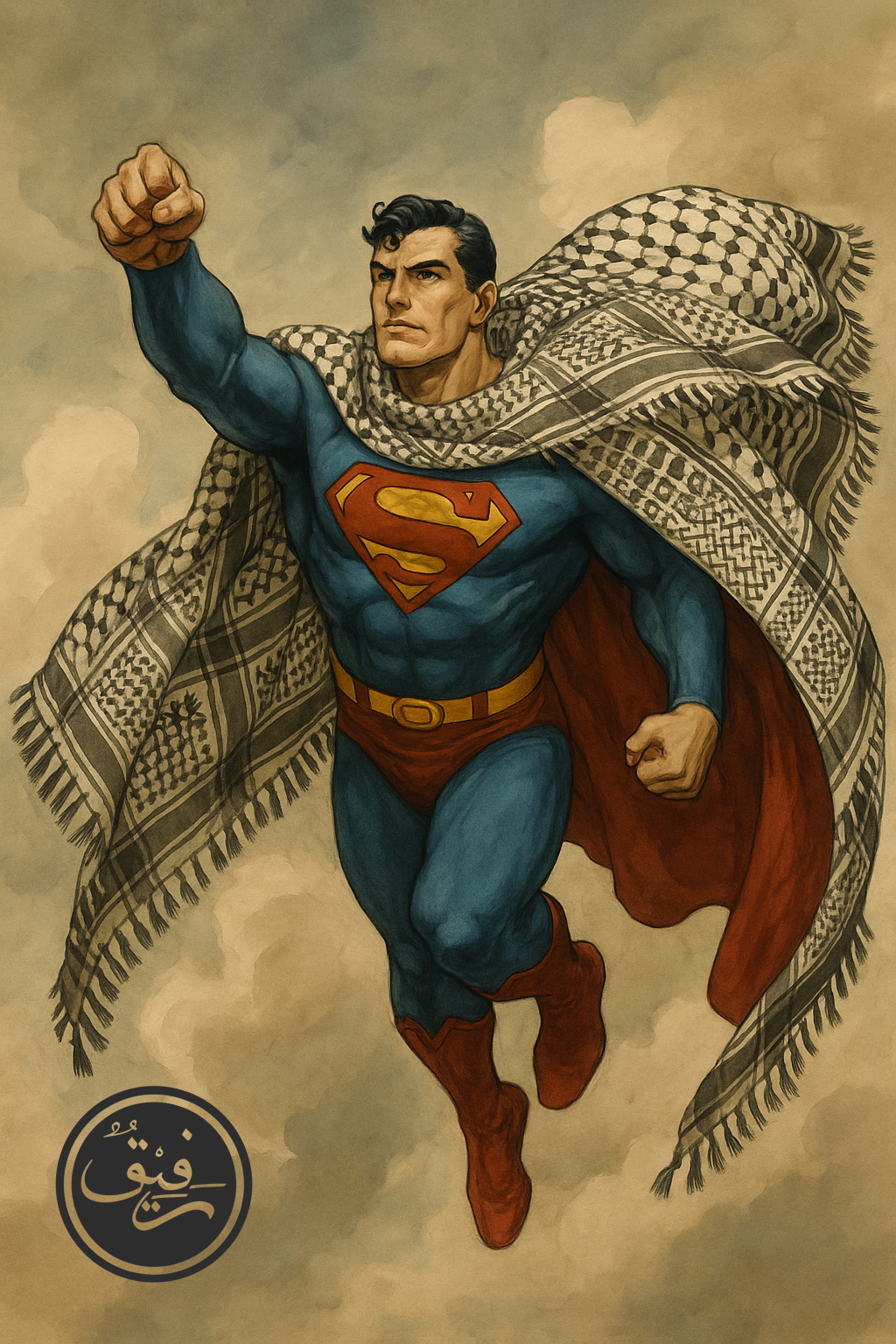
They called him the Man of Steel. But in Gaza, they make heroes out of dust, cloth, and resolve.
In a world saturated with capes, franchises, and box office saviours, we’ve released a different kind of superhero — one who doesn’t fly above the people, but walks among the tents.
He has no fortress of solitude. He shares tea with the wounded. He holds space, not spotlights.
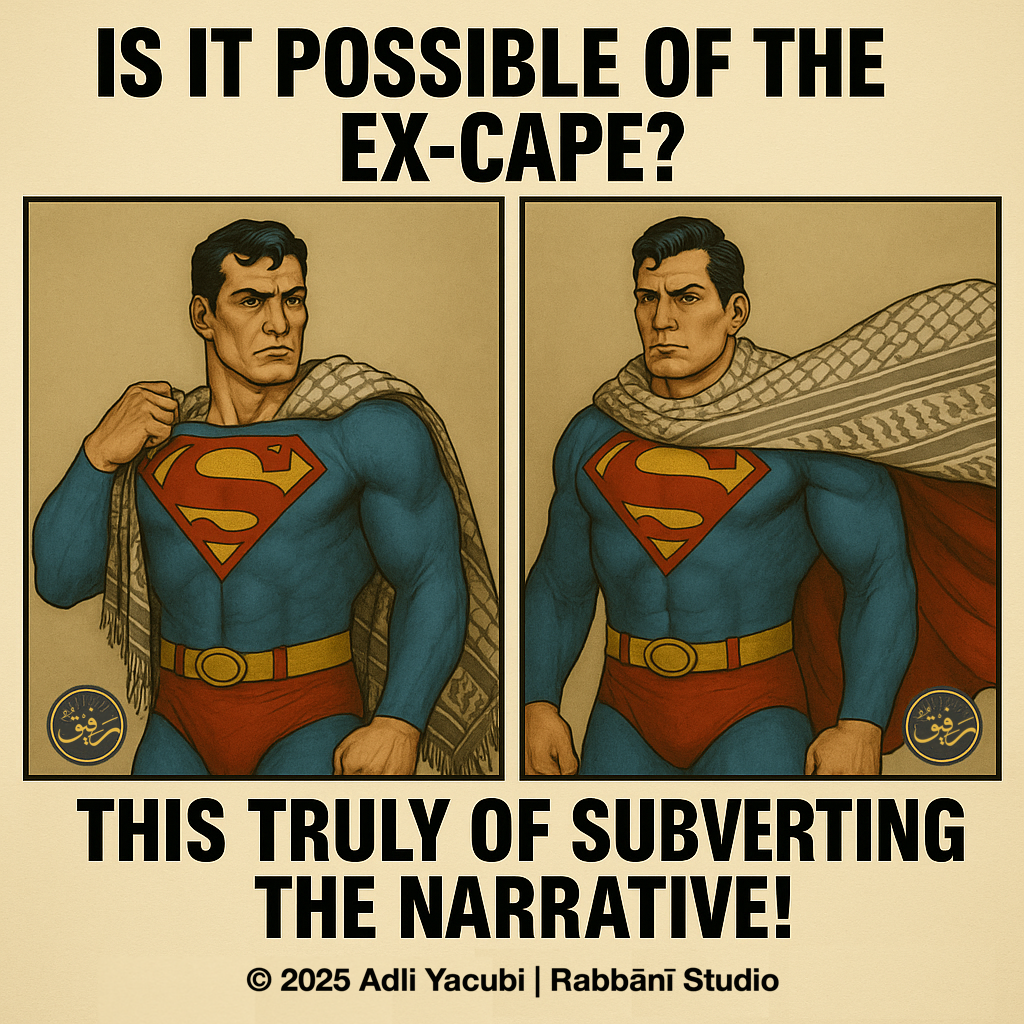
The cape was never the miracle. The keffiyeh carries more truth than tights ever could. This truly of subverting the narrative. 📸 Visual by Rabbānī Studio – 2025
Who Are the Real Superheroes?
It’s the paramedic running through smoke with nothing but gloves and prayer. The poet who rhymes her grief into defiance. The mother who ties her son’s shoelace and whispers “Go.”
It’s the teenager live-streaming truth. The uncle who hands out rice in plastic bottles. The whisperers. The rememberers. The quiet ones.
It’s the ones who stay.
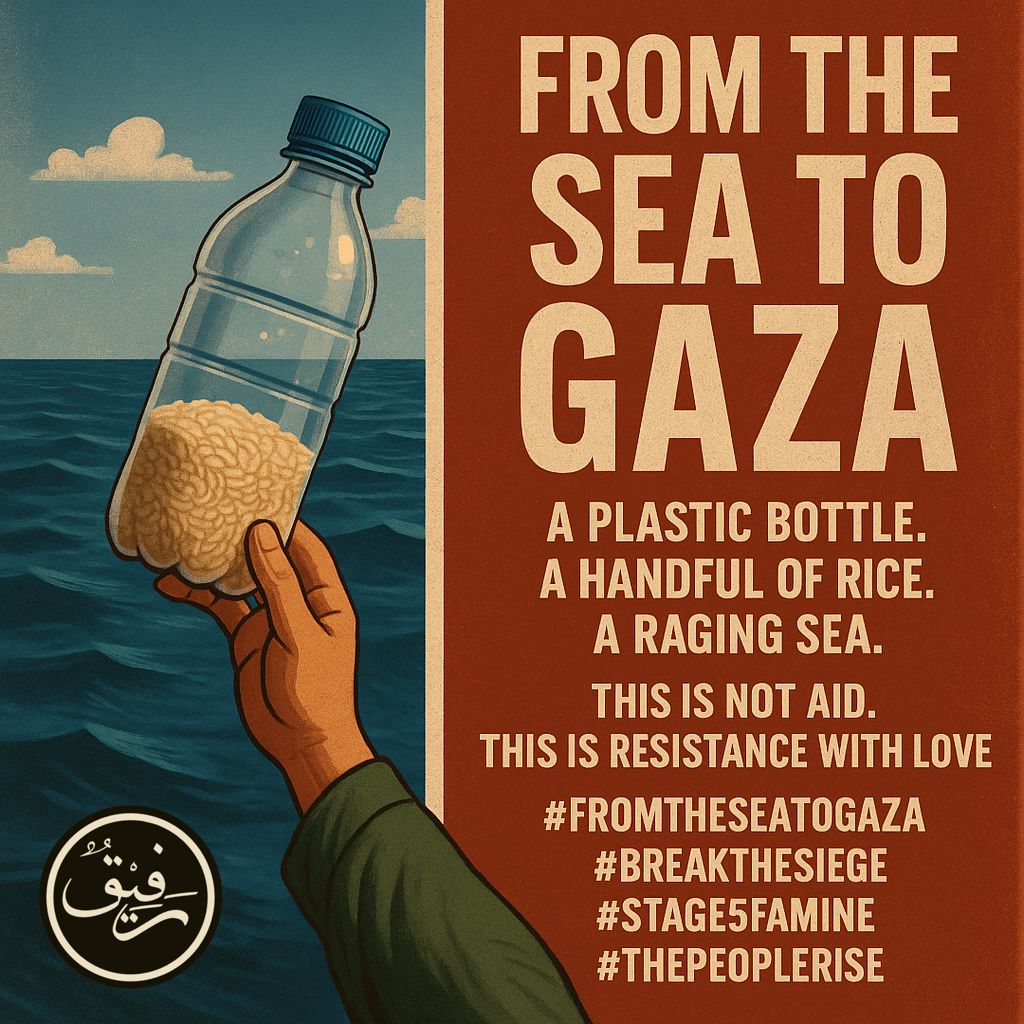
A bottle. A handful of rice. A prayer. This is not airdrop. This is resistance with love. 📸 Visual by Rabbānī Studio – 2025
From the Sea to Gaza
A Plastic Bottle. A Prayer. A Revolution.
We’ve seen images of superheroes with capes. But real power comes wrapped in plastic — not silk.
In Gaza, an uncle takes a used water bottle, fills it with rice, seals it with prayer, and sends it toward the shore.
This is not airdrop. This is not humanitarian branding.
This is resistance with love. It’s not the cape that saves. It’s the hand that still gives when everything has been taken.
From the Sea to Gaza.
From cape to keffiyeh. From myth to memory. Not above the people — among them. 📸 Visual by Rabbānī Studio – 2025
Not to Save. To Witness.
So yes. We’ve drawn Superman. But it’s not because Gaza needs saving.
It’s because the world needs reminding that true strength isn’t flight —
It’s sumūd.
And that’s always been a Palestinian superpower.
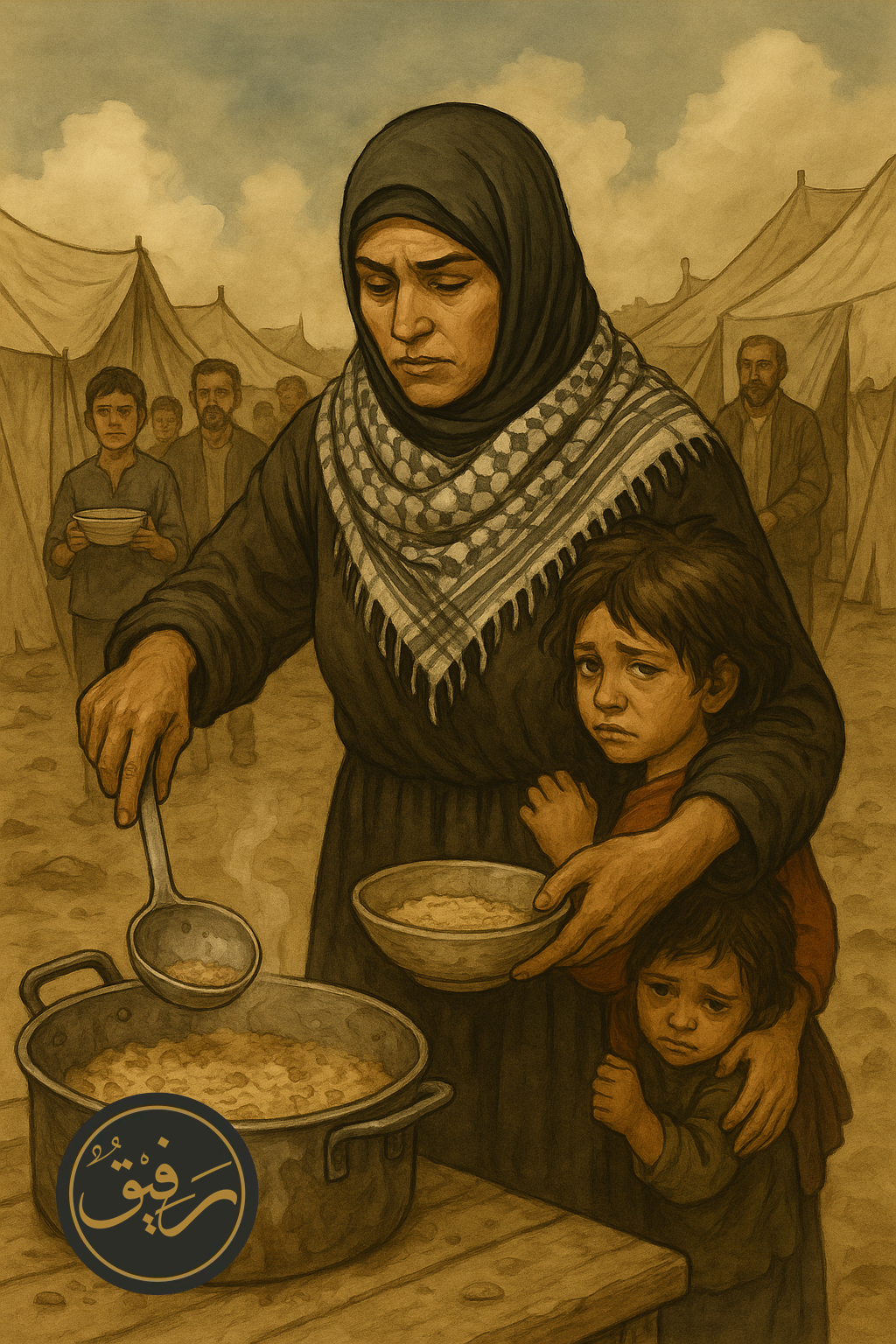
A Mother in the Time of Hunger Her child clings to her side. The pot is nearly empty. But she still stirs. This, too, is superheroism. 📸 Visual by Rabbānī Studio – 2025
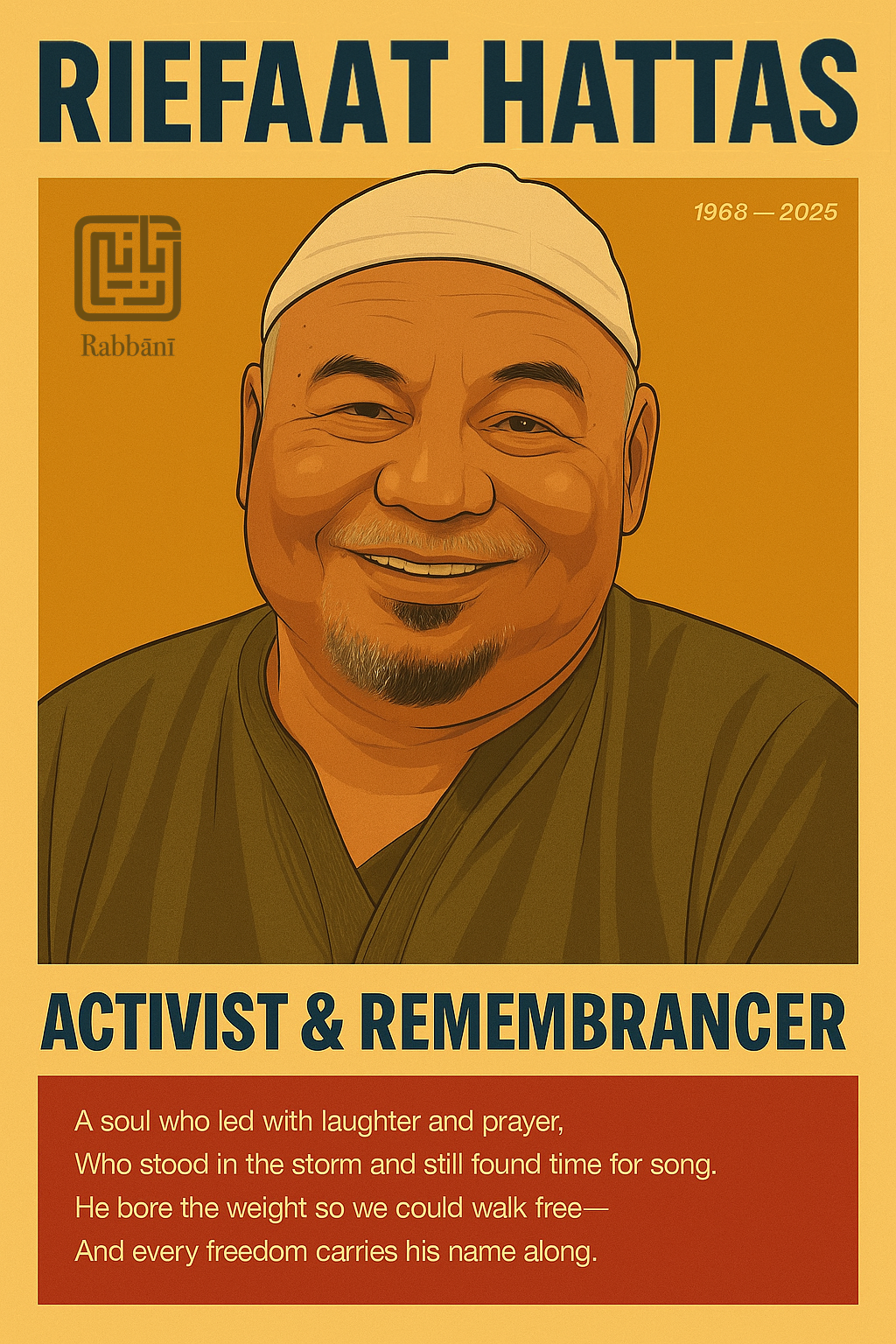
The Boy Who Waved Back: Remembering Riefaat Hattas of Manenberg
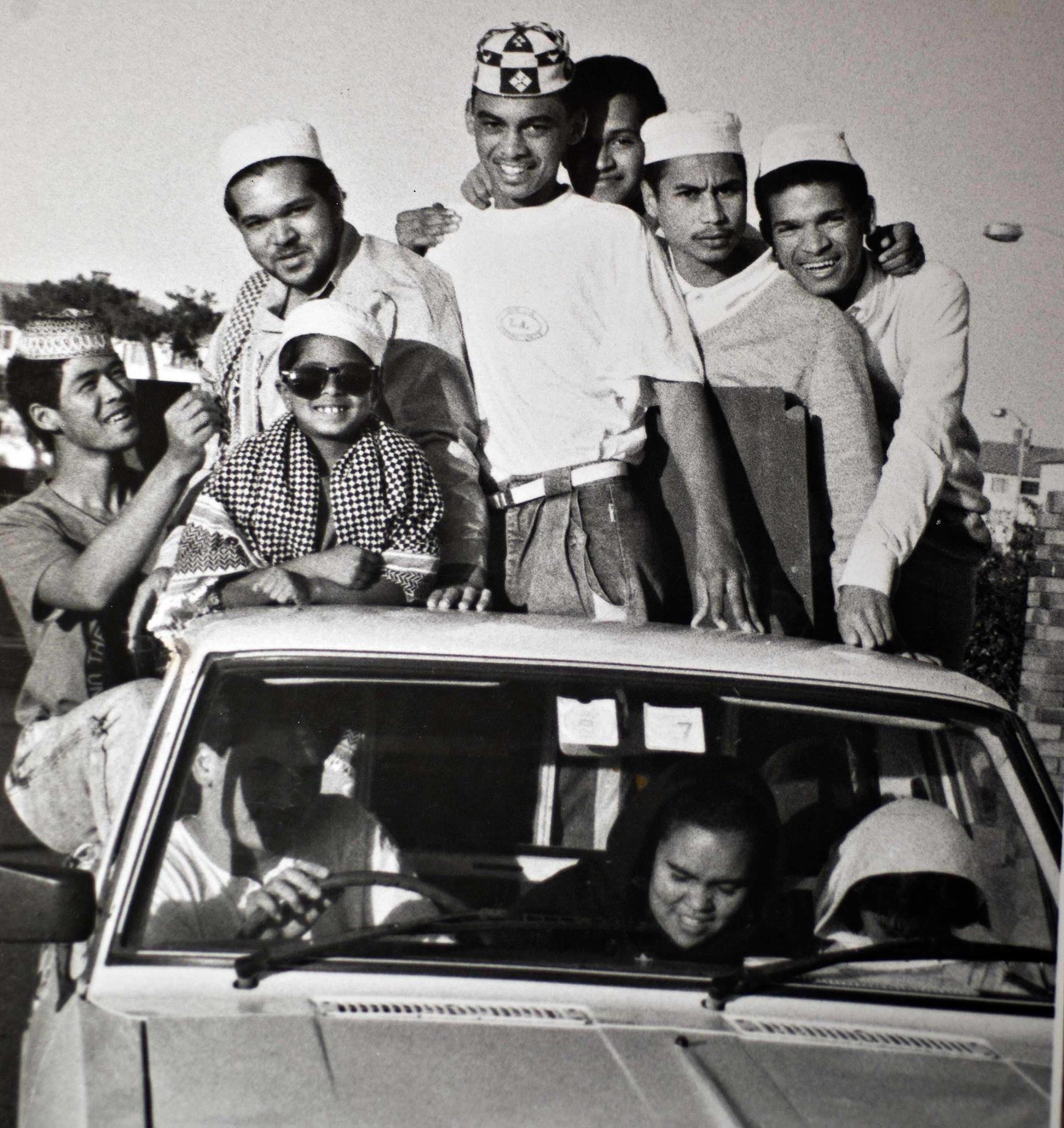
Young activists of the Call of Islam, Manenberg, 1980s. Riefaat Hattas, second from top right, stands among friends and comrades — a generation brimming with laughter, courage, and purpose. [Pic: Yunus Mohamed]
Manenberg: Where Struggle Learned to Laugh
There’s a photograph from another time — a car crowded with boys and brothers, some perched atop, some packed inside, all lit by the unmistakable fire of youth. Manenberg, 1980s: a borrowed car, a shared cause, a city holding its breath.
Among them is Riefaat Hattas — eyes forward, a quiet anchor in the rising tide.
Those who lived through the 1980s on the Cape Flats will remember: Cars that carried more than passengers — they carried dreams, sometimes fugitives. Boys who became men before their time. Smiles that defied a brutal state.
It was here, at Silverstream, in schoolyards dusted with chalk and hope, that Riefaat found his voice. A student leader, a Call of Islam activist, he joined a movement that dared to speak justice in the language of faith.
A Life Shaped by Struggle
Riefaat Hattas was born in 1968 and grew up in Manenberg, places shaped by apartheid’s sharp edges and the stubborn dignity of ordinary families. He matriculated at Silverstream Secondary in 1986, a year that would change his life and the country.
That year, he led a student march — Casspirs ringed the school, hundreds of unarmed students brutalized by the SADF. He was only 18 — but already a leader, a UDF and ANC supporter, mentored by Celeste Naidoo and MK underground structures.
In November 1985, during a march to honour detainees and the fallen, Riefaat was arrested under the Terrorism Act. Tortured at Manenberg station, interrogated, violated, broken down — then sent to Victor Verster Prison.
“The National Party should take responsibility for destroying and ruining our lives.” — Riefaat Hattas, TRC Hearings, 1997
Testimony and Trauma
Riefaat’s scars ran deep, but he spoke them aloud at the Truth and Reconciliation Commission:
“We aged ten to fifteen years in a matter of months… We never realized the kind of psychological stress and trauma we have been subjected to… I’m messed up because of what I went through during my high school days.”
He admitted the cost: Nervous wreck, unable to finish school in a normal way. Many friends became casualties — some went into hiding, some fled, others fell into drugs or gangs. Riefaat himself needed weekly counseling to manage the trauma that never left.
“Money can put something meaningful into my life. I have been tortured, I have nightmares, I could pay for counselling.”
Action Without Fear
Those who knew him say he was action-oriented, never content to sit on the sidelines. He became known for his directness, for “not being afraid.” He worked as a professional assistant officer for the City of Cape Town, always serving — quietly, sometimes with a smile that held both pain and possibility.
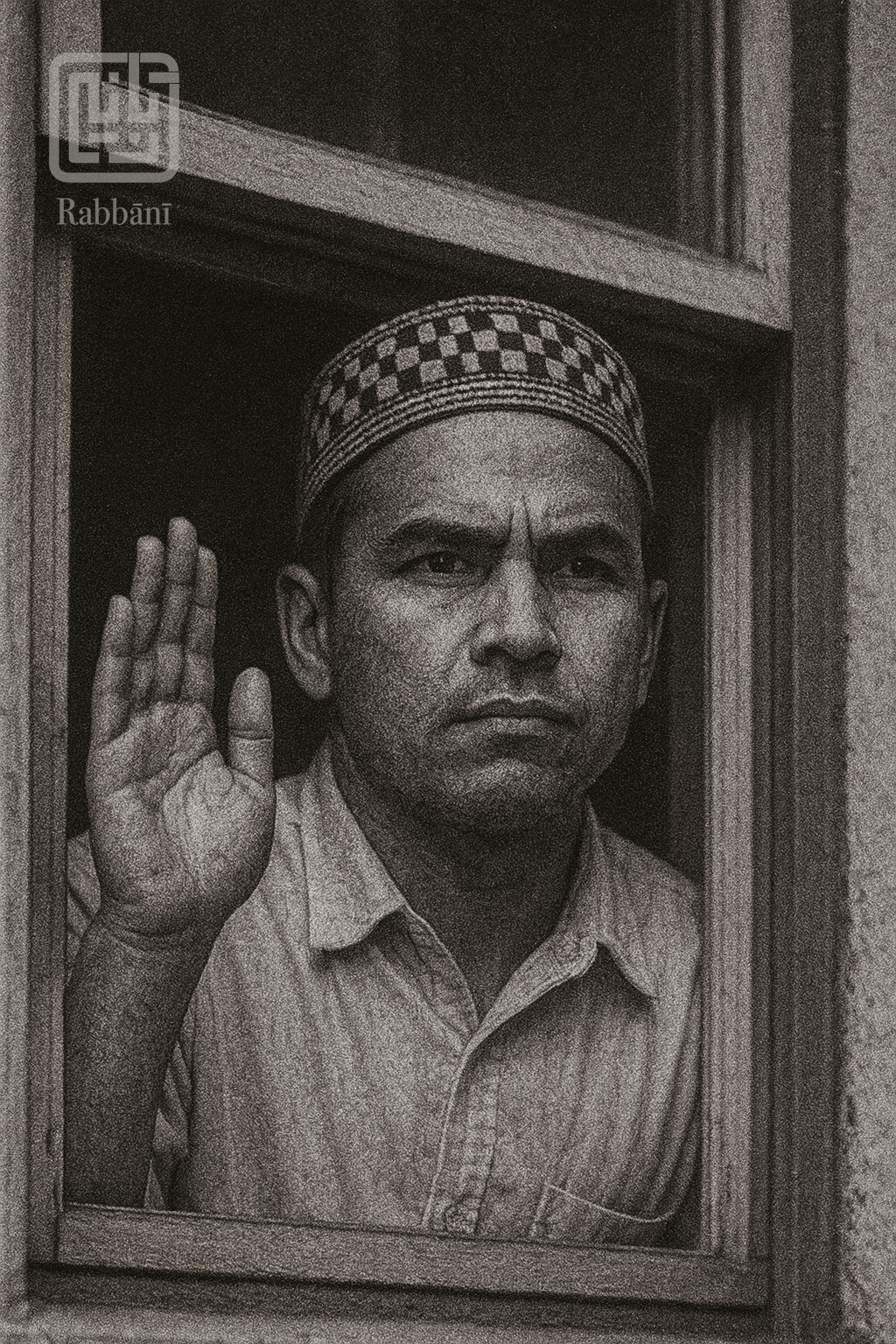
Riefaat Hattas, looking out from an embassy window, kufiyyah on, defiant and unbroken. This scene — recreated in tribute — echoes the iconic image of a young comrade who refused to disappear, even when others scattered.
Another time, he famously waved from the window of the American embassy during a similar protest. That photo is still an icon: the boy who refused to disappear.
Legacy: The Freedoms We Now Inherit
The freedoms Cape Town’s Muslims (and South Africans in general) enjoy today — to gather, to pray, to march, to speak — were won by Riefaat’s generation at terrible cost.
“We never knew how big our contribution would become, how our struggle would free so many others.” So said a comrade at his janazah, echoing Ebrahim Rasool’s words.
“He was one who stood out for justice as a witness to Allah. Riefaat carried the scars of torture and never broke — he stood in the embassy window, waving, so we would know not to run. The freedom we have today was won by his courage and the courage of his generation. Let us not pray perfunctorily; let us remember what was paid for us.”
Stories now echo from one generation to the next. Medat Adams’ young son hears the “old days” — torture, detentions, the moppies that kept hope alive when hope seemed like madness. Riefaat was a storyteller, a writer of comic skits for the nag troop, a keeper of laughter in the midst of struggle.
Riefaat: Lightness in the Struggle
At rallies and mass meetings, Riefaat was always the one looking for a piece of cardboard — anything, just to make salaah on, wherever he found himself.
During the matric exam boycotts, a group of them hid out at a teacher’s house. When the teacher came out, he called, “I can see you, Achmat!” — because Achmat was so tall, he couldn’t hide behind a bush.
After court appearances, Riefaat would lead the hungry crew straight into a janazah house along Thornton Road — knowing there would always be food, and never standing on ceremony.
Once, passing Pollsmoor Prison, he hung out the car window and led everyone in shouting, “Viva Mandela!” At the drive-in later that night, seeing white kids lugging their mattress home, he yelled out, “Sê ve jou ma — jy’t ’n comrade gesien!” [Tell your mom that you saw a comrade!]
He had a gift for turning every moment — even hunger, boredom, or fear — into a kind of resistance and joy.
#masekin — Ma se Kind, My Mother’s Child
Not just the humble, not just the poor — but every child of the Cape, every struggler, every brother, every sister carried in the memory of mothers who gave more than they had, who called each of us masekin — my mother’s child, so no one would feel alone.
For Riefaat, it was the truth of his life: He belonged to the people, and the people belonged to him.
Legacy: Freedom, Memory, and Sacred Song
But Riefaat was also a keeper of remembrance.
Who can forget the play, 333 Years of Islam in South Africa? He wasn’t just a participant — he was central, guiding the theatre piece, leading voices through the opening invocation. He would start the Ratibul Haddad, and his voice — deep, insistent — would call out “Qul huwallahu ahad…” until the whole circle answered. He loved the Gadat, cherished the sacred rhythms that stitched community and soul together.
These weren’t performances; they were living acts of ibadah, of memory, of survival. Riefaat made sure that in our struggle, we didn’t forget our dhikr, our poetry, our song.
It’s no wonder he led the Gadat like he was born to it — his Hattas (Attas) blood remembering the names that sailed from Hadhramaut to the Cape. Barakah doesn’t always skip a generation; sometimes it lands on the tongue of a child who never forgot.
[The Attas (Al-Attas) family are a Hadhrami lineage whose spiritual traditions—like the Ratibul Attas and the Gadat—helped shape Cape Muslim remembrance.]
Riefaat Hattas, years after the struggle. Still carrying the light, the smile, and the steadfastness that defined his youth. A witness to history — and a reminder that joy is its own act of resistance.
Legacy at Work: Community Builder in the City
After the struggle, Riefaat entered the City of Cape Town at the most basic level in the electricity department — but he never stopped building. According to Farouk Robertson (Communications, City of Cape Town), Riefaat steadily worked his way up to become central in community education for the City’s energy cluster. He was a true driver of interdepartmental, community-facing initiatives: creative, innovative, and never afraid to challenge technocrats to see things from the community’s point of view. He didn’t just serve; he inspired — often sharing new approaches and championing programs that brought real, active engagement into the City’s work.
Even in the workspace, he was a man of progressive action.
(Thanks to Farouk Robertson, via Shamile Manie, for these memories.)
Closing Prayer
May Allah gather Riefaat among the steadfast. May his wounds be healed in the gardens of peace. May we remember him — in our freedoms, in our laughter, in every act of justice — as the one who waved back when the world turned away.
Tramakasi — Our Thanks
This tribute would not have been possible without the memories, love, and testimony of those who knew Riefaat best. With deep gratitude to Ambassador Ebrahim Rasool, Shamile Manie, Salih Davids, Medat Adams, Dawood Hattas, Zieyaat Hattas, and the rest of his dear family — for their witness, their courage, and their generosity in holding Riefaat’s story with both pain and pride.
May Allah bless you all. Tramakasi. Shukran. Thank you.
References & Further Reading
Oral Tribute: Ebrahim Rasool. “Janazah Tribute for Riefaat Hattas.” Delivered at Riefaat Hattas’s janazah, July 2025. (Notes and excerpts via Shamile Manie and Adli Yacubi’s transcription.)
TRC Testimony: Hattas, Riefaat. Testimony at the Truth and Reconciliation Commission Children’s Hearing, Athlone, Cape Town, 22 May 1997. (As quoted in: SAPA, “TRC hears emotional testimony at children’s hearing,” 22 May 1997.)
Activist Testimony & Reparations: “Govt ‘spits in face of apartheid victims’.” Mail & Guardian, 5 October 2000. (Quoting Riefaat Hattas on the cost of struggle and reparations.)
Facebook Tributes & Community Memory: Jason Patrick Hanslo, “#masekin: Riefaat Hattas,” Facebook, 5 May 2022.
Personal Correspondence and Memories: Shamile Manie, WhatsApp messages to Adli Yacubi, July 2025. Salih Davids, “My Brother in Islam, Riefaat” (tribute poem), July 2025. Ebrahim Rasool, Janazah Tribute, July 2025.
Photographs: Yunus Mohamed, “Call of Islam, Manenberg, 1980s.”
Published Blog Draft: Adli Yacubi, “The Boy Who Waved Back: Remembering Riefaat Hattas of Manenberg,” unpublished manuscript and blog, July 2025.
Our Father: Braima Winter — The Man Who Read the Weather and Raised Us with Words
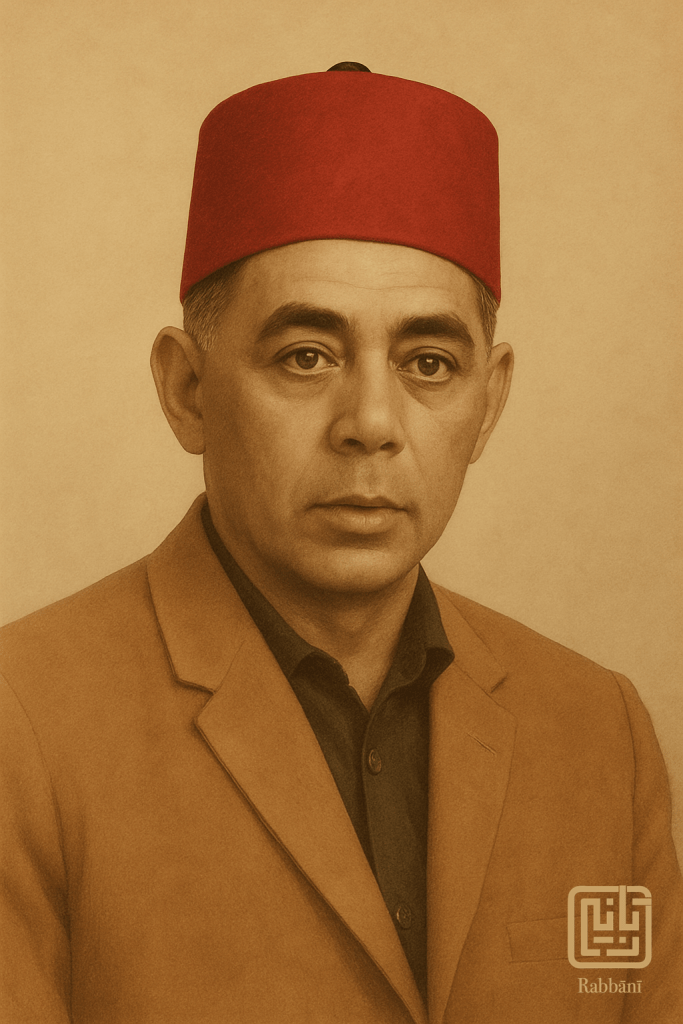
Braima in His Red Koefiyya Not just a head covering, but a hush of dignity. A crown worn by those who build without boasting, who read clouds like verses, and raise children like minarets — quietly, steadfastly, towards the Light.
They called him Braima Baard. But he was clean-shaven. They called him Braima Winter. Because even if there was only one cloud in the sky, he’d say: “Dis winter, Gaya.”
He was our father: Ebrahim Abdul Aziz Jacobs. Born of tailors and dressmakers — his father, Abdul Aziz, worked with thread; his mother, Gadija, crafted fabric into form. From such soft-handed lineage, he turned to bricks and cement.
His mother once teased him, laughing: “Met jou sag handjies, wat soos ‘n bricklayer gan djy maak?”
But he became one. And not just any bricklayer. He built kilns. He protected cement floors. He shaped the foundations that others would walk on long after he left the site. He built a good few walls of Primrose Park masjid (called Jamiya Tus Sabr).
He guided others. Trained them. Gave them skills, and more than that, dignity.
Yet behind all of this physical work was another kind of labour — of language, of laughter, of letters. He was the spine of our family’s love of books, storytelling, and sly, gentle humour. He was reading before most could walk. As a child, already in his diapers, he was immersed in words, letters, pages. No one had to push him. It was in him.
Imam Ghazali. Ibn Battuta. Jalāl al-Dīn Rūmī. Shams Tabrizi. He didn’t just read. He remembered. And retold. And spun.
He raised seven children with his hands, but never truly raised his hand at them. His discipline was the silence between sentences. His presence was the lesson.
We never feared him. We trusted him. Because the man who knew where every cloud was going — also knew how to hold a storm.
He didn’t build palaces. He built people. He built us.
And when he dressed, he often wore his red koefiyya — not the long turban of his childhood, but a shorter, neat fez with a tassel, worn by men who held pride without noise. It was the kind worn by many hadjies after the sorbaan had fallen out of fashion. It became his crown.
One Fajr morning, when I was a teenager, he woke me gently. We walked together through the streetlights of Primrose Park toward the mosque. I looked around and said, “So many Muslim houses still have their lights off. Don’t they make salah?” He chuckled softly, and said, “Perhaps they are praying while their lights are off so that they can go back to sleep. You must focus on your own salah. Other Muslims are not your concern.”
And perhaps this was the secret of his laqab… As Shaykh Jamiel Abrahams reflected:
“The secret of this Laqab… is that no Winter will pass except that he is Madhkour — remembered — even by the non-living creation. Better than making dhikr, he becomes Madhkour — mentioned and remembered — by his Rabb.”
May Allah grant us all to become Madhkour. Āmīn.
“What a lovely man. He was always saying to us, ‘Kom biesmielah,’ and happy to have us around.” — Shamiel Isaacs, Bonteheuwel (Call of Islam)
And today, as we recite stories, as we reach for bricks and books and blessings — we say: Braima Winter, we remember. And we still feel your weather. And your words. And your mercy.
Innā li-llāhi wa-ʾinnā ʾilayhi rājiʿūn Surely to Allah we belong and to that we will return. [Surah Baqarah, 2:156]
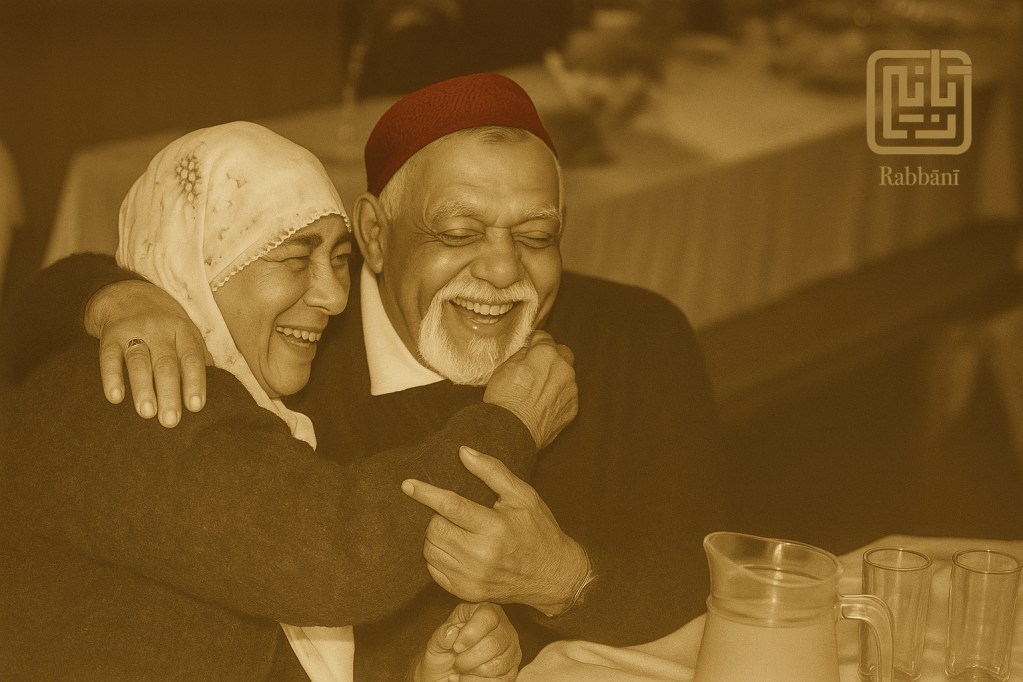
And this is how we remember him best: Laughing beside Gaya, the love of his life — as if the whole world had just whispered a joke only they could understand.
Braima and Gaya Laughing — A Crowned Moment of Mercy
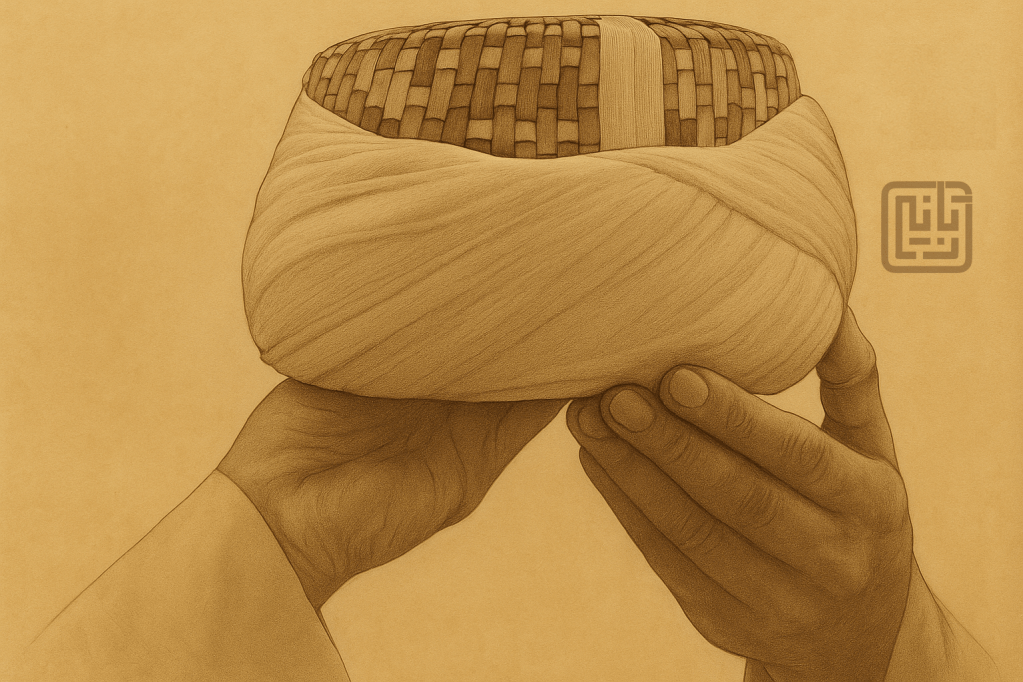
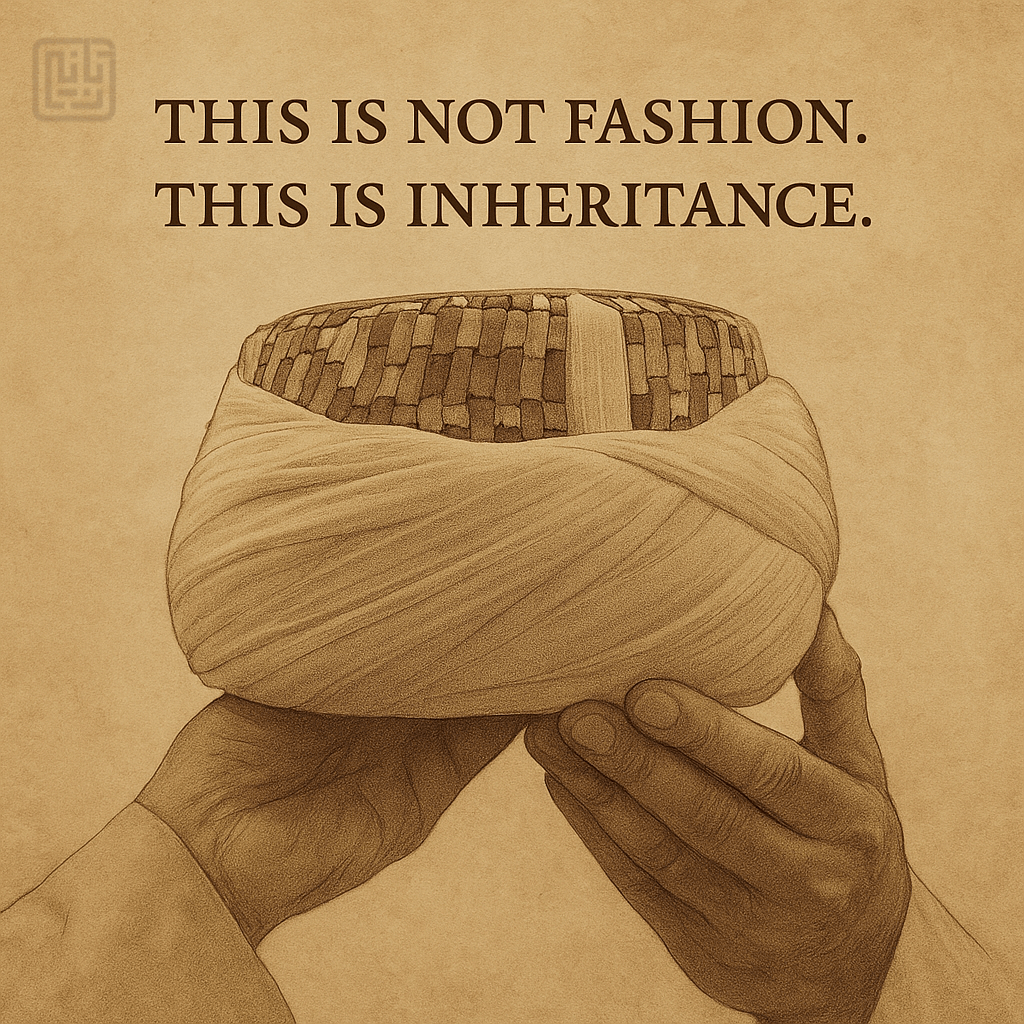
The other day, I told my brother-in-law, Al-Ameen, how we need to promote the sorbaan again—that sacred cloth of knowledge and dignity that once crowned the heads of our teachers and storytellers. Without missing a beat, he said, “Do you want one? I’ll give you mine.”
I was taken aback. “Really? Don’t you wear it?”
He smiled. “It’s too garish for my style.”
Then he added, almost casually, “It’s from my dad. From Boeta Junain.”
And suddenly, I was no longer standing in conversation. I was nine years old again, my hand tucked in my mother’s, walking down Olifants Street in Primrose Park. We were on our way to meet my new khalifa.
My mother, Hi’ Rugaya, had decided it was time for me to learn Qur’an properly. We walked all the way down the road, right to the edge where Primrose Park brushes up against Manenberg. That place where the road thins out, where the houses change tone.
We met him at the doorway. Tall. Stern. A presence.
On the way back, she asked me gently, “So what do you think?”
I paused, looked up at her, and said with wide eyes, “Met sy grou oë en grys baard, hy lyk soos ’n wolf.” (With his gray eyes and silvery beard, he looks like a wolf.)
She laughed. But we went back the next day. And the next. And the next.
Boeta Junain became my khalifa — more than just a madrasa teacher. He taught me the Qur’an. He taught me tauhid, tahara, and how to perfect my salah. But most of all, he taught me the stories. Hundreds of them. Stories of the awliya, of lovers of God, of hidden saints, of miracles wrapped in humility.
He loved me like a son. I stayed in his madrasa well into high school. When I was seventeen, I left to study at As-Salaam Institute in Braemar, KwaZulu-Natal. There I met another teacher who helped refine my Qur’anic pronunciation. A year later, after completing matric, I came back.
And I returned to Boeta Junain.
He asked me to recite. Listened deeply. Then called his older students, saying, “Come. Let Adli help you improve your recitation.”
That day I knew what tarbiyah meant: to be raised, then trusted, then made to raise others.
Some of those students, like members of the Browns family, went on to become among South Africa’s well-known huffaadh.
And now, all these years later, his sorbaan has surfaced again—offered from father to son, and from brother to brother. A gift wrapped not only in cloth, but in memory.
Today, three of his children, Salama, Cassiem and Juleiga are now continuing this legacy teaching young children in Qur’an and Islam.
The sorbaan is not fashion. It is not costume. It is voice made visible.
It is the texture of trust. The curve of tradition.
It says: I have received. I have remembered. I will return.
When I look at it now, even in another’s hands, I see something eternal: gold thread, cotton wrap, and the quiet humility of a teacher who looked like a wolf, but raised a whole den of cubs.
Acknowledgement Tramakasi to Sh. Jamiel Abrahams, Sadia Fakier, Zaid Nordien, and Al-Ameen Marley — for helping carry this cloth of memory into the light.
Postscript If Al-Ameen does send me the photo of the original sorbaan, I will share it. But even now, the memory is vivid enough to wear.


 Adli Yacubi