Category: Short Story

  • Before Three Sisters: A Road Interrupted, A Heart Opened

    Before Three Sisters: A Road Interrupted, A Heart Opened

    Before Three Sisters: A Road Interrupted, A Heart Opened

    We left Johannesburg in the early light, bound for Worcester — a journey that would return me not only to a familiar valley, but to a story still unfolding. I climbed into Deem’s bakkie at 6:20am. The air was still soft with sleep, but the weight we carried was real — a dinghy boat hitched behind us, and cement bags packed into the back to balance the load. Deem was heading to the Cape for another transport run, as he often did — ferrying cars, boats, bakkies, golf carts, whatever needed moving.
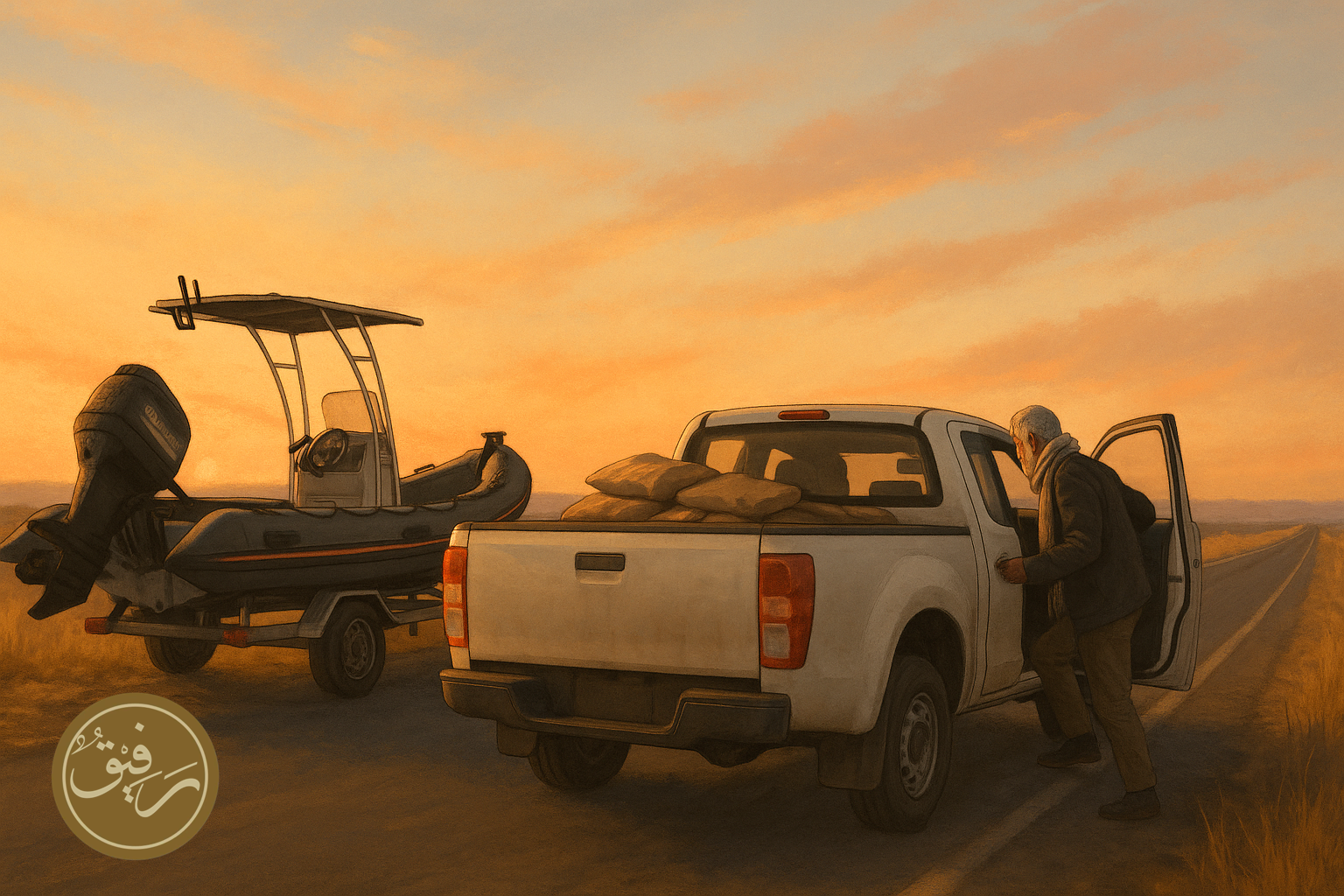
    He kept it steady, slow — 80 to 90 km/h. The road hummed low. We started talking.

    Mostly about our children.

    His sons, his daughter. Now grown. Their paths, their beliefs, the choices they were making in a complicated world.

    “I worry, bru,” he said. “About their Islam… their qibla.”

    I nodded. And gently shared my own truth:

    “We’ve already planted the seeds, Deem. Madrasa, school, life. The goodness is wired in. They’ll find their way to the Divine — maybe not how we imagined, but still. They’ll find it.”

    We sat in that silence — the kind that listens.
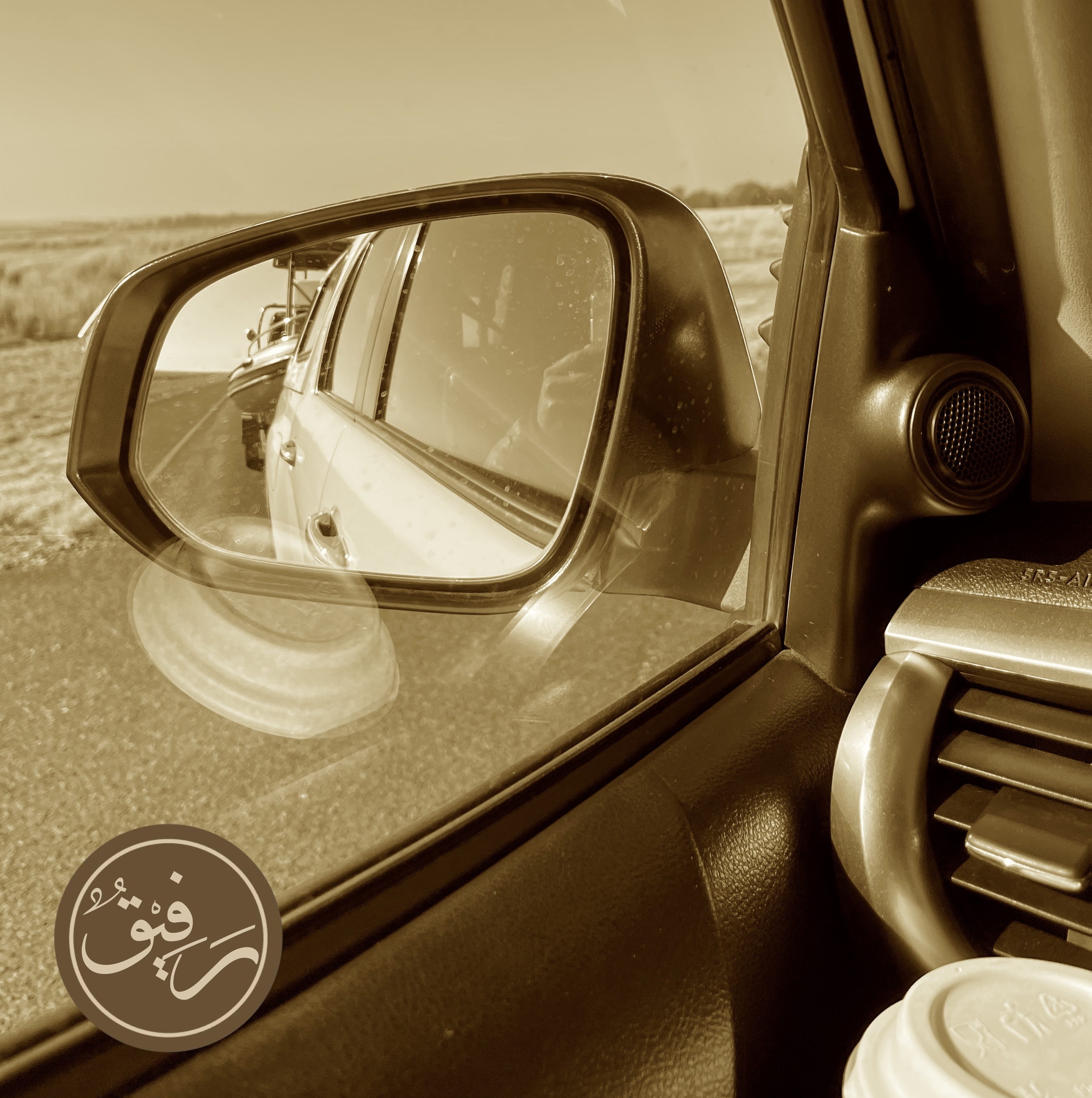

    Faried and the Detour

    Just before Three Sisters, Deem got a message. A friend of his, Faried, had broken down with his family. We rerouted.

    And just like that, our quiet bakkie became a car of five — Faried, his wife, and their daughter now in the back seat. I stayed quiet. This wasn’t my space to speak.
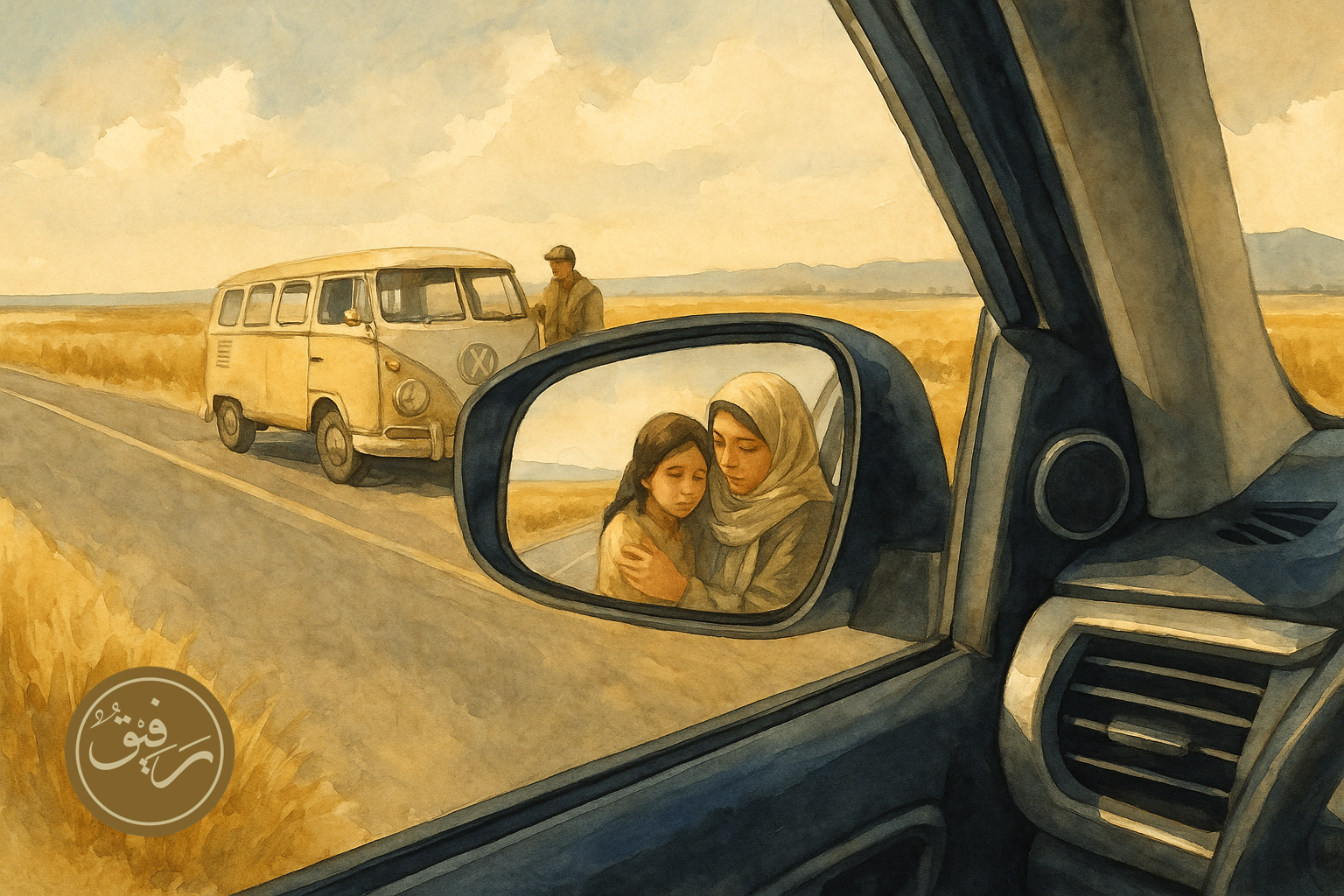
    But something had shifted. The stillness that had carried us through the early part of the journey made way for the unexpected warmth of company, for laughter, for memory. What had begun as a private ride between two companions was now a shared passage — a reminder that some roads widen not with tar, but with presence.

    The wife was chatty, warm, full of stories. She and Deem started talking about Deem’s drivers. One in particular: Archie.

    “Archie’s solid,” she said. “Kaaps, maar sharp. Always shows up.”

    A few kilometres down the line, just past Beaufort West, almost in Worcester, Deem turned to me and asked:

    “You know what Archie’s real name is?”

    I smiled.

    “My eldest brother — Allah yarhamu — was Fuad. But everyone called him Archie. So… is he also Fuad?”

    Deem laughed.

    “Nai bru… his real name is Abdul Qahhar.”

    We both burst out.

    “Qahharjie becomes Archie! Allah!”

    The Bend in the Road

    The road narrowed into the Hexrivier Valley. Dark by then. But not empty. The headlights caught a curve.

    “You see that corner?” Deem said.

    And then he told me:

    His father — Omar, also known as Amie, known to my kids as Dada — once took that very bend too fast. Racing from farm to farm, moving fish, goods, deals. He missed the turn. His bakkie flew into the river. He survived. And fished out his own worker, too.

    “I was a laaitie then,” Deem said. “But every time I pass this spot, I remember. Dada was tough. A real survivor.”

    I stayed quiet. Because what do you say when the road opens memory like that?


    To Worcester, With Love

    And then, as the road opened wider and the mountains made way for valleys known in name and marriage, I found myself returning not just to a place — but to the people and stories who made that place feel like mine.

    Worcester wasn’t just a destination. It was memory incarnate.

    When I married Sadia, I stepped into her family’s legacy — the Fakiers and the Majieds. Worcester was theirs. Her childhood. Her community. Later, her battleground — she became a unionist, fighting for dignity across these valleys.
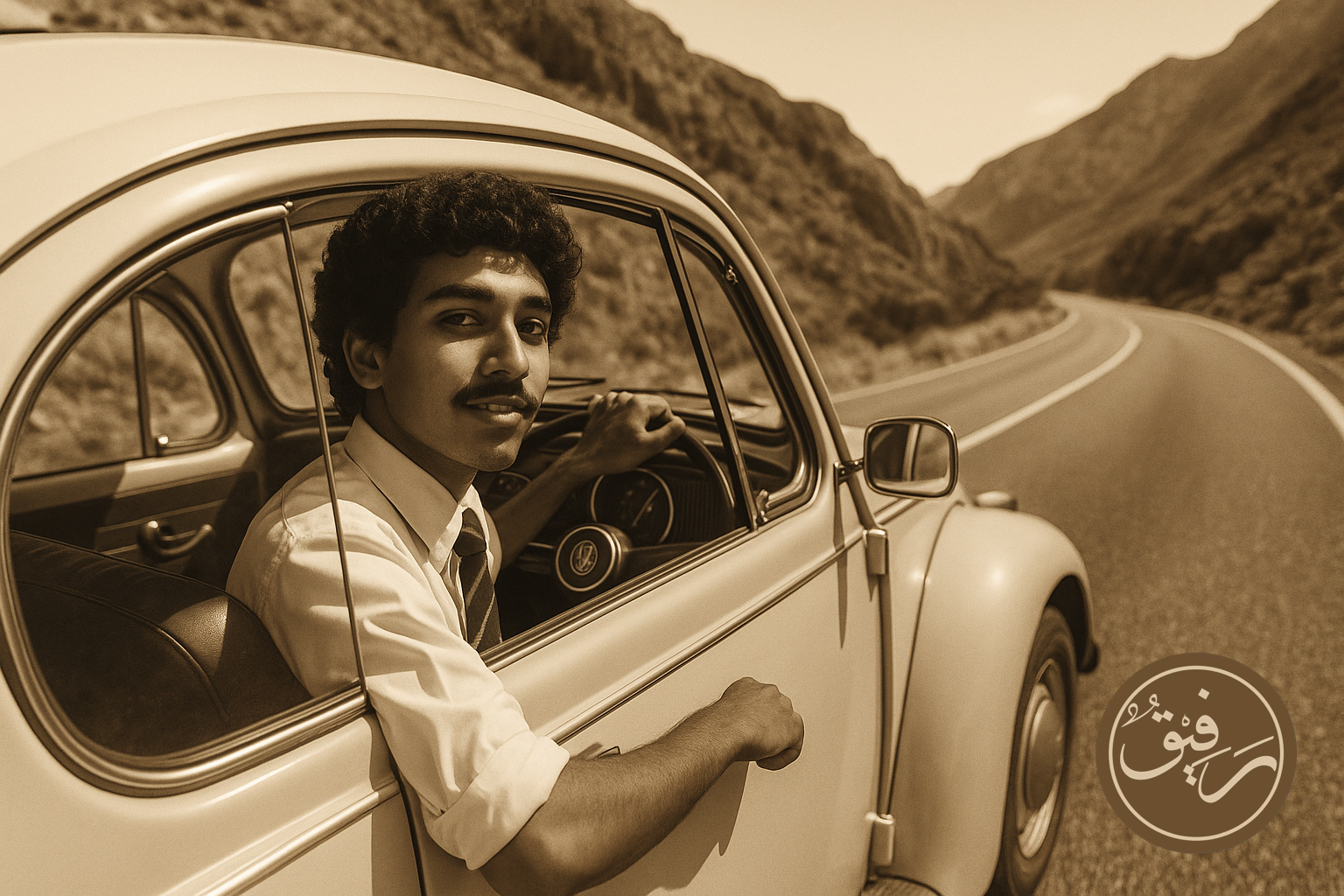
    Back when I was still courting her, I’d drive my light blue VW Beetle 1400 — my first car, bought from Deem — all the way from Cape Town to Worcester and back. About 120 kilometres each way. For love.

    So that night, when we came through the final bend, the boat still hitched behind us, the road folding into familiar curves… I realised:

    This wasn’t just a road trip. This was return.

    To family. To love. To the people who carried us before we even knew their names.


    Closing Blessing

    As Shaykh Jamiel Abrahams said, in response to this journey:

    “Many a person with shaggy and dusty hair, dusty and driven away from doors… if he was to call on Allah ﷻ, Allah would surely answer.”
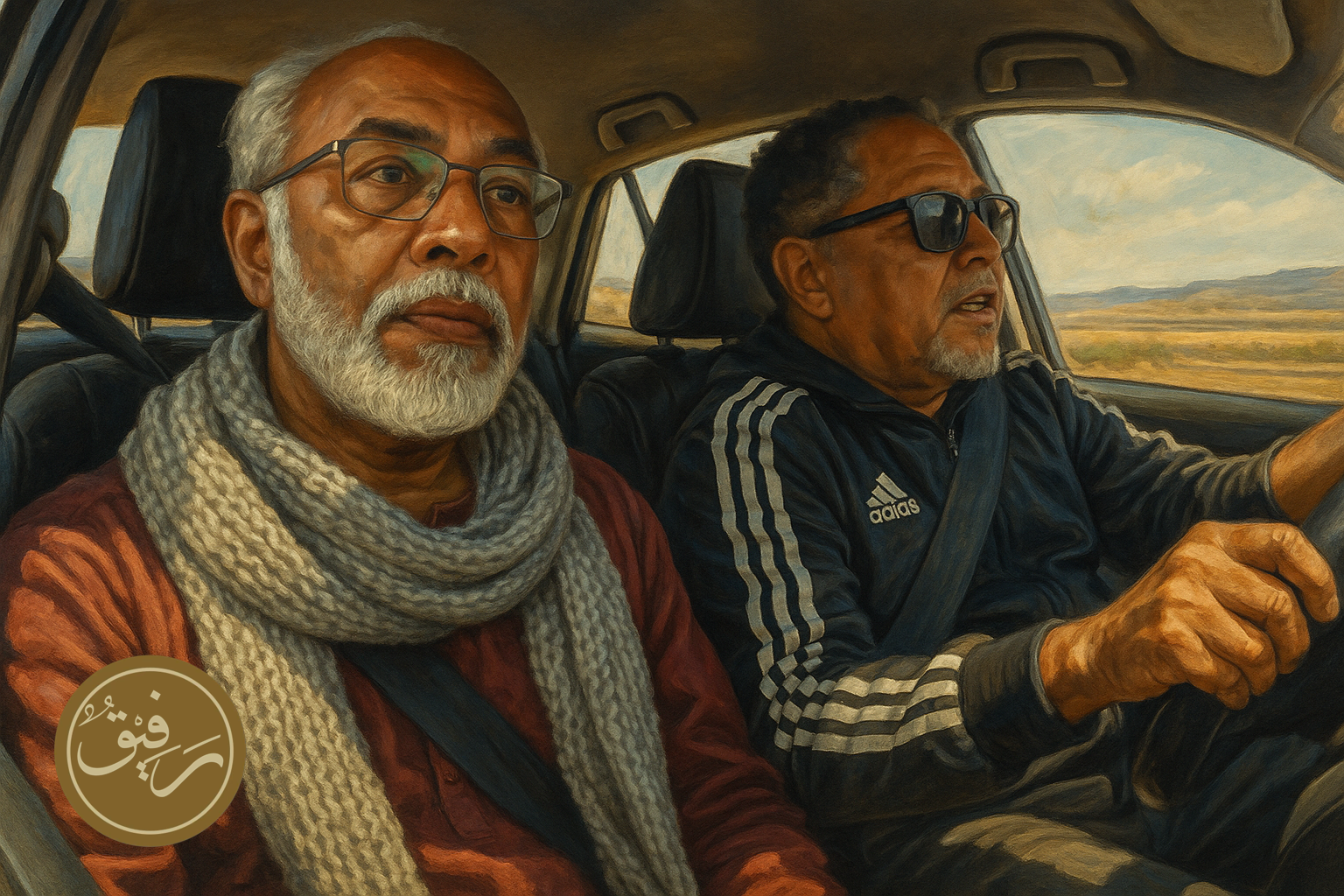
    Some roads answer us back. Even in silence. Even before Three Sisters.

    And maybe, if you’ve followed this far, it means you too have travelled one of those roads — or carried its dust in your shoes.
  • The Legend of the Silver Tree

    The Legend of the Silver Tree

    The Legend of the Silver Tree

    (Passed down through the mothers. Told now in your hands.)

    My mother told me this story.
    She said her own mother heard it from her mother.
    So now, I pass it to you — like a seed in the wind —
    so that you, too, might send it down the line.

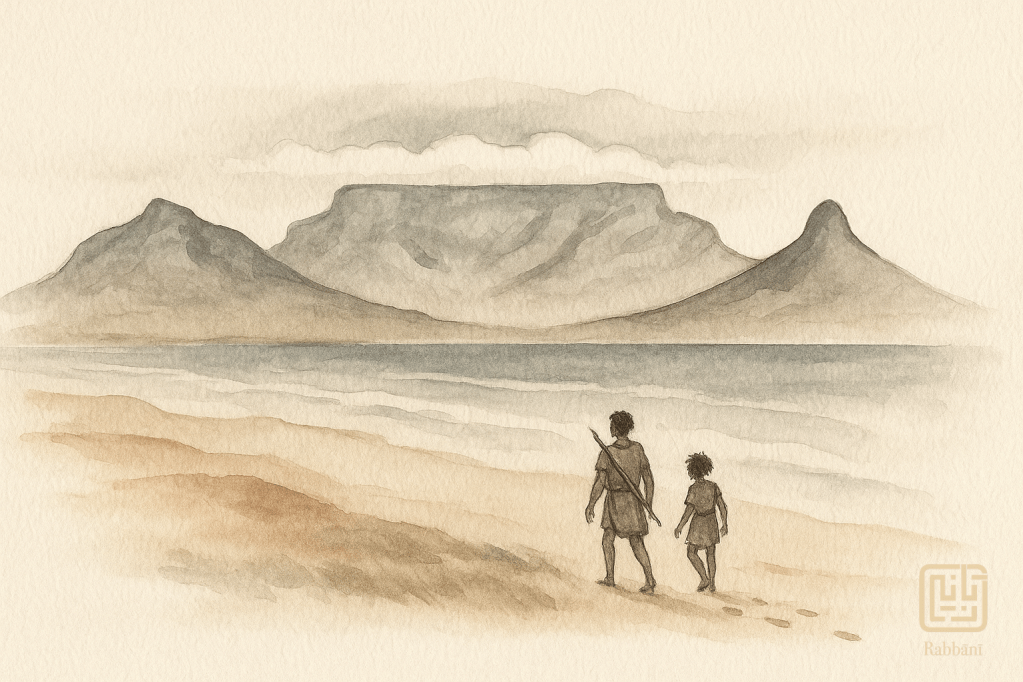
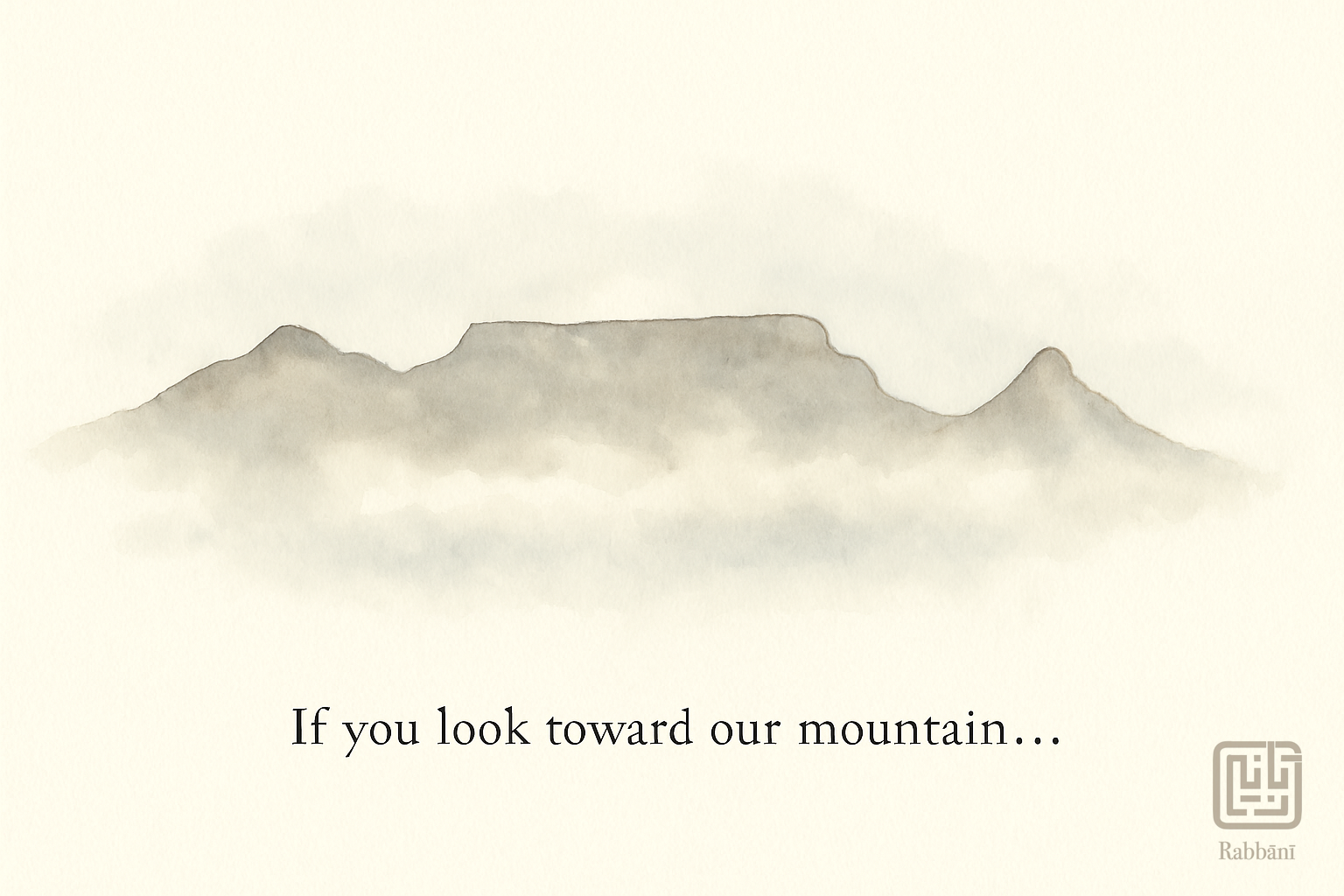
    If you look toward our mountain — Table Mountain —
    you’ll see the cloth of cloud spread across its top like a table set for guests.
    To the right: the lion, his back forming Signal Hill, his mane rising into Lion’s Head.
    To the left: Devil’s Peak, brooding.
    The lion and the devil seated at the same table.
    What a sight for any ship entering Table Bay!

    But this story is older than the ships.
    Older than the settlers who named those peaks.
    Older even than the first Khoi and San who walked these lands.

    Long, long ago — perhaps 22,000 years or more —
    the people lived far inland.
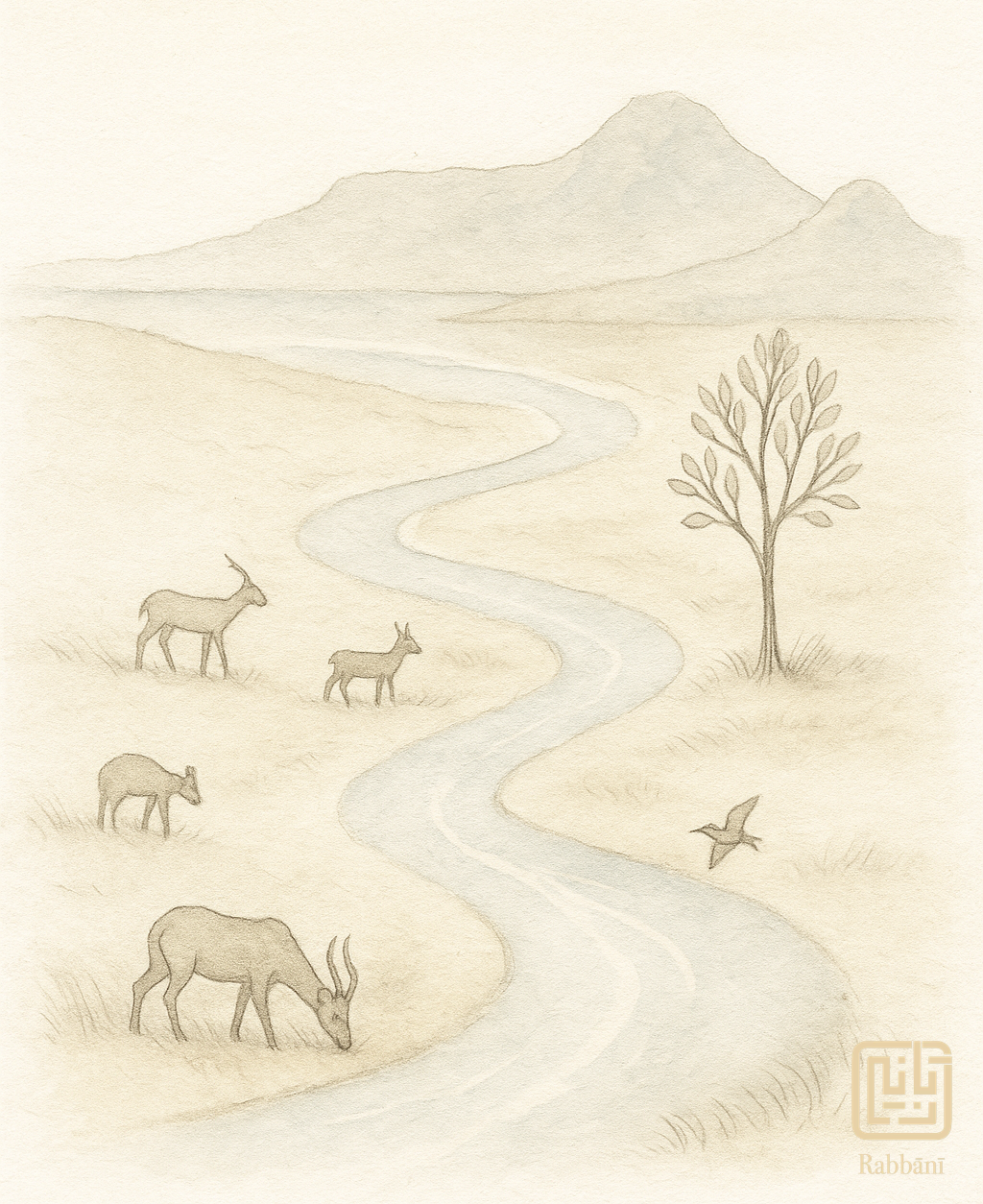
    The land was green. Rivers ran deep.
    Wild animals moved in herds like shadows.
    The earth was generous.

    But then the rains lessened.
    The land grew hotter, harder.
    Some clans became violent.
    The world was shifting.

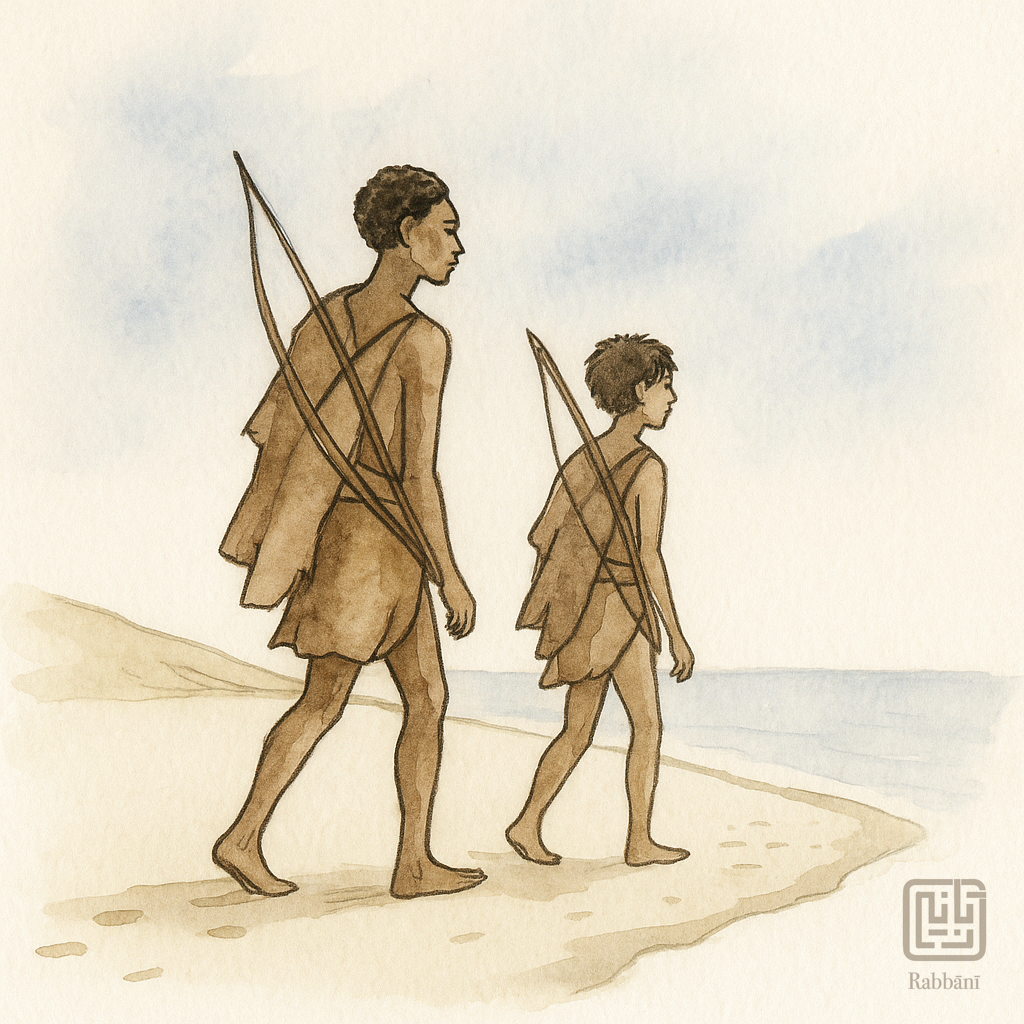
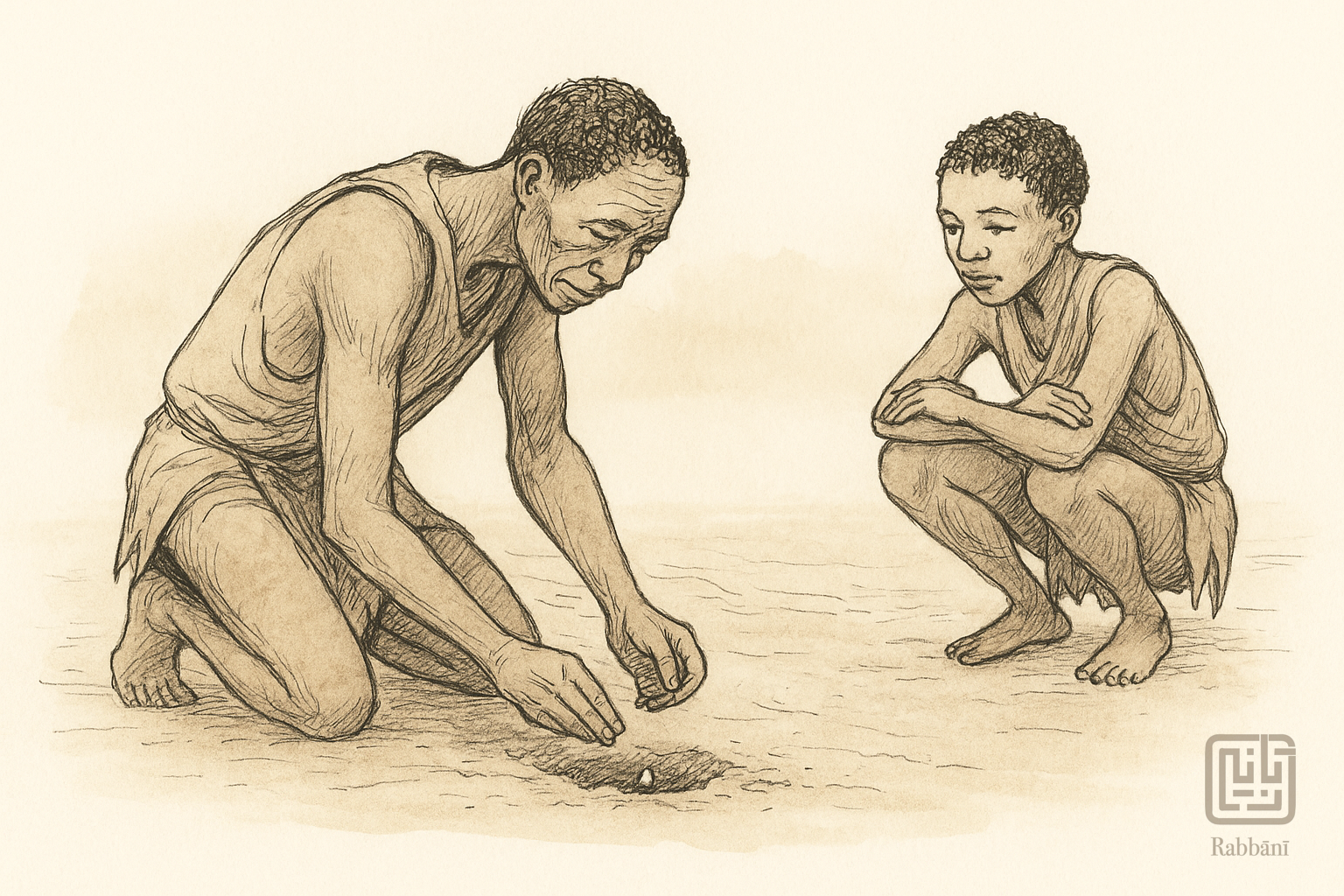
    And so it was that a man named Gubi — a fire-maker, a spark of a man —
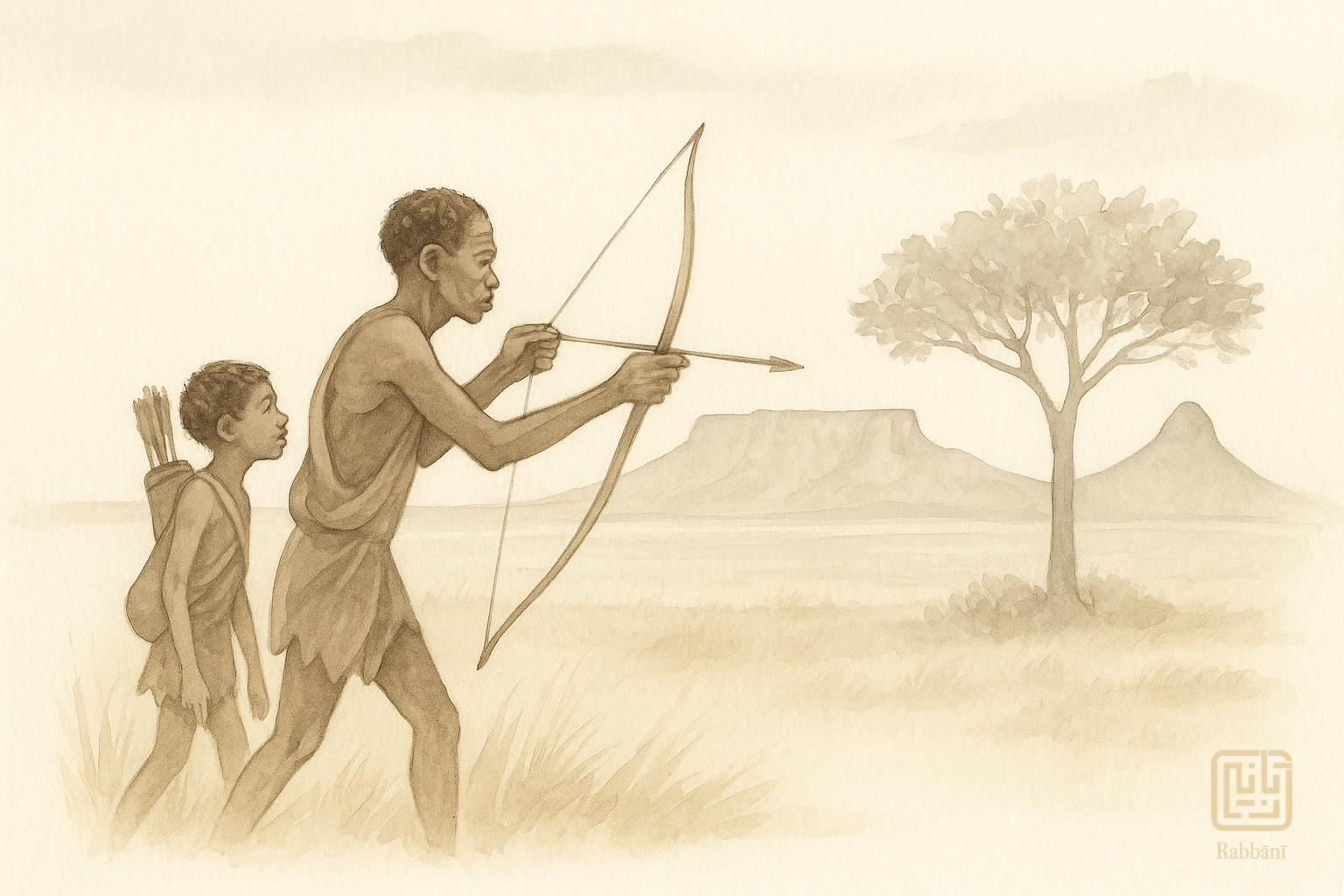
    took his young son, Nori, and journeyed south along the Atlantic edge.
    Not fleeing.
    Seeking.

    Their goods were wrapped in leather.
    Their bows slung across their backs.
    They followed the cold sea winds,
    walking toward a dream of sanctuary.

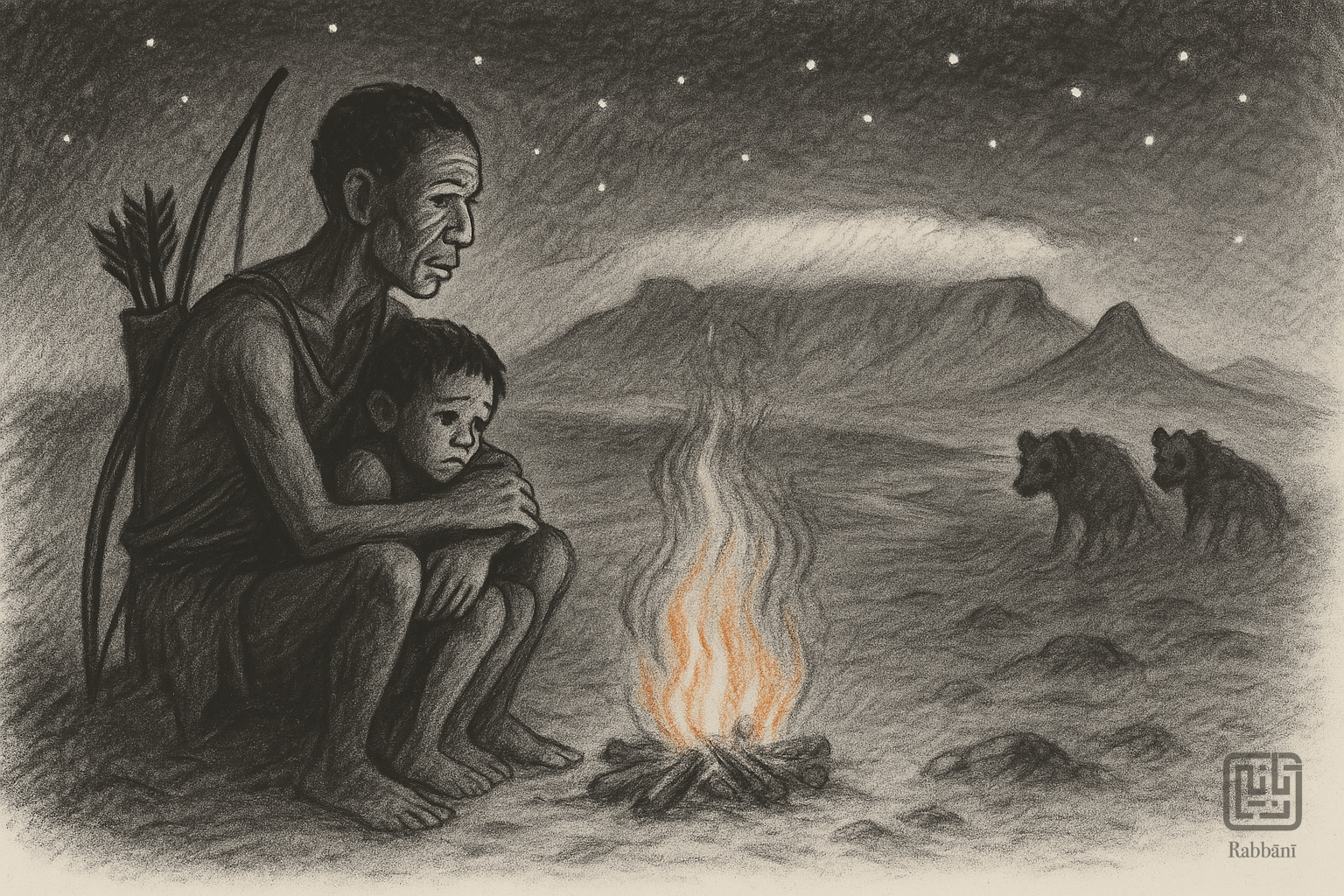
    One night, as their fire danced in the dunes,
    hyenas came snarling through the dark — hunting porcupines.
    Gubi rose with fire in hand, casting its light wide,
    pushing the predators back into the night.

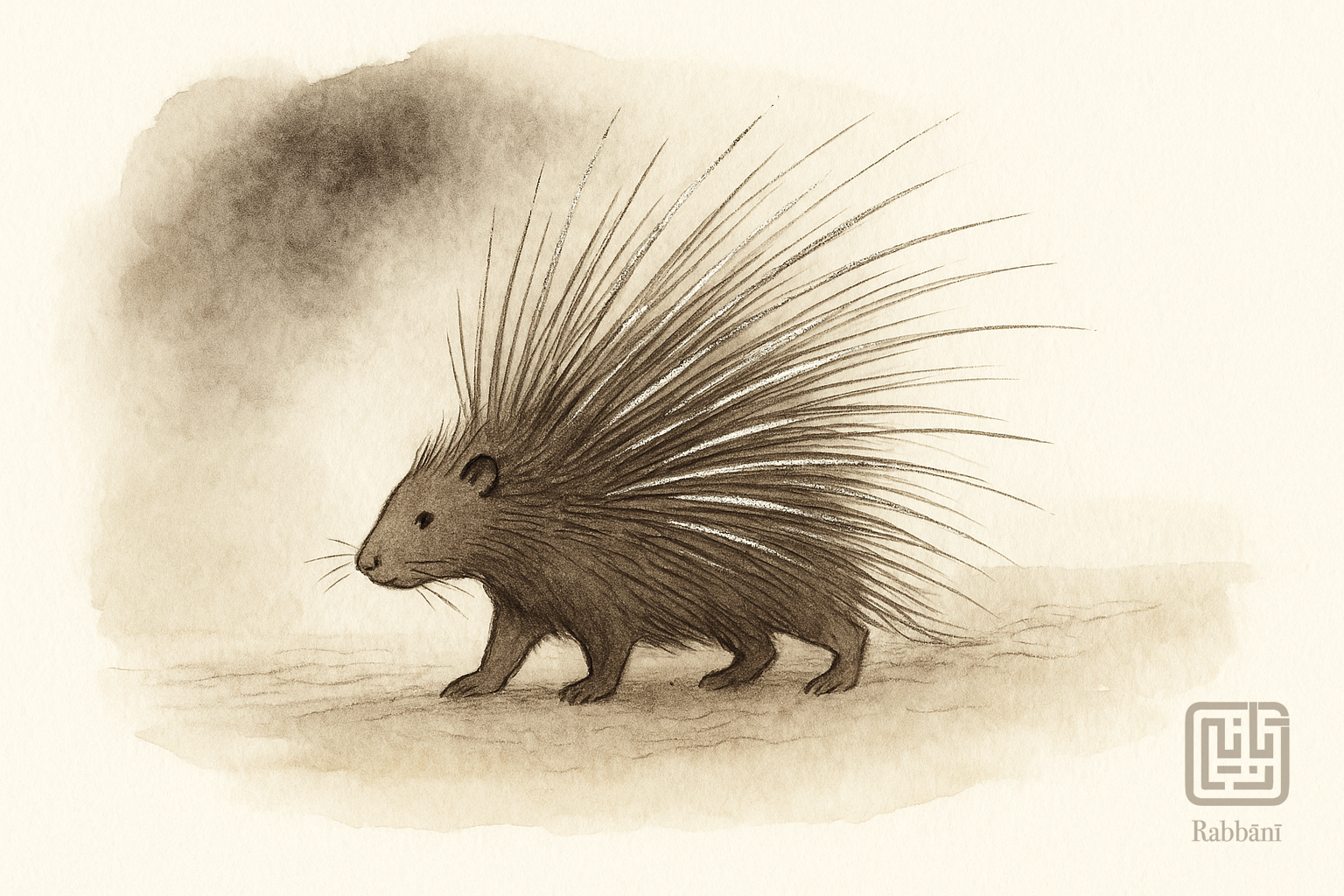
    From the shadows came a porcupine.
    But this was no ordinary porcupine.
    She was old — a sage — her quills silver with wisdom.
    She stepped forward and spoke in a voice like rustling leaves:

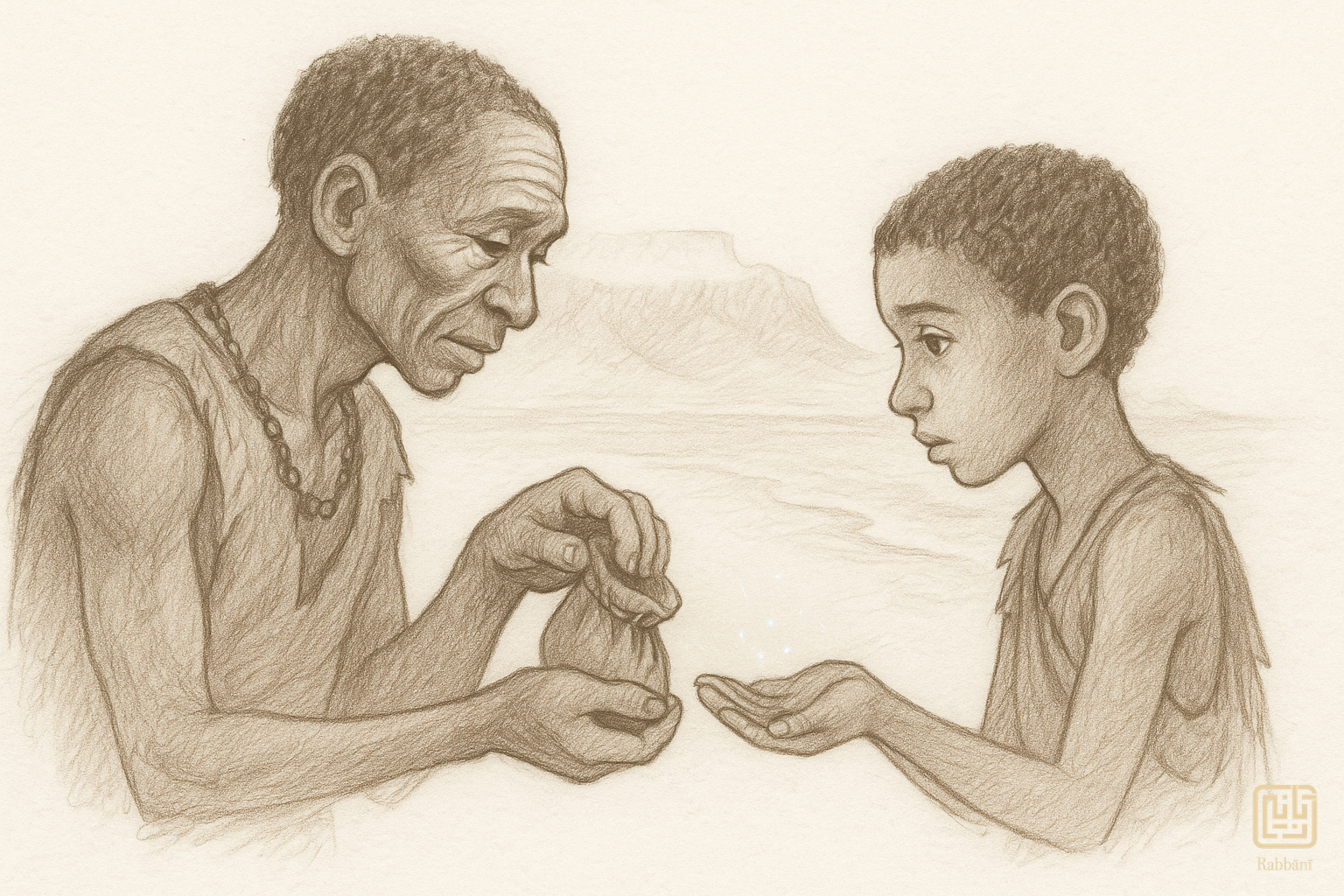
    “You have shown courage and care.
    For this, I give you a pouch.”

    Inside: a handful of shimmering seeds —
    soft, silver-tipped, unlike anything they had seen.

    She said:
    “As you walk,
    look for the place where the sea makes clouds.
    When you find it, plant these.
    If they grow, you’ll know: this is your place.”

    And so they walked on.

    And when they reached the foot of the mountain —
    flat, cloud-veiled, vast —
    Gubi and Nori felt the truth of it in their bones.

    They planted the seeds.

    And by dawn, the Silver Trees had begun to rise —
    shimmering, breathing, alive.

    Not just plants.
    A blessing.

    And that is how the Silver Tree — found only here —
    came to live beneath Table Mountain.
    Not brought by botanists.
    Not named by settlers.
    But gifted by a porcupine,
    Planted by Gubi and Nori,
    Rooted in fire, story, and seed.

    And when the rains came,
    those Silver Trees
    drank from the river
    that flowed down the mountain —
    the one they called Camissa
    the place of sweet waters,
    rushing underground, murmuring toward the sea.

    Even now, that river runs — quietly —
    beneath the city that forgot it.
    But the mountain remembers.

    It remembers its own name.

    Not Table.
    But Hoerikwaggo — the Mountain of the Sea.
    To its right, the curled-back hill they once called The Sleeping Lion
    its back arched into what settlers would name Signal Hill,
    its mane rising into Lion’s Head.
    To the left, the shadowed one —
    once called Windmaker’s Watch,
    now called Devil’s Peak.

    The land is older than its names.
    And stories, like rivers, find their way back.


    Epilogue

    Some stories are planted, not written.
    They take root in silence.
    They grow in the shade of memory.

    This is one of those.

    Passed from mother to daughter, from father to son,
    from fire-circle to ear, from silence to word.

    The Silver Tree still stands.
    The mountain still watches.
    And somewhere, Gubi and Nori are still walking —
    between cloud and coast,
    between the land’s longing and the sky’s answer.

    So tell this story again.

    When the mountain is misted,
    when the wind shifts,
    when the child beside you asks,
    “Where did we come from?”
    Tell them…

    “Let me tell you the story of Gubi and Nori —
    the spark and the seeker —
    and the tree that shimmered with yes.”


    Postscript

    This story is told in honour of those who remind us that memory is a form of resistance.

    We acknowledge Patric Tariq Mellet, whose book The Camissa Embrace reclaims the deep currents beneath colonial erasure. Through his work, Camissa is no longer hidden — it is remembered as a place of sweet waters, of creolised identity, of sacred convergence.

    We also draw from Stuart Hall, particularly The Fateful Triangle: Race, Ethnicity, Nation, which reminds us that nations are not simply born — they are narrated into being.
    To say I am from Camissa is to resist imposed categories and to speak from the riverbed of relation — to narrate the nation otherwise.

    This reflection flows alongside the companion essay:

    → A Word That Wounds and Wakes Us: Rethinking “Coloured” in the Age of Memory
    which wrestles with the term “Coloured” — its violence, its survival, and the sacred dye of remembrance:
    ṣibghah Allāh — the Colour of God (Qur’an 2:138).

    🌿 Author’s Note

    I wrote this story in honour of a voice passed through many generations — from my mother, to her mother, and beyond. It weaves ancestral memory with imagination, drawing from the wisdom of our lands, our rivers, and our people.

    Gubi and Nori may be characters in legend, but they carry something real: the spirit of all those who walked before names, who travelled with seeds, and who listened deeply to the mountain’s silence.

    I offer this story as a small act of remembering — a quiet prayer that memory may once again run like water beneath the city.

    – Adli Yacubi
    Writer. Listener. Wordsmith of the Sweet Waters.

  • The Day Auntie Lêga Turned 80

    The Day Auntie Lêga Turned 80

    A story about birthdays and litanies and how traditions die out…

    auntie-lega-six
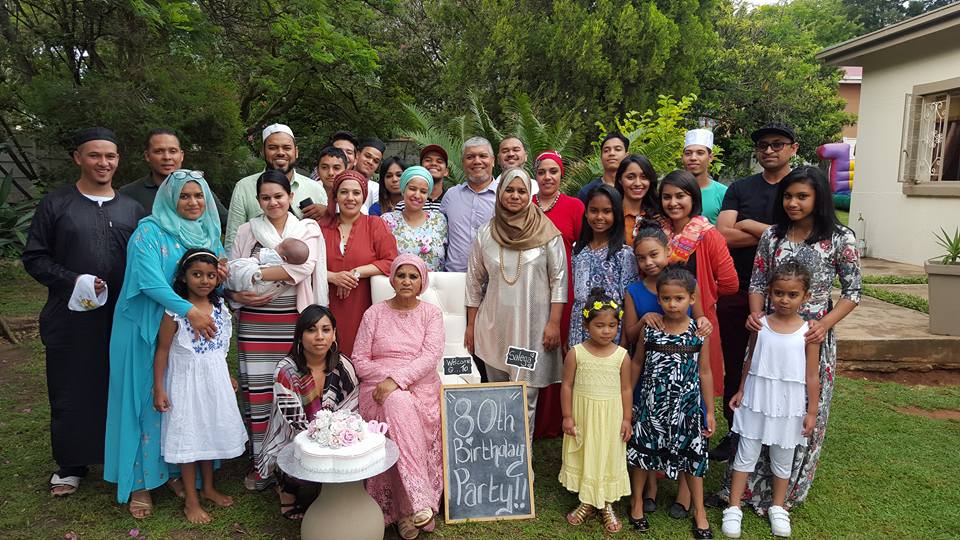
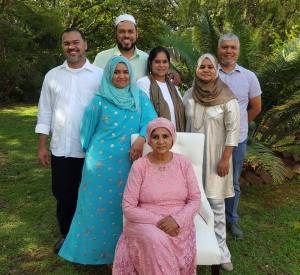
    Auntie Lega on her 80th with six of her seven children.

    It was Auntie Lêga’s birthday this weekend. It was her 80th celebration. Seven kids (minus one who had passed on), 20 grandchildren and 11 great-grandchildren in addition to extended family and friends flooded the house of her son, Ismail, to mark this amazing milestone. A huge tent with rows of trestles had been set up in the backyard to accommodate all the guests.

    Auntie Lêga (short for Saliega, or the pious one) had called me weeks earlier and then every consequent week to secure my attendance at this event. Then, for good measure, a final call a night before the actual event. I was going to attend anyway as Auntie Lêga is the only aunt that my spouse, Sadia, has living in Johannesburg.

    But Lêga was not taking any chances. She had called up a friend who could write down a speech that she wanted me to read to those attending which has become my function at family occasions. It was a touching note thanking sons and daughters, their spouses and their kids for putting up with her and their efforts for making her 80th a special occasion.

    And what an occasion! Prawn curry, leg of lamb, wonderfully flavoured chicken, dhal, a brinjal dish… And that’s just what I had on my plate. The dessert required a good few paragraphs all of their own.

    img_1433
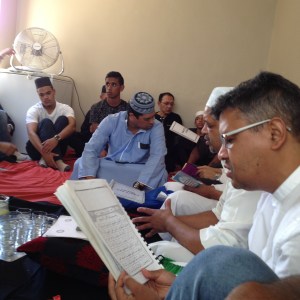
    Reciting the Gadat, a 300-year-old Cape tradition, on Auntie Lega’s birthday.

    In the back room, on the floor with blankets and bedsheets, the Gadat Jamaat started the occasion by reciting a spiritual litany that was over 300 years old. I looked around the room and realised that I was witnessing a community tradition that could actually be dying out. The only ones able to still recite along to the Gadat were those from my generation and older.

    The younger ones were there, on the floor sitting cross-legged, either out of respect or one of their parents had instructed them saying, “Get yourselves into that room and don’t embarrass me!” And perhaps in response to the youngsters rolling their eyes the parent added, “I don’t care if you don’t know the Gadat, just go sit there!” So they sat there, listening to a cultural symphony, that made no sense to them at all.

    There was a time when the Gadat would be a regular feature in the cultural life of a young Muslim growing up in South Africa. Well, ok, largely in the Cape and wherever there were communities who had roots in the Cape. Every Thursday evening, birthdays, funerals and memorials for the deceased would be commemorated with Ratibul Ḥaddad or, literally, The Collection of the Ironsmith which is the family name of Imam Abdullah ibn Alawi al-Ḥaddad who wrote the litany in 1661 when he was 27 years old.

    When it was brought to the Cape, most likely by Tuan Guru in the late 1700s, the Gadat took on a colour all of its own. But not just a colour… also a fragrance, a sound and a taste unique to this rhythmic and melodic litany. The colour and taste came from the sweet treats (biscuits, koesisters, bollas) baked and fried by the family hosting the Gadat. This would become the contents for a little gift package (or barakat) that you would get when you leave the gathering.

    More often than not, it was the women of the house who would prepare these treats. But that would not be the only taste they would contribute. They also conjured up the Gadat’s own, unique drink: The Gadat Melk. Just as the litany would wind down, participants would be given a tiny glass of this milk drink prepared with cinnamon, cardamon and sweetened with sugar.

    No Gadat would be complete either without the burning of incense that would become so synonymous with the event that when incense is burnt on its own, it almost seems lonely. And so, by flooding all the senses, the women in the community had ensured that the Gadat would become a special occasion that all in the community would anticipate with longing. Everyone would participate, and the Gadat (because of its musicality and careful construction) helped in making the memorisation of prayers, of Qur’anic scripture and the Names of God that much easier.

    But as time passes, traditions change. Now, at Auntie Lêga’s 80th celebration, my kids do not know how to make Gadat. They can see it on YouTube, download a PDF version of the text with translation from the internet, but the colour, the taste, the fragrance, the sound and touch of this old tradition has become like an old relative with dementia. They can hear her, but they can’t make sense of what she is saying. She might as well be speaking in tongues.

    But not Auntie Lêga. On her 80th she is as alert, as funny and as spritely as ever. She’s not happy, for example, that someone promised to bring her Lindt chocolate for her birthday and then forgot! Saliega is half the height of her son, but with a warmth and generosity that is larger than life. And she has ensured that those attributes are now a central tradition in her large family. Right down to the 11 great-grandchildren.

    [If you like this story then click the blue star  below.]

  • The Road Trip of an Empty Coke Bottle

    The Road Trip of an Empty Coke Bottle

    Because unburdening can be liberating, and sometimes you just need to travel…

    coke-300x199An empty, capless, two litre Coke bottle was jay-rolling across a busy Goldman Street near the pedestrian crossing. I had fetched my ten year old son from the primary school down Sixth Avenue. At 2.07pm, that part of Florida, Roodepoort, can be a traffic nightmare for about another twenty minutes but the 2-litre did not care. It does not go to school and—and now that it was empty—no home to go to either.

    So it skipped and hopped across the street. I thought for sure that my front tyres would crush the life out of the bottle but no. It somehow dodged our wheels and of the two-way traffic by inches. I looked in my rear view mirror and saw that it did not wait for the traffic light at the pedestrian crossing nor did it allow the traffic officer, on duty for pupils, to halt any of the cars to give a Coke right of way. If plastic bottles have a gust of wind at their back, who needs right of way?

    When it hit the curb on the other side of the road, it spun a few times and continued to roll in the direction it was going. All along Goldman Street it rolled. On the concrete between the curb and the road, it looked as if it was merrily making its way towards the Goldman Shopping Complex. The way it rolled, with its ends bopping as it hit stones and debris, it looked as if it was hopping to a beat.

    The car radio was on and I imagined the Coke bottle going down the street to the sound of Justin Timberlake’s My Love.

    Yeah, because
    I can see us holding hands
    Walking on the beach,
    our toes in the sand
    I can see us on the countryside
    Sitting on the grass,
    laying side by side

    But 2-litre plastic bottles don’t listen to music and don’t care much for Justin Timberlake even though they may have much in common as Pop Music is often referred to as plastic. It did not bother the bottle either that Coke often uses popular music to promote its product to consumers. It did not see the irony.

    So we cannot tell what gave the Coke bottle its rhythm as it made its way towards the next intersection. As the bottle went out of sight I wondered whether plastic bottles going for a stroll really need an observer to ensure that their story will be documented?

    So, anyway, as it rolled past Seventh Avenue, a guy on his bike was standing at the traffic stop with one foot on the road, waiting to make his way into Goldman. His eyes trailed the carefree Coke bottle roll along in front him. It seemed to be almost dancing. He thought to himself what an interesting metaphor for life. The emptier you are—with less worries and stress—the happier you will be. Freer. He smiled to himself.

    The 2-litre did not look up or contemplate the biker because Coke bottles don’t cycle and could not be bothered by philosophical thoughts about life and what it all means. So it passed by the guy on the bike without even a nod and on it rolled…

    The Coca-Cola logo was now a spinning red band when the 2-litre reached the busy traffic intersection on Eighth Avenue and Goldman. Wreckless buses, expedient mini-taxis and impatient BMWs were not going to slow down or honk at a plastic bottle who cannot understand what the red man means on pedestrian light.

    I cannot say that our Coke bottle smiled when it bobbed unscathed across Eighth or that it even looked back to admire what it had accomplished. But even if I could, it was short lived because just then the bottle deflated.

    Some heavy guy, dressed in rags, had stepped on the empty bottle with his worn out boot. He jumped a bit on the bottom part to ensure that there was no air left. He took off the wrapper and put both in a huge canvas bag squatting on his trolley. There were hundreds of other squashed plastic bottles, plastic wrappers and an assortment of other used junk in his treasure.

    He pulled the rope on his trolley to haul it for another 10 kilometres to the recycling dump. He thought to himself: Why don’t all the bloody plastic refuse come rolling down the street like this empty 2-litre Coke bottle. Then he had another brain wave: When they pay me at the dump, I am buying myself a 2-litre just for myself. The plastic Coke bottle said nothing.

  • The Magical Garden of Words

    The Magical Garden of Words

    There was once a boy who loved words very much…

    Image by Wellington Sanipe in Unsplash
    Image by Wellington Sanipe in Unsplash

    Once, not far from here, there lived a boy. He was an ordinary boy except for one thing: he loved words. What type of words you ask? Oh, many kinds of different words. Words that made you see things differently, words that made you smile, words that made you sad, words that made you imagine amazing things… Many different words.

    These words he would pick up when others would use them in conversation. He discovered some when his father told stories. Others he found when his mother told him what to buy when she sent him to the corner shop. And yet others he uncovered in conversations he overheard when adults were speaking… Soon he had collected a large number of beautiful words.

    It was not that he really understood any of these words. Well, not at first. But as he took them to his room, he would look up their meanings in a dictionary and lay on his bed and pondered over them. Turning them round and round in his mind. Every new word he had would bring new ideas into his head.

    As he collected these words, he hid them in a box under the bed where no one could get to them. Soon he had so many that they could no longer fit in the box. Tried as he could, the lid of the box would not close any longer. The box was full. And so it was that as he grew older, he always had many boxes in his room each one filled to the brim with the new words he collected over the years.

    His mother was not too happy about this because it meant that his room was always untidy: boxes everywhere with words spilling out of them. Why could he not be like other boys and just forget words as soon as they are told to him, she would complain. Many of the words had found their way onto the the blankets of his bed, onto the floor and even onto the walls. His room was a mess of words.

    One day he took one of these words and planted them to see what would happen. He took a little pot with soil and put the word inside. He watered it and would you believe it? It grew. First a green stem with leaves and then later a flower: the word in colour with the most beautiful petals.

    So excited was he that he fetched his box of special words and began to plant them one by one. Soon he had a garden of words. Pot planted words were now everywhere in his colourful garden. Some words grew differently from others. Some had grown, like his first word, into word flowers. Others, grew into poems, into stories, into tales. Some even grew into books.

    On a sunny day a young woman walked by and admired his garden of words. “What a most amazing garden,” she said. “You should cut them and put them in vases.” He could see that the words had a great effect on her. As she cast her glance to different parts of the garden, the young man could see that the different word flowers changed the expression on her face.

    When she looked into the furthest corner of the garden where a tree of poems was in bloom, she became transfixed, the smile fading from her face and a tear forming in the corner of her eye. Then when she bent down to page through a book hanging from a branch, her eyebrows seemed to crease and there was a lost look in her eyes like someone who had stepped into a different world. Other stories made her smile so wide, the young man blushed.

    “Would you like one of them?” he asked because he could see that this word wonderland had touched her heart. He picked a poem with the most exquisite colours and gave it to her. When she looked him in the eye, he knew, in that moment, that she would always return to this magical garden of words.

  • The Legend of Sand and Sea

    The Legend of Sand and Sea

    The story of how earth and water met and why we love strolling on the beach…

    Image by Forrest Cavale on Unsplash
    Image by Forrest Cavale on Unsplash

    Sand, daughter of rock, and Sea, son of rain, finally met. Sea was shy and, for once, was unable to make waves. He hid behind a boulder. Sand was less bashful. She sought him out and cornered him on the waterfront. “I have been watching you for some time already and I like what I see,” said Sand, “You are just the cowboy for me. So why don’t you marry me?”

    Sea was taken aback. “I like you too,” said Sea, going back and forth, “but you don’t want to marry someone like me.”

    “But I do,” said Sand, “I think we make the perfect match.”

    “But I’m unreliable,” replied Sea, “everyone knows that I come and go like the tide.”

    “But every time you come in,” said Sand, “I will be refreshed.” She smiled widely.

    “Sometimes the weather angers me,” said Sea desperately, “then I blow up a storm.”

    “On my shore,” replied Sand, “have I been anything but the epitome of calm?”

    “I have depths you cannot imagine,” answered Sea, “A darkness you will never fathom.”

    “I lie in the sun all day,” said Sand, “and sometimes can be quite shallow, but I like a nice challenge.”

    “Yes,” searched Sea, “but I am known to drown many things.”

    “Whether I am under you or inside you,” replied Sand, “you can never swallow me.”

    Finally, when he could not think of anything else, Sea said: “Do I have a choice?”

    “I don’t think so,” replied Sand and smiled wider than any shoreline, “It is inevitable.”

    The sun set quickly behind the horizon.

    And so Sand and Sea were married. Under the watchful eyes of Moon, Sea regulated his tides. No matter how deep Sea was, you always found Sand holding him up. When he blew up in storm he found a place rest on the shores of Sand. There, with every incoming wave they renewed their love for each other and mingled in the breaking crest. They talked no more as there was no need for words any longer.

    After many years, and with the help of Sun, Sand and Sea gave birth to offspring that would symbolise their love for each other. These children were the first humans made of Sand and Sea. Human beings combined calm and storm, shallow and deep, travelling and staying — the one part never being able to swallow the other.

    People went all over the earth always keeping grandmother Sand under their feet to keep them firm and to build their homes. At first they only went where their uncles, the rivers were, and then later took water with them wherever they went. And till today, when lovers want to renew their love for each other they go walking on the shoreline with their feet mingling in the wet sand, their children building sandcastles that the tide will try to swallow… inevitably.

    Image by Ry Van
    Image by Ry Van