Category: Kufic Art

  • A Door Opens: The Story Behind Rabbānī Creative Studio

    A Door Opens: The Story Behind Rabbānī Creative Studio

    ✨ A Door Opens: The Story Behind Rabbānī Creative Studio
    There are doors we walk through without noticing, and then there are doors that change the way we see.
    Rabbānī Creative Studio was one of those doors.

    It began as sketches and fragments, growing into a space that felt less like a business and more like a miḥrāb — not just a niche in the wall, but a place to face what matters most. Every design, every word, is a way of turning toward beauty, memory, and meaning.


    What We Create

    Rabbānī Creative Studio combines the art of storytelling with the craft of design — bringing together history, heritage, and heart in every project. Our work ranges from intimate, single-page scrolls to full-length publications, always rooted in thoughtful aesthetics and cultural resonance.
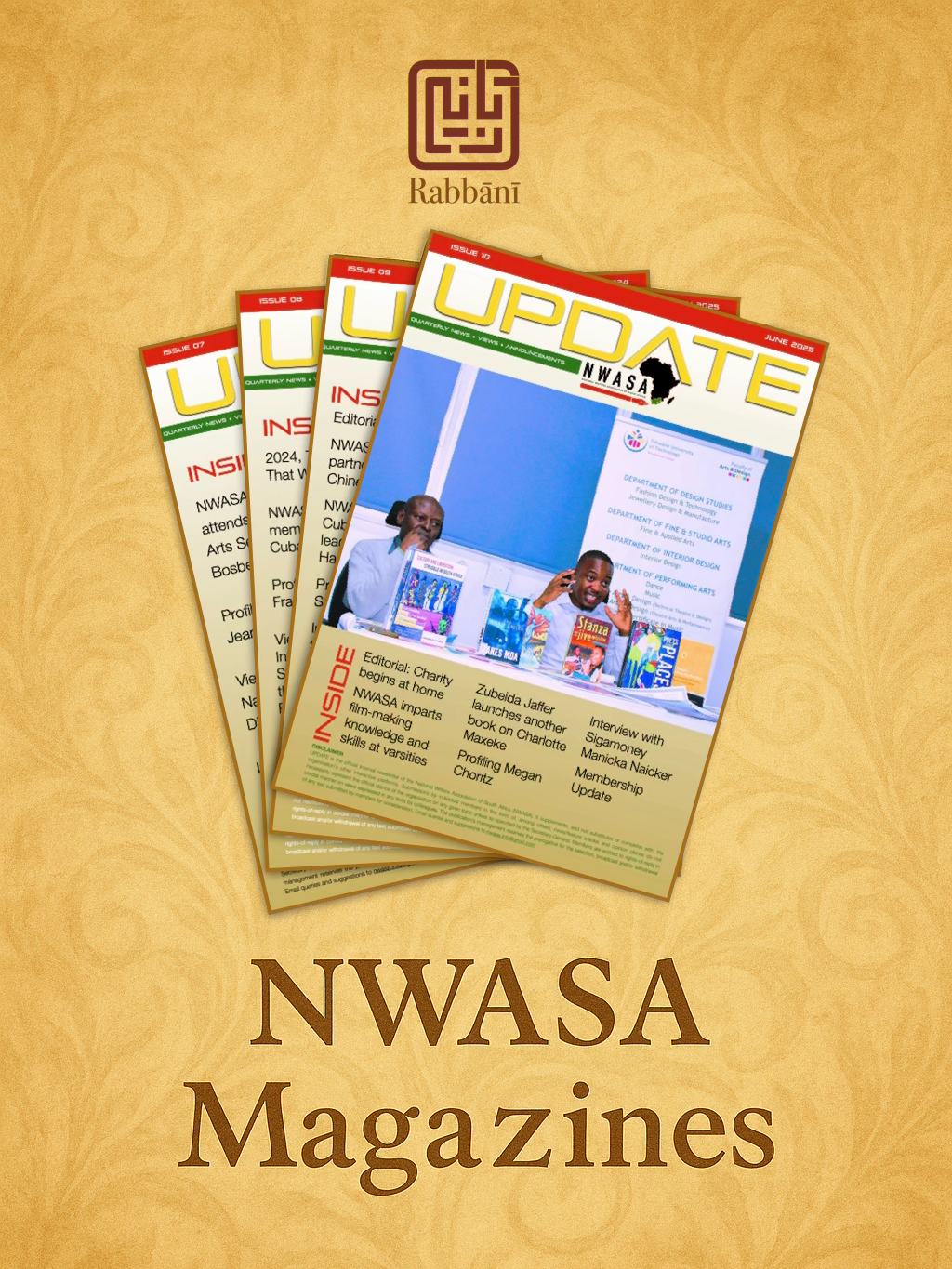
    Above: Four recent editions of NWASA Update (Issues 7–10), designed and produced by Rabbānī Creative Studio — from layout to print-ready publication.

    1. Magazines & Periodicals

    Full-layout design, editorial support, and branding for publications.
    Example: Four complete editions of NWASA Update (Issues 7–10), from concept to print-ready files.

    2. Commemorative Scrolls & Posters

    Custom-designed scrolls and posters for milestones — Hajj, weddings, anniversaries, and memorials — blending text, imagery, and heritage motifs.

    3. Books & Anthologies

    Cover design, interior layout, and thematic visual concepts for poetry collections, historical works, and memoirs.

    4. Heritage & Cultural Projects

    Visual storytelling and identity work for community heritage initiatives, exhibitions, and cultural campaigns.

    5. Branding & Identity

    Logos, seals, and visual systems inspired by classical design traditions, adapted for modern digital and print needs.


    Our Way of Working

    We work slowly when needed, urgently when called for — always with care. Our style blends modern design with heritage textures, drawing on Cape memory, Islamic art, and global traditions.

    “What began as sketches and fragments grew into a space that felt less like a business and more like a miḥrāb — a place to face what matters most.”


    An Ongoing Invitation

    Rabbānī Creative Studio is now a home for creative work that carries a pulse — spiritual, cultural, and human.

    It’s for those who believe beauty can be an act of care.
    It’s for those who want words to live not just on the screen but in the heart.

    And it’s an open door.

    You’re welcome to step inside.


    The Door Is Open

    If you would like to:

    • Commission a unique design
    • Collaborate on a heritage project
    • Preserve your story in words and images

    … then step inside. Let’s create something that lasts.

    📩 Email: adli@adliyacubi.blog
    🌐 Website: adliyacubi.blog
    📱 Social Media:

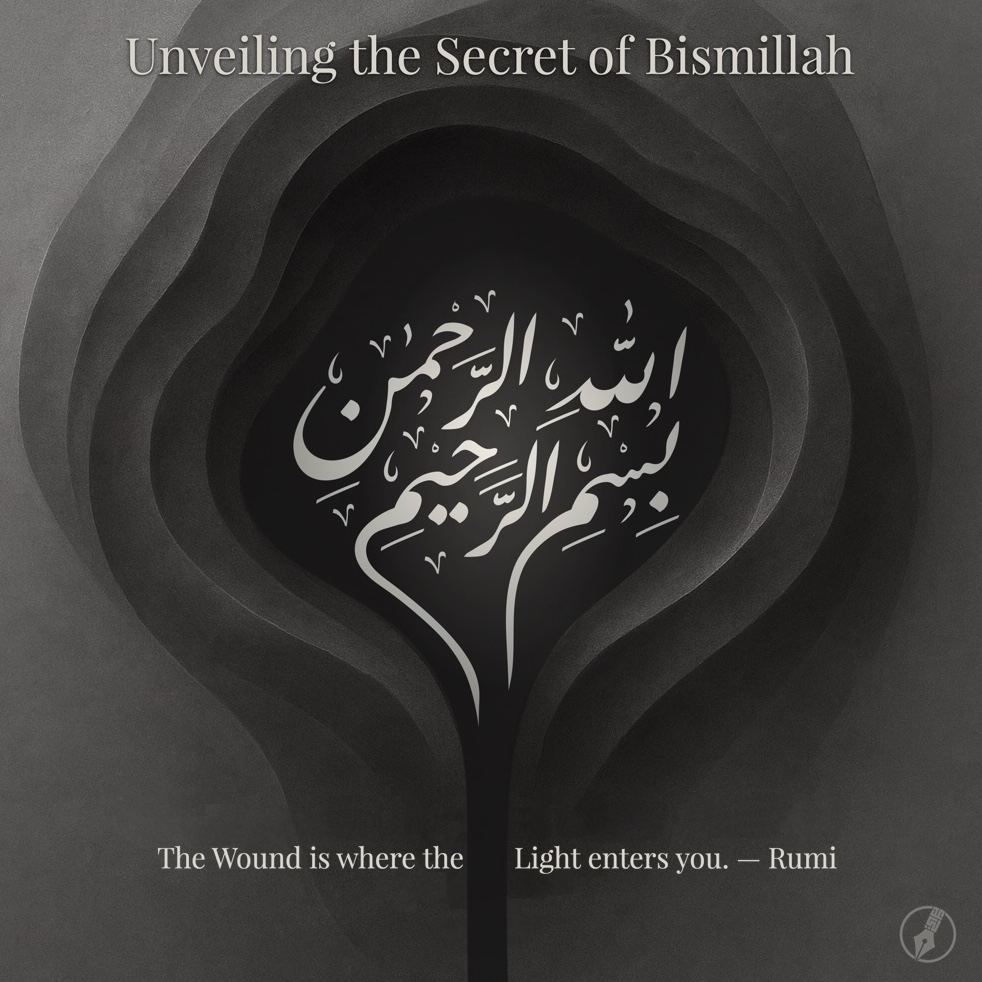
  • The Womb of Mercy: Unveiling the Secret of Bismillah

    The Womb of Mercy: Unveiling the Secret of Bismillah

    “In the name of Allah, the Entirely Merciful, the Especially Compassionate”
    — every beginning echoes the womb of creation, where mercy overcomes all. 

     At the beginning of every chapter of the Qur’an (except one), and at the start of every act of meaning, Muslims invoke the sacred words: bismillāhir raḥmānir raḥīmIn the name of Allah, the Entirely Merciful, the Especially Compassionate. It is not merely a formula. It is a return. A remembrance of the womb of mercy from which all existence flows.

    The Love Letter of Bismillah

     In Surah An-Naml, we are told the story of the Prophet Solomon (Sulayman, peace upon him) sending a letter to the Queen of Sheba. He instructs the hoopoe bird:
    “Go with this letter of mine and deliver it to them, then stand aside and see how they will respond.” (27:28)

    When the Queen reads the letter, she declares:
    “O you chiefs! A truly distinguished letter has been conveyed unto me. Behold, it is from Solomon, and it says, ‘In the name of Allah, the Entirely Merciful, the Especially Compassionate. Do not be arrogant with me, but come to me, fully submitting to Allah.’” (27:29–31)

    Before asserting power, before making demands, Solomon begins with mercy. Even in politics and statecraft, mercy frames the dialogue. Every relationship — between people, between nations, between heart and heart — is meant to begin in the name of mercy.

    The Womb of Creation

    The Arabic root ر ح م (rā ḥā mīm) — from which Raḥmān and Raḥīm are derived — is intimately connected to raḥm, the womb.

    Allah reminds humanity:
    “O humanity! Be mindful of your Lord Who created you from a single soul, and from her He created her mate, and through both He spread countless men and women. And be mindful of Allah—in Whose Name you appeal to one another—and the wombs. Surely Allah is ever Watchful over you.” (4:1)

    The womb is not just a biological vessel; it is a sign, a sacred reality. The Prophet, peace and blessings be upon him, said in a sacred narration (Hadith Qudsi):
    “When Allah decreed the creation, He pledged Himself by writing in His Book, which is laid down with Him: ‘My Mercy prevails over My Wrath.’”
    (Muslim, Bukhari, an-Nasa’i, Ibn Majah)

    Mercy is the origin of all things.
    The womb is the first mercy a soul encounters in existence — a place of absolute protection, nourishment, and unseen care. No wonder the Prophet narrated this to his companions.

    Jahima (r.a.) came to the Prophet, peace and blessings be upon him, and he said, “O Messenger of Allah, I intend to join the military expedition, and I seek your counsel.” The Prophet said, “Do you have a mother?” He said yes. The Prophet said, “Stay with her, for paradise is beneath her feet.”
    (Sunan al-Nasā’ī)

    In another Hadith Qudsi, sacred narration, the Prophet Muhammad (peace be upon him) said that Allah said:
    “I am Ar-Raḥmān and created the raḥm (womb) – And I named it after Me.”
    (Ahmad)

    Pain and Mercy

    “The wound is the place where the light enters you.”
    Rumi’s words evoke not only pain but transformation. The womb is a site of life-giving pain — a space where creation ruptures comfort. It is the most literal place where light enters: the emergence of life into a world of awareness, form, love.

    In verse 18:81, the Qur’an speaks of a child being taken away so another, “more virtuous and nearer in affection,” may come. Pain and replacement. Loss and mercy. Mercy is not always softness — it may come dressed in fire, thunder, or sacrifice.

    No wonder Allah states, “And My Mercy encompasses everything” (Quran 7:156). This verse reinforces the idea that God’s mercy is vast and all-encompassing, extending to every aspect of existence. This verse highlights the inclusive nature of divine mercy, encouraging believers to seek forgiveness and strive for a compassionate life. It serves as a call for Muslims to practice mercy in their daily lives, fostering a community built on compassion and understanding.

    Bismillah in Everyday Life

    The Messenger of Allah, mercy of God and peace upon him, taught:
    “Any matter of importance that is not begun with ‘In the name of Allah’ will remain devoid of blessing.”
    (Sunan Abi Dawud, Sahih Ibn Hibban)

    And regarding daily purification (wudhu), he said:
    “There is no valid ablution for he who did not mention Allah’s Name.”
    (Ahmad, Sunan compilers)

    Every act, every moment, every step must be wrapped in remembrance. By invoking Bismillah, we are not just seeking blessing; we are anchoring ourselves back to the womb of mercy — to the beginning of all things — where Allah’s Compassion and Care cradle us unseen.

    Closing Reflection: A Womb of Light

    To begin with Bismillah is to step into the womb of mercy. A place where something is made of us. A place of constriction, gestation, and eventual emergence.

    Ibn al-ʿArabī described mercy as the first veil between us and the Real. To know mercy is to be veiled, yes — but also to be protected, incubated until we are ready to face the fullness of the Divine.

    And so, like the Queen of Sheba, we receive the letter.
    And like the hoopoe, we deliver it.
    And like the child, we are born through pain.
    And like Rumi, we remember that it is the wound — the rupture — that lets in the Light.

    And this is why we celebrate the wombs.

  • Kufic Art

    Kufic Art

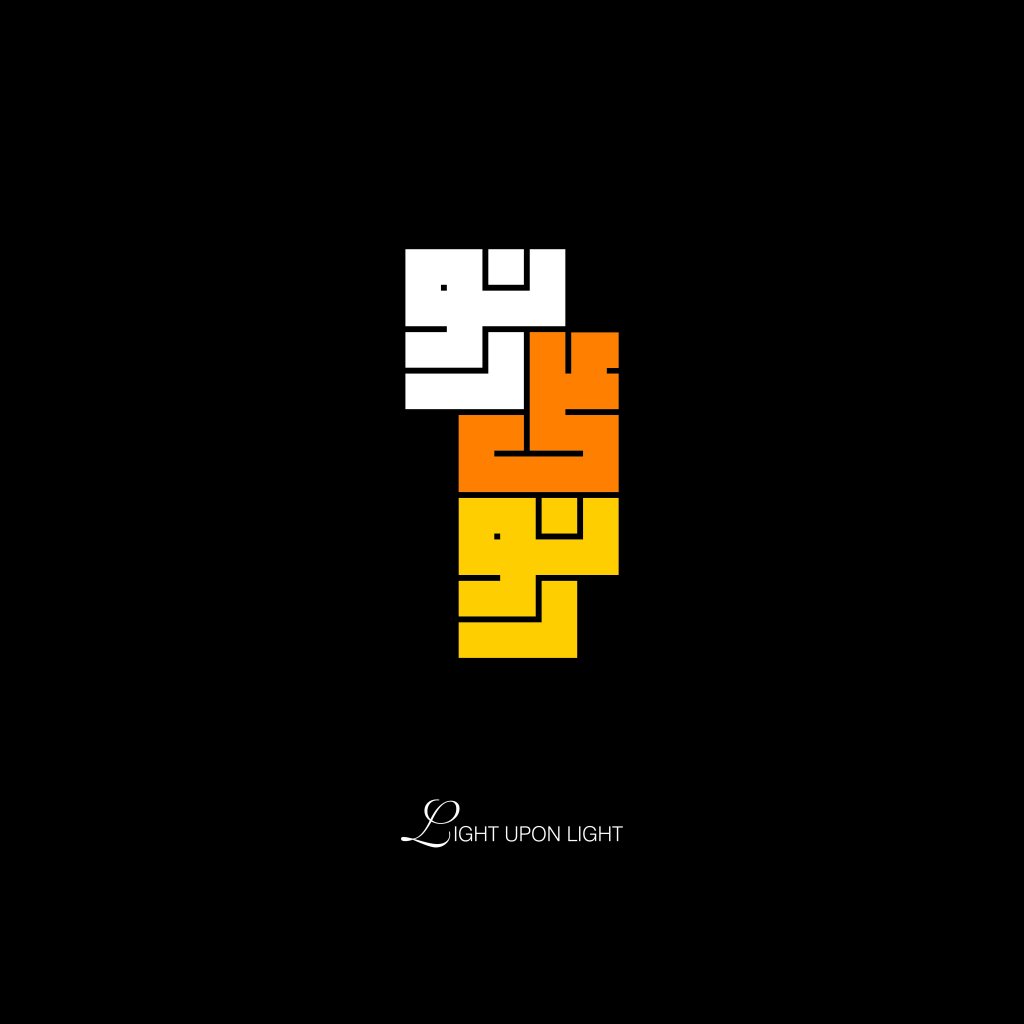
    the-penKufic is a stylised form of Arabic script following a square or geometric shapes. It is one of the oldest forms of Arabic calligraphy named after the city of Kufa in Iraq.

    I love this form of calligraphy because, at one level, you can design it using digital programmes and, at another level, it requires discipline as it restricts how you can design. This makes for fascinating graphic expression.

    This page will showcase my kufic art that are largely interpretations of Qur’anic verses. In fact, the logo that I have designed for myself combines the my many interests: the pen is symbolic of all things media and the design above the pen nib is a form of Arabic kufic script that spells my name.

    I have two boards on Pinterest that illustrate what I love about this form of art. Kufic Inspired is of my own attempts at the art form and Kufic City is the works of others that I find interesting. Below are some examples of my work.

    three

    subhanallahalgamdulillah

    la-ilaha-illallahallahu-akbar