Adli Yacubi

Wordsmith of Remembrance

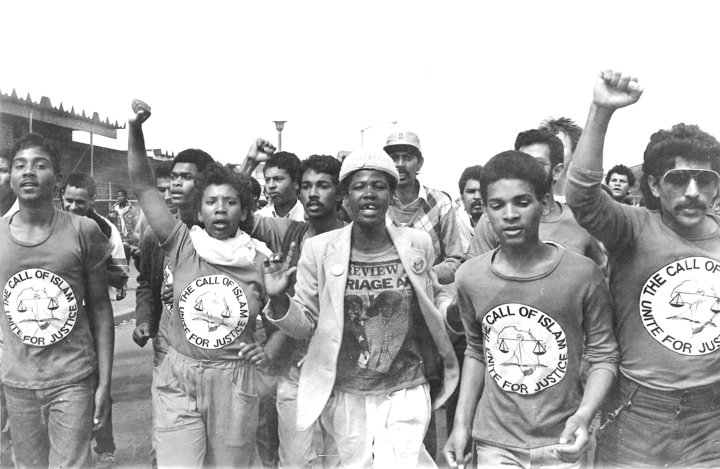
  • Remembering the Call of Islam
    call-march
    Call of Islam march in the 1980s. Pic: Yunus Mohamed

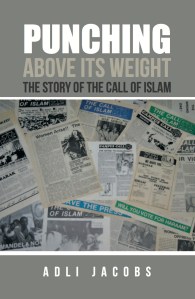
    When I published my first book in 2014, a community in Pretoria invited me to share with them the significance and the reasons for writing Punching Above Its Weight

    Cover

    Launched in 2017.

    I am most grateful for this opportunity to speak to you today, at the Rasooli Centre, on my first book, Punching Above Its Weight – The Story of the Call of Islam. This is not just a story of my own youth, of how I came to be a part of such an important organisation. This is not just a biography of the Call of Islam and how the organisation as well as the broader community developed a new and fresh way to view our own Islam.

    This is not just the story of how a tiny Muslim population at the tip of Africa, in concert with others, stood their ground against the mighty apartheid government and policies of dehumanising all who were deemed lesser because of the colour of their skin. It is not just the story of the resilience of a population who, despite massive exploitation and oppression, stayed true to their humanity and made space for many, including members of the white population, in the struggle against apartheid.

    Written in an easy style, without complicated language, I try to tell the story of a seemingly insignificant political movement that made far-reaching contributions to the freedom struggle in South Africa. The book traces the many activities of the Call of Islam, the mass rallies, the interfaith gatherings, funeral demonstrations, culminating in the one of biggest and most significant gatherings of Muslims in SA, the National Muslim Conference in 1990.

    Punching Above Its Weight is about all of these and more. Ebrahim Rasool, now the ex-SA ambassador to the US, reflects on this in the Foreword to the book:

    “It is a travesty that we have waited almost 30 years for Punching Above Its Weight – The Story of the Call of Islam to be told. I am happy that Adli has now done so. It may not be a perfect rendition of the history; a complete account of every debate, campaign or incident; or a personal recall of every brave and thoughtful member. But it fulfils a need.

    “In a world where some Muslims present us as backward by their example, and our opponents project us as barbaric in their propaganda, the least that this book will do is to say that in 1984, in the midst of an almighty struggle against apartheid, there emerged from a community that came to South Africa as slaves and exiles, who constituted only a small minority, yet from them the Call of Islam was born.”

    So, in many ways, it was the Call of Islam, Muslims in South Africa and freedom-loving South Africans generally who all punched above their weight in a time when we thought we would never see the day when we would all be free. That was a time when Ronald Reagan’s America saw South Africa’s apartheid government as an ally in the Cold War and when the rest of the world’s nations (except a few) were slow to respond to the crimes against humanity that was taking place in South Africa. We were then where Palestine is today, under the occupation of a brutal regime.

    The book is, at one level a celebration of our South African victory, but also about the lessons we must learn from this experience because of what use is a celebration for humanity if we do not try to understand how we overcame our biggest challenges. I believe, in attempting to understand how we changed our selves in the midst of struggle, we can use those insights to inform what our role should be today and make better use of our present freedoms and challenges. Because…

    “Centring on the story of the Call of Islam is in many ways a lens to look at the details of the South African struggle. It means zooming in, as you would with a microscope, to observe the anti-apartheid struggle by focussing on some of its compounds and atoms that give a different insight than if one just looks at the broad strokes. And because the Call was more than just a faith-based organisation – rather, it was one engaged in political struggle – its model can be educational to many social movements, activist or non-governmental formations, and even social welfare groups, both in South Africa and beyond.”
  • Part 1: Jordan, Sweet Jordan

    Notes from a week of sightseeing, in three parts.

    Queen Alia Airport
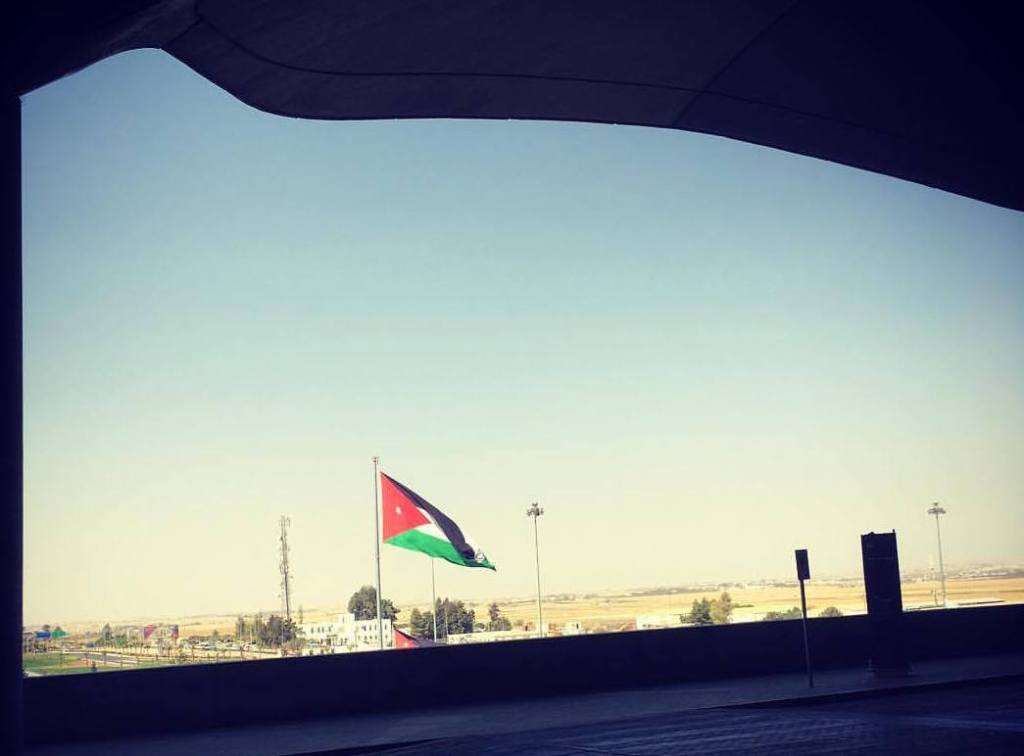
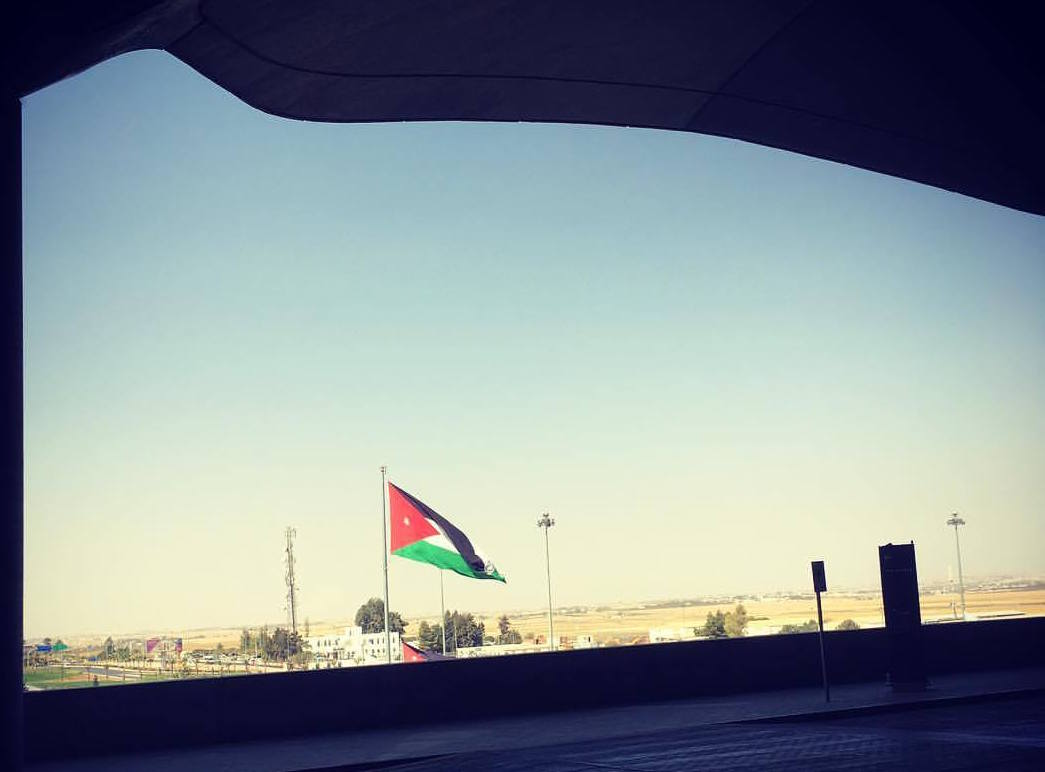
    View from Queen Alia Airport in Amman, Jordan.

    She said, “I need to have my work visa renewed and the closest place for me to go is Amman, Jordan. I don’t want to do this alone. Can you meet me there? It will take about a week…” I had just begun to recover after almost two weeks in Abuja, Nigeria for a hectic work engagement. By that Sunday, my Emirates flight touched down at a fairly quiet Queen Alia International. The wonders of online booking!

    For the next few days we would play a waiting game for Sadia’s work to email her an official letter. This letter she had to use to make an online application. She was supposed to then get an appointment and then we needed to pick it up at the visa offices in Amman. Simple enough. But the online app kept on crashing as soon as she pressed the button to confirm. The nightmares of online booking!

    But, meanwhile, we were in Jordan! Sadia and I had been to Saudi Arabia for pilgrimage. We had been to Turkey for a week. We had been to Malawi… But never to Jordan. And there is so much historical sites to visit in Amman and surrounding areas, we decided to make the best of it. After all, was it not Prefab Sprout who kept on reminding us “Jordan, Sweet Jordan. Hand me any cup you find that’s lying spare. Jordan waiting for me there…”

    IMG_3536
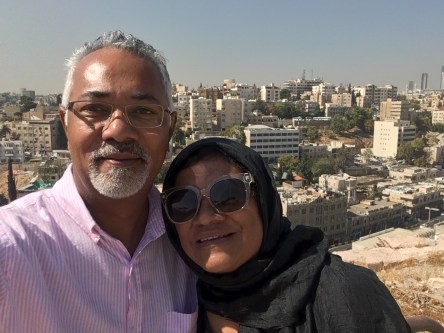
    Sadia and I with Amman in the background.

    So how do you get see as much as you can, staying as close to the capital as possible just in case the letter arrives or you need to dash off to the embassy if all else fails? You get an uber driver, that’s what! But with a strong taxi lobby in Jordan, uber and Careem (a competing taxi app in the Middle East) now operate under the radar. So henceforth, when I speak of our uber driver, I will call him ‘Mr Amman’.

    When Sadia arrived at the airport in Amman, it was the most convenient thing to use her app to get to midtown. She didn’t realise that uber wasn’t legit. When Mr Amman arrived to pick her up, he explained his position. But we are from South Africa. We’re quite accustomed to supporting the underdog. And so for our stay in Jordan, Mr Amman became our go-to guy.

    For starters, he found us an apartment that was way more competitive than staying in midtown. I asked him, “Mr Amman, what is cost of living like in Jordan or at least in this town.” “Mr Adli,” he said, “it is too much expensive. To live ok, in an apartment and to eat everyday you need maybe 1000JOD.” Good with the numbers, Sadia adds, “That’s almost R20 000! A month!”

    “Would that include a car?” “No! Just rent, food and so on.” Over the next few days I realise that public transport is virtually absent in Jordan. There are no trains and maybe public buses but not too many because, for all our drives through the city, I didn’t see any. The Jordanian Dinar (or JOD, pronounced JD!) is strong. You need R18,72 or $1,41 to buy 1JOD.

    Sadia and I realised long ago that, whenever we travel, it’s a mistake to constantly convert currency when buying things. You allocate your money for food, accommodation, travel and so on and then you go about your travels. If you constantly convert, you will stay in your hotel room! The one good thing about the Middle East is that, generally, food is cheap. And when I say cheap, I mean street food!

    So if you like shwarma, falafel, kabsa and so on, then you can survive quite well in Jordan. Of course, all over the Amman, there are also outlets for American food franchises such as KFC, McDonalds, Burger King and others I had not even heard of such as Popeyes. What is also very useful, is to rent an apartment and then stock up with your basics such as coffee, bread, cereals and so on from a local supermarket.

    IMG_3500
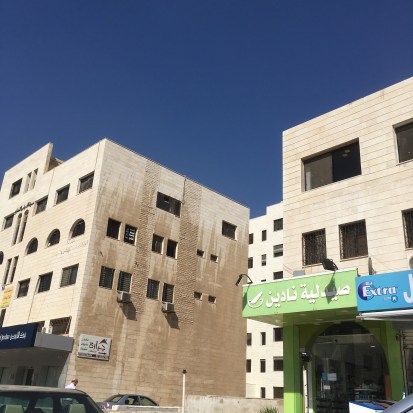
    Apartment blocks with shops below.

    For the next few days, while waiting for the letter, Mr Amman took us all over his city. The hills of Amman gives the city an interesting character. It’s like Cape Town’s Bokaap but times 100. This makes for very many quaint streets with its many twists and turns in a city with mostly white buildings. Mr Amman tells us that this, the colour white, is a city ordinance. So if you haven’t been paying attention to the street names, you can get very lost in Amman!

    One fine morning, a cool Autumn 24 degrees celsius, Mr Amman arrived at our apartment building. He said, “Today I think I will take you to see Jerash. You will see. You will like it too much!”


  • A Brother Like No Other

    Mourning Faried Jacobs and the Pain of Letting Go

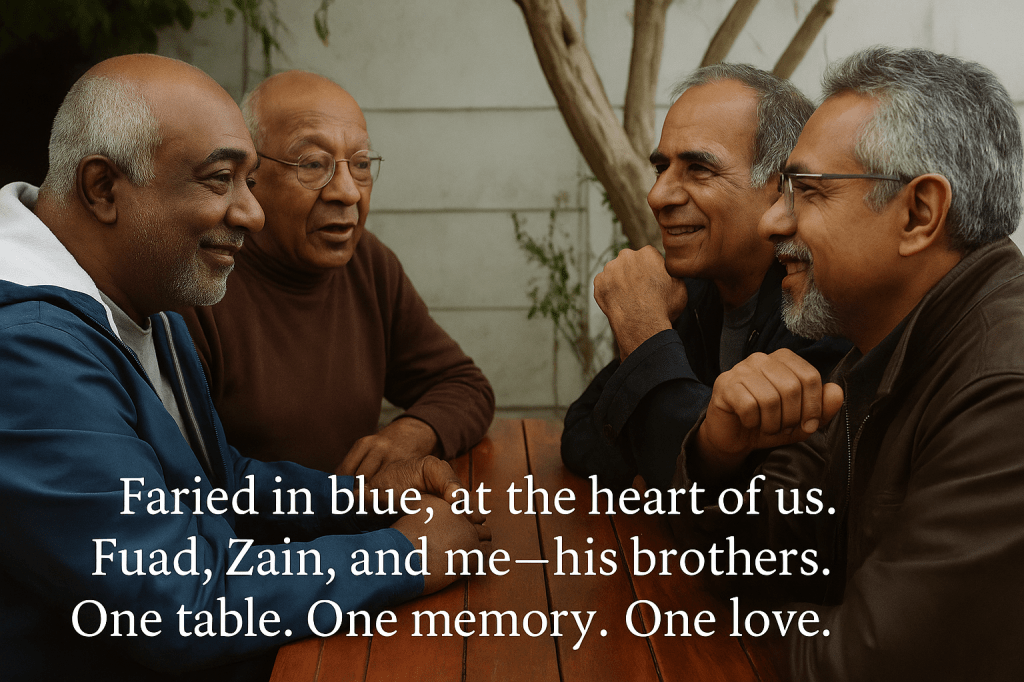
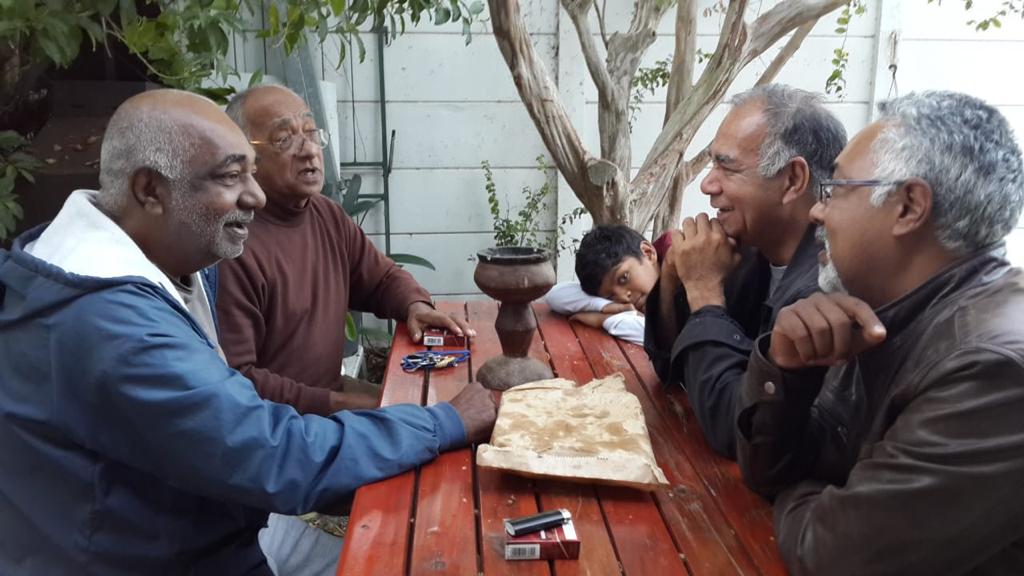
    Faried in blue, at the heart of us.
    Fuad, Zain, and me—his brothers.
    One table. One memory. One love.

    Your passing caught me off guard.
    I had planned to fly down to Groote Schuur Hospital—to hold your hand, to hear your familiar, half-teasing greeting:
    “This is nothing. How long are you staying? Will you be sleeping on our couch in the lounge?”
    But the doctors had already sedated you.
    And while we weren’t watching, you let go of my hand and slipped quietly into the next realm.
    I said my goodbye by placing my palm on your forehead, feeling your life force dissolve.

    The grief swept me away like a sudden tide.
    In that single, helpless moment, memories surged—those threads that bound us—flooding my chest in a merciless storm of emotion.
    Now, five days later, I’m still adrift, trying to gather pieces from the wreckage.
    Perhaps these fragments will steady me.

    You shaped my life profoundly—especially during my adolescence.
    With Dad growing older, it was you, along with your remarkable wife Zuleiga, who guided me through those uncertain years.
    During summer vacations, I was your clumsy teenage apprentice—sweeping up at building sites where you were foreman and supervisor.
    It was my job to scrub your and Dad’s boots clean, and to wash off the cement-caked tools of the trade.
    You were, in those days, both stern and kind—frightening and benign.

    One day, while we were building a factory, the owner’s son stormed onto the site, shouting insults at our father.
    Mid-rant, he suddenly found himself face-down in a wheelbarrow.
    You had knocked him out cold with a spade to the side of the head.
    You saw him for what he was: a racist, self-righteous prick—and an abusive employer.
    You never tolerated either.
    That moment stayed with me.
    Years later, when I joined the freedom struggle, I carried it like a compass.

    Of course, I wasn’t guided by you alone.
    I was blessed—loved by all our siblings, their partners, and their children.
    But your influence stood apart. Like your name, it was unique.
    You were, somehow, the rare blend of our mother’s blunt honesty and our father’s quiet grace.
    Your language was rough, your heart soft.
    It took us years to understand that your sharp tongue was often the symptom of undiagnosed, untreated diabetes—the same illness that eventually claimed you.

    Now that you can no longer protest, I’ll say it plainly:
    You were a terrible capitalist.
    You once ran a butchery in Mitchell’s Plain that failed—not from mismanagement, but because you kept giving the meat away.
    To struggling customers.
    To broke relatives.
    Later, in your construction business, you gave jobs to young family members who needed work, even when the books didn’t balance.
    When the business eventually closed, you had no regrets.
    The Qur’an speaks of such people, calling them “those who gave preference to others, even though poverty was their own lot.”

    Postnote

    Faried was the middle-child in our siblings—one of four brothers and three sisters.
    He passed away eight years ago, on the eighth day of Ramadan.
    He used to joke that he would be the one to bury Fuad, our eldest brother, since he was younger and expected to outlive him.
    But fate had other plans.
    We lost Fuad two years ago, and with him, another great pillar of our family.

    In our grief, we found strength in remembering Faried’s resilience, his unflinching kindness, and his deep sense of duty.
    His life remains for us a source of comfort, a touchstone of dignity, and a lesson in selfless love.

    Footnote:

    May Allah have mercy on his soul, inna lillahi wa inna ilayhi raji’un, and on the souls of all our departed—those who laughed with us at one table, and now dwell in the unseen.

  • The Grandmother of Just Girls

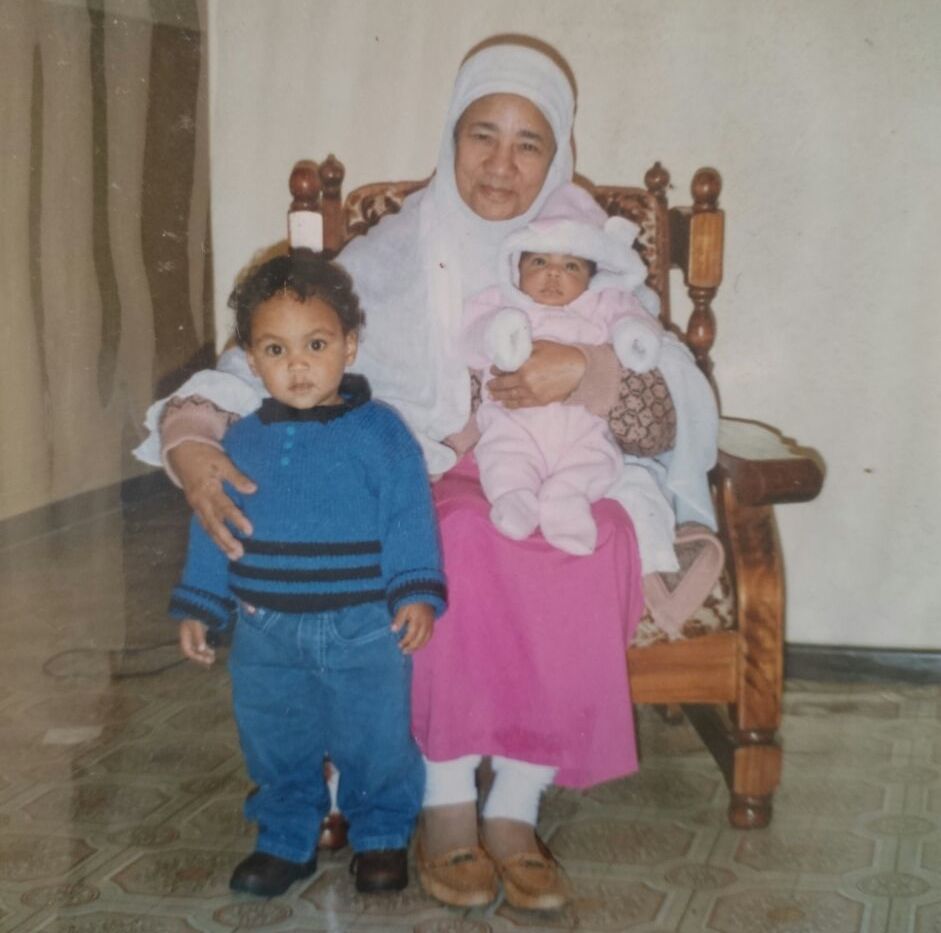
    rugayabil-ii
    My mom with her granddaughter, Bilqis, on her lap. Bilqis’s cousin, Omar is standing.

    I never really met my grandparents from either my mom’s side or my dad’s. I lie. I met my dad’s dad. Twice. Once in Kingsley Street in Salt River when I was about eight years old. My mom had to say to me, “This is your grandfather.”

    I saw this older version of my dad in his sleeveless vest and long white underpants with three kids hanging onto him. My grandfather was short. Like my dad. And I looked at those kids stretching out his vest, my cousins who I also did not know, with envy.

    The second time I saw him, I may have been twelve. He was laid out on a metal table in the lounge of the same house in Salt River, covered in white linen up to his neck. My grandfather had passed away. “Kiss your grandfather,” my mom said to me, “don’t be afraid.” I kissed him on his cold forehead and that was that.

    My six other siblings were more fortunate I was. They have memories of my dad’s mom who stayed with us for a time when we lived in District Six and the older siblings have wonderful stories about my mom’s mom, Moeder (real name Zubeida), that I love listening to.

    Of the two role models in my life, my dad was the more child-friendly. That’s not really accurate. Rugaya, my mom, was a woman who preferred boys over girls. She adored her four sons over her three daughters. This preference became more noticeable when the grandchildren came on the scene. Of her 27 grandkids, there are only eight boys!

    My mom, God bless her soul, was also not one to disguise her displeasure or dislike for something or someone. You could often see it in her entire face no matter how hard she tried to disguise it (when she did try, which was not often). So when Sadia, my spouse, gave birth to our first born, this is how she reacted to the news when I called her in my absolute excitement.

    “Mom, Sadia just gave birth!” I said.

    “What is it?” she asked.

    I knew exactly what she meant but said, “The child’s name will be Bilqis.”

    “What type of a name is that? That’s mos an Indian name. Is that for a girl or a boy?”

    “It’s a girl. Silly. My firstborn is a girl.”

    “Your dad will come to the hospital,” she said and put the phone down.

    breimabil
    My dad with Bilqis.

    There is this beautiful black and white I took with my dad, Ebrahim or Breima, holding Bilqis with delight in his eyes. She sensed his warmth and smiled back. Breima was great with kids. All kids. He could sing them to sleep within seconds. A true baby whisperer. A storyteller of note and incapable of giving us a hiding. Ever.

    Sometime after Bilqis’s naming ceremony or ‘doekmal’ (probably from the Afrikaans ‘doopmal’) my mom and dad came to visit us in Mountain Road in Woodstock. Not one to give my mom a break with her preference for boys, I placed Bilqis on her lap and said, “I want to take a pic of Ouma with her grandchild.” She sat with Bilqis, and about manages to make a smile.

    I have no doubt that my mother loved my kids but, somehow, she was not wired to relate to other females as she was towards males. This is why most of her students (mostly female) who she taught in ritual preparation of the deceased (or toekamanie-werk) remember her as stern.

    But for all her hard exterior, her students loved her. When she passed, some 500 women attended her janazah (funeral), lining the streets to give her a guard of honour as she was carried to the mosque for the funeral prayers.

    When Sara-Nida, my second daughter, was born, I called my mom once more.

    “Mom, Sadia has given birth to a healthy baby.” Once more I held back saying the gender.

    “What is it?”

    “Sara. Her name will be Sara.”

    “Another girl!” she said with clear disappointment in her voice, “I’m mos already known as the grandmother of just girls…”

    When Ganaan, my youngest daughter, was born, I had resigned myself to the idea that my mom was not going to change. So when Sadia became pregnant with our last, we decided to have a scan done to check the sex of the child. It was a boy! I duly informed my mom.

    By the time Jauzi Hashim was born, however, my mom’s health had already taken a turn for the worst. That morning when I called her with the news, we had a heartbreaking conversation.

    “Mom, Sadia gave birth!”

    “Sadia gave birth?”

    “Yes, it’s a boy. His name will be Jauzi.”

    “Sadia can’t be due yet.”

    “She was due. It’s a boy. This morning. I just saw him.”

    “A boy? Whose boy?”

    “My boy. Sadia just gave birth.”

    “Sadia gave birth? But Sadia can’t be due yet.”

    And the conversation went round and round like this for fifteen whole minutes. Her mind was beginning to fail her. She could not retain information. The best news for the granny of just girls. Her youngest son just had a son, only the second of her four sons to have this ‘honour’ and Rugaya’s memory had started to fail her.

    What Sadia and I did not know is that when I initially called my mom to say that the scan had revealed that Sadia was going to give birth to a boy, she had already begun to give instructions to my sister-in-law, Zuleiga, to pack a box of baby clothes and other accessories and mail that up to us in Pretoria.

    My mom passed away a month later, having never set eyes on her new grandson, the last of eight. The box of baby goodies arrived a week after that.

    I am remembering all this now and thinking that all of these experiences are now inside of me. I’m a granddad for the first time. My grandson, Zahi Salman, is adorable. I too find it hard to disguise my emotions. He knows this and responds by holding onto my face when I pick him up. So when I hold him, I think to myself, “Rugaya, your granddaughter has a son. You would love him too. And he would love you no matter your stern face!”

  • I let Nancy Sinatra sing in Sally Little’s biography
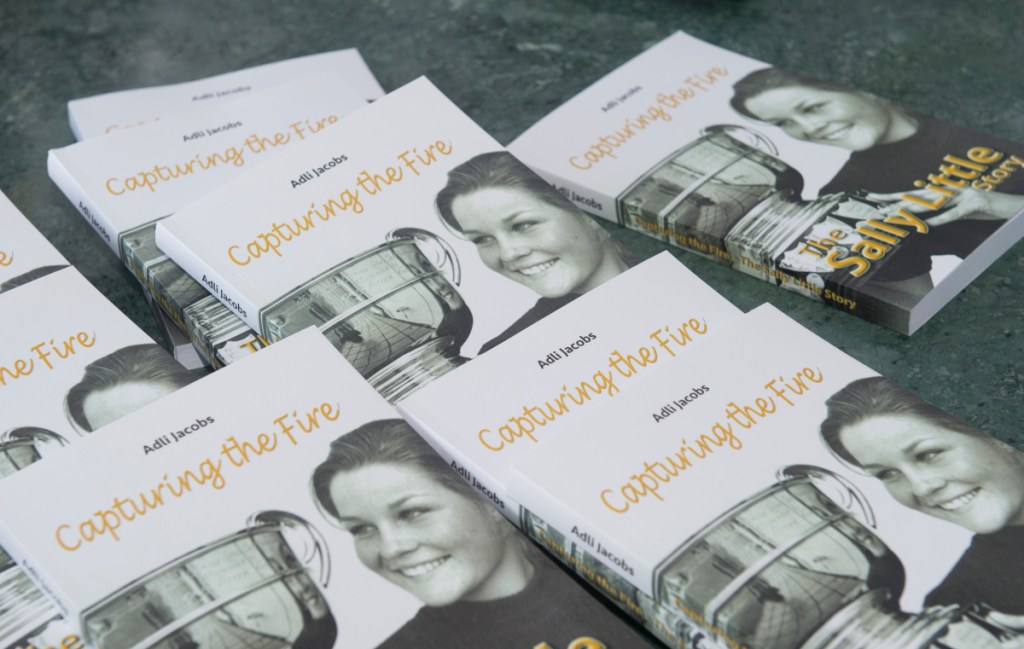
    Adli Jacobs shares his insights on the process of writing Capturing the Fire and why setting the tone in storytelling is so important.
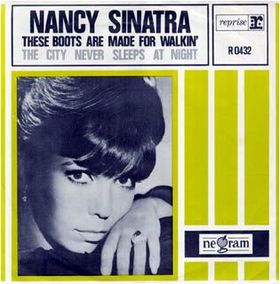
    nancy_sinatra_single_cover_these_boots_are_made_for_walkin
    Copyright belongs to Reprise Records or the graphic artist(s).

    Music is phenomenal. It is not just the universal communications that can cut across language barriers, the age gap or cultural differences. It sets the mood or the scene, draws out the emotions when you least expect it and can say things in ways that often defies explanation. But there is one more reason why it can be invaluable in a book.

    When I was writing the first few chapters of Capturing the Fire, a song came to mind when I was writing about a part of Sally Little’s life when she was struggling with a violent fiancé. It was a major milestone for her and as she was explaining how she dealt with event, These Boots Are Made For Walkin’ started to play in my head.

    I googled the song and lo and behold, it was released in the very year this event took place! Originally performed by Nancy Sinatra (Frank’s daughter) and written by Lee Hazlewood, the song was first heard on the radio in 1966. That’s a year after I was born. Since then, various cover versions were made by, amongst others, Geri Halliwell and Jessica Simpson.

    I took the chorus lyrics and placed it as inspiration at the top of Chapter Three: Mr Wrong in the red MG. I read the chapter once more and realised that the lyrics just added an interesting dimension to the story; it transports the reader back to that time period and suggests the mood of Sally Little at the time.

    Later, as the editing unfolded, the editor asked me why some chapters had a quote or lyrics of a song such as Nancy Sinatra’s and why the others did not. I said, “It was spur of the moment thing.” But when I thought about it, I realised that there are probably songs at every milestone to Sally’s life that can help set the time for that era. And of course, there are.

    You can google any year and you will find lists of popular hits with few variations from country to country. These Boots, for example, became a hit song once more in 2005 not just in the US and the UK but also Germany, Switzerland, Belgium, The Netherlands, Austria, Ukraine and Greece. This, of course, speaks volumes about the monopolies in the international music industry.

    So the book ended up having song lyrics at the beginning of every chapter where I could not find some other relevant quotation. The song did not only have to be relevant to the time, the lyrics also had to speak to the content of the chapter and perhaps add a layer of insight or perspective that I could not, as the writer, say overtly.

    The irony of it all was that Sally is actually a classical music fan and there are not many lyrics for that genre or at least words that people will remember. She was once invited by her sister Janeen to join them at a U2 concert in the States. She was not much of a U2 fan (or pop music for that matter) and so when it began to rain, she wanted to go home.

    But I stuck to the music references in the biography because music pervades our lives whether we like the song or genre or not. It’s on the radio, on TV, in adverts, in movies. Music is everywhere and becomes a reference point through all our dramas, our breakdowns, our joys and celebrations.

    Now, when Sally’s story becomes a feature movie, they will know which music to source to set the scene for the different chapters of her life. So let me just place those lyrics firmly in your head…

    These boots are made for walking, and that’s just what they’ll do
    One of these days these boots are gonna walk all over you

    Are you ready, boots?
    Start walkin’

  • The Day Auntie Lêga Turned 80

    A story about birthdays and litanies and how traditions die out…

    auntie-lega-six
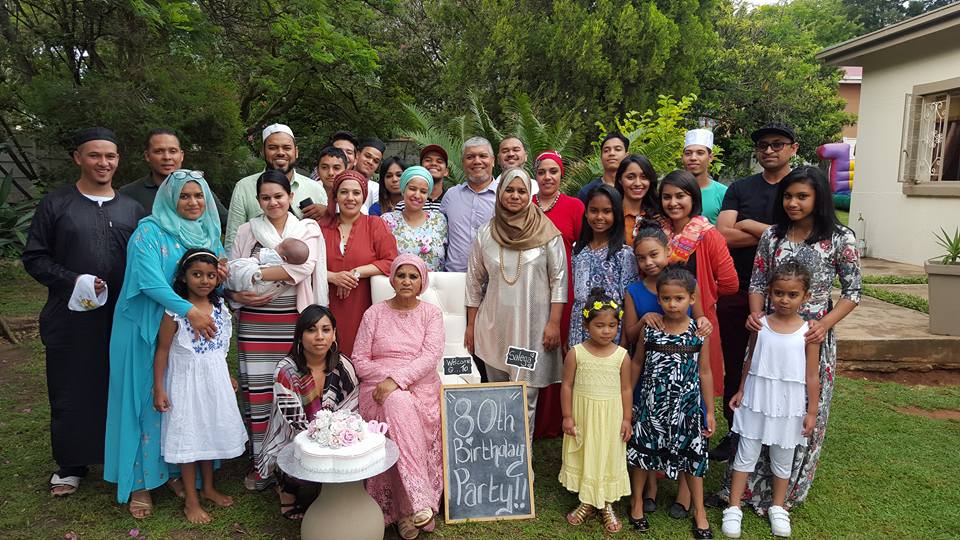
    Auntie Lega on her 80th with six of her seven children.

    It was Auntie Lêga’s birthday this weekend. It was her 80th celebration. Seven kids (minus one who had passed on), 20 grandchildren and 11 great-grandchildren in addition to extended family and friends flooded the house of her son, Ismail, to mark this amazing milestone. A huge tent with rows of trestles had been set up in the backyard to accommodate all the guests.

    Auntie Lêga (short for Saliega, or the pious one) had called me weeks earlier and then every consequent week to secure my attendance at this event. Then, for good measure, a final call a night before the actual event. I was going to attend anyway as Auntie Lêga is the only aunt that my spouse, Sadia, has living in Johannesburg.

    But Lêga was not taking any chances. She had called up a friend who could write down a speech that she wanted me to read to those attending which has become my function at family occasions. It was a touching note thanking sons and daughters, their spouses and their kids for putting up with her and their efforts for making her 80th a special occasion.

    And what an occasion! Prawn curry, leg of lamb, wonderfully flavoured chicken, dhal, a brinjal dish… And that’s just what I had on my plate. The dessert required a good few paragraphs all of their own.

    img_1433
    Reciting the Gadat, a 300-year-old Cape tradition, on Auntie Lega’s birthday.

    In the back room, on the floor with blankets and bedsheets, the Gadat Jamaat started the occasion by reciting a spiritual litany that was over 300 years old. I looked around the room and realised that I was witnessing a community tradition that could actually be dying out. The only ones able to still recite along to the Gadat were those from my generation and older.

    The younger ones were there, on the floor sitting cross-legged, either out of respect or one of their parents had instructed them saying, “Get yourselves into that room and don’t embarrass me!” And perhaps in response to the youngsters rolling their eyes the parent added, “I don’t care if you don’t know the Gadat, just go sit there!” So they sat there, listening to a cultural symphony, that made no sense to them at all.

    There was a time when the Gadat would be a regular feature in the cultural life of a young Muslim growing up in South Africa. Well, ok, largely in the Cape and wherever there were communities who had roots in the Cape. Every Thursday evening, birthdays, funerals and memorials for the deceased would be commemorated with Ratibul Ḥaddad or, literally, The Collection of the Ironsmith which is the family name of Imam Abdullah ibn Alawi al-Ḥaddad who wrote the litany in 1661 when he was 27 years old.

    When it was brought to the Cape, most likely by Tuan Guru in the late 1700s, the Gadat took on a colour all of its own. But not just a colour… also a fragrance, a sound and a taste unique to this rhythmic and melodic litany. The colour and taste came from the sweet treats (biscuits, koesisters, bollas) baked and fried by the family hosting the Gadat. This would become the contents for a little gift package (or barakat) that you would get when you leave the gathering.

    More often than not, it was the women of the house who would prepare these treats. But that would not be the only taste they would contribute. They also conjured up the Gadat’s own, unique drink: The Gadat Melk. Just as the litany would wind down, participants would be given a tiny glass of this milk drink prepared with cinnamon, cardamon and sweetened with sugar.

    No Gadat would be complete either without the burning of incense that would become so synonymous with the event that when incense is burnt on its own, it almost seems lonely. And so, by flooding all the senses, the women in the community had ensured that the Gadat would become a special occasion that all in the community would anticipate with longing. Everyone would participate, and the Gadat (because of its musicality and careful construction) helped in making the memorisation of prayers, of Qur’anic scripture and the Names of God that much easier.

    But as time passes, traditions change. Now, at Auntie Lêga’s 80th celebration, my kids do not know how to make Gadat. They can see it on YouTube, download a PDF version of the text with translation from the internet, but the colour, the taste, the fragrance, the sound and touch of this old tradition has become like an old relative with dementia. They can hear her, but they can’t make sense of what she is saying. She might as well be speaking in tongues.

    But not Auntie Lêga. On her 80th she is as alert, as funny and as spritely as ever. She’s not happy, for example, that someone promised to bring her Lindt chocolate for her birthday and then forgot! Saliega is half the height of her son, but with a warmth and generosity that is larger than life. And she has ensured that those attributes are now a central tradition in her large family. Right down to the 11 great-grandchildren.

    [If you like this story then click the blue star  below.]

  • Two Rivers

    cosmic-timetraveller
    Pic by Cosmic Timetraveller on Unsplash

    Two rivers descend from their mountain source
    Over the edge, barefoot towards their destinies
    One finds open horizons, free flowing courses
    The other, hidden beauty, silent testimony

    Two rivers race towards the shoreless ocean
    Boulders to pebbles, meandering their flow
    One becomes a city slicker in slow motion
    The other, to an ancient oasis it shall go

  • That Feeling When You Fly

    julia-revitt
    Pic by Julia Revitt on Unsplash

    The standing and the folding
    The proud amongst the humble
    The asking and the holding
    It all begins to crumble

    The open and the secret
    The silence and the noise
    The profane wrapped in sacred
    The quiet informs the voice

    The salute and the worship
    The body and the soul
    Resolute and with purpose
    Drink water from the bowl

    On the carpet, on the sand
    The wall behind the shroud
    How a seed becomes a plant
    While waiting for a cloud

    Invisible rain come pouring
    Securing every heart
    On the living, on the snoring
    Tearing everything apart

    Rivers run from higher ground
    From mountain to the valley
    The rider does not make a sound
    A moment she will tarry

    The opening and the closing
    The earth beneath the sky
    The poetry and the rhyming
    That feeling when you fly

  • Four posters inspired by Rumi

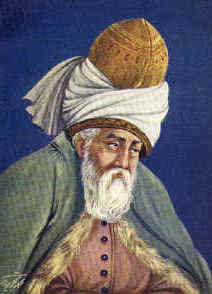
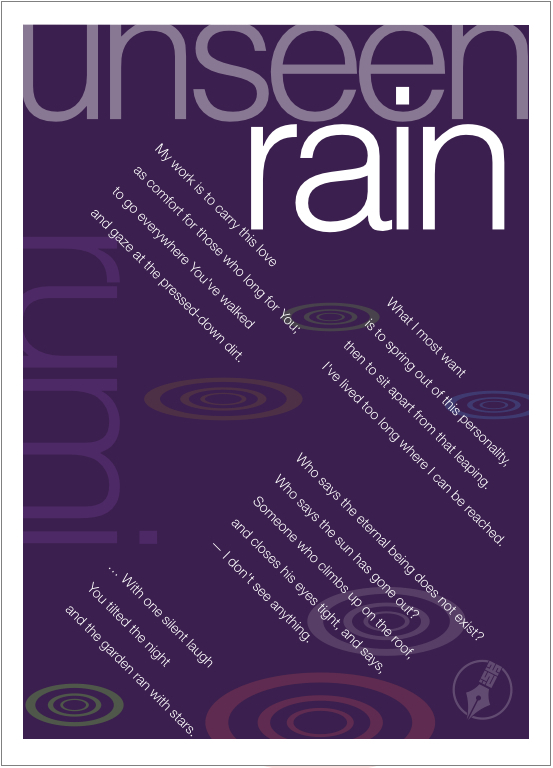
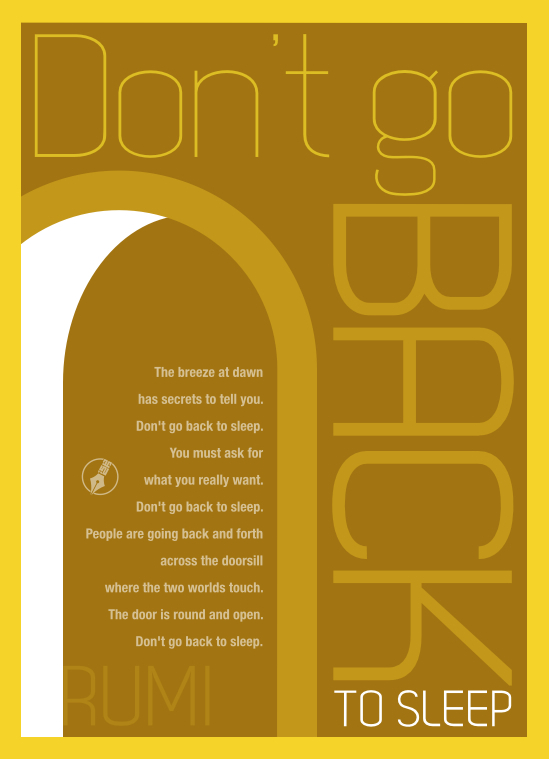
    rumiIf there is one poet that can speak to the heart of spirituality with a timeless relevance and cutting across different persuasions, then Rumi is most certainly the master. Raised on stories of his life by my dad, I have only really begun to make sense of Mevlana Jalalluddin Rumi recently.
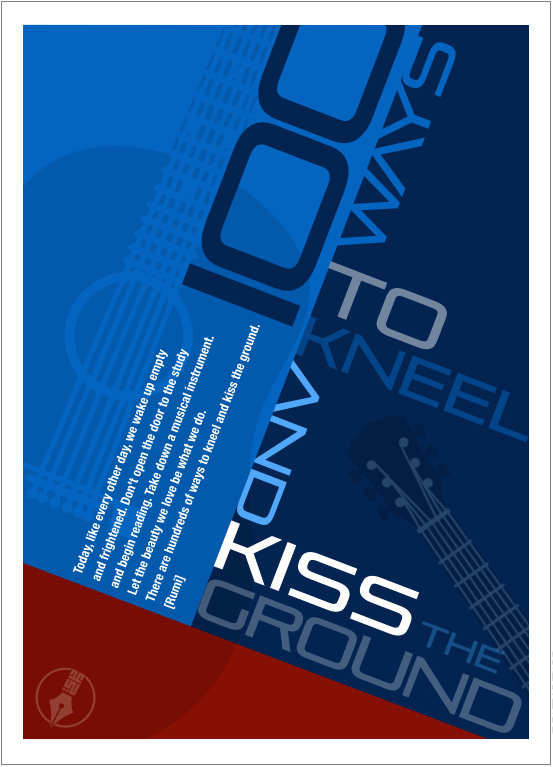
    His poem below hit such a chord with me, that I named my guitar ‘Rumi’:

    Today, like every other day, we wake up empty
    and frightened. Don’t open the door to the study
    and begin reading. Take down a musical instrument.
    Let the beauty we love be what we do.
    There are hundreds of ways to kneel and kiss the ground.

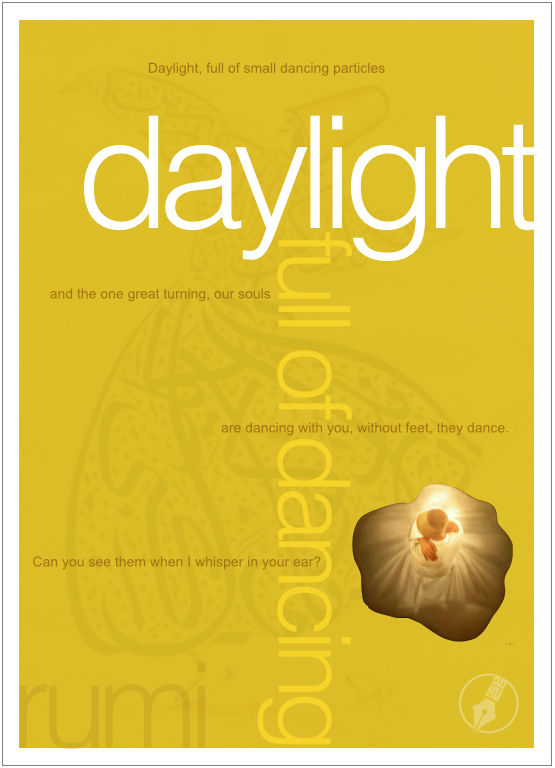
    This poster series are my interpretations of four of my favourite Rumi poems.

    rumi-posters-003rumi-posters-005rumi-posters-004rumi-posters-001


  • Commemorating Johnny Issel in design

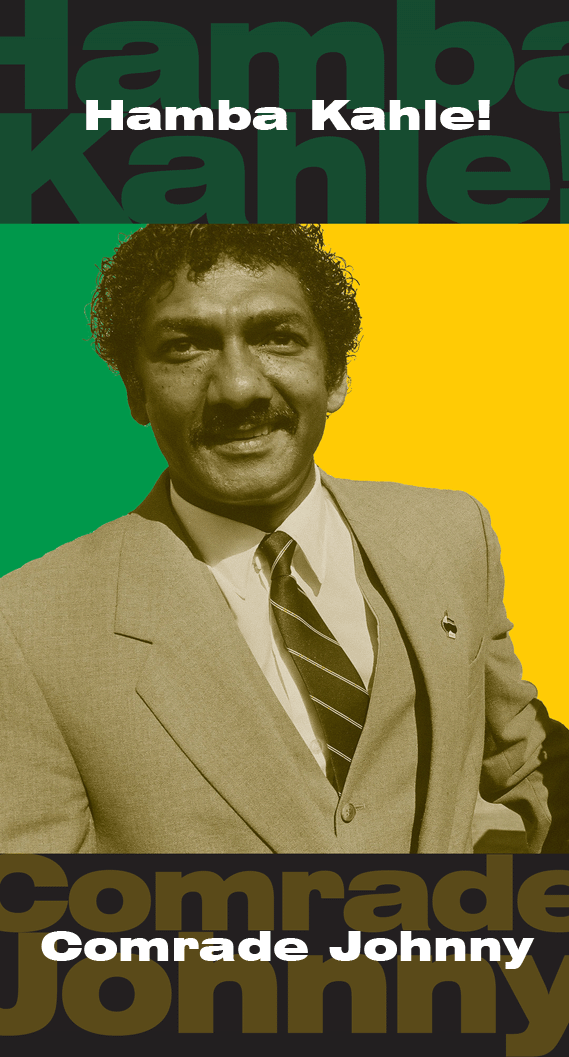
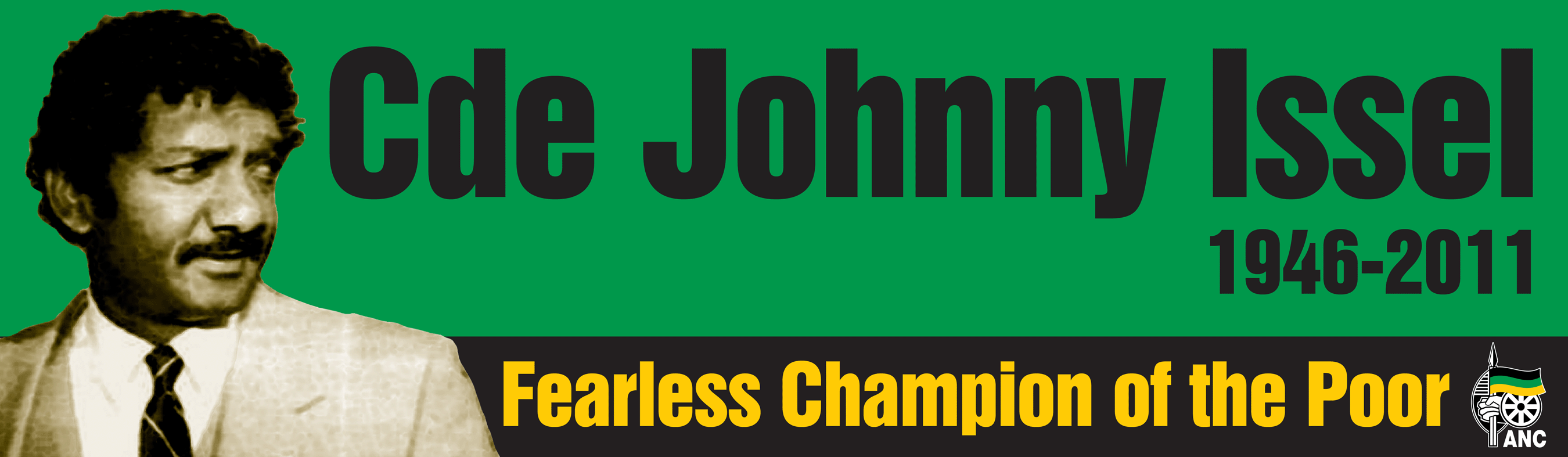
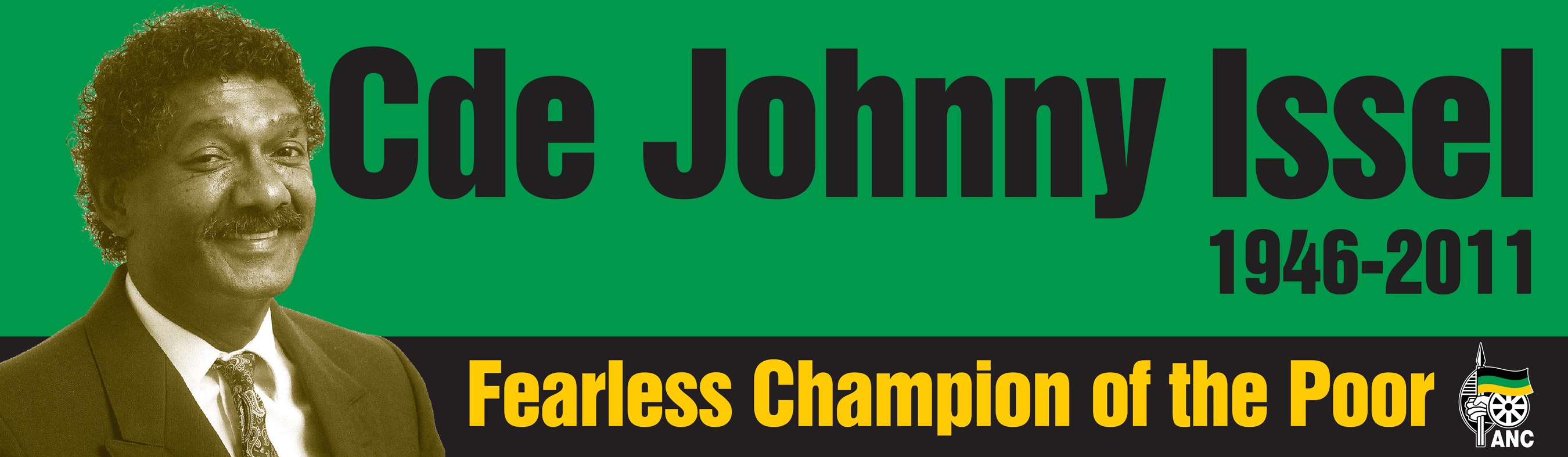
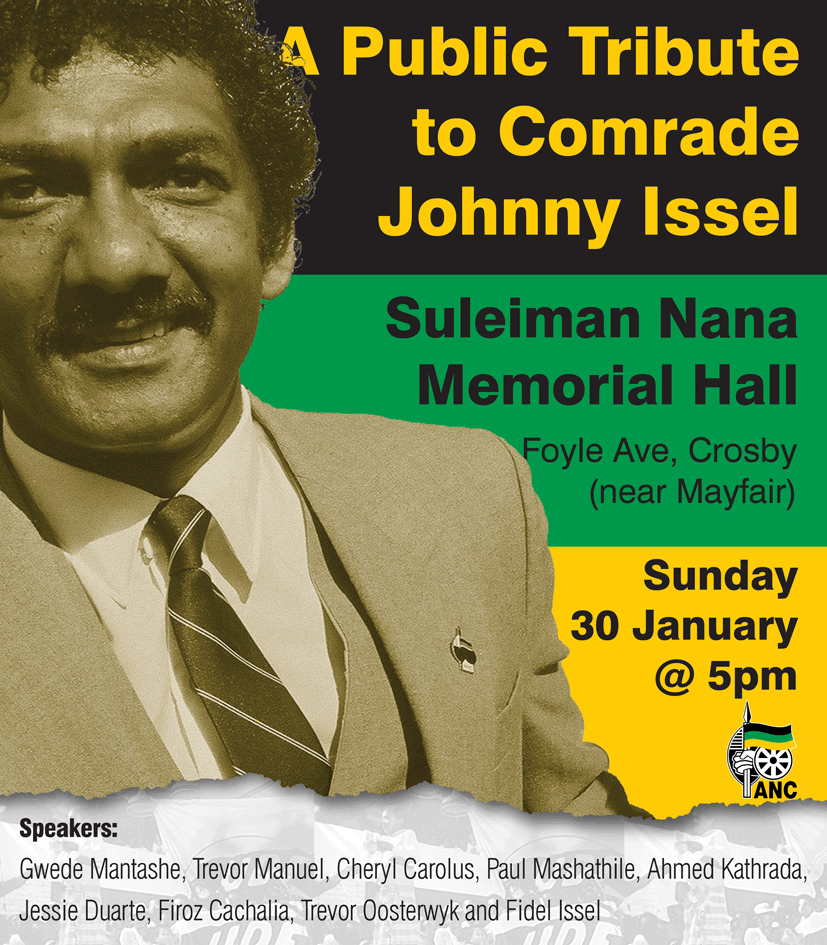
    In 2011, on 23 January, an icon of the struggle for freedom and democracy in South Africa passed away. Johnny Issel was not just central to the formation of the United Democratic Front, he also played a critical role in the life of so many community organisations and activists from that era. I cut my teeth in media at Grassroots Publications that would not have existed if not for Johnny.

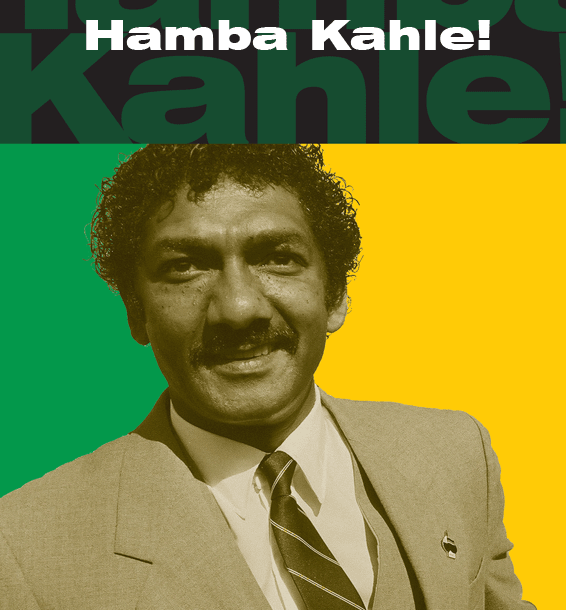
    It was then a deep honour for me to be involved in the committee that organised a tribute to Johnny Issel in Johannesburg when many of his comrades and friends could not make it to the official memorial in Cape Town. My small contribution was to design posters and banners for that tribute.

    In deciding how to design the banners and posters, I was inspired by the following comments Ryland Fisher made in his own tribute article:

    But while he was promoting legal opposition to the apartheid regime, Issel also played a major role in popularising the ANC in the Western Cape and in South Africa while the organisation was banned.

    He was the key driver behind the first public unfurling of the ANC flag at Hennie Ferrus’s funeral in Worcester, which was soon followed by more public displays of the ANC flag. At this time, one could be jailed for at least five years for possessing, let alone displaying, an ANC flag.

    When the ANC was unbanned in the early 1990s, it was almost logical that Issel should be appointed as its Western Cape organiser. This time the title organiser was appropriate, because the ANC hoped to tap into his considerable experience of organising communities.

    johnny-issel-poster-1-2johnny-issel-poster-2johnny-issel-poster-3tribute-eposter