Adli Yacubi

Wordsmith of Remembrance

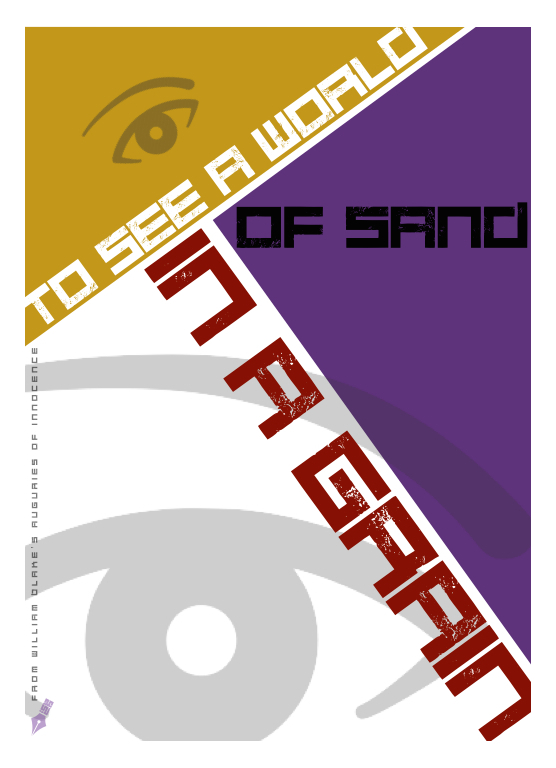
  • To see a world in a grain of sand

    Auguries of Innocence is a poem of 132 lines by William Blake, possibly written in 1803 but published in 1863. It is the first four verses, however, that found popularity.

    To see a World in a Grain of Sand
    And a Heaven in a Wild Flower
    Hold Infinity in the palm of your hand
    And Eternity in an hour
    I studied the poetry of Blake when I was at university and committed a number of verses from his works to memory. Years later, a good friend and mentor, Zane Ibrahim reminded me of the above four lines to help me see the light at a time of emotional turmoil.
    It is to honour that moment that I have designed the following poster series.
  • Posterize it!
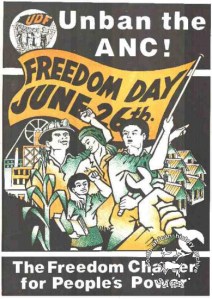
    unban-anc
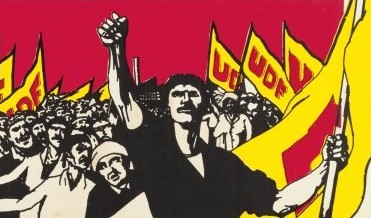
    UDF poster from the 80s.

    In the 1980s, in the struggle against apartheid, activists used different forms of media to win ‘the hearts and minds’ of the public. Initially, these posters were largely used to publicise mass meetings, public rallies, mass funerals and demonstrations. Later, they were also used as a means of education such as posters of the Freedom Charter.

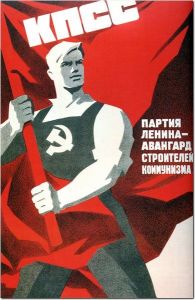
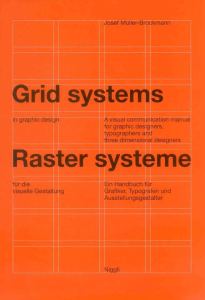
    But posters are more than just a means of mass communication. In the Russian Revolution, constructivist designed posters and book covers were regarded as art forms and had a major influence on design in the 20th century. The Bauhaus movement through individuals like Joseph Müller-Brockmann brought constructivism into popular use in western mainstream media design.

    constructivism
    Soviet constructivist poster. I have a whole collection here.

    That influence reached right into South Africa in the 1980s. Not so much the straight lines and angles but definitely the stoic faces staring into bright future, the raised fists, the fluttering banners and the limited use of colour.

    When I started at my first real job at New Era magazine, I came across Müller-Brockmann’s grid design for all page layout, not just posters. Through his book, Grid Systems in Graphic Design, he had systematised Russian constructivism. He also saw graphic design as a discipline, a philosophy, a calling.

    grid-systemsIt is in light of this that I will be sharing (soon) my own poster designs influenced by constructivism and grid system design. This matches nicely with my fascination of Kufic art which is, sort of, an Arabic calligraphic expression of the same.

    Meanwhile, check out my collection of curated posters on Pinterest here and here.

  • Drawn
    Oscar Keys.jpg
    Pic: Oscar Keys on Unsplash

    I’m drawn to you
    Like a salmon
    Running upstream
    Risking all
    To return
    From where she began

    I yearn for you
    Like a sunflower
    Turns its face
    To follow
    A star
    Always out of reach

    I search for you
    Like a droplet
    Falling to earth
    Becoming stream
    Forever swimming
    To the sea

    [First published on Medium]

  • Kufic Art

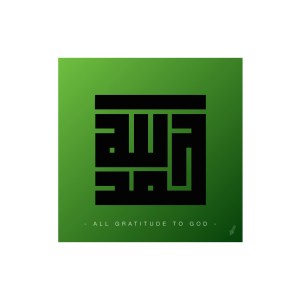
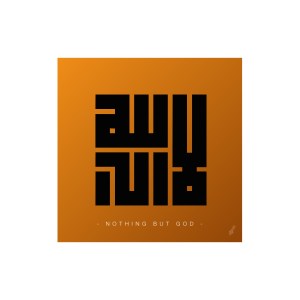
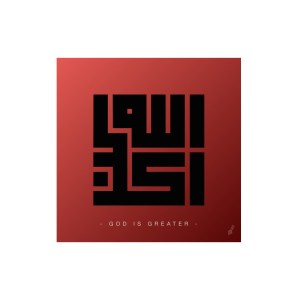
    the-penKufic is a stylised form of Arabic script following a square or geometric shapes. It is one of the oldest forms of Arabic calligraphy named after the city of Kufa in Iraq.

    I love this form of calligraphy because, at one level, you can design it using digital programmes and, at another level, it requires discipline as it restricts how you can design. This makes for fascinating graphic expression.

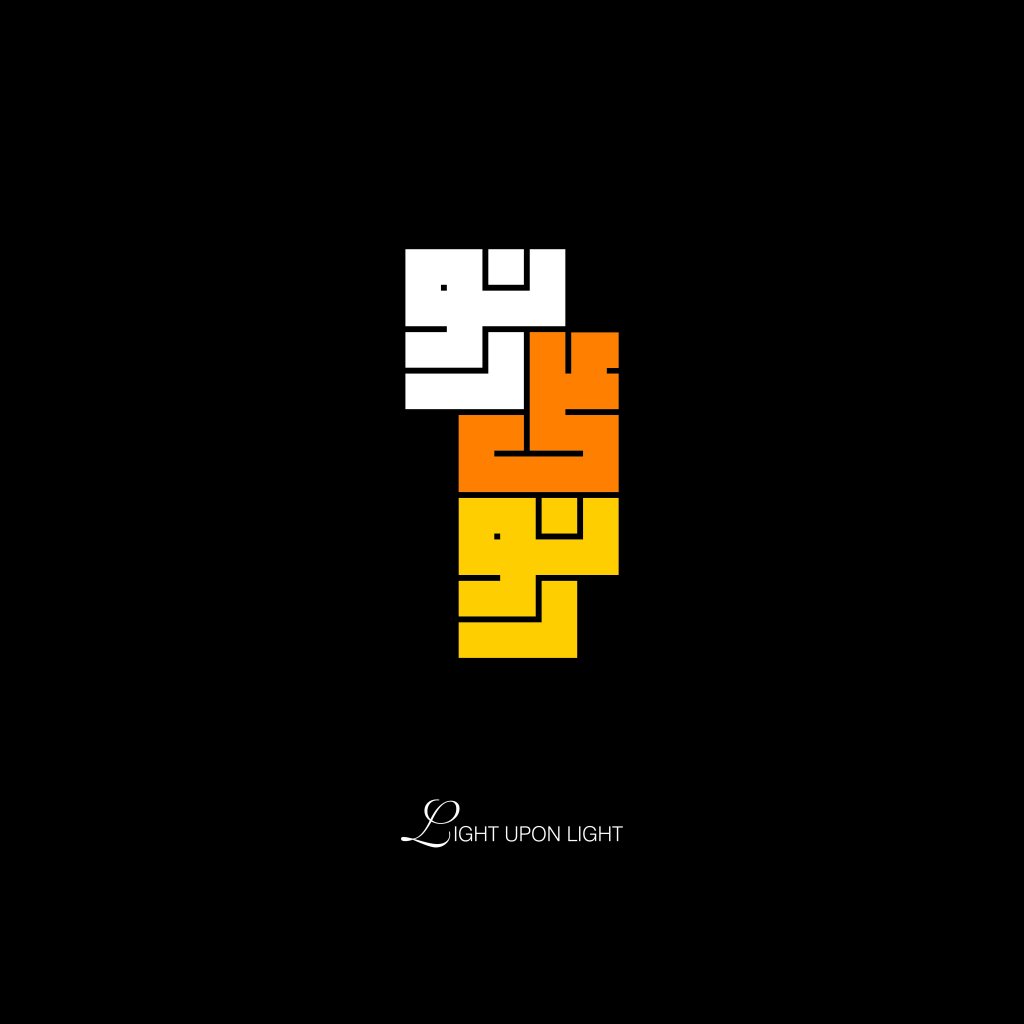
    This page will showcase my kufic art that are largely interpretations of Qur’anic verses. In fact, the logo that I have designed for myself combines the my many interests: the pen is symbolic of all things media and the design above the pen nib is a form of Arabic kufic script that spells my name.

    I have two boards on Pinterest that illustrate what I love about this form of art. Kufic Inspired is of my own attempts at the art form and Kufic City is the works of others that I find interesting. Below are some examples of my work.

    three

    subhanallahalgamdulillah

    la-ilaha-illallahallahu-akbar

  • Take a deep breath. We’re going swimming

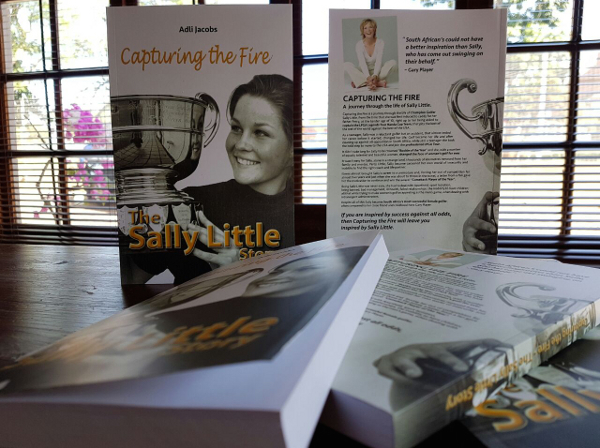
    The author reflects on the process of writing the biography of SA golf champion, Sally Little… 

    sally-little-book-on-display-1
    It’s finally here after a year’s hard work. The Sally Little book launched on 4 October 2016.

    David Bowie was interviewed and asked about his creative process.  He said that his best works came from those moments when his toes could not feel the bottom of the pool, when he was outside his comfort zone.

    When the opportunity of doing a biography of Sally Little, world champion golfer, came along, that was exactly what I felt: I was in deep waters and yet it was strangely appealing.

    Just from my initial research about this sportswoman, her meteoric rise, the many tournaments she had won and still going strong despite her age, I was already beginning to develop an analogy, an outline of what her story meant and what it could mean.

    Once that happened, I knew that this was a story that I wanted to capture. Here was a image that I wanted to paint. In that moment, I realised that this story would force me to draw on my all my resourcefulness in a profound way.

    One of those challenges for me as an anti-apartheid political activist from the 1980s, a product of the National Party forced removals from District Six to the Cape Flats, was whether I had the ability to have enough empathy, enough skill as a writer to capture the story of someone who broke the international sports boycott that helped bring down apartheid.

    But it was also about whether I would be able to see Sally as more than just a sports celebrity. Would I be able to get her to tell me about herself, the side that fans may never see, without holding back? Would I be able to get her to trust me enough to share her story with the world?

    I was embarking on a journey that had a clear destination; a published book of Sally Little’s biography. I was all packed and ready. What was not clear, however, was how this journey would unfold.

    But I am a huge David Bowie fan, an activist from the 80s and I love swimming in deep waters…

  • The Road Trip of an Empty Coke Bottle

    Because unburdening can be liberating, and sometimes you just need to travel…

    coke-300x199An empty, capless, two litre Coke bottle was jay-rolling across a busy Goldman Street near the pedestrian crossing. I had fetched my ten year old son from the primary school down Sixth Avenue. At 2.07pm, that part of Florida, Roodepoort, can be a traffic nightmare for about another twenty minutes but the 2-litre did not care. It does not go to school and—and now that it was empty—no home to go to either.

    So it skipped and hopped across the street. I thought for sure that my front tyres would crush the life out of the bottle but no. It somehow dodged our wheels and of the two-way traffic by inches. I looked in my rear view mirror and saw that it did not wait for the traffic light at the pedestrian crossing nor did it allow the traffic officer, on duty for pupils, to halt any of the cars to give a Coke right of way. If plastic bottles have a gust of wind at their back, who needs right of way?

    When it hit the curb on the other side of the road, it spun a few times and continued to roll in the direction it was going. All along Goldman Street it rolled. On the concrete between the curb and the road, it looked as if it was merrily making its way towards the Goldman Shopping Complex. The way it rolled, with its ends bopping as it hit stones and debris, it looked as if it was hopping to a beat.

    The car radio was on and I imagined the Coke bottle going down the street to the sound of Justin Timberlake’s My Love.

    Yeah, because
    I can see us holding hands
    Walking on the beach,
    our toes in the sand
    I can see us on the countryside
    Sitting on the grass,
    laying side by side

    But 2-litre plastic bottles don’t listen to music and don’t care much for Justin Timberlake even though they may have much in common as Pop Music is often referred to as plastic. It did not bother the bottle either that Coke often uses popular music to promote its product to consumers. It did not see the irony.

    So we cannot tell what gave the Coke bottle its rhythm as it made its way towards the next intersection. As the bottle went out of sight I wondered whether plastic bottles going for a stroll really need an observer to ensure that their story will be documented?

    So, anyway, as it rolled past Seventh Avenue, a guy on his bike was standing at the traffic stop with one foot on the road, waiting to make his way into Goldman. His eyes trailed the carefree Coke bottle roll along in front him. It seemed to be almost dancing. He thought to himself what an interesting metaphor for life. The emptier you are—with less worries and stress—the happier you will be. Freer. He smiled to himself.

    The 2-litre did not look up or contemplate the biker because Coke bottles don’t cycle and could not be bothered by philosophical thoughts about life and what it all means. So it passed by the guy on the bike without even a nod and on it rolled…

    The Coca-Cola logo was now a spinning red band when the 2-litre reached the busy traffic intersection on Eighth Avenue and Goldman. Wreckless buses, expedient mini-taxis and impatient BMWs were not going to slow down or honk at a plastic bottle who cannot understand what the red man means on pedestrian light.

    I cannot say that our Coke bottle smiled when it bobbed unscathed across Eighth or that it even looked back to admire what it had accomplished. But even if I could, it was short lived because just then the bottle deflated.

    Some heavy guy, dressed in rags, had stepped on the empty bottle with his worn out boot. He jumped a bit on the bottom part to ensure that there was no air left. He took off the wrapper and put both in a huge canvas bag squatting on his trolley. There were hundreds of other squashed plastic bottles, plastic wrappers and an assortment of other used junk in his treasure.

    He pulled the rope on his trolley to haul it for another 10 kilometres to the recycling dump. He thought to himself: Why don’t all the bloody plastic refuse come rolling down the street like this empty 2-litre Coke bottle. Then he had another brain wave: When they pay me at the dump, I am buying myself a 2-litre just for myself. The plastic Coke bottle said nothing.
  • How do you even begin to eat a mountain?

    [I have retold this story countless times. It was told to me when I was a student in the 80s. I googled the original storyteller but could not find any reference to it online. It resonated with me because I was born at the foot of Table Mountain in District Six, Cape Town. I am thankful, even now, for Khurram Murad for making this part of his keynote address so long ago.]

    table-mountain
    Table Mountain taken by Aadela Parker.

    There once was a man who was very unhappy. Something was troubling him but he could not put his finger on it. At night he was restless and it took a while for him to sleep. That night he had strange dream.

    He dreamt that an old man approached him and said, “When you wake in the morning, eat the first thing that you see.” When he woke up that morning sweating from the vision, he opened his eyes and saw the mountain. What? How am I supposed to eat a mountain?

    Maybe the old man was joking. He then went about his usual tasks for the day. He still felt troubled though. That night he had the same dream. But now the old man was ranting and raving, “What are you afraid of? Eat the first thing you see.”

    It is not easy to choose what you should see when you wake so when he woke that morning again and saw the mountain, he thought the old man must be crazy. The third night the old man was now threatening him with a stick and promised to make the rest of his nights a living hell if he did eat what he saw when he woke.

    That morning he woke with determination. When he saw the mountain, he immediately packed and set out to eat it. But as he moved closer to the mountain, a strange thing happened: it started to grow smaller. The man began to panic because it seemed as the mountain was moving further away. Just my luck he thought and started to increase his pace. The closer he moved the smaller the mountain.

    By midday he was running. At the end of the day he reached where he thought the mountain should have been. But it had grown so small that he could stoop down, pick it up and put it in his mouth. What do we learn from this strange but interesting story? I believe four things:

    • We all need dreams. We need a vision and a plan to get us where we need to go. We must see the idea before us and keep it in our sight. A dream that you cannot conjure before you is not going to keep our attention.
    • A dream will remain unattainable if we make no effort to make it real. It takes slog. Sometimes the work seems impossible to absorb. But sometimes the most difficult things to learn turn out to be the most enjoyable once you get it. Sometimes, the harder a thing becomes the sooner you are reaching a breakthrough. Apartheid gave way when we thought that we should prepare ourselves for a long fight and bitter fight.
    • Besides the dream and the effort you also need belief. You must believe in yourself. You must believe that you can win. You must believe that it is worth it. Belief gives you confidence and the world cannot resist a person with confidence it will open up paths and opportunities that you never imagined.
    • Finally: sometimes the solutions we are looking for are not weird or strange. Sometimes (often) what we look for, or the solution, lies right in front of us like the mountain in my story. That mountain was in front of his window his whole life but it did not occur to the man to seek it out.
  • How to learn something entirely new in just 4 steps

    It starts by diving in boots and all…

    I was writing a ‘spark’ on Somewhere about how I learn new concepts, new processes or even new skills, when I realised that I actually needed to add water to this very succinct format that only allows for 250 characters. Now, happily, that spark can be my outline:

    To learn something entirely new, for me, 4 things help: 1) I become single-minded about the subject. 2) I take notes as I read (mind-maps). 3) I explain the concepts to anyone that cares to listen. 4) I start to implement what I’ve learnt.

    Image by Brooklyn Morgan on Unsplash

    Single-mindedness

    There is saying that I came across a while back when I tried my hand at Shotokan Karate. I was told: first you imitate, then you innovate. It basically means that if you don’t know something, then you learn from those who do. And you learn from them by imitating what they do, until you get it. Once you have it, then you can become quite creative in how you deploy it.

    In karate—but also in ballet, gymming and other such activities—they make you do the same set routines over and over until you get it or you collapse or whichever comes first. This is not only applied to physical skills but also in learning a new language, in academics, in maths(the bloody times-table), in music, etc.

    But when I say single-mindedness, I’m referring to a process where you become (ok, you induce yourself to become) passionate, besotted, obsessed, perhaps even fanatical about the subject. In other words, you drown yourself in the subject. This allows for a few things to happen:

    1. Fanaticism sweeps away all critical thought, making it possible for you to absorb as much of the subject as possible. Ask any cult member. This is good because it allows for easier imitation or for the information to lodge in your mind.
    2. It helps you to acquire as many bits of information, readings, insights, views on the subject matter as possible. You then become a true student of that area of knowledge. This is the actual aim of assignments, exams and dissertations.
    3. When it comes to the innovation stage, you will have much to draw on. In fact, when you flood your attention with a single subject over a given period, the questions and applications of that information will already begin to emerge.

    But to get the most out of this process, you need to have a good reading technique.

    Mind-maps

    I taught journalism and media studies to college students from first to fourth year. During revision week I noticed that everyone was using the highlighting method. You know the drill: read text, see something interesting, deploy highlighter in a million shades of pastel neon.

    Some even had a technique: green for interesting, pink for very important and orange for things the lecturer mentioned. The idea is to go hunting through the text for the various bits, highlight it and then read the selected coloured bits in a cram session just before the exam.

    Now besides ruining the text book, making it a tad difficult to sell later when the course is over, this is not going to really help in retaining information. You have only really engaged your eyesight leaving much of you other senses out of the equation. And the one sense you should not be leaving out, is that of touch.

    So when I read, I take notes. On a seperate sheet of paper. Or if I am reading an eBook, I open ‘Stickies’ and type out insights, interesting points that I come across. When I write, I put done down salient points and connect them to secondary ideas. And those ideas, I then connect to other related points and so on.

    If you were taking notes of this piece, for example, you might typically have my four major points and each one, in turn, would have sub-points of what the major ones are about. A third layer might be of what you make of all this nonsense. Get it?

    Your mind-map can also be colourful and then you can bring out those highlighters you love so much, like this:

    Why write ? When you write things down, you are making a personal association with the information you are reading. You are actually slowing down your reading, allowing your mind to engage with the information. Chances are also bigger that when you recall the information, the act of you writing will have a stronger image in your mind than just text that you read in some book.

    Just an aside: I have found that when I feel sleepy during a boring meeting, doodling actually keeps me from dozing off. And I can actually remain sober throughout even if my doodles have actually nothing in common with the subject matter. Go figure! (Actually, there is a study on this!)

    So now we have passion, then reading technique. But how do you own this new information?

    Verbal diarrhoea!

    I love movies. Whether animation, thrillers, science fiction, historical drama… It does not matter as long as it is a great story and I can see layers of meaning. Anyone who knows me will know that I can be a great spoiler of the plot. Whatever! The storyteller in me just wants to retell that plot. want to to be the one that gets you to see the genius in the story!

    So when I went to university, I would emerge from an amazing (amazing for me, ok?) psychology or African history lecture, sit down any buddy who would give me half a nod, and rave about the insights I just gleaned. I would repackage that entire one hour session and tell it as if I had come up with those ideas myself.

    When it came to exams, I would generally be able to recall entire lectures of certain subjects. And yeah, it would generally be the ones that I raved about. What happened here? It’s fairly simple…

    Once you are able to explain a concept in your own words, then several amazing things happen:

    1. If you can explain a concept you have heard or read, you are beginning to make sense of it in your mind.
    2. By retelling, you too are hearing it for a second time. Everytime you do, you are reinforcing the information.
    3. Once you make sense and retell, you are owning the information making recall much easier.

    And was it not Einstein who said:

    Now do!

    So once you have submerged yourself in the subject matter, reading as much as you could mindfully, and verbalised it—and by so doing, owning the information—you should implement, innovate, write about it, use it…

    Over the last while I have taught myself to blog, understand social media and pushing that blog content to social networks, use my Twitter account more effectively, swimming in the waters of crowd funding and deepen my understanding of narrative and storytelling.

    If you are reading this, then that last adventure on improving my online posts was not for naught and the advice I received from copyblogger actually paid off!

    – First published on Medium

  • Sally Little on a beautiful Cape Town morning
    Photo0168
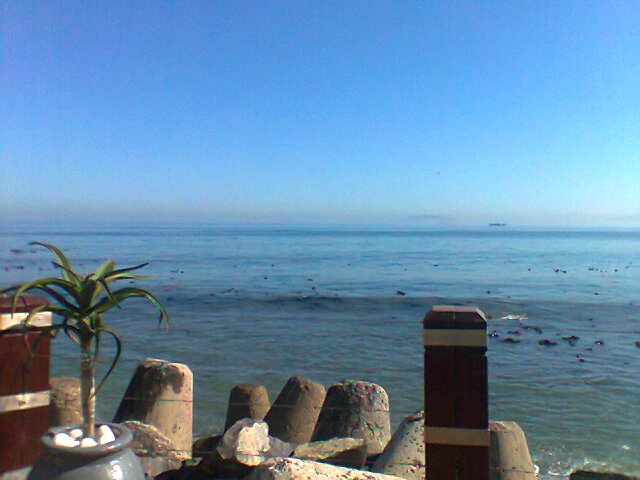
    View from Radisson Hotel breakfast area in Green Point

    I did not know what to expect when Sally Little agreed to meet me at nine for coffee at the Radisson Hotel, in Green Point, Cape Town. The idea was that it was time to put a face to the email discussions. I had arrived early to make a good impression and took a seat on the veranda overlooking a calm Atlantic basking in placid Mother City weather. To remind me what she looked like just in case I greeted the wrong person, I opened my laptop to take one last look at her profile on The Sally Little Foundation website.

    When I looked up from her picture, Sally had just entered the Radisson’s breakfast area. With a disarming smile she came directly to where I was sitting. “You must be Adli, it’s so nice to meet you,” she extended her hand to give me a confident handshake. With an equally friendly business partner, Kathy Gorchoff, Sally set about to make me feel so at ease that the next hour became the most fruitful meeting I had had in months.

    As she recounted her years of living and working the United States, I was struck by not just the ease with which she told her stories, but also her own self-awareness. “Every time I won a tournament,” she confided, “I would keep keep the trophy in a bag, then hid it under the bed.” She did not want her mom to make a fuss about the achievement.

    Here was no prima donna. This was not a stand-offish celebrity with guarded comments, wry smiles and tinted sunglasses. Perhaps the only trace she bore of the world champion golfer status was an unmistakable self-confidence that she integrated with an unusual openness and willingness to share candid insights. Drawing attention to a slight gait in her step as we concluded our meeting, she revealed that she was going to have an operation on her ankle but would be available on Skype. It seemed as if someone had clearly forgotten to inform Sally that she is regarded as one of the greats in a very prestigious game!

  • And here I thought I was the only one

    When I first saw Groundhog Day, I was drawn to its notion of Carpe Diem

    [Written in response to The Subtle Brilliance of ‘Groundhog Day’]

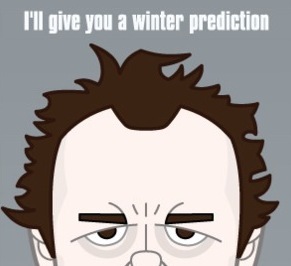
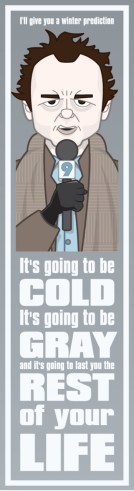
    Groundhog Day poster

    Bill Murray in Meatballs marks my days of questionable movie tastes in my youth. I was fourteen when the movie hit the circuit and I just had to see it. And as my tastes improved, so did the actor as he meandered his way through CaddyshackStripes and Ghostbusters. Arguably, Groundhog Day, was a Bill Murray that had matured as an actor, a watershed moment, sort of like the way John Travolta improved through his movie career.

    Throughout the 90s I would unpack the whole plot of Groundhog Day in workshops to inspire youth to take charge of their own transformation. I would explain that the Phil being trapped in the same day was often what our own lives are really like. We may number them differently, give them different names and watch different weather conditions play themselves out… Our days are basically the same. And we have trapped ourselves in this monotonous routine.

    The only way out was to acknowledge that we are wasting away with our lookalike days and then to make incremental changes. And if you focus on changing yourself, the rest will work itself out or won’t even matter. It worked so well, I remembered those moments and then deployed it once more to first year journalist students when I started lecturing. I then played clips of the movie because… well I could, as I had my class trapped for an hour a quarter!

    And here I was thinking that I was this freak for holding onto an oldie such as Groundhog Day. So thank you Remi for adding in all those layers of meaning to a movie that I already believed is inspirational…