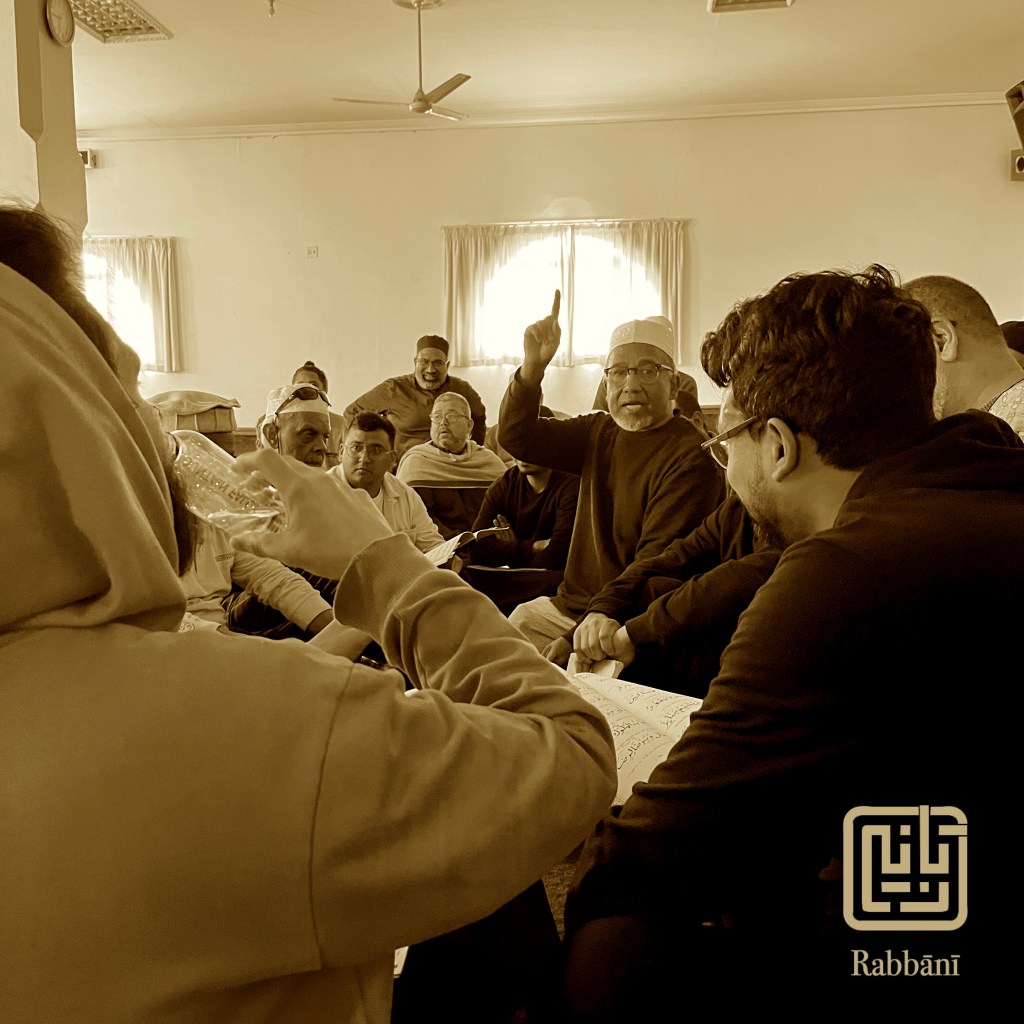
Fast-Forward into the Institute, Returning to the Circles
A week with the IslamicText Institute and Azzawia’s living tradition
It was a whirlwind week — Arabic on Tuesday, fiqh on Wednesday, Kitabush Shukr on Sunday, and Mawlood practice at Azzawia to close. What began as a fast-forward plunge into the Institute ended as a return to the circles that have always held the rhythm of Cape Town’s tradition.
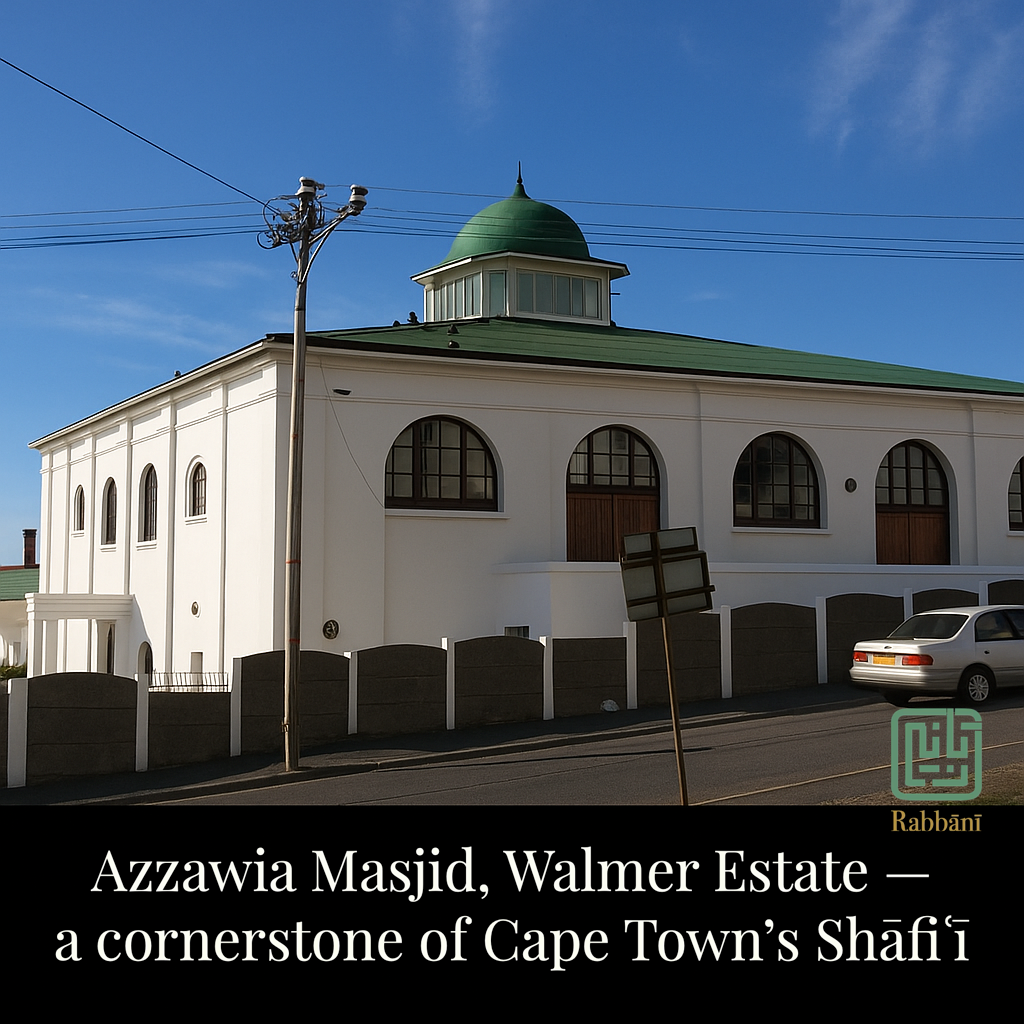
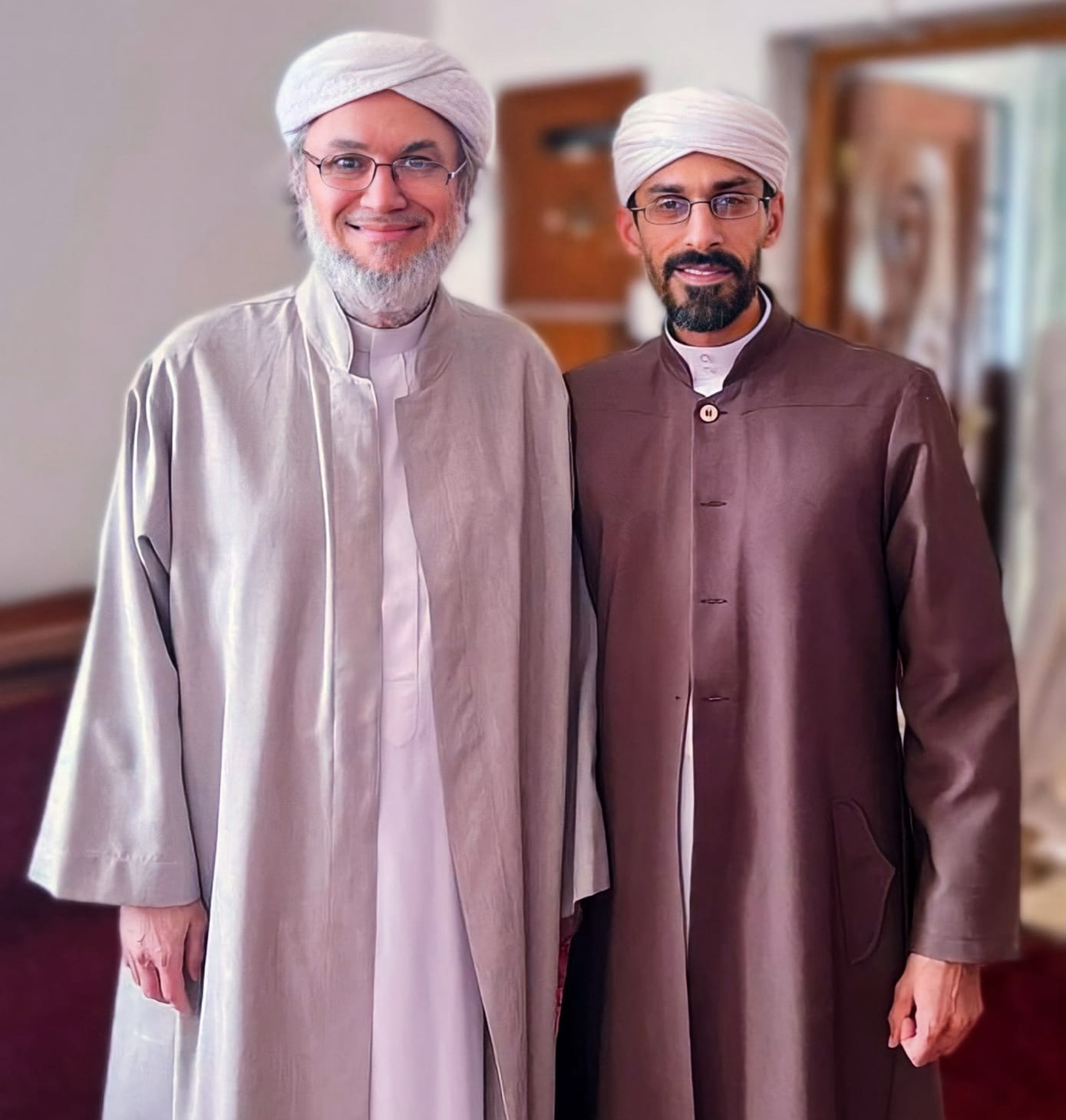
It began with a handshake at Azzawia. Shaykh Allie Khalfe smiled, extended his hand, and with that simple gesture drew me into a current that would carry me through a whirlwind week — Arabic, fiqh, gratitude, and finally the rhythms of Mawlood.
Where Azzawia’s circles had been steady and calm, the IslamicText Institute moved like a river already in motion. One week felt like fast-forwarding through months of learning, not skipping steps, but running to keep pace.
Tuesday Night – Kitāb al-Asāsī (Arabic)
The week began with Arabic, the Kitāb al-Asāsī.
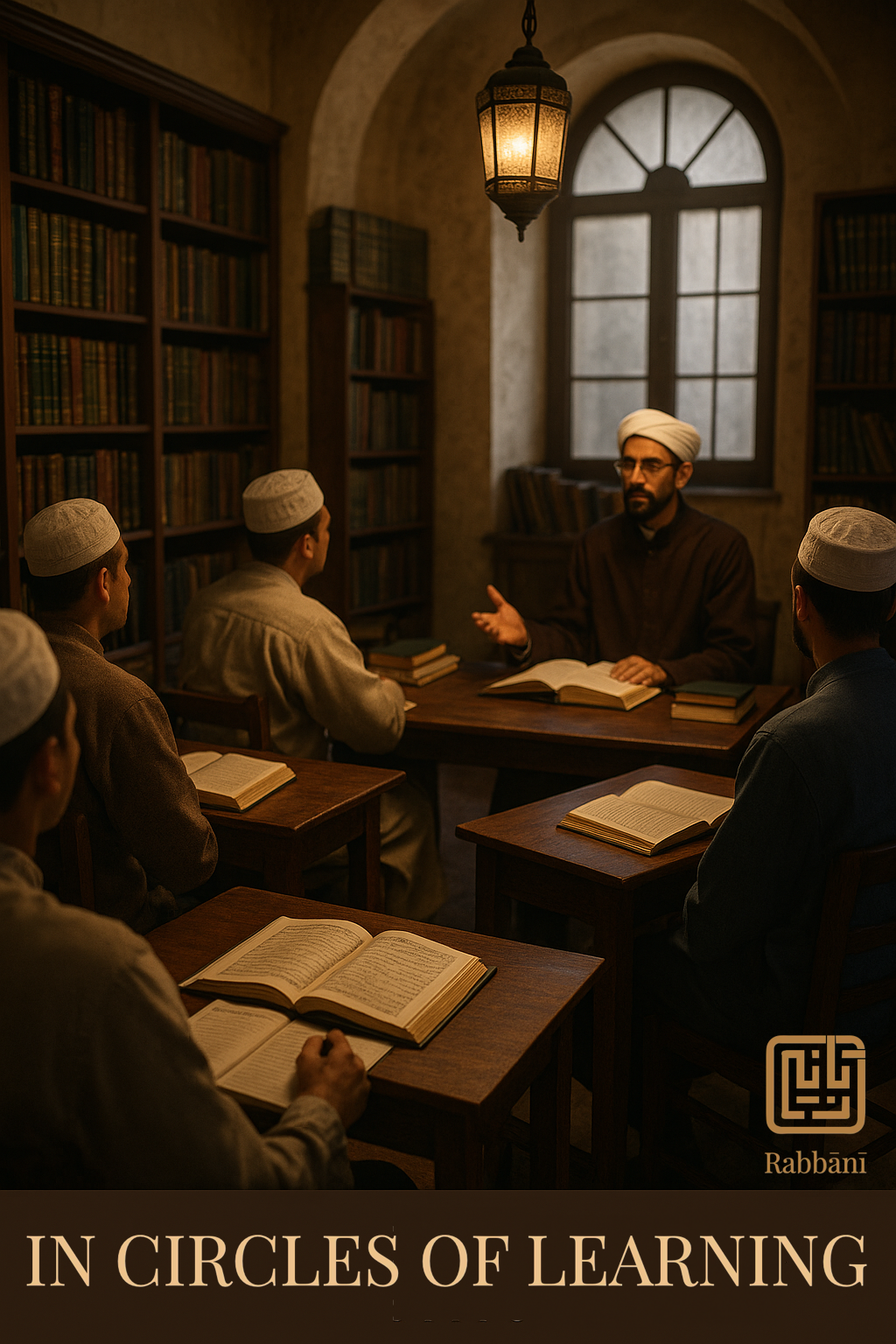
Stepping into the Arabic class at the IslamicText Institute felt like boarding a train already in full motion. The Shaykh and the students were moving at speed, voices alternating between reading aloud, parsing grammar, and drilling vocabulary. On the board, examples unfolded in careful script: prepositions locking words into the genitive, adjectives matching their nouns in gender and case, colours shifting form depending on what they described. What for some students was revision, for others — like me — was a plunge into deep waters.
The pedagogy was exacting. Shaykh Allie did not slow the pace, but instead invited everyone to rise with it. “Read, now explain, now apply,” was the rhythm. Mistakes were corrected swiftly, but with humour; every slip was a lesson, every correction a reminder that Arabic is both precise and merciful — demanding effort, but always rewarding persistence. You could sense that this was no ordinary language class. It was training the mind to think with Qur’anic logic, to tune the tongue to sacred precision.
For me, it felt beyond capacity. Months of Arabic study had not prepared me for the quick-fire exchanges, the confident parsing, the way students moved from grammar to meaning almost effortlessly. Yet this sense of inadequacy became its own teacher: a reminder that humility is the door to knowledge. The Shaykh’s method left no space for passivity; to survive, one had to participate, stumble, rise again, and keep pace with the moving current.
And yet, beneath the intensity, a deeper truth was visible. This Arabic — this Kitāb al-Asāsī — was not an isolated discipline. It was the key, the doorway to everything else. Without it, the texts of fiqh and ʿaqīdah that followed on Wednesday would remain veiled. With it, even a little of it, the veils began to lift. As the class closed, I realised that I had not simply attended a language lesson. I had glimpsed the scaffolding of the tradition — the way Arabic itself becomes the vessel carrying law, creed, and devotion across centuries.
The experience was like being dropped onto a moving train: you find your balance by running. And the Shaykh’s clarity carried us along.
Wednesday Night – Fiqh and ʿAqīdah in Motion
If Tuesday was about catching the rhythm of Arabic grammar, Wednesday was a double immersion — first in the law of prayer (Fiqh), then in the foundations of belief (ʿAqīdah).
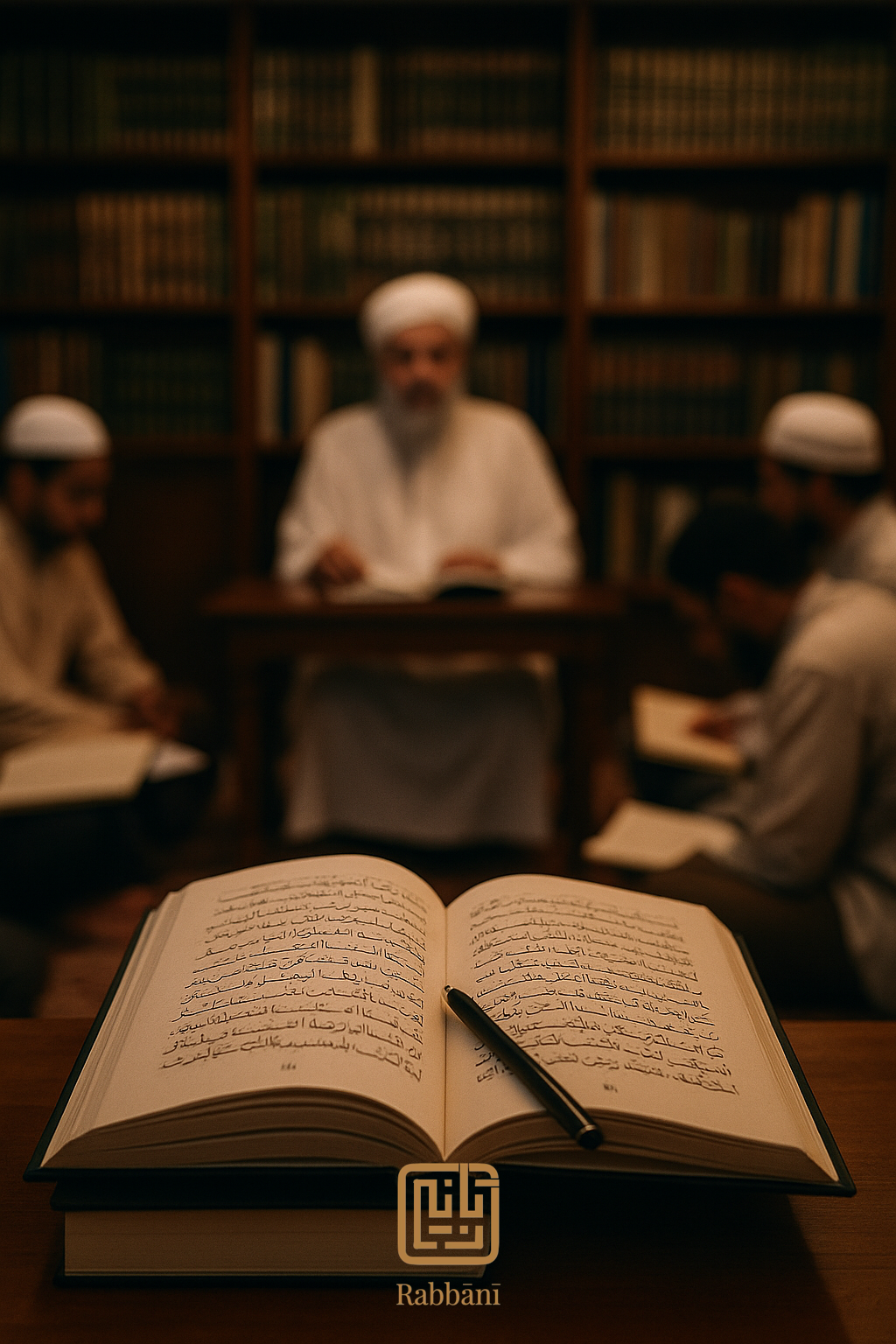
In the Fiqh class, we entered al-Majmūʿ of Imām al-Nawawī, studying the conditions for a valid prayer (Shurūt Ṣiḥḥat al-Ṣalāh). Shaykh Allie Khalfe reminded us that prayer is not just a series of movements, but an act that only takes its true form when certain conditions are met: purity, covering the body, facing the qiblah, the right time, and the intention. Without these, the prayer is incomplete — like trying to build a house without laying its foundation.
What struck me most was how the discussion flowed between law and purpose. Technical details (such as what invalidates purity or how to define proper covering) were paired with reminders of why these rules exist: to help us stand before Allah with clarity and humility. Even for someone familiar with the Shāfiʿī tradition, it felt fresh — like polishing something you thought was already shining.
After Fiqh came ʿAqīdah, using the poem al-Jawharah as our guide. The Shaykh paused on a verse about knowing what Allah loves and what He dislikes, and how this knowledge has two sources: Revelation (the Qur’an and hadith) and the insight of the heart. The latter, he explained, is rare and precious — not every reflection is reliable, but when guided by sincerity and remembrance, it can be a light Allah places within the heart.
The room grew quiet at this point. It was as if the text had shifted from rules to reflection, inviting us inward. One student described it as moving from the “outer map” of worship into the “inner compass” that helps us navigate love and awe of Allah.
Together, these two sessions showed me the balance of Islamic learning: law to protect the structure of worship, belief to enliven its spirit.
Sunday Morning – Kitābush Shukr (Gratitude)
The class opened with Shaykh Allie Khalfe guiding us into Bayān al-Tamyīz — the explanation of distinguishing between what Allah the Exalted loves and what He dislikes.
As Imam al-Ghazālī reminds us, gratitude (shukr) is not merely a feeling but an act: to use Allah’s blessings in obedience to Him. Ingratitude (kufr al-niʿmah) is its opposite — using those same blessings in disobedience.
The Shaykh highlighted that distinguishing between Allah’s love and dislike has two sources:
- Revelation — the Qur’an and the Prophetic Sunnah.
- Insight of the Heart — reflection with the “eye of the heart,” rare and difficult, yet precious when granted.
A fellow student captured it beautifully:
“The meaning of gratitude is to use the blessings that Allah the Exalted has bestowed upon us in obedience to Him; and the meaning of ingratitude is the opposite… Revelation is the foundation, but the inner sight is what polishes the heart.”
In this way, Shaykh Allie urged us to see shukr not as abstract, but as practice — prayer, fasting, feeding the needy, speaking truth — until life itself becomes an act of thanks.
Sunday Evening – Mawlood Practice at Azzawia
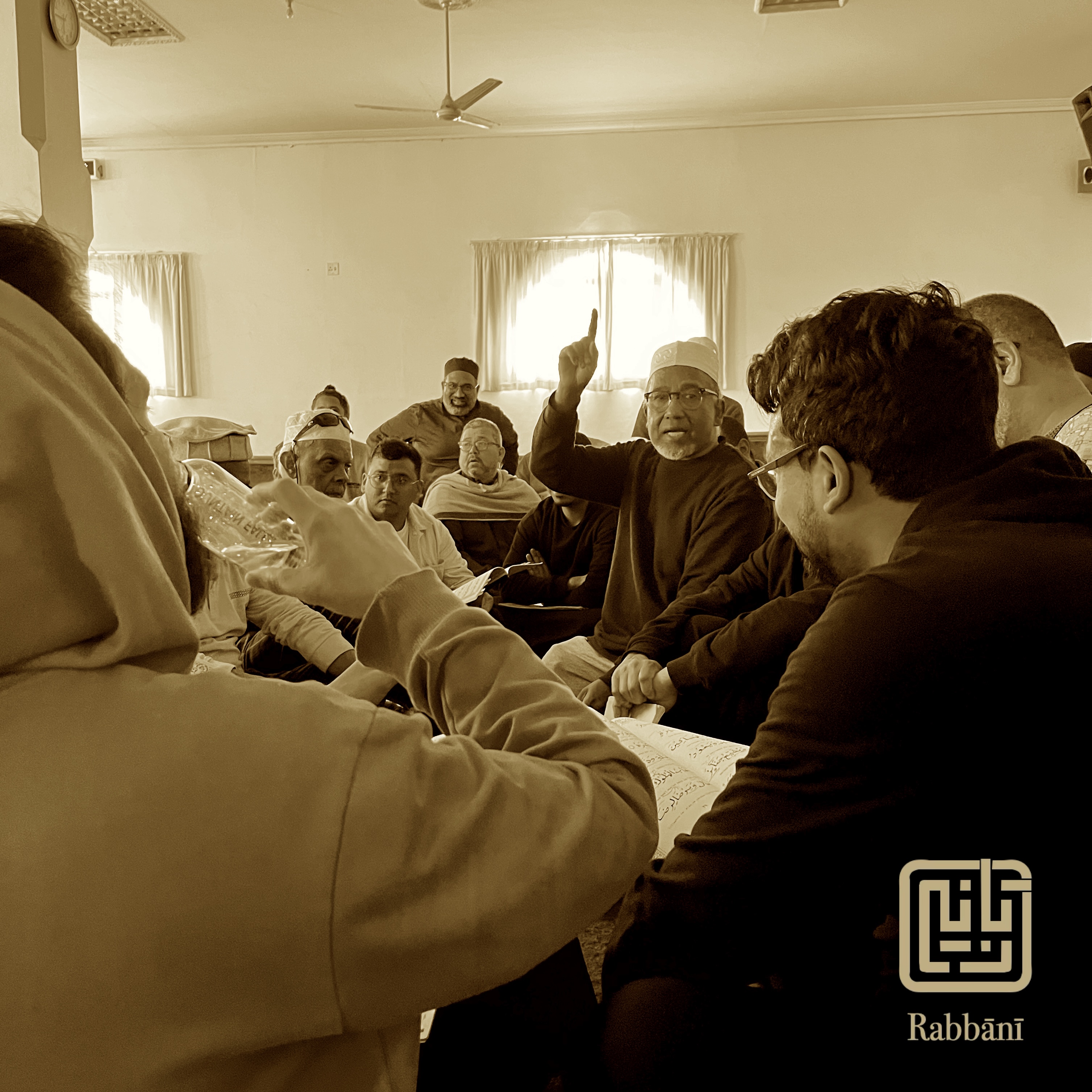
As the sun lowered that same Sunday, I stepped back into Azzawia — not for fiqh or grammar, but for song.
The Mawlood practice was alive:
- A conductor guiding the voices — “higher here, lower there, let me show you.”
- Laughter and corrections, Afrikaaps mixing with Arabic across the room.
- Pages of the Barzanji Mawlood open, voices rising and falling, the rhythm of devotion rehearsed until it became natural.
Behind the practice, in conversation, plans unfolded: flowers and rose water, daljies and samoosas, volunteers preparing. The anticipation of the Mawlood itself, still weeks away, hovered in the air.
It felt like the body of the community rehearsing, tuning itself — men and women, Afrikaans and English, sacred text and local voice, all weaving into one.
Closing Reflection – Learning at Speed, Returning to Circles
By the week’s end, I had been swept into three modes of learning — the sharp sprint of Arabic grammar, the layered dialogue of fiqh, the contemplative unfolding of gratitude, and the embodied devotion of Mawlood practice.
The Institute was fast-forward — a current already in motion. Azzawia remained steady — circles rooted in the soil. Together, they are not opposites, but complements.
I left with my notes still warm in my hands, the echo of recitation still in my ears. Learning at speed. Remembering at depth.
And in both places — gratitude.
🤲 Dua at the End
اللَّهُمَّ اجعل هذا العلم نورًا في قلوبنا، وعملاً صالحًا في حياتنا، وذُخرًا لنا يوم نلقاك.
O Allah, make this knowledge a light in our hearts, a righteous action in our lives, and a provision for us on the Day we meet You.
🔗 Cross-link
👉 For a deeper sense of Azzawia’s slower rhythm, see my earlier reflection: In the Circles of Azzawia.
 Adli Yacubi