Heritage Month Reflections on Water, People, and Becoming
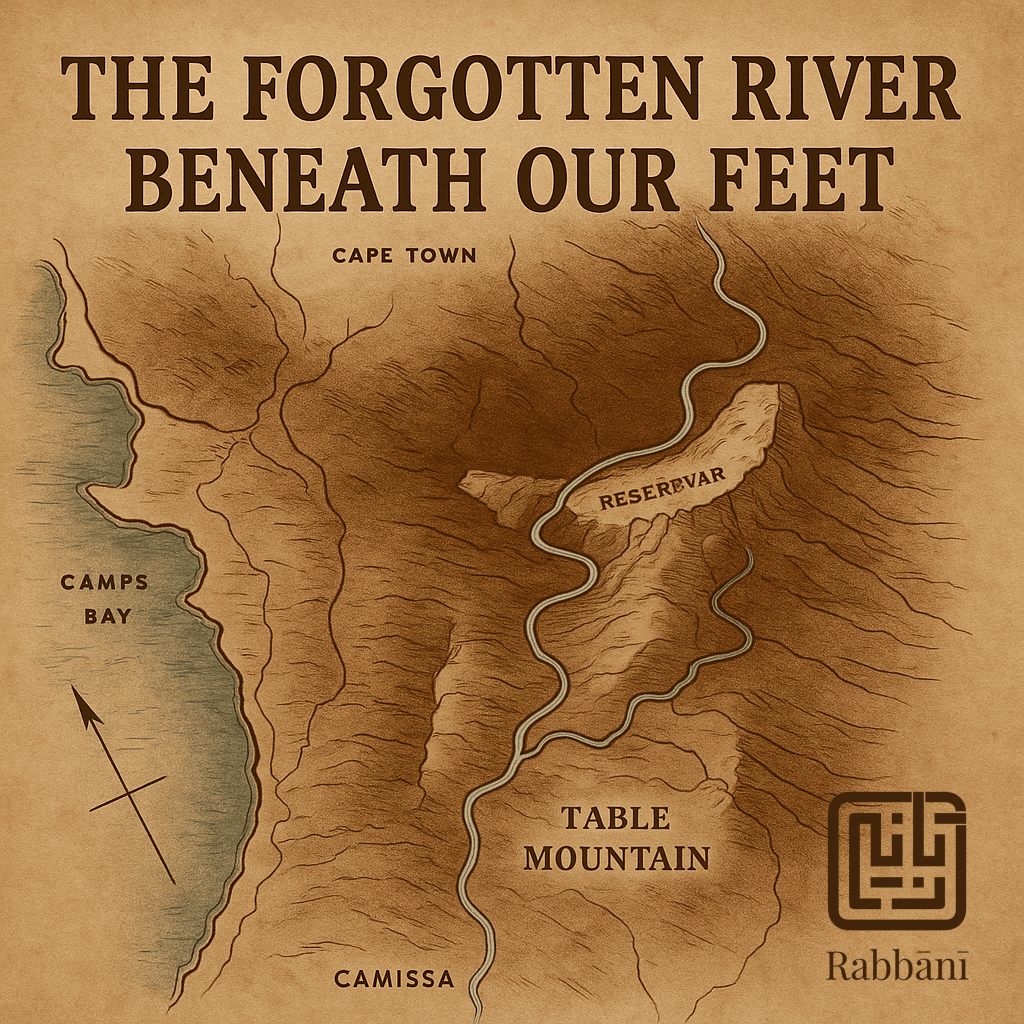
The Forgotten River Beneath Our Feet
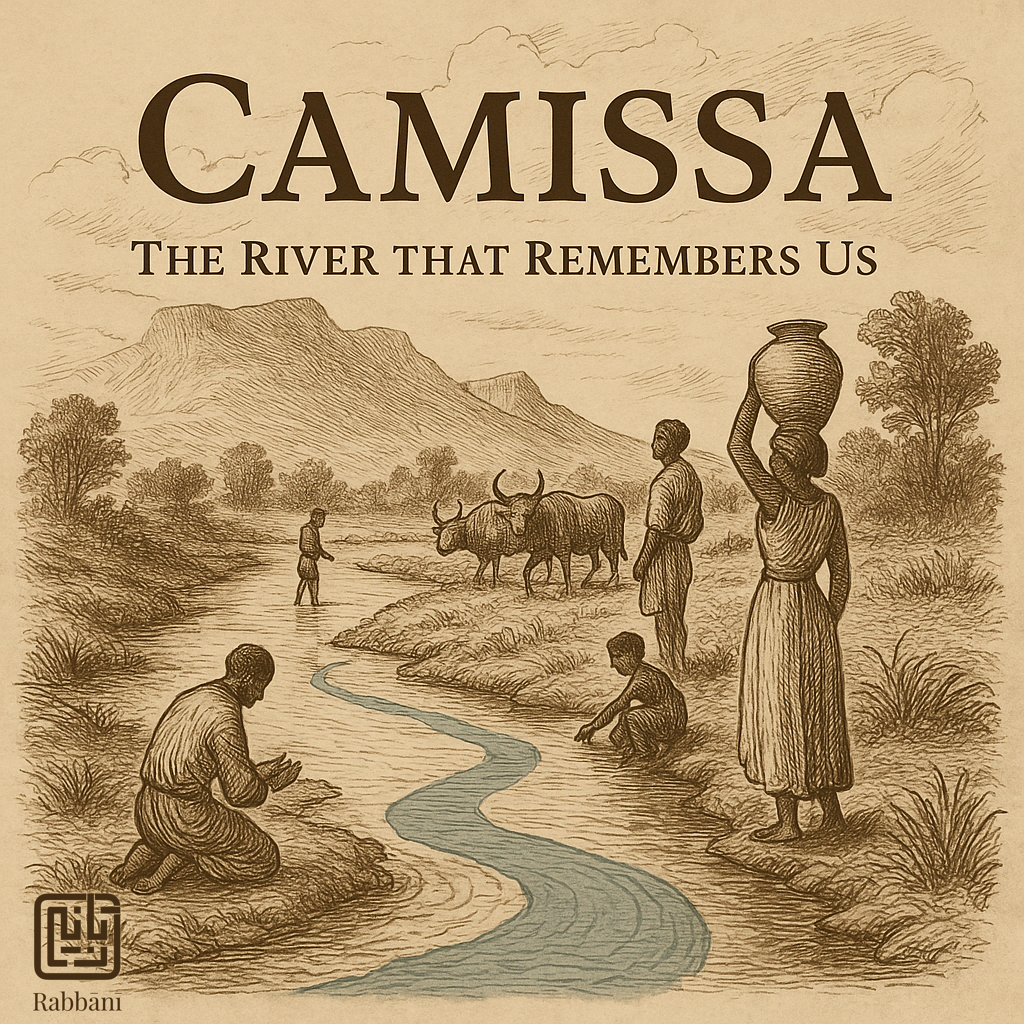
Before there were streets and buildings, before Company Gardens and canals, there was water. It rose from the springs of Table Mountain and came tumbling down in streams, gathering into what the Khoi called Camissa — the place of sweet waters. For centuries, this river sustained life at the Cape. The Khoi and San drank from it, rested by its banks, told stories in its shade. Later, enslaved men and women from Java, Bengal, Madagascar, Mozambique, and India touched its current as they bent under forced labour. Fresh water was the first mercy, and the first demand.
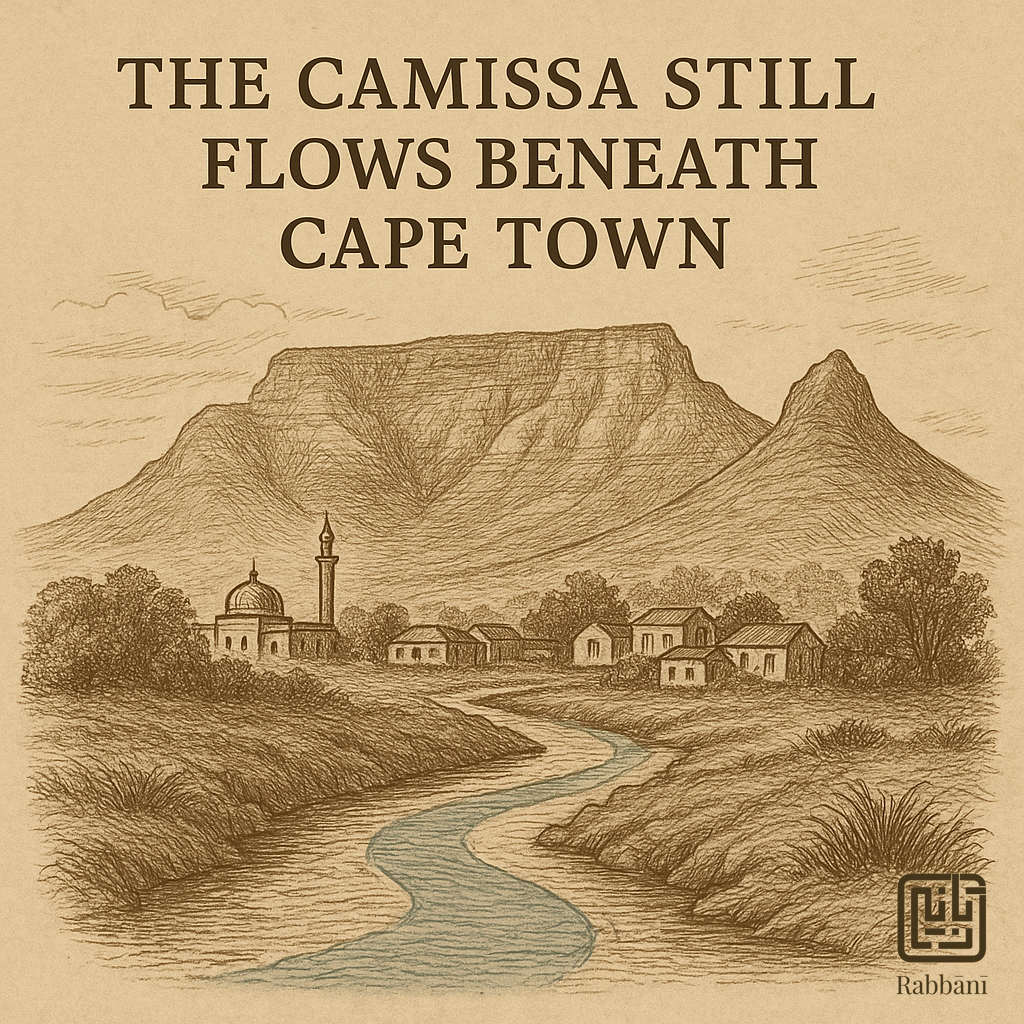
Camissa once ran openly down into the town. The Dutch East India Company carved it into canals, forcing its body into stone, bending it to their fort and gardens. But water has memory. It seeps under walls, reappears in unexpected places, refuses to be silenced. Today, buried beneath tar and pavement, Camissa still flows. And if you pause long enough, you might hear it whisper under your feet.
At the River’s Edge: A People Gathered
The river was never just water. It was a meeting place, a barzakh — a threshold where lives, languages, and faiths collided. Khoi pastoralists led cattle to drink. San hunters rested with skins and stories. Dutch settlers drew buckets to quench their fort. Slaves dug trenches, carried wood, and planted gardens for a company that claimed the river as its own.
Yet at the same banks, something else was happening. Free Blacks, exiles, manumitted slaves, and the first Muslims of the Cape gathered here. The Auwal Mosque — our first mosque — rose near the Camissa’s streams. Qur’an recitation and children’s laughter mingled with the sound of water. Out of pain, a people began to form.
African Camissa: A Wider Circle
Patric Tariq Mellet calls this heritage African Camissa. It is more than geography; it is an identity — a wider circle of becoming. In his telling, Camissa is the place where Khoi, San, enslaved Africans, Asian exiles, and their descendants all drank from the same stream, forming a new community beyond the colonial word “Coloured.”
Stuart Hall once said identity is not a fixed thing we inherit, but a process of becoming. Camissa is that process made visible in water — always moving, always reshaping, carrying traces of every stone it has touched.
The River of Resistance and Remembrance
Water has always been resistance. Hājar ran between the hills in desperation, and Zamzam burst forth in the desert — the well that still feeds millions of pilgrims. Camissa, too, gave life to those who were bound in chains. The VOC tried to control it, but enslaved hands touched it daily, and their songs flowed into it.
In my own writing, I have tried to follow these streams:
The Legend of the Silver Tree — a story of shimmering roots in mountain mist.
The Mother Tongue of Tasbih — where Afrikaans, written in Arabic script, became a stream of prayer.
Tamat — a reminder that completion is never an ending, but a living beginning.
Hājar — the Black mother whose faith turned thirst into a sacred inheritance.
All these pieces flow back into Camissa. The river is not only history — it is memory itself, resisting erasure.
Heritage Month: Listening for the Water
September often gives us monuments, parades, and neat stories of “unity in diversity.” But heritage is not polished granite or rainbow slogans. It is water that refuses to stay in its channel.
Camissa is buried, but not gone. It still seeps under Cape Town, carrying whispers of Khoi clans, slave lullabies, Qur’an verses, and the rhythm of ghoema drums. It reminds us that heritage is not just what we are handed, but what we choose to remember and honour.
Closing Reflection
The Camissa River still remembers us. It does not flow in straight lines. It curves, divides, disappears, and resurfaces — like our histories, like our families, like our faiths. To walk in Cape Town is to walk above water, on layers of memory that never dry out.
The tree shimmers still, for those who know where to look. The river flows still, for those who choose to listen.
🎥 This reflection also lives as a video. Watch it on [Instagram]
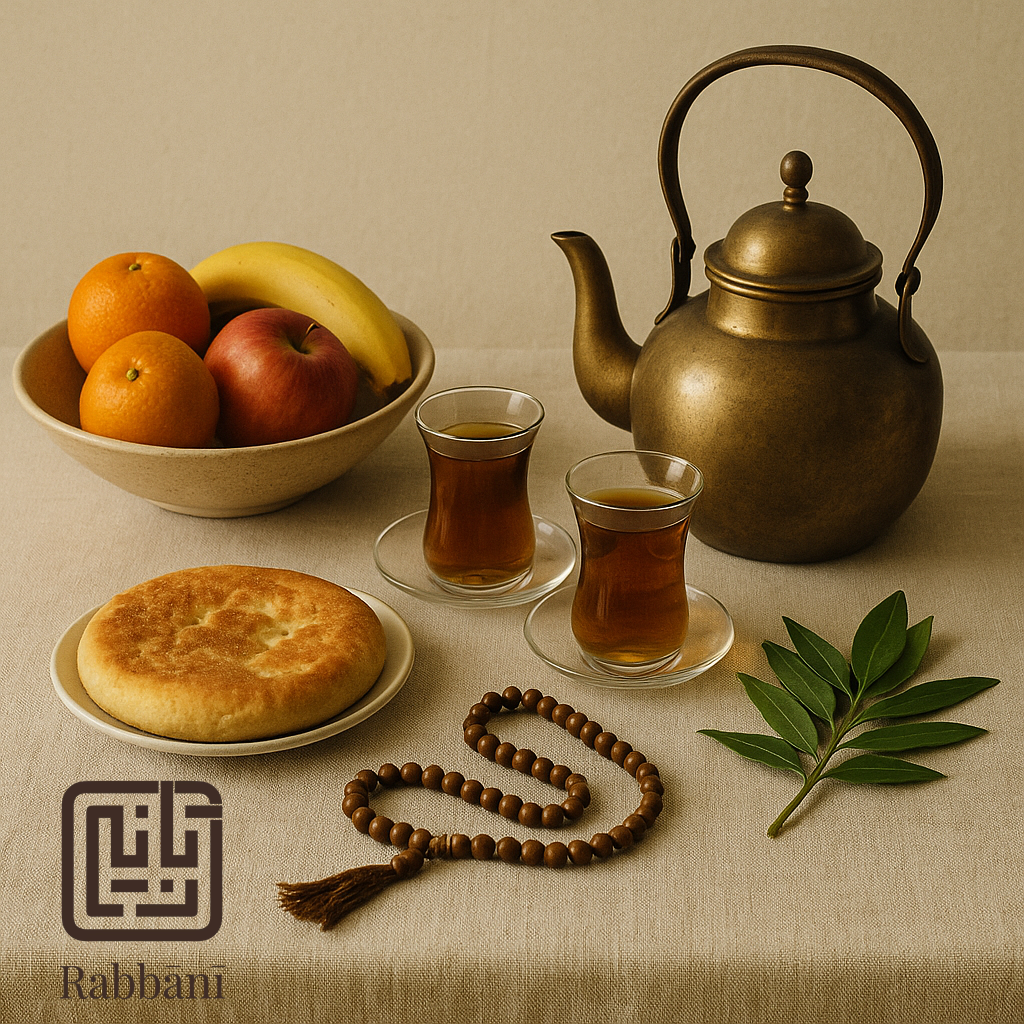
Every Rabiʿ al-Awwal, Cape Town breathes differently. The air is heavy with sandalwood smoke, the sny of rampies, the melody of the Riwayat al-Barzanji. Children once practised their lagu at home, correcting one another — because to sing the Prophet ﷺ was to sing him beautifully. Even cutting lemon leaves became dhikr.
This is Cape devotion: love woven into scent, sound, and preparation. It was never by chance. Preparation itself was worship.
The Beauty of Riwāyah
The Arabic word riwāyah (رِوَايَة) means narration. But in the Cape it became more: the sung retelling of the Prophet’s ﷺ life.
Imām Jaʿfar al-Barzanji (d. 1763), Chief Mufti of Madinah and a Kurd from Barzan, composed ʿIqd al-Jawāhir (The Necklace of Jewels). Written in rhythmic prose and poetry, it tells the noble birth and qualities of the Prophet ﷺ. From Madinah it travelled to East Africa, Southeast Asia, and the Cape, where it became the heartbeat of Mawlud gatherings — always with sandalwood burning, rampies cut, and voices rising in lagu.
How beautiful is thy face, Shining brighter than the sun. This night is lit by your light — A night of joy, a day of pride. The givers of glad tidings cried out: “The Chosen One, the Beloved, has come — rejoice!“
From Barzan to Jerusalem to the Cape
The same Kurdish soil that gave us Barzanji also gave us Ṣalāḥuddīn al-Ayyūbī (Saladin) — the liberator of Jerusalem in 1187. One carried the pen of devotion, the other the sword of justice.
🌿 The Cape inherited both: singing the riwāyah with love, and resisting injustice with courage. Devotion is never only ritual — it is also justice.
Mawlud and the Question of Evidence
Every year, voices say: “Mawlud is bidʿah. It is ḥarām.” But as Shaykh Allie Khalfe reminds us, declaring something ḥarām requires qatʿī (decisive) proof in both chain (thubūt) and meaning (dalālah). No such text exists.
Instead, the Qur’an itself honours prophetic birthdays:
“Peace be upon him the day he was born” (Q 19:15) — Yaḥyā.
“Peace be upon me the day I was born” (Q 19:33) — ʿĪsā.
The Prophet ﷺ also endorsed gratitude for sacred days. When the Jews fasted to commemorate Musa’s deliverance, he said: “We have more right to Musa than you” — and he fasted (Bukhārī, Muslim).
If deliverance is worthy of commemoration, how much more the birth of Muhammad ﷺ, mercy to the worlds (Q 21:107).
Graves, Memory, and Reverence
Some argue: “Level the graves.” They quote hadith forbidding plastering or building on tombs. But the Qur’an records that when the People of the Cave were discovered, those who prevailed said: “We will surely build a masjid over them”(Q 18:21).
Our sacred sites confirm this:
The Hijr Ismāʿīl beside the Kaʿbah contains the graves of Hājar and Ismāʿīl.
Masjid Nabawī encloses the Prophet ﷺ, Abū Bakr, and ʿUmar.
The Cape’s kramats — Tuang Yusuf, Tuang Guru, Tuang Mahmud — stand as circles of remembrance.
These are not shirk but reverence, places of memory and duʿāʾ. To erase them is to erase ourselves.
Activism as Sunnah
The Prophet ﷺ left us more than rituals. He left us justice. The Constitution of Madinah established a civic community across religions and tribes.
That spirit carried into the Cape’s struggle against apartheid. In the Call of Islam, the Muslim Youth Movement, and the National Muslim Conference at UWC (1992), activists remembered the Prophet ﷺ not only with salawāt but with action — defending equality, insisting on women’s inclusion, placing youth at the centre. To live his Sunnah is to resist injustice.
The Everyday Sunnah
And yet, his legacy is also small, intimate. To say “Ahlan wa sahlan” at the door is prophetic. To put on the kettle and share food is prophetic. To dress with dignity, to smile, to eat together — these are echoes of the Prophet ﷺ at the table.
That was my final note on Radio 786: Mawlud is not just once a year, but lives in every act of welcome, in every gathering, in the rhythm of our homes.
Gadija’s Reflection
At the close of our conversation, Gadija Ahjum reminded listeners that these traditions are not nostalgia but a living inheritance. They still speak to Cape Town today — in song, in struggle, in everyday acts of kindness. Her words were a benediction: that we must hold on to these echoes, because they remind us who we are, and whose love runs in our veins.
Closing: In Our Veins, In Our Graves
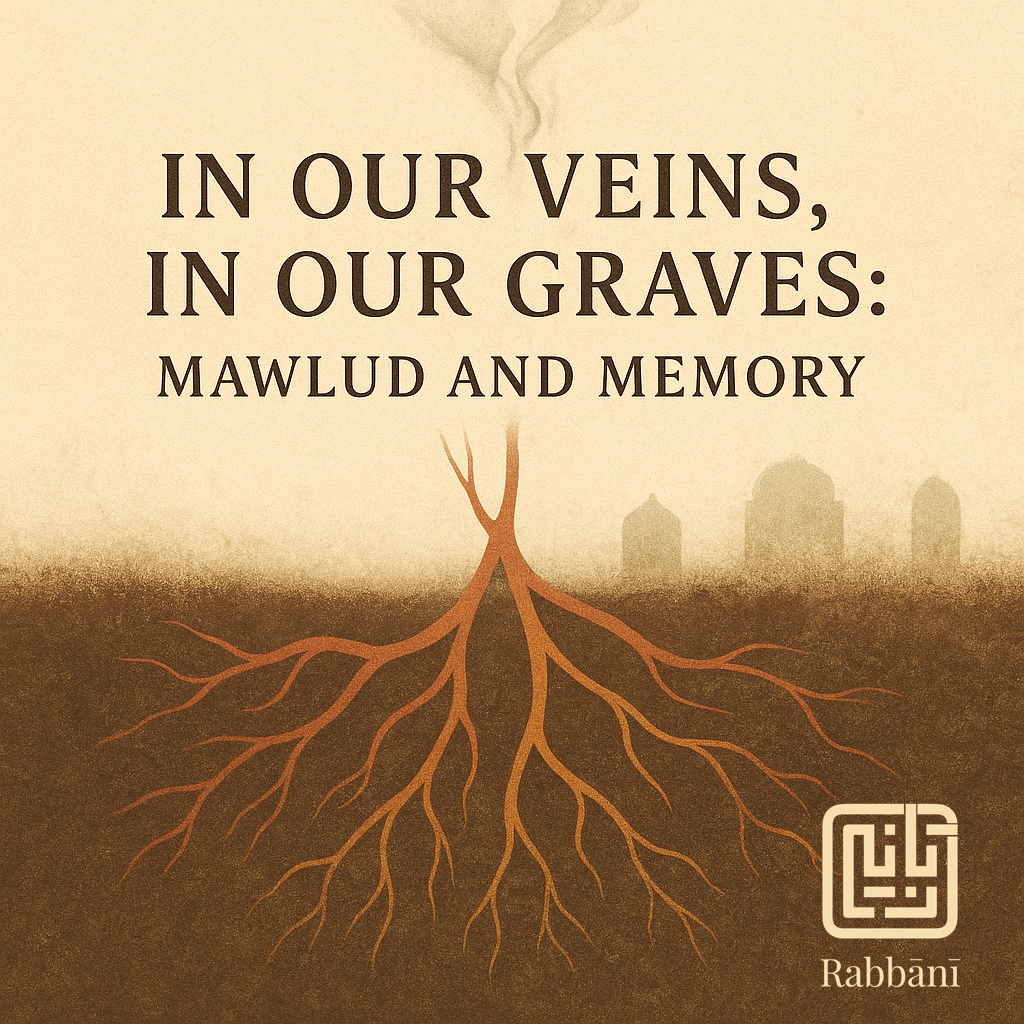
The Prophet ﷺ is not only in our books. He is in our veins — in sandalwood tasbihs from Makkah, in rampies leaves cut by children, in songs sung through the night. And he is in our graves — in the kramats that guard our Cape, in the Hijr Ismāʿīl, in Masjid Nabawī itself.
This is the beauty of riwāyah: history retold in the key of love, memory carried on the breath, the Prophet ﷺ remembered not only in books, but in song.
And then comes the moment every Cape gathering knows. The reciter enters the salawāt, and we rise. To stand in qiyām is to welcome the Beloved ﷺ into the room. Voices swell, hearts open, and it feels as though his light enters the gathering like fragrance. This is not metaphor — it is inheritance. In standing, we join generations before us, declaring with our bodies and our voices: the Prophet ﷺ lives in our veins, and in our graves.
🔗 Related Blogs & Reflections
🌿 The Prophet in Our Veins — Cape Mawlud traditions, sandalwood, inheritance: Read here
🧭 Tourist in My City — walking Cape Town’s sacred geography: Camissa, Slave Lodge, Bo-Kaap, Tana Baru: Read here
🕊️ A Family Dhikr Between Birth and Remembrance — names, dreams, duʿāʾ across generations: Read here
🌊 Get Rooted, Walk Through the Sea — faith at life’s thresholds: Read here
🕌 Streams of Ink and Streams of Light — reflections on adab, ink, and the mosque as living memory: Read here
Before Three Sisters: A Road Interrupted, A Heart Opened
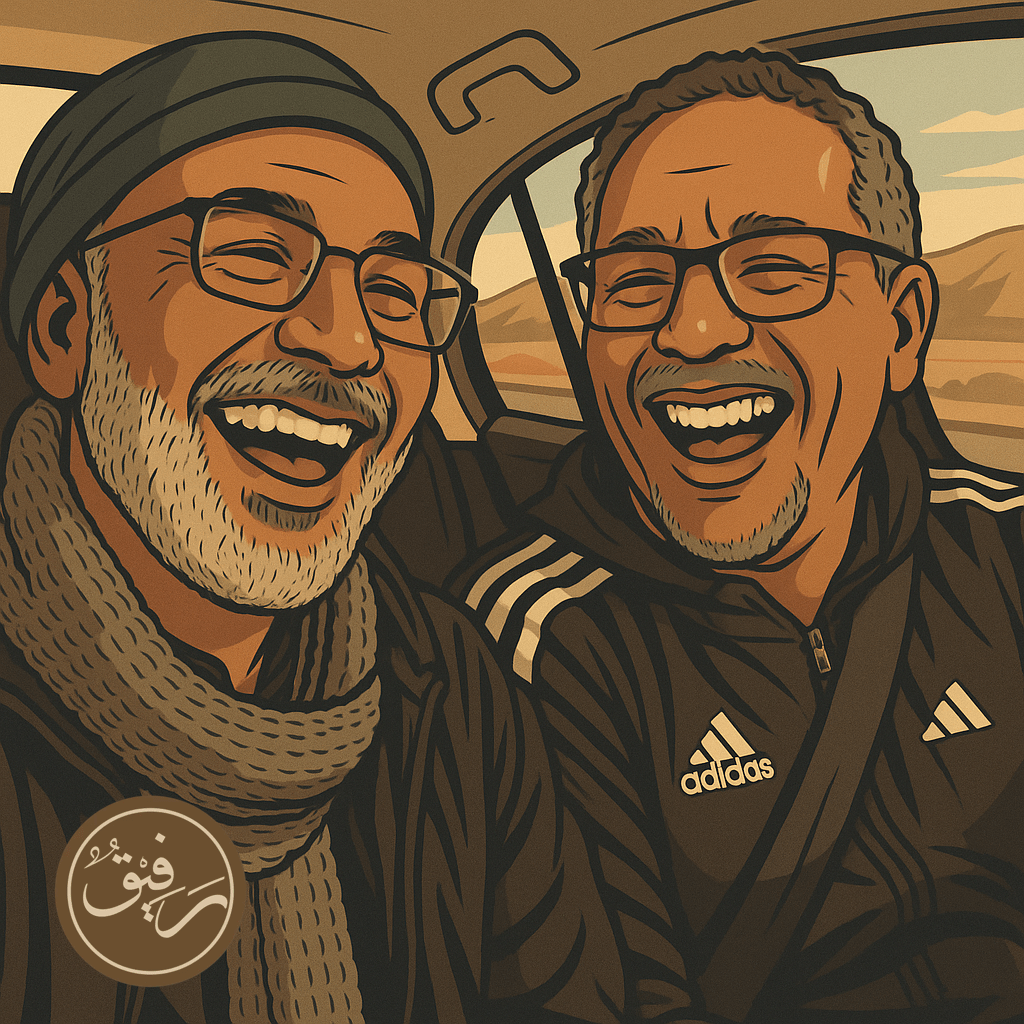
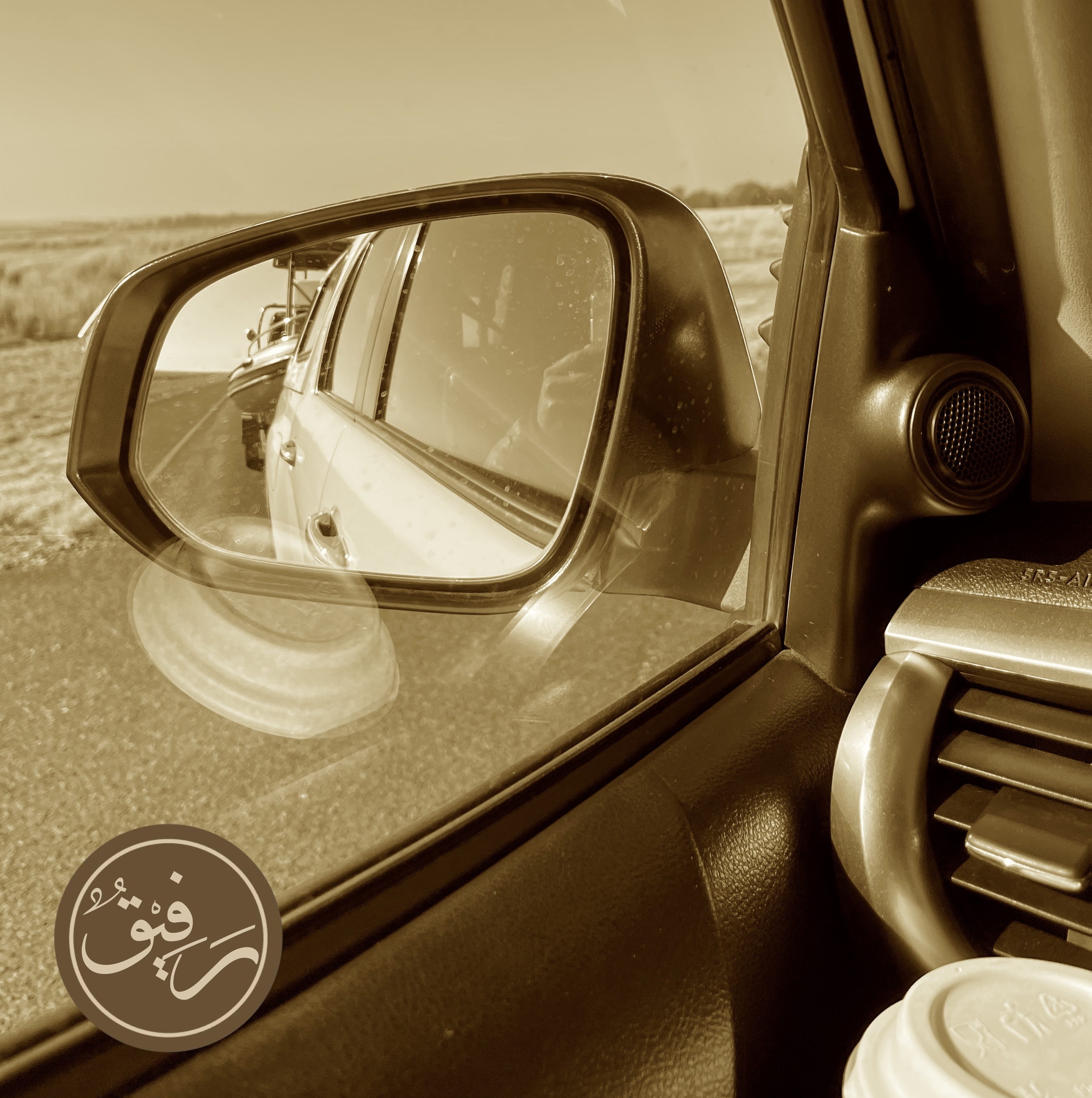
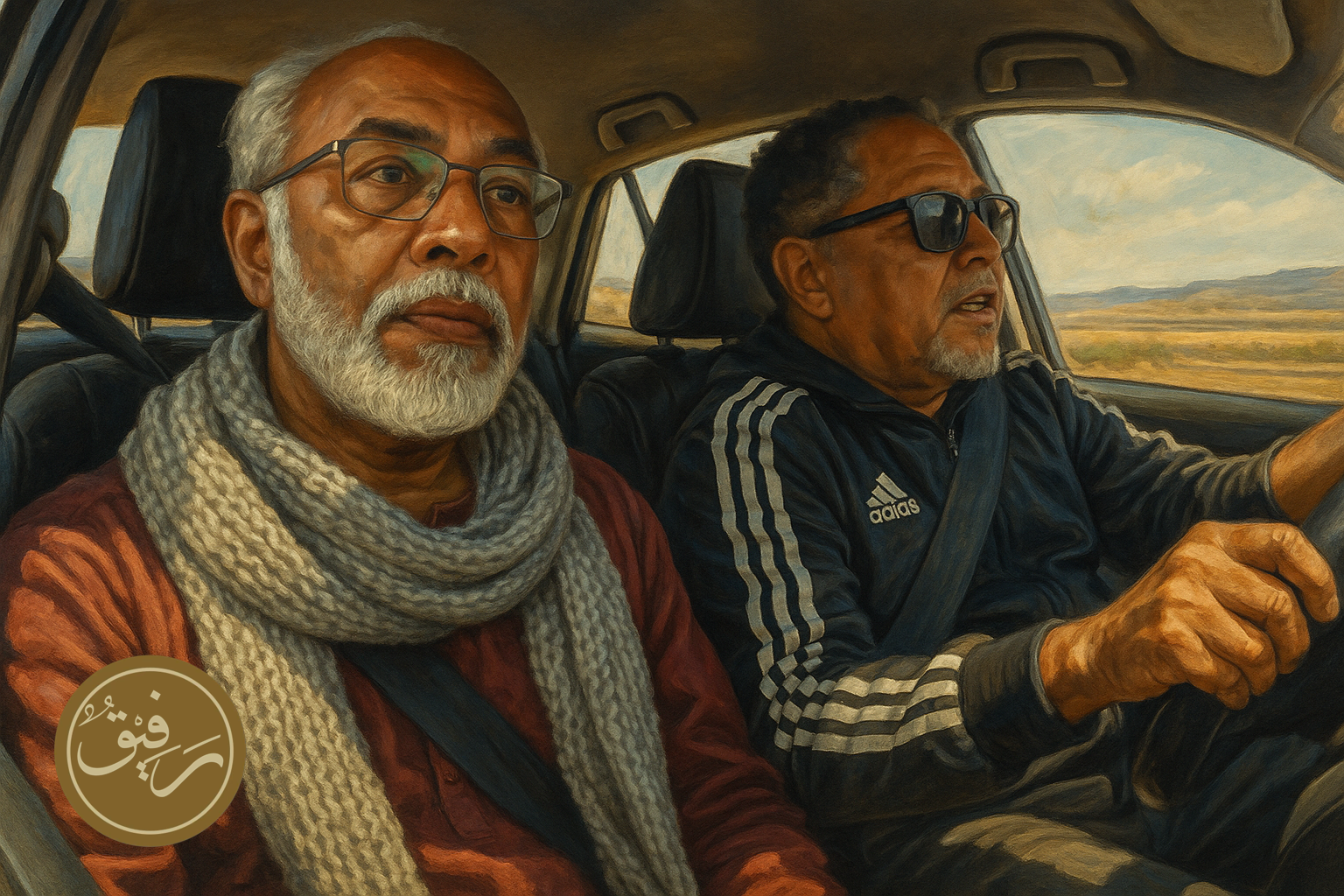
We left Johannesburg in the early light, bound for Worcester — a journey that would return me not only to a familiar valley, but to a story still unfolding. I climbed into Deem’s bakkie at 6:20am. The air was still soft with sleep, but the weight we carried was real — a dinghy boat hitched behind us, and cement bags packed into the back to balance the load. Deem was heading to the Cape for another transport run, as he often did — ferrying cars, boats, bakkies, golf carts, whatever needed moving.
He kept it steady, slow — 80 to 90 km/h. The road hummed low. We started talking.
Mostly about our children.
His sons, his daughter. Now grown. Their paths, their beliefs, the choices they were making in a complicated world.
“I worry, bru,” he said. “About their Islam… their qibla.”
I nodded. And gently shared my own truth:
“We’ve already planted the seeds, Deem. Madrasa, school, life. The goodness is wired in. They’ll find their way to the Divine — maybe not how we imagined, but still. They’ll find it.”
We sat in that silence — the kind that listens.
Faried and the Detour
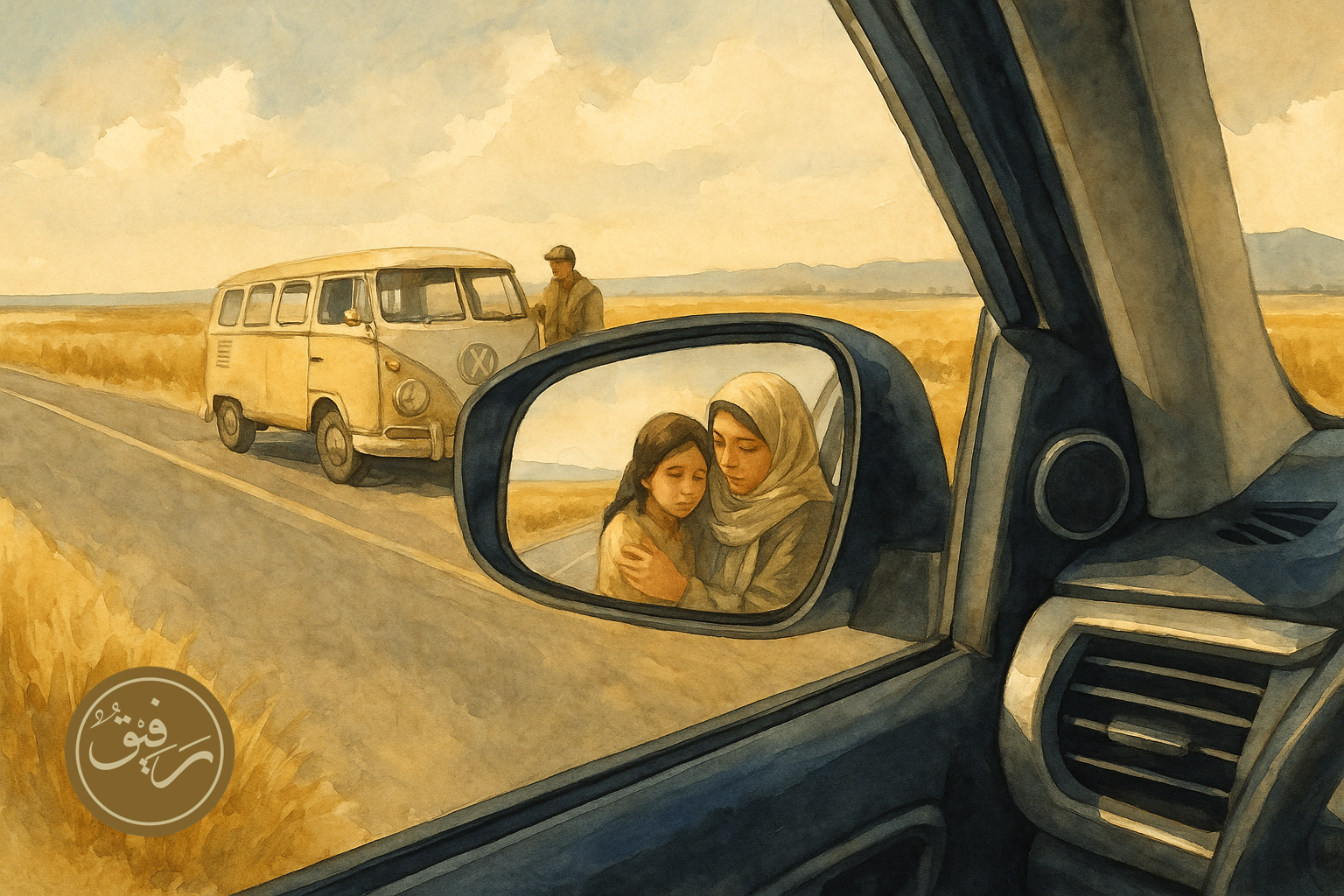
Just before Three Sisters, Deem got a message. A friend of his, Faried, had broken down with his family. We rerouted.
And just like that, our quiet bakkie became a car of five — Faried, his wife, and their daughter now in the back seat. I stayed quiet. This wasn’t my space to speak.
But something had shifted. The stillness that had carried us through the early part of the journey made way for the unexpected warmth of company, for laughter, for memory. What had begun as a private ride between two companions was now a shared passage — a reminder that some roads widen not with tar, but with presence.
The wife was chatty, warm, full of stories. She and Deem started talking about Deem’s drivers. One in particular: Archie.
“Archie’s solid,” she said. “Kaaps, maar sharp. Always shows up.”
A few kilometres down the line, just past Beaufort West, almost in Worcester, Deem turned to me and asked:
“You know what Archie’s real name is?”
I smiled.
“My eldest brother — Allah yarhamu — was Fuad. But everyone called him Archie. So… is he also Fuad?”
Deem laughed.
“Nai bru… his real name is Abdul Qahhar.”
We both burst out.
“Qahharjie becomes Archie! Allah!”
The Bend in the Road
The road narrowed into the Hexrivier Valley. Dark by then. But not empty. The headlights caught a curve.
“You see that corner?” Deem said.
And then he told me:
His father — Omar, also known as Amie, known to my kids as Dada — once took that very bend too fast. Racing from farm to farm, moving fish, goods, deals. He missed the turn. His bakkie flew into the river. He survived. And fished out his own worker, too.
“I was a laaitie then,” Deem said. “But every time I pass this spot, I remember. Dada was tough. A real survivor.”
I stayed quiet. Because what do you say when the road opens memory like that?
To Worcester, With Love
And then, as the road opened wider and the mountains made way for valleys known in name and marriage, I found myself returning not just to a place — but to the people and stories who made that place feel like mine.
Worcester wasn’t just a destination. It was memory incarnate.
When I married Sadia, I stepped into her family’s legacy — the Fakiers and the Majieds. Worcester was theirs. Her childhood. Her community. Later, her battleground — she became a unionist, fighting for dignity across these valleys.
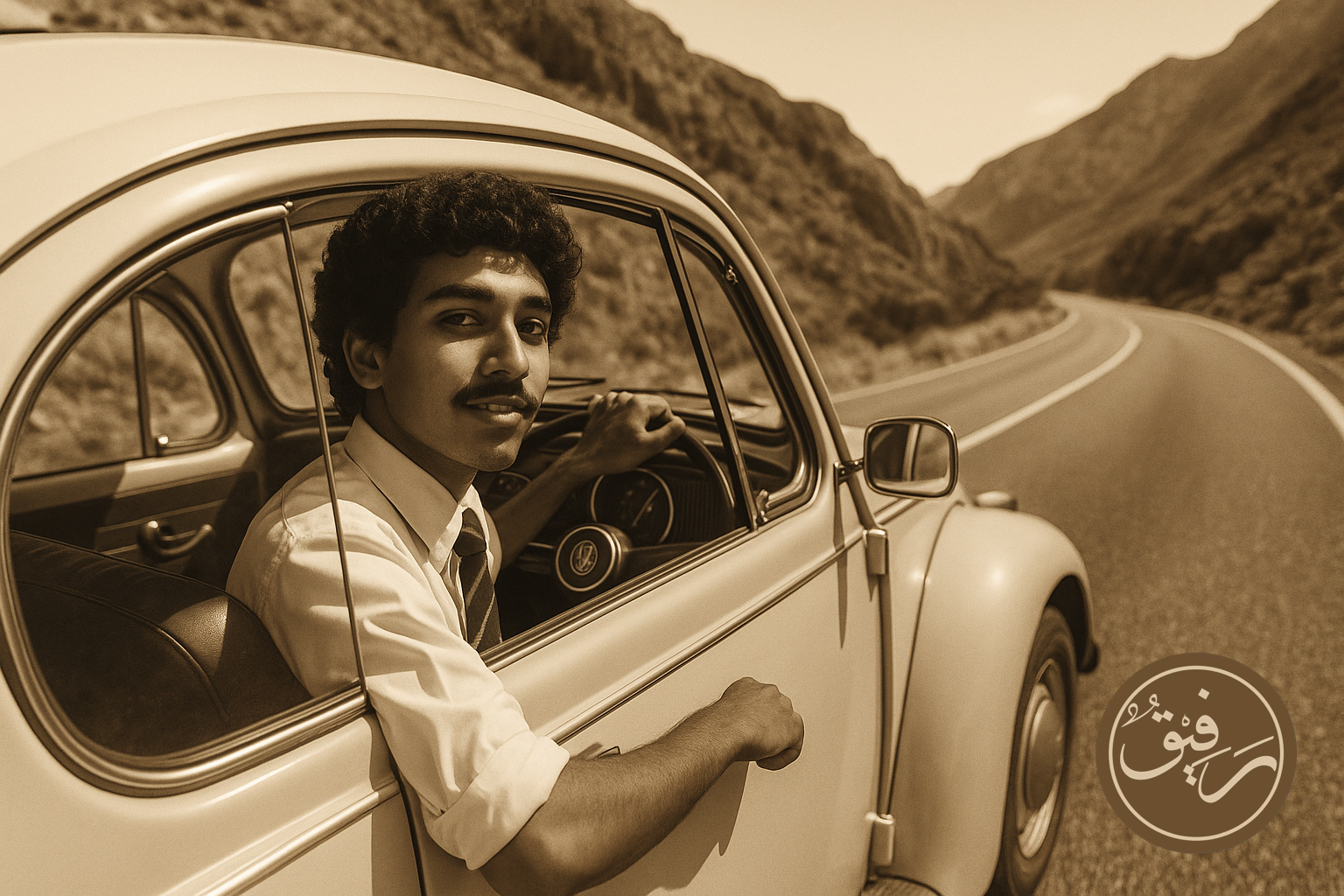
Back when I was still courting her, I’d drive my light blue VW Beetle 1400 — my first car, bought from Deem — all the way from Cape Town to Worcester and back. About 120 kilometres each way. For love.
So that night, when we came through the final bend, the boat still hitched behind us, the road folding into familiar curves… I realised:
This wasn’t just a road trip. This was return.
To family. To love. To the people who carried us before we even knew their names.
Closing Blessing
As Shaykh Jamiel Abrahams said, in response to this journey:
“Many a person with shaggy and dusty hair, dusty and driven away from doors… if he was to call on Allah ﷻ, Allah would surely answer.”
Some roads answer us back. Even in silence. Even before Three Sisters.
And maybe, if you’ve followed this far, it means you too have travelled one of those roads — or carried its dust in your shoes.
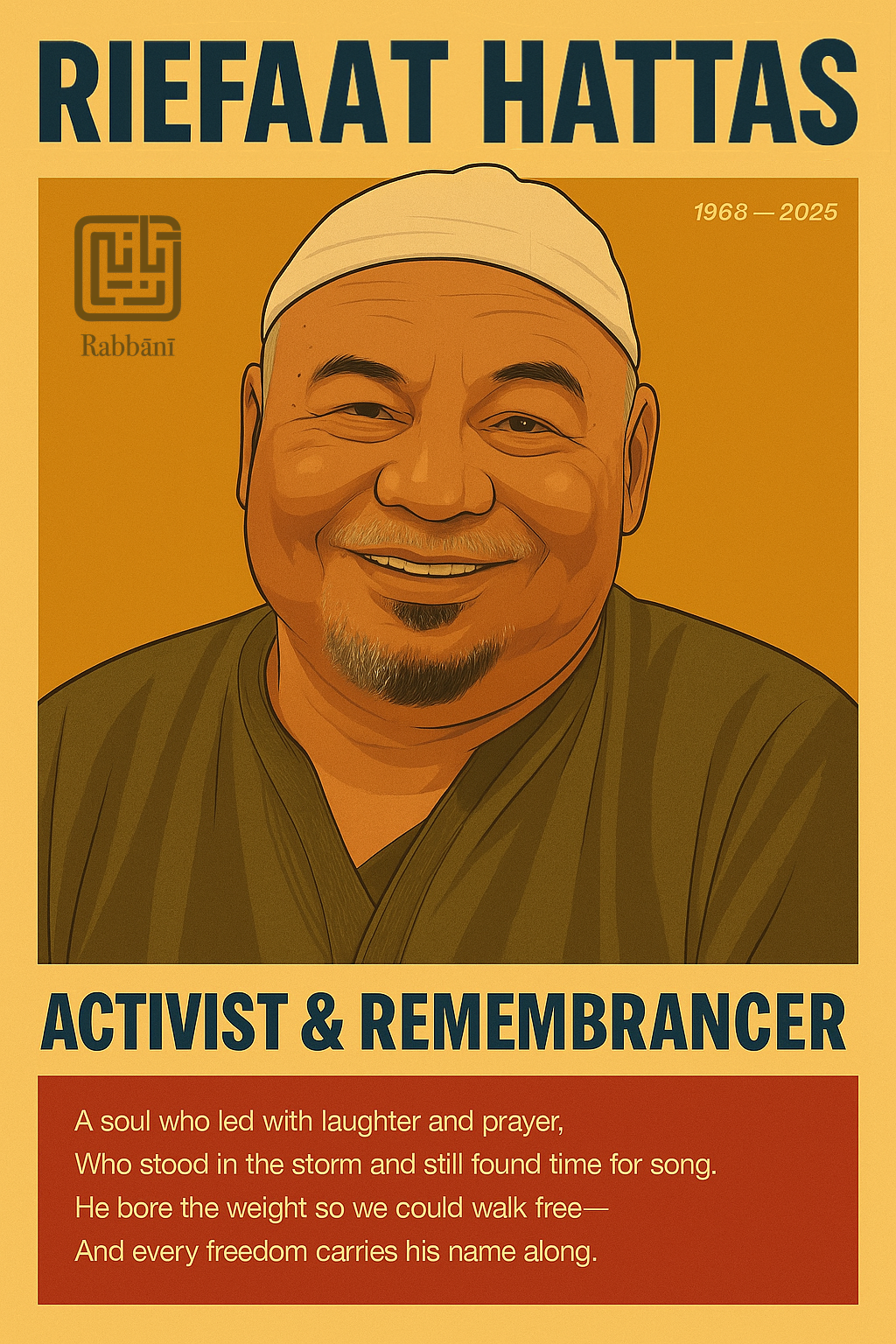
The Boy Who Waved Back: Remembering Riefaat Hattas of Manenberg
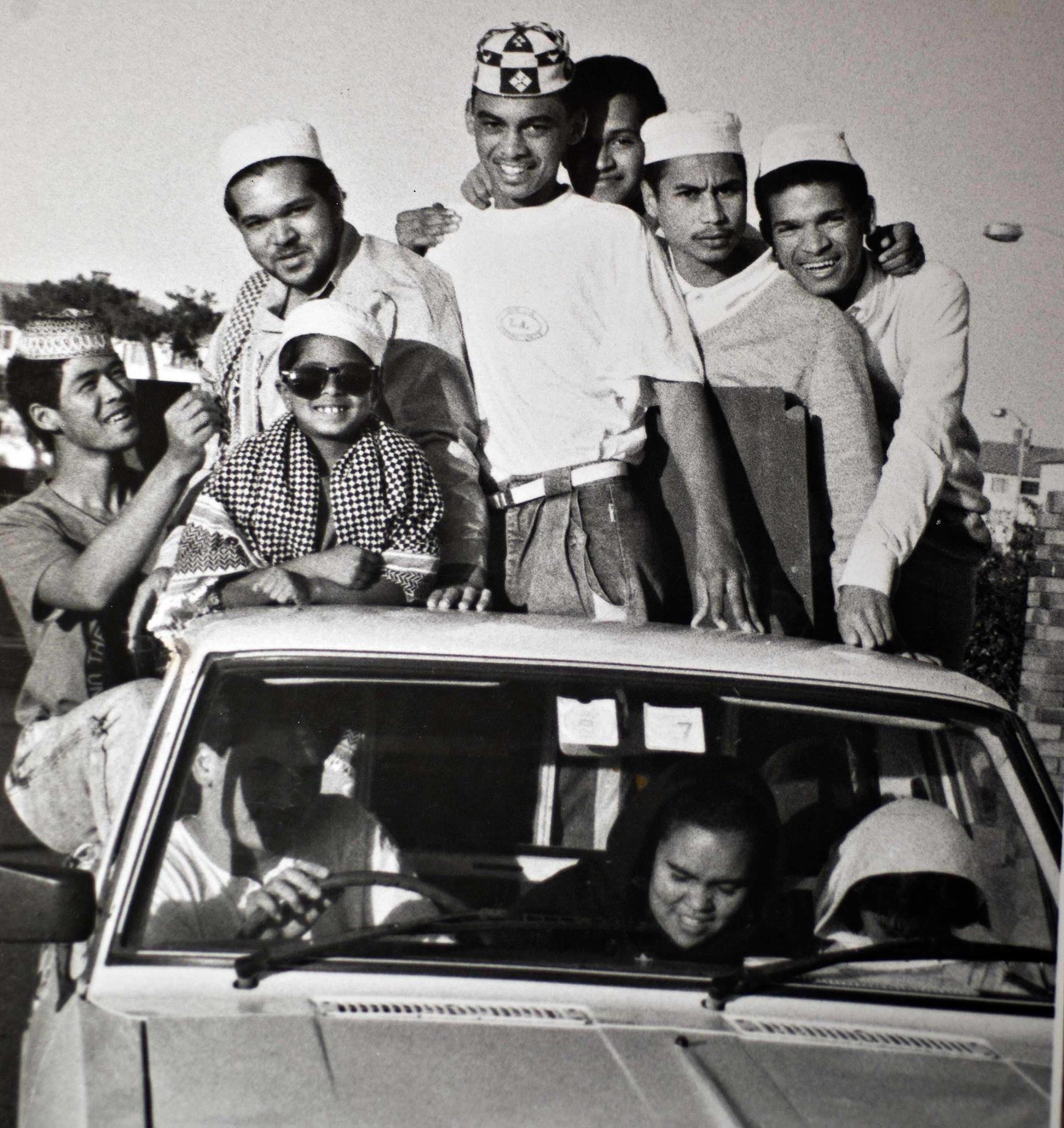
Young activists of the Call of Islam, Manenberg, 1980s. Riefaat Hattas, second from top right, stands among friends and comrades — a generation brimming with laughter, courage, and purpose. [Pic: Yunus Mohamed]
Manenberg: Where Struggle Learned to Laugh
There’s a photograph from another time — a car crowded with boys and brothers, some perched atop, some packed inside, all lit by the unmistakable fire of youth. Manenberg, 1980s: a borrowed car, a shared cause, a city holding its breath.
Among them is Riefaat Hattas — eyes forward, a quiet anchor in the rising tide.
Those who lived through the 1980s on the Cape Flats will remember: Cars that carried more than passengers — they carried dreams, sometimes fugitives. Boys who became men before their time. Smiles that defied a brutal state.
It was here, at Silverstream, in schoolyards dusted with chalk and hope, that Riefaat found his voice. A student leader, a Call of Islam activist, he joined a movement that dared to speak justice in the language of faith.
A Life Shaped by Struggle
Riefaat Hattas was born in 1968 and grew up in Manenberg, places shaped by apartheid’s sharp edges and the stubborn dignity of ordinary families. He matriculated at Silverstream Secondary in 1986, a year that would change his life and the country.
That year, he led a student march — Casspirs ringed the school, hundreds of unarmed students brutalized by the SADF. He was only 18 — but already a leader, a UDF and ANC supporter, mentored by Celeste Naidoo and MK underground structures.
In November 1985, during a march to honour detainees and the fallen, Riefaat was arrested under the Terrorism Act. Tortured at Manenberg station, interrogated, violated, broken down — then sent to Victor Verster Prison.
“The National Party should take responsibility for destroying and ruining our lives.” — Riefaat Hattas, TRC Hearings, 1997
Testimony and Trauma
Riefaat’s scars ran deep, but he spoke them aloud at the Truth and Reconciliation Commission:
“We aged ten to fifteen years in a matter of months… We never realized the kind of psychological stress and trauma we have been subjected to… I’m messed up because of what I went through during my high school days.”
He admitted the cost: Nervous wreck, unable to finish school in a normal way. Many friends became casualties — some went into hiding, some fled, others fell into drugs or gangs. Riefaat himself needed weekly counseling to manage the trauma that never left.
“Money can put something meaningful into my life. I have been tortured, I have nightmares, I could pay for counselling.”
Action Without Fear
Those who knew him say he was action-oriented, never content to sit on the sidelines. He became known for his directness, for “not being afraid.” He worked as a professional assistant officer for the City of Cape Town, always serving — quietly, sometimes with a smile that held both pain and possibility.
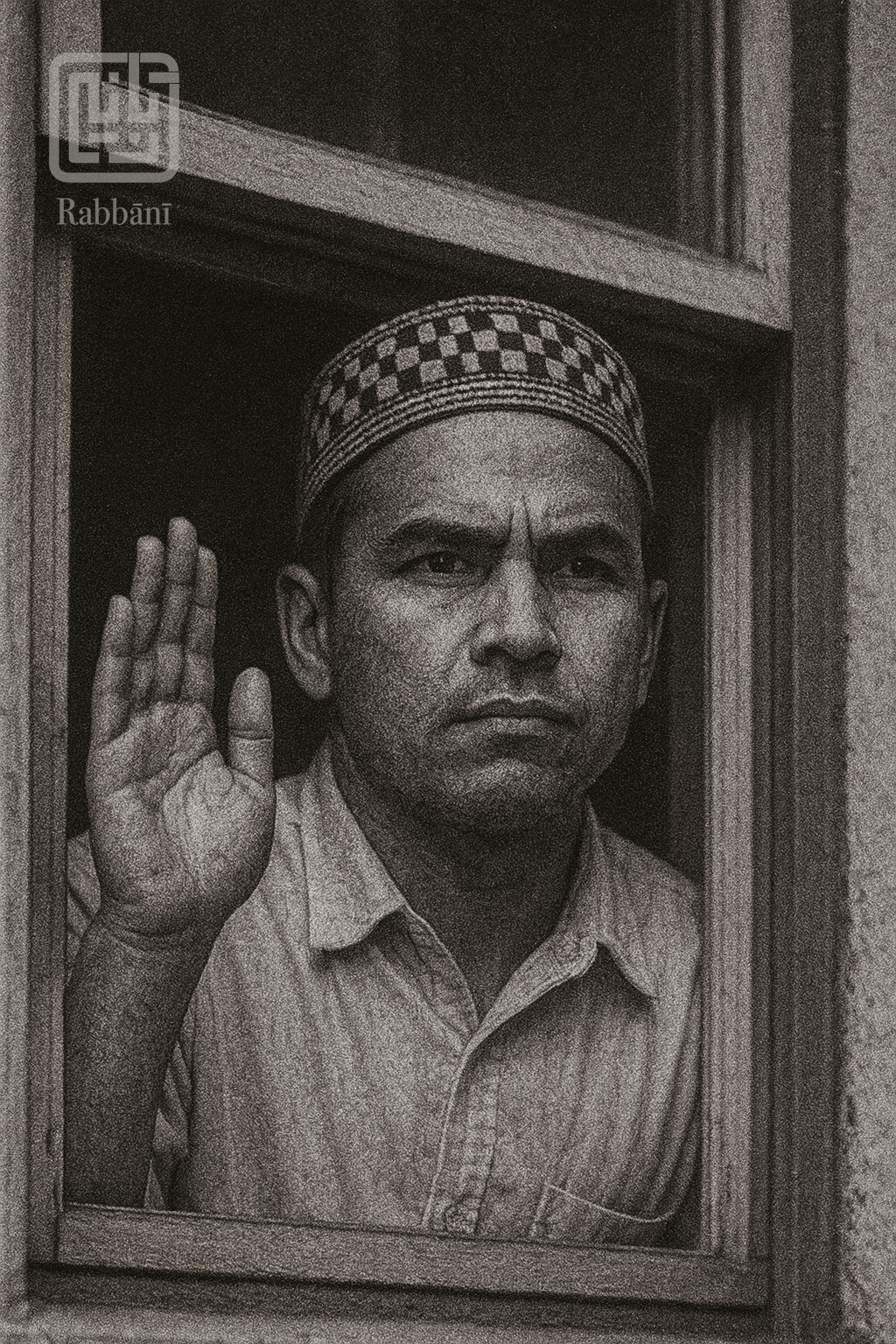
Riefaat Hattas, looking out from an embassy window, kufiyyah on, defiant and unbroken. This scene — recreated in tribute — echoes the iconic image of a young comrade who refused to disappear, even when others scattered.
Another time, he famously waved from the window of the American embassy during a similar protest. That photo is still an icon: the boy who refused to disappear.
Legacy: The Freedoms We Now Inherit
The freedoms Cape Town’s Muslims (and South Africans in general) enjoy today — to gather, to pray, to march, to speak — were won by Riefaat’s generation at terrible cost.
“We never knew how big our contribution would become, how our struggle would free so many others.” So said a comrade at his janazah, echoing Ebrahim Rasool’s words.
“He was one who stood out for justice as a witness to Allah. Riefaat carried the scars of torture and never broke — he stood in the embassy window, waving, so we would know not to run. The freedom we have today was won by his courage and the courage of his generation. Let us not pray perfunctorily; let us remember what was paid for us.”
Stories now echo from one generation to the next. Medat Adams’ young son hears the “old days” — torture, detentions, the moppies that kept hope alive when hope seemed like madness. Riefaat was a storyteller, a writer of comic skits for the nag troop, a keeper of laughter in the midst of struggle.
Riefaat: Lightness in the Struggle
At rallies and mass meetings, Riefaat was always the one looking for a piece of cardboard — anything, just to make salaah on, wherever he found himself.
During the matric exam boycotts, a group of them hid out at a teacher’s house. When the teacher came out, he called, “I can see you, Achmat!” — because Achmat was so tall, he couldn’t hide behind a bush.
After court appearances, Riefaat would lead the hungry crew straight into a janazah house along Thornton Road — knowing there would always be food, and never standing on ceremony.
Once, passing Pollsmoor Prison, he hung out the car window and led everyone in shouting, “Viva Mandela!” At the drive-in later that night, seeing white kids lugging their mattress home, he yelled out, “Sê ve jou ma — jy’t ’n comrade gesien!” [Tell your mom that you saw a comrade!]
He had a gift for turning every moment — even hunger, boredom, or fear — into a kind of resistance and joy.
#masekin — Ma se Kind, My Mother’s Child
Not just the humble, not just the poor — but every child of the Cape, every struggler, every brother, every sister carried in the memory of mothers who gave more than they had, who called each of us masekin — my mother’s child, so no one would feel alone.
For Riefaat, it was the truth of his life: He belonged to the people, and the people belonged to him.
Legacy: Freedom, Memory, and Sacred Song
But Riefaat was also a keeper of remembrance.
Who can forget the play, 333 Years of Islam in South Africa? He wasn’t just a participant — he was central, guiding the theatre piece, leading voices through the opening invocation. He would start the Ratibul Haddad, and his voice — deep, insistent — would call out “Qul huwallahu ahad…” until the whole circle answered. He loved the Gadat, cherished the sacred rhythms that stitched community and soul together.
These weren’t performances; they were living acts of ibadah, of memory, of survival. Riefaat made sure that in our struggle, we didn’t forget our dhikr, our poetry, our song.
It’s no wonder he led the Gadat like he was born to it — his Hattas (Attas) blood remembering the names that sailed from Hadhramaut to the Cape. Barakah doesn’t always skip a generation; sometimes it lands on the tongue of a child who never forgot.
[The Attas (Al-Attas) family are a Hadhrami lineage whose spiritual traditions—like the Ratibul Attas and the Gadat—helped shape Cape Muslim remembrance.]
Riefaat Hattas, years after the struggle. Still carrying the light, the smile, and the steadfastness that defined his youth. A witness to history — and a reminder that joy is its own act of resistance.
Legacy at Work: Community Builder in the City
After the struggle, Riefaat entered the City of Cape Town at the most basic level in the electricity department — but he never stopped building. According to Farouk Robertson (Communications, City of Cape Town), Riefaat steadily worked his way up to become central in community education for the City’s energy cluster. He was a true driver of interdepartmental, community-facing initiatives: creative, innovative, and never afraid to challenge technocrats to see things from the community’s point of view. He didn’t just serve; he inspired — often sharing new approaches and championing programs that brought real, active engagement into the City’s work.
Even in the workspace, he was a man of progressive action.
(Thanks to Farouk Robertson, via Shamile Manie, for these memories.)
Closing Prayer
May Allah gather Riefaat among the steadfast. May his wounds be healed in the gardens of peace. May we remember him — in our freedoms, in our laughter, in every act of justice — as the one who waved back when the world turned away.
Tramakasi — Our Thanks
This tribute would not have been possible without the memories, love, and testimony of those who knew Riefaat best. With deep gratitude to Ambassador Ebrahim Rasool, Shamile Manie, Salih Davids, Medat Adams, Dawood Hattas, Zieyaat Hattas, and the rest of his dear family — for their witness, their courage, and their generosity in holding Riefaat’s story with both pain and pride.
May Allah bless you all. Tramakasi. Shukran. Thank you.
References & Further Reading
Oral Tribute: Ebrahim Rasool. “Janazah Tribute for Riefaat Hattas.” Delivered at Riefaat Hattas’s janazah, July 2025. (Notes and excerpts via Shamile Manie and Adli Yacubi’s transcription.)
TRC Testimony: Hattas, Riefaat. Testimony at the Truth and Reconciliation Commission Children’s Hearing, Athlone, Cape Town, 22 May 1997. (As quoted in: SAPA, “TRC hears emotional testimony at children’s hearing,” 22 May 1997.)
Activist Testimony & Reparations: “Govt ‘spits in face of apartheid victims’.” Mail & Guardian, 5 October 2000. (Quoting Riefaat Hattas on the cost of struggle and reparations.)
Facebook Tributes & Community Memory: Jason Patrick Hanslo, “#masekin: Riefaat Hattas,” Facebook, 5 May 2022.
Personal Correspondence and Memories: Shamile Manie, WhatsApp messages to Adli Yacubi, July 2025. Salih Davids, “My Brother in Islam, Riefaat” (tribute poem), July 2025. Ebrahim Rasool, Janazah Tribute, July 2025.
Photographs: Yunus Mohamed, “Call of Islam, Manenberg, 1980s.”
Published Blog Draft: Adli Yacubi, “The Boy Who Waved Back: Remembering Riefaat Hattas of Manenberg,” unpublished manuscript and blog, July 2025.
Afrikaans in Arabic Script and the Ratib al-Haddad
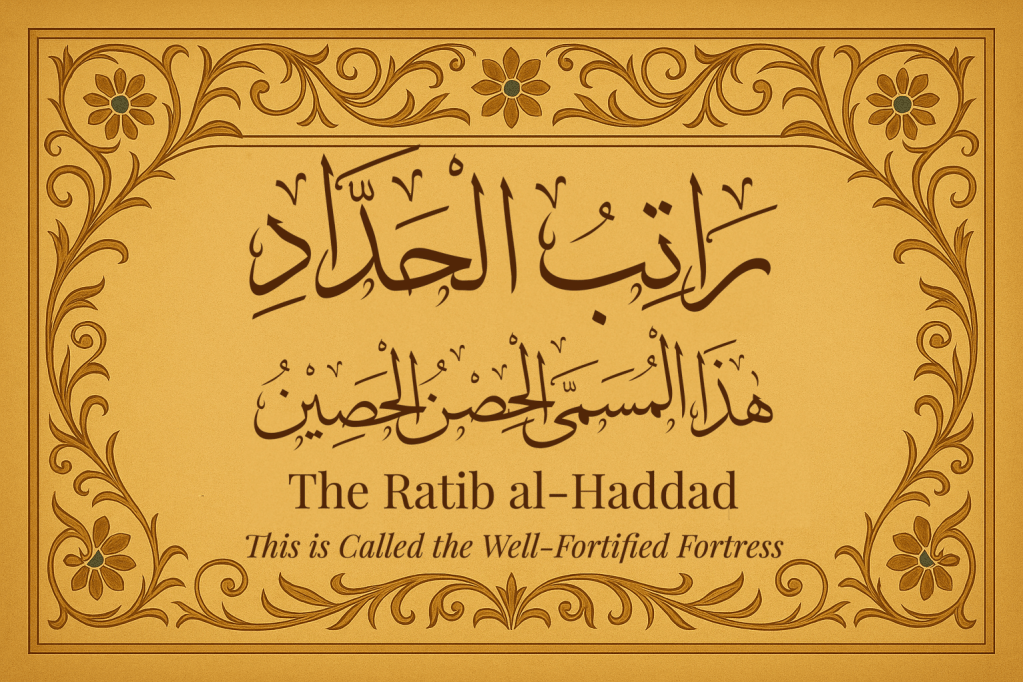
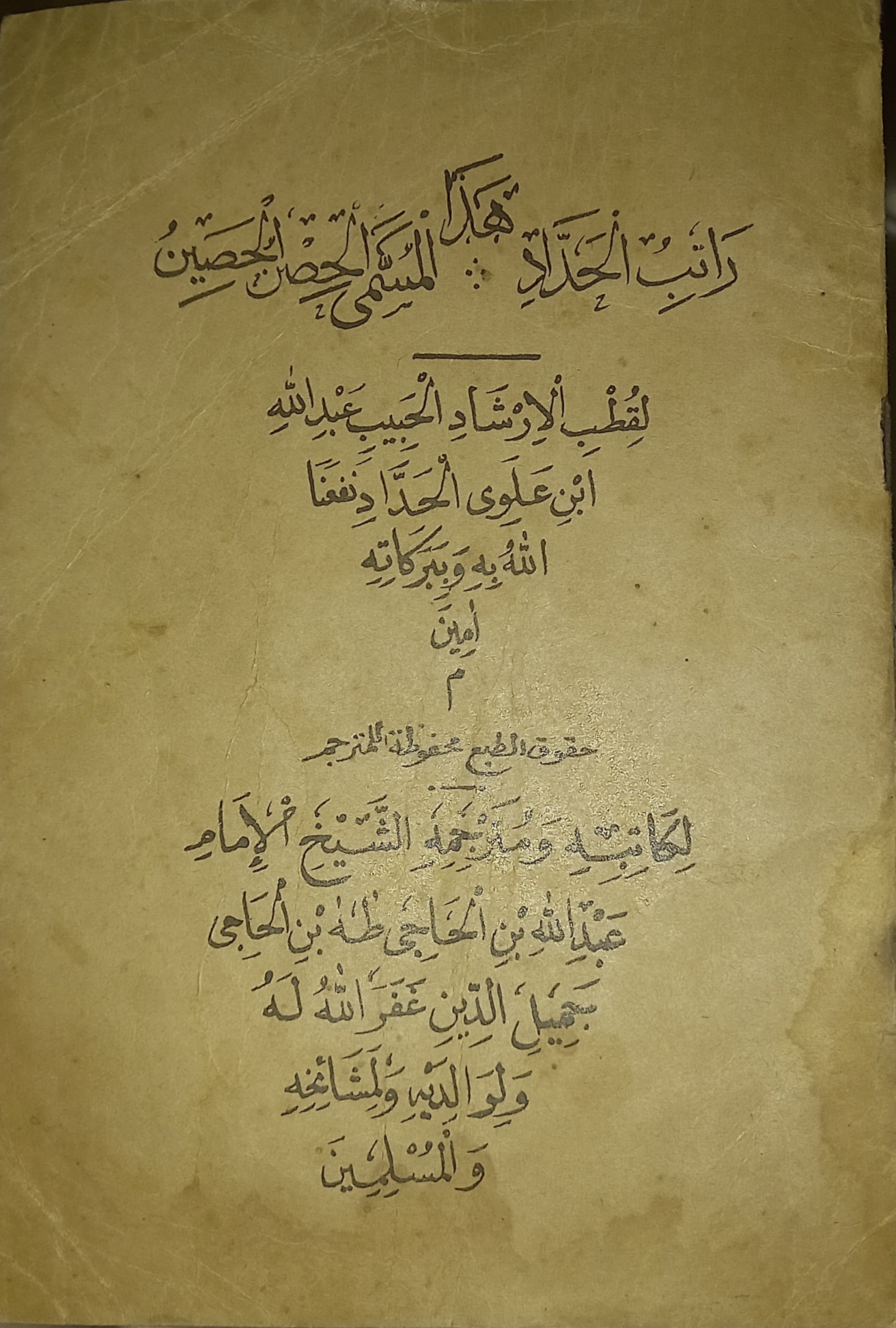
Bismillah. Among the rarest cultural gems of the Cape is this handwritten or printed Ratib al-Haddad in Arabic script — and beneath each sacred verse, a transliteration and translation in Afrikaans, also in Arabic script. This devotional work bears the title:
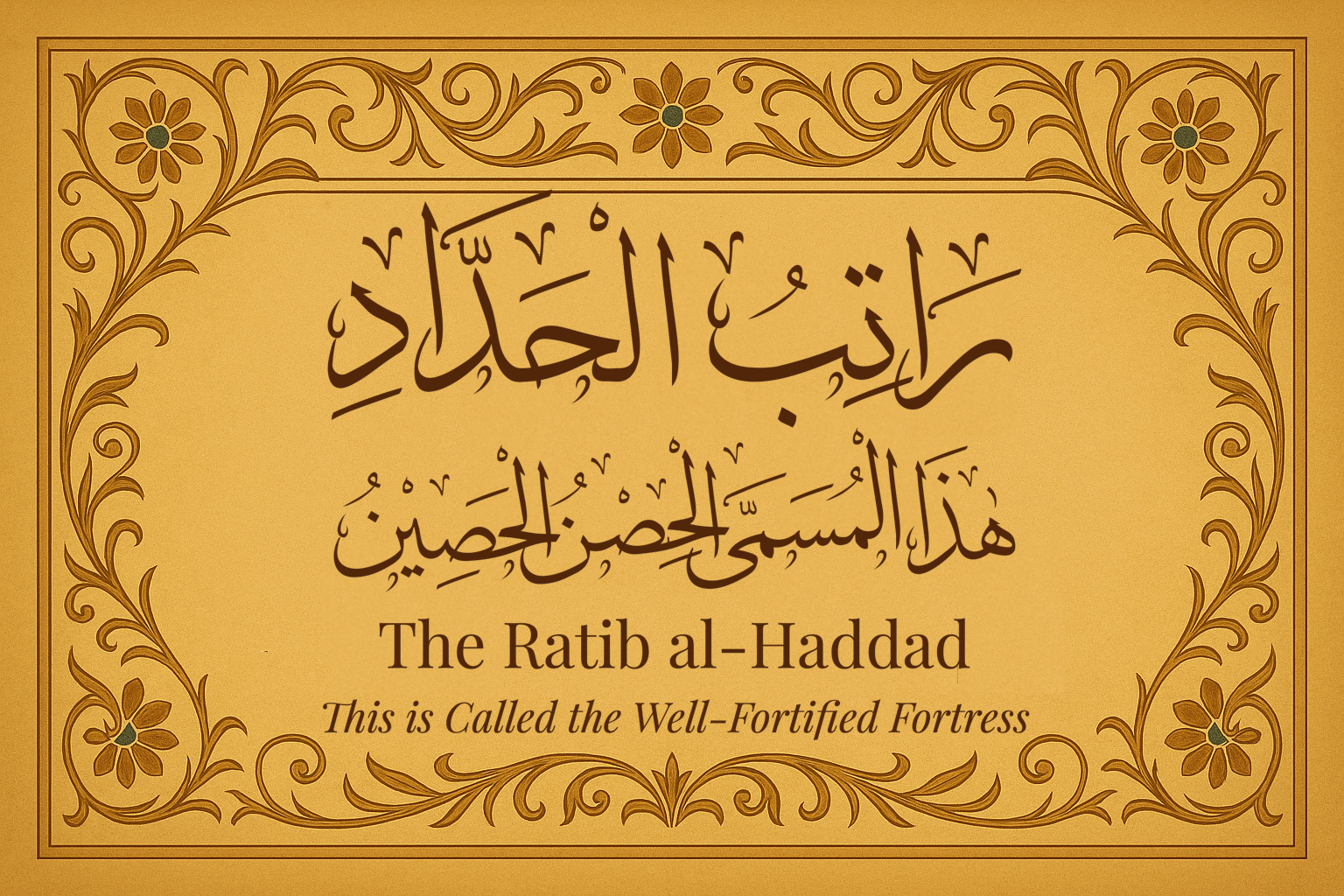
رَاتِبُ الْحَدَّادِ هَذَا الْمُسَمَّى الْحِصْنُ الْحَصِيْنُ The Ratib al-Haddad – This is Called the Well-Fortified Fortress.
It is more than just a document — it is a linguistic relic, a spiritual practice, and a memory map of how Qur’anic dhikr was carried across generations, even when Arabic as a language was no longer spoken fluently. The presence of Afrikaans — lovingly scribed in Arabic letters — reminds us that remembrance found its voice even in colonised tongues. This text is proof: the Divine was praised in the language of those who suffered, resisted, and healed.
This is no ordinary translation. It is a trace of the Cape’s earliest Muslim educational systems, where a now-suppressed form of Kaapse Afrikaans was used to teach, explain, and transmit the Qur’an and dhikr — long before formal Arabic learning was accessible.
This copy, sourced and shared by Sheikh Jamiel Abrahams, is one of the most exquisite I have seen. It is more than a relic. It is the visual embodiment of a living legacy.
The Arabic-AfriKaaps hybrid in these pages is not just linguistics — it is resistance, devotion, and adaptation in motion. A tongue formed in the shadows of empire, now remembered in the radiance of dhikr.
This post offers a glimpse — a few carefully selected lines, an image scroll, and finally, the full PDF. We will not translate every line, for that would dilute the power of seeing, hearing, and feeling them in their original form. But we will linger on a few pages to taste the spiritual flavour of this inheritance.
One of the first lines to appear in the Ratib is the luminous opening:
بِسْمِ اللهِ الرَّحْمـٰنِ الرَّحِيمِ Bismillāhir-Raḥmānir-Raḥīm In die Naam van Allah, die Meest Genadige, die Meest Barmhartige
Even this sacred formula, transliterated and translated into Afrikaans using Arabic script, glows with the care and creativity of the Cape’s early Muslim scribes. It reveals how rahmah—Divine Mercy—was not only recited, but lovingly inscribed in the mother tongue of those who carried it. A tongue made tender through hardship, and made holy through remembrance.
These pages are not just recitations — they are archives of survival.
The Cape’s Muslim community, born out of bondage and exile, did not merely memorize. They engraved, translated, sounded out — in their own accents, on their own terms. They bent Arabic script to capture the cadence of their Afrikaans. They bent Afrikaans to serve the memory of Allah.
In this Ratib, we witness the divine echo across generations.
To read it is to hear our grandparents whispering in candlelight, gathering children close, turning pages that looked like home.
This is not nostalgia. It is testimony.
May we become worthy inheritors of their voices.
Living Chains: A Note of Gratitude and Transmission
We are humbled to acknowledge those who have preserved and transmitted this treasure across generations.
Our deep thanks to Zaid Nordien, who reminded us that this version of the Ratib al-Haddad — written in Arabic-Afrikaans script — was transliterated and rendered by Shaykh Taha Gamieldien, the grandfather of ShaykhFaiek Gamieldien. It was widely copied and circulated in Cape Town, including in black-and-white prints. Zaid shared that his own journey began at the age of three, attending Gadat with his uncle, the late Boeta Faldie Behardien, and that his grandfather, Galiefa Ebrahim Nordien (Brayma Bokbaard), had received ijāzah for the Ratib from Shaykh Ismail Ganief. His father also received ijāzah from Shaykh Omar Abdullah of the Comoros — known throughout Africa as Mwyini Baraka — as well as from the late Shaykh Muhammad Alawi al-Maliki.
And here the circle returns home:
Zaid Nordien relayed that Shaykh Omar Abdullah gave express permission to grant ijāzah to all who recite the Ratib, all who love it, and all who seek it. He conveyed this instruction to me personally in Glen Austin, Midrand, during my recovery from a stroke. Now, alḥamdulillāh, it is finally recorded.
Even more striking: the ancestor of this very Shaykh — the deposed Sultan Abdallah II ibn Alawi of Anjouan, from the noble Ba ʿAlawī lineage — was exiled to Cape Town around 1834. Local oral tradition holds that he met Carel Pelgrim (Hassanuddin), the Cape’s first known Muslim pilgrim to Makkah, and may have encouraged him on his sacred journey. The silsila, both spiritual and historical, reveals itself in astonishing ways — alive, pulsing, and unfolding across time.
The Salawāt of Mwyini Baraka
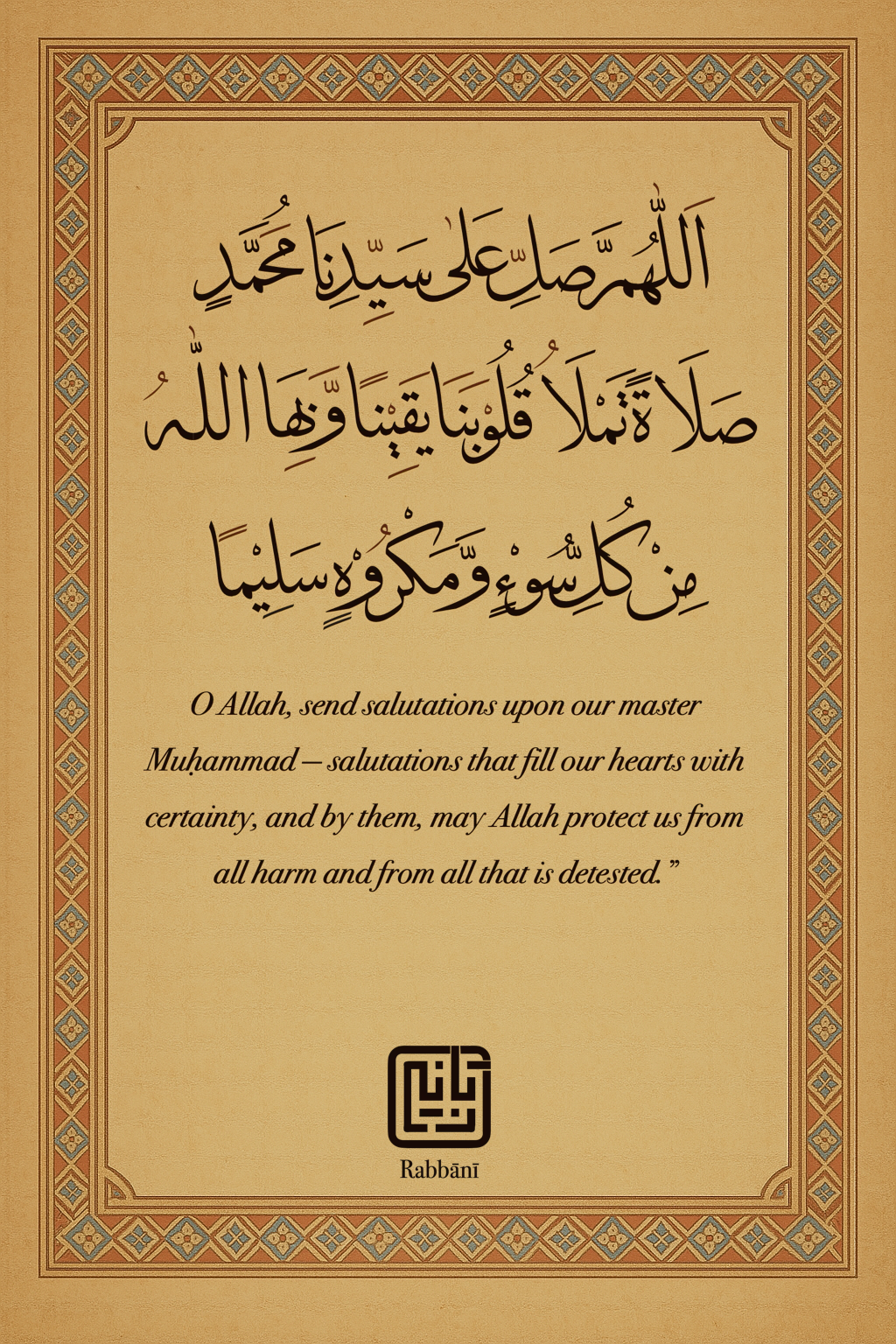
We close with a salutation upon the Prophet ﷺ, taught by Shaykh Omar Abdullah — a direct descendant of the Messenger ﷺ through Sayyid Abu Bakr bin Salim.
Allāhuma ṣalli ʿalā Sayyidinā Muḥammadin ṣalātan tamlaʾu qulūbanā yaqīnan wa bihā Allāhu min kulli sūʾin wa makrūhin salīmā.
Translation:
“O Allah, send salutations upon our master Muḥammad — salutations that fill our hearts with certainty, and by them, may Allah protect us from all harm and from all that is detested.”
📜 Other Paths of Remembrance
This scroll is only one leaf in a growing tree of spiritual memory.
If this piece stirred something in you, you may also wish to explore:
These are threads in a larger weave — remembering the divine through the tongues of our mothers, the melodies of our fathers, and the whispered prayers of the unseen saints who still walk among us.
The Ratib al-Haddad: A Symphony of Spiritual Resilience
Introduction
In the centuries-old Cape Muslim tradition, the Rātib al-Ḥaddād stands as a spiritual symphony. Its composer, Imam ʿAbd Allāh ibn ʿAlawī al-Ḥaddād, drew upon a Qur’anic verse known as the Verse that Faces Outward at the Rawdah of the Prophet ﷺ, giving it a protective resonance. This rhythmic litany unfolds like movements of a musical masterpiece, each moment drawing the heart closer to Divine presence. Inspired by Imam al-Haddad’s mission to guide believers through fear and trial, the Ratib remains a living masterpiece of faith.
Movement I: The Prelude of Protection
O you who fear, gather at the gate of forgiveness; Bismillah like a banner above your heart, Ayatul Kursi as your armour, verses of Baqarah as your shield. In this dawn of remembrance, let salawat fall on your lips like rain upon a thirsty earth, and trust flow through your veins until your soul is clothed in light. This is the first movement: a prayer of protection woven from the very breath of Revelation.
Movement II: The Rhythms of Remembrance
Subḥānallāh, transcendence like the sky’s endless horizon; Alḥamdulillāh, gratitude flowing through every breath; Allahu Akbar, awe striking the heart; Lā ilāha illallāh, unity beyond all boundaries. These dhikr, recitations, rise and fall like ocean waves, polishing the mirror of the heart until it shines with trust and surrender.
Movement III: The Pulse of Tawhid
Al Maʿbūd, meaning The Worshipped One, calls the believer to recite Lā ilāha illallāh fifty times, each repetition chiseling away fear and confirming pure oneness. It circles the heart like a crown of certainty. The three Quls stand as guardians, their verses sealing every crack against doubt. This movement is a fortress of tawhid, where the soul forgets every other reliance and trusts only Allah.
Movement IV: The Prayerful Crescendo
Duas rise like incense, interlaced with Al-Fātiḥa, each plea a petition for healing, protection, mercy, and light. The tongue becomes a river of hope, carrying the soul to a calm shore. Here the believer surrenders every burden, resting in the assurance that Allah is the One who hears and responds.
Closing Invocations
Al-Fātiḥa on the soul of our master, our beloved, our intercessor, the Messenger of Allah, Muhammad ibn Abdillah, his family, his Companions, his wives, and all his noble household.
Al-Fātiḥa on the soul of our master al-Muhajir Ahmad ibn Isa and his descendants.
Al-Fātiḥa on the soul of our great teacher, the jurist al-Muqaddam Muhammad ibn Ali Ba Alawi and his lineage.
Al-Fātiḥa on the souls of our noble Sufi masters wherever they may be, east or west, that Allah may raise their ranks.
Al-Fātiḥa on the soul of the compiler of the Ratib, the Axis of Guidance, Abdullah ibn Alawi al-Haddad and his family line.
Al-Fātiḥa on the souls of all the pious servants of Allah, our parents, our teachers, those who have rights upon us, and the believers who have passed away in this land.
Cape Ritual Practice
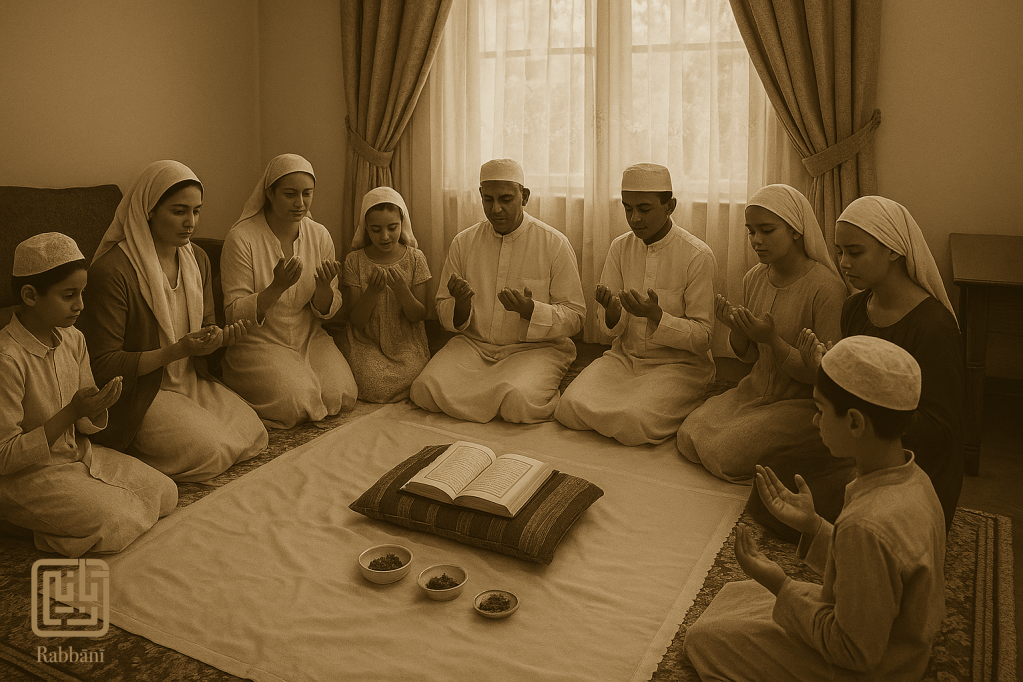
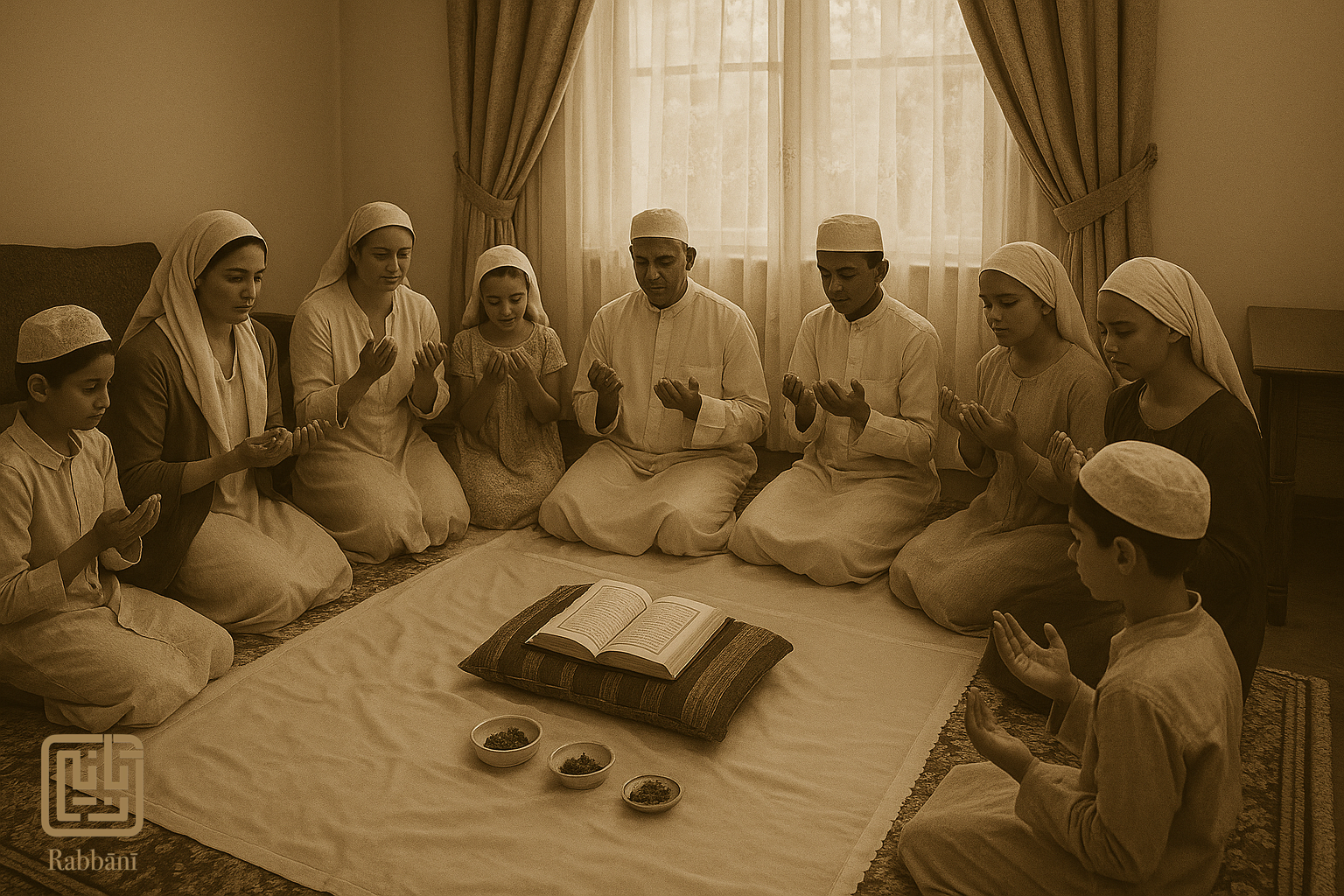
In South Africa, especially in the Cape, families often recite the Ratib al-Haddad after a loved one passes away, beginning from the first night and continuing for seven nights, then gathering on the fortieth day, the hundredth day, and each year on the anniversary of the passing. The Ratib is also recited at birthdays, during Mawlud celebrations, generally every Thursday night, sometimes Sunday mornings, a week before weddings, at engagements (known as lambary), and at naming ceremonies (doekmal or doopmal). This tradition anchors the community in remembrance and prayers for all occasions of joy, transition, and remembrance.
About Dhikr
The term dhikr refers to remembering, remembrance, or reciting and chanting the names of Allah, specific prayers, or Qur’anic verses. It is a rhythmic practice that roots the soul in the Divine, and is central to the Ratib al-Haddad tradition.
Individual or Group Practice
The Ratib al-Haddad can be recited alone or in a group, with equal blessing. Allah says in the Qur’an: “And men and women who remember Allah often — for (all of) them Allah has prepared forgiveness and a great reward” (Quran 33:35). The Prophet ﷺ said: “People will not sit in an assembly in which they remember Allah without the angels surrounding them, mercy covering them, and Allah mentioning them among those who are with Him.”
Foundations
The Ratib al-Haddad stands upon the firmest pillars of faith, a radiant string of pearls drawn from the Qur’an and Sunnah. It opens with the best Surah — Sūrat al-Fātiḥah, flows into the greatest verse — Āyat al-Kursī, affirms the Shahādah — the finest declaration of oneness, and continues with the enduring praises of al-Bāqiyāt al-Ṣāliḥāt. It includes the daily istighfār of the Prophet ﷺ, abundant ṣalawāt upon the Beloved ﷺ, and concludes with the dhikr by which Imām al-Bukhārī sealed his Ṣaḥīḥ.
Composed in sacred sequence by Imām ʿAbd Allāh ibn ʿAlawī al-Ḥaddād — a noble grandson of the Messenger ﷺ — this Ratib is not merely a litany, but a luminous map of remembrance. It is a symphony of Qur’anic light and Prophetic rhythm, preserved across centuries as a living trust.
And its resonance reached far beyond Ḥaḍramawt: both the Wird al-Laṭīf and the Ratib al-Ḥaddād were introduced and supported within the Harams of Makkah and Madinah under the patronage of Sultan Muḥammad IV of the Ottoman Empire (r. 1648–1687). This formal recognition affirms the Ratib’s deep-rooted legitimacy — not as invention, but as a distillation of the best of revelation, transmitted and treasured by the global Ummah.
Ijāzah: A Living Trust of the Ratib
For those who wish to benefit from the Ratib al-Haddad, we carry with us a sacred ijāzah — a scholarly and spiritual transmission — conveyed through four chains (asanīd) that reach back to the Composer of the Ratib, Imām ʿAbdullāh ibn ʿAlawī al-Ḥaddād**, may Allah sanctify his soul.
Shaykh Jamiel Abrahams writes:
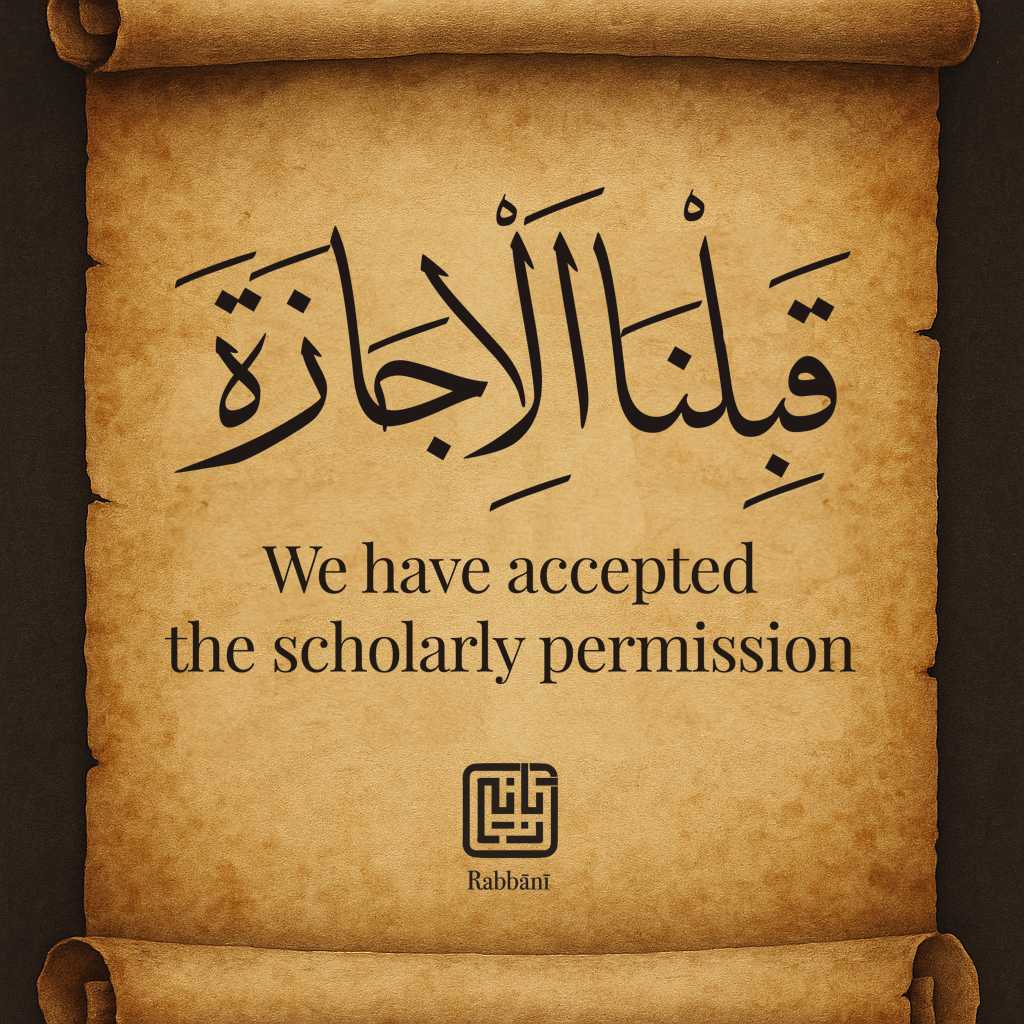
“Ijāzah for those who wish to benefit from the four asānid to the Composer of the Ratib… Say: Qabilnā al-Ijāzah — ‘We have accepted the scholarly permission to recite the Ratib of Imām al-Ḥaddād.’”
“We say Composer, not Author — for the adhkār are drawn from the finest pearls of the Qur’an and the most radiant lights of the Prophetic Sunnah.”
This ijāzah is not just scholarly — it is a living trust passed down through centuries of remembrance. To receive it is to stand in the river of continuity, with the awliyāʾ and scholars who preserved this path of dhikr through love, hardship, and sincerity.
And as for those who label such remembrance a bidʿah…
رَغِمَ أَنْفُ مَن صَرَّحَ بِأَنَّهَا بِدْعَةٌ “May the nose be rubbed in dust of the one who declares it an innovation.”
Let the river flow. Let the remembrance remain. And let every breath that utters His Name be a proof of mercy, not division.
My Personal Ijazah
This symphony carries my own transmission: an ijāzah granted by Zaid ibn Umar to me, Adli ibn Ibrahim, written in his own hand, linking me to the chain of Imam al-Haddad. That blessing lives within every note of this symphonic meditation, reminding me of the trust, humility, and sacred responsibility that this heritage confers. This ijazah is more than a note: it is a living chain, a breath carried from master to student across centuries, reaching back to Imam al-Haddad and forward into my heart. It binds me to the rhythm of this Ratib as if to a heartbeat, reminding me to hold it with care, reverence, and gratitude, so its protection and blessing might continue to resonate for future generations.
Historical Echoes
The Ratib was recited by enslaved Muslims at the Cape as a shield of hope and protection during times of oppression, helping them hold fast to faith. Generations later, it became a spiritual companion for many who resisted apartheid, its verses reminding them of divine justice, courage, and unity against all forms of tyranny. It is said that in the darkest nights of slavery at the Cape, the Ratib became a quiet liberation, whispered in hidden corners. Its rhythms reminded believers they were still seen by Allah, still dignified. During the anti-apartheid struggle, activists turned to these same verses, finding courage and calm as they faced injustice, with the Ratib a spiritual sword against oppression and despair.
Conclusion
From Yemen to the Cape, from ancient gatherings to modern hearts, the Ratib al-Haddad remains a living breath of resilience and unity. Its movements still guide communities to remember Allah, to stand together in hope, and to place trust in Divine mercy across the centuries. Like a living river, its currents still flow, nourishing communities with remembrance and calling them to a higher trust in Allah’s mercy. Imam al-Haddad, inspired by the symbolism of the Verse that Faces Outward, wove its spiritual meanings into the Ratib, transforming it into a shield that echoed both the Prophetic sanctuary and the everyday lives of worshippers from Yemen to the Cape.
May its verses guard every heart, and may its blessings gather our children and their children into the same ocean of divine love, until the final day.




 Adli Yacubi