Tag: CapeTownHistory

  • When the Conqueror Steals the Tongue

    When the Conqueror Steals the Tongue

    When the Conqueror Steals the Tongue

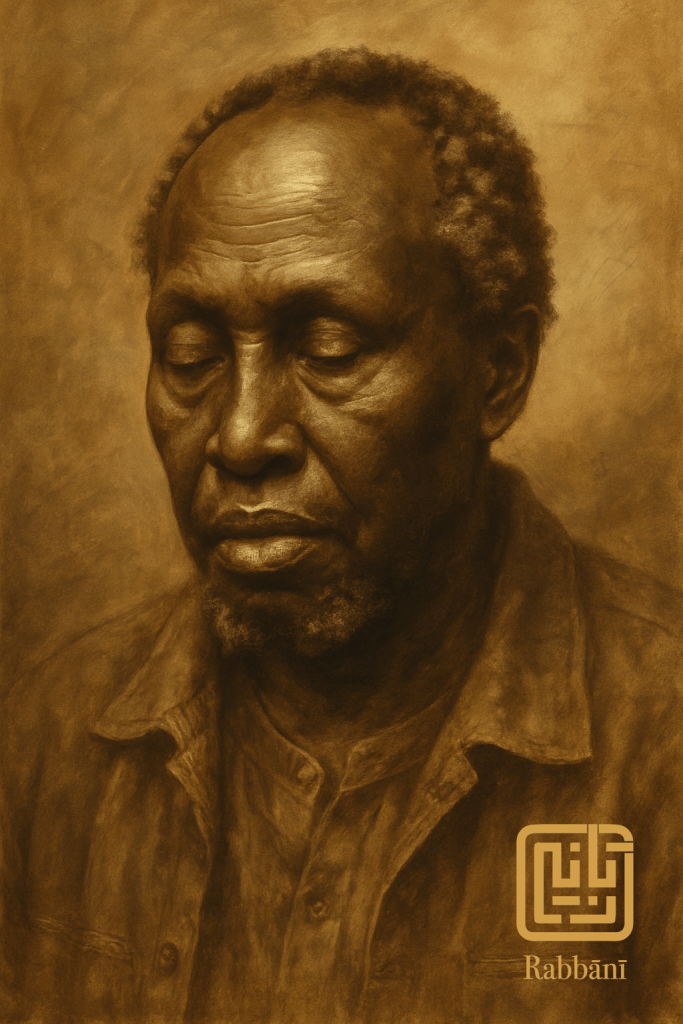
    Ngũgĩ wa Thiong’o, Kaaps, and the Language of Return

    “Take away our language and we will forget who we are.”
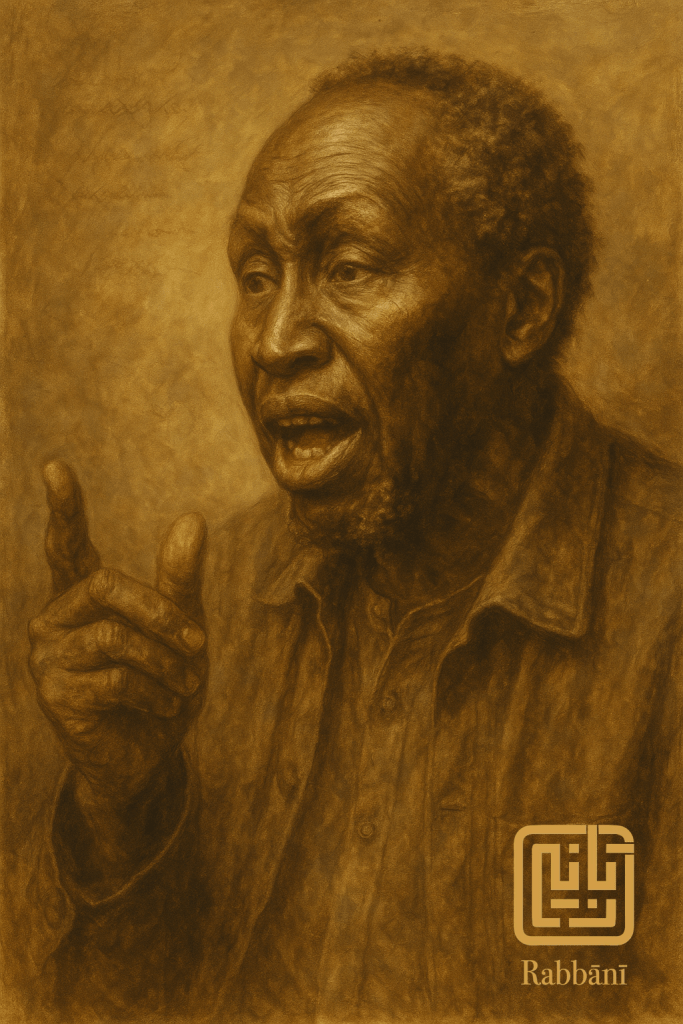
    Ngũgĩ wa Thiong’o’s words land with the sharpness of memory — not just for Kenya, where he grew up, but here at the Cape, where empire’s conquest of our bodies came with a quieter, more enduring conquest of our tongues.

    Ngũgĩ’s recent essay in The Guardian tells how colonial schools punished African children for speaking their mother tongues, rewarding only the conqueror’s speech. It shows how missionaries imposed new, biblical names on students — turning Ngũgĩ into “James” — severing identity at the root. He calls this the colony of the mind, where shame and silence make us police our own voices.


    The Cape Echo

    We know this story.
    In our Cape classrooms, Kaaps — the language of our homes, jokes, and arguments — was labelled “slang,” “broken,” or “incorrect.” Arabic-Afrikaans, the written tongue of our forebears’ Qur’ans and litanies, vanished from the public page. It was no accident. This was the slow grind of erasure: to make us strangers in our own mouths.
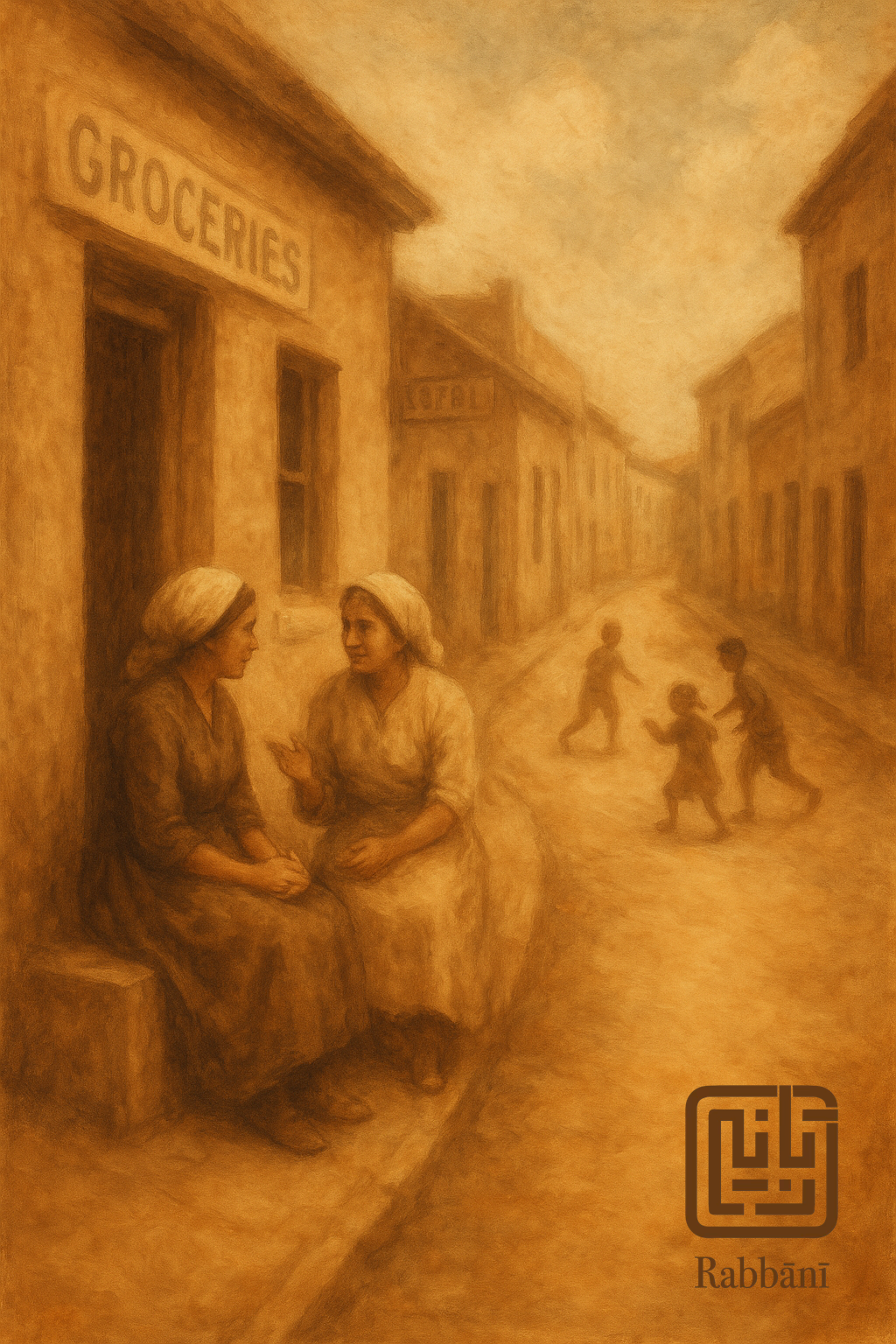

    Kaaps lives in the stoep conversations, the street games, the everyday poetry of the Cape.

    Kaaps as a Living Archive

    Kaaps is not “lesser” Afrikaans. It is the living grammar of the Cape, born from the meeting of Khoi, Malay, enslaved African, and European tongues. It carries the rhythm of working-class streets, the tenderness of family kitchens, the wit of those who survive by laughing.

    Ngũgĩ’s call for linguistic justice speaks directly to Kaaps: the demand that we write, publish, and teach it without apology, that we refuse to bleach it into acceptability. To reclaim Kaaps is to reclaim the right to sound like ourselves.


    The Ratib al-Haddad and the Sound of Home

    If Kaaps is our daily voice, Arabic-Afrikaans is our prayer voice. In the Ratib al-Haddad, Cape Muslims preserved the Qur’an’s Arabic alongside Kaaps-Afrikaans, written in Arabic script. These manuscripts are living proof that language can survive conquest by going underground — into the masjid, the madrasa, the family du’a.

    Ngũgĩ imagines a network of languages, each contributing its own beauty. The Ratib is already that: Arabic, Malay, and Kaaps carrying barakah together, resisting the empire’s hierarchy of tongues.
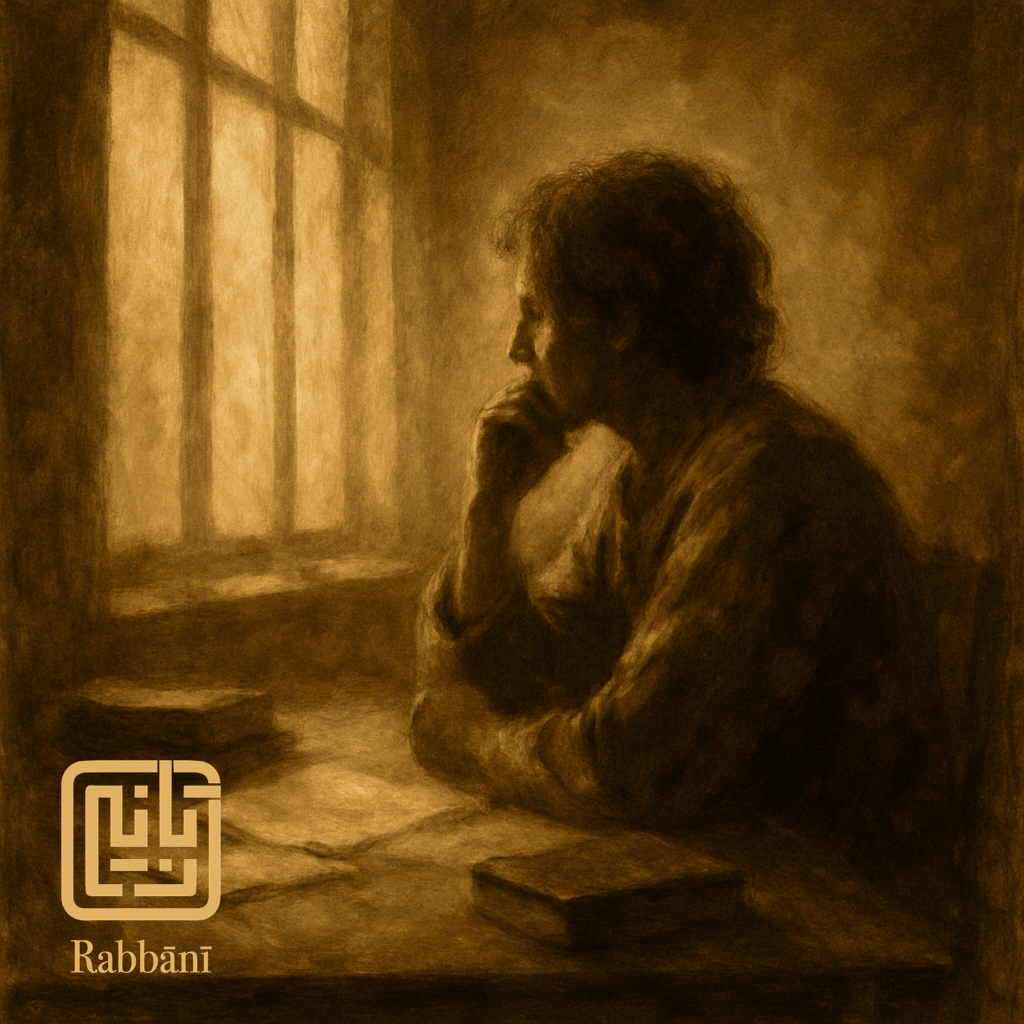

    The colony of the mind — when language is caged, and light must break through.

    Colonies of the Mind

    The greatest victory of conquest, Ngũgĩ says, is when we no longer need to be told our languages are inferior — we have already believed it. That is the “colony of the mind.”

    This is why we keep unearthing Arabic-Afrikaans manuscripts, writing Kaaps into the public record, celebrating the medora and the sorbaan, documenting the words of our elders. These are not side-projects — they are acts of return.


    From Erasure to Inheritance

    Ngũgĩ reminds us: decolonisation begins with language. Every blog on Kaaps, every poster that holds a Cape word like a jewel, every unpacking of the Ratib is not just cultural garnish — it’s the soil in which freedom takes root.

    If the conqueror severs language to make us forget, then our work is to speak, sing, write, and teach in our own tongues until our children’s children remember again.

    📖 Read Ngũgĩ’s full essay here: The Guardian


    Further Reading

    If this reflection spoke to you, you may also like:

  • In the Circles of Azzawia

    In the Circles of Azzawia

    In the Circles of Azzawia

    From Sunday’s Kitāb al-Shukr to Monday’s Minhāj al-Ṭālibīn, tracing the chains of Shāfiʿī knowledge, the whispered wisdom of teachers, and a daily breeze of remembrance.

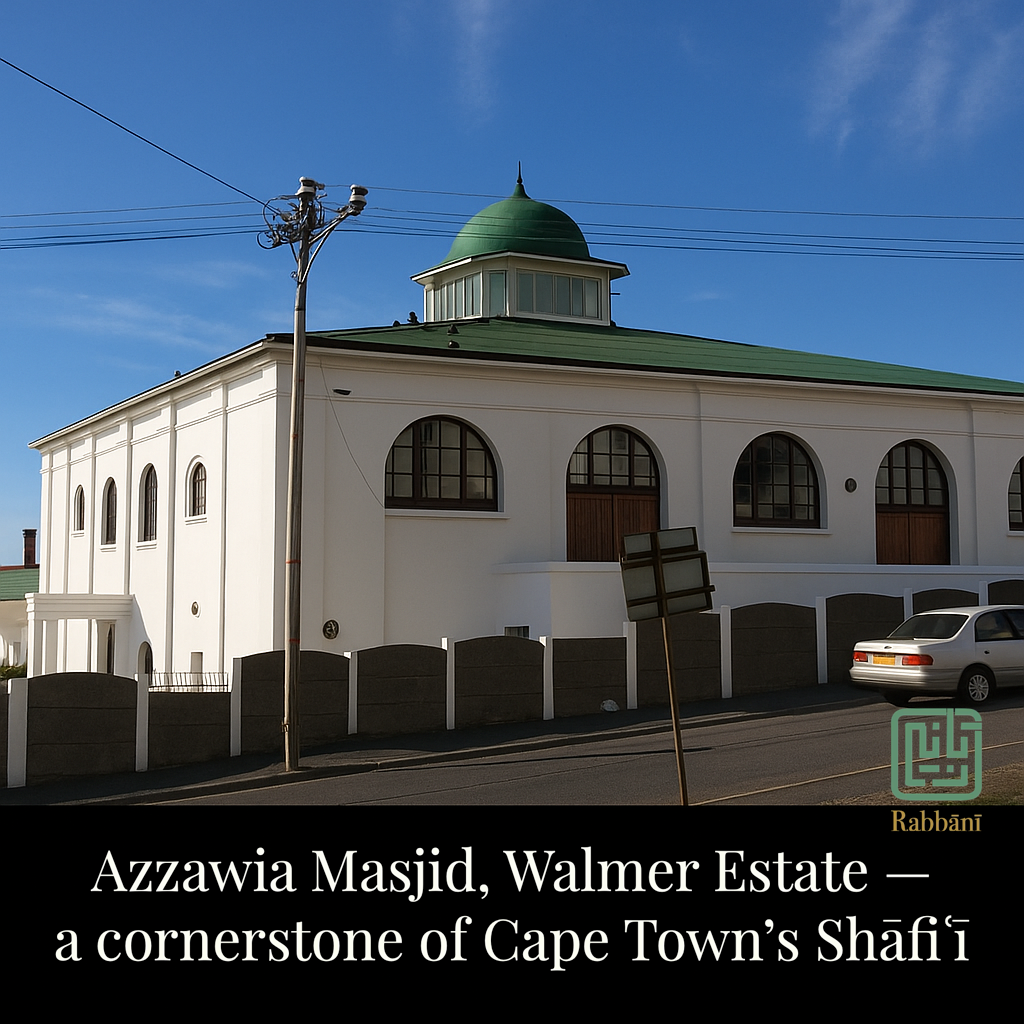
    Azzawia Masjid, Walmer Estate – a cornerstone of Cape Town’s Shāfiʿī scholarship and spiritual tradition.

    Sunday Morning – Chains of Knowledge, Wings of Mercy

    Last Friday, Al Ameen, my swaer, took me to Al Azawia Mosque in Walmer Estate. I had only wanted to greet Shaykh Achmad Hendricks, who was delivering the Jumuʿah khuṭbah. But in the front ṣaff, I also took hands with Shaykh Allie Khalfe.

    He smiled and said, “Adli, I’m glad you are here in Cape Town. Come to my dars this Sunday morning.”

    I went.

    The gathering was in the old style — a teacher seated, a text in Arabic before him, the words flowing into English explanation. Shaykh Allie was reading from Imām al-Ghazālī’s Kitāb al-Shukr (Book of Gratitude). Before the lesson began, Rashaad recited the Qaṣīda al-Burda Sharīf with the beat of the duff — a reminder that knowledge, in our tradition, is not only in the mind but in the heart, the breath, the rhythm.

    The room carried the scent of chains of transmission — ustādh to ustādh, back to the author, to the early masters, to the Messenger ﷺ. We were given a chart in Arabic, thirty or so key uṣūl al-fiqh terms, the kind that open doors into the Qurʾān’s architecture. A gift in itself.

    Shaykh Allie moved between concepts — ʿilmtafakkurḥāl; gratitude as both unveiling and action; the way arrogance blinds and mercy gives wings; Allah’s command in the Qur’an for Mūsā عليه السلام to speak kindly even to Pharaoh; and how every act, every vessel, every design is part of tawḥīd.

    He reminded us that knowledge is not a library of abstractions but an ʿamal — a living response. That Bismillah should precede everything, and that the chains we hold are not shackles but the silsilah — the unbroken links of teachers and students — which, when pulled, draw the heart closer to Allah.

    At the end, he placed in my hands a book: A Journey Through Time with Al-Shāfiʿī, Muhammad bin Idris, Volume 2. Another link in the chain, another door to open.

    I left with the sense that gratitude itself is a journey — from the first Bismillah to the final Alhamdulillah — and that Cape Town, for all its winds, still holds corners where the old way of learning is alive, unbroken, and quietly shining.

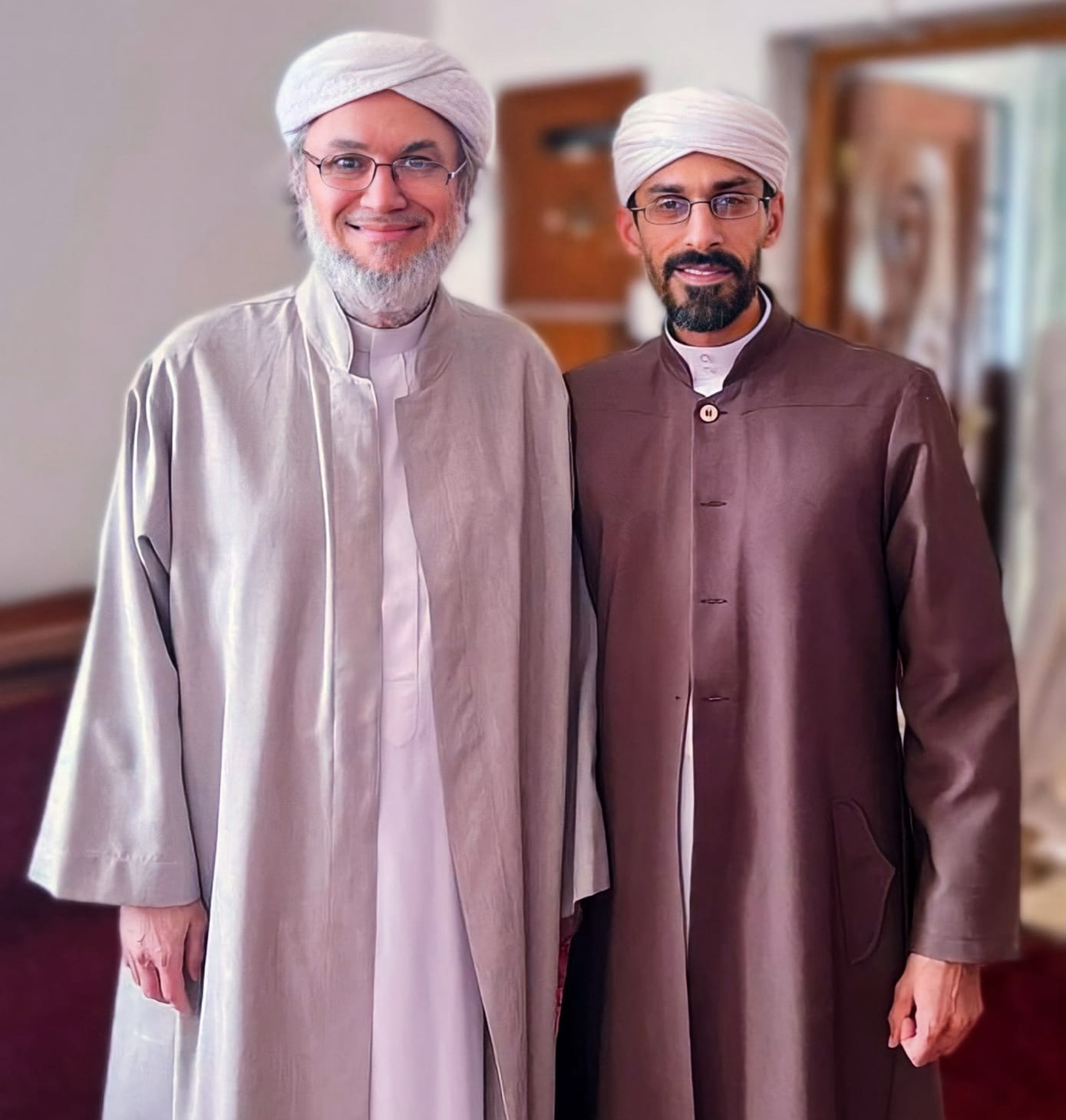
    Two pillars of Cape Town’s Shāfiʿī tradition — Shaykh Achmad Hendricks (left) and Shaykh Allie Khalfe (right).
    Between them flows an unbroken silsilah: the study circles, the Qur’anic sciences, the breath of dhikr, and the living manners of the tradition. Under their guidance, the old way of learning — text in hand, hearts attentive — remains alive in Cape Town.

    Monday Night – Two Hours on an Introduction

    On Monday night, 11 August 2025, I returned to Azzawia Mosque — this time for the weekly dars with Shaykh Achmad Hendricks.

    The WhatsApp invitation from Rashaad Samaai had been simple:

    Shaykh Ahmad is currently teaching the Minhāj al-Ṭālibīn of Imām al-Nawawī and the Risālah of Imām al-Qushayrī.

    My madhhab is Shāfiʿī — as is the majority of Cape Muslims — so to sit in a reading of Imām al-Nawawī’s masterpiece felt like stepping into my own inheritance.

    Shaykh Achmad spent two hours on just the introduction — pausing on its closing lines:

    Finally, in cases where there is divergence of opinion among authorities I shall give an impartial exposition of the two opposing theories, the two sides from which one may consider the question in dispute, and the two methods of reasoning adopted in order to solve it; and then I will also, where there is occasion for it, quote separately the decisions of our imam al-Shāfiʿī, and note the relative value of the different appreciations.

    From that, a whole world opened: the discipline of fairness, the patience to hold two views in one’s hands, and the humility to weigh them without arrogance.

    It took me back to a scene years ago in the Haram at Makkah. A teacher had just finished lecturing his students. When he rose, they swarmed him like bees — those nearest whispering their questions, the teacher answering in whispers too. Everyone leaned in to catch the words. Then, when he departed, they rushed into the market to buy the books he had mentioned.

    That is knowledge — not the cold storage of facts, but the living pursuit: sitting, listening, writing, memorising. The kind that makes the heart lean forward. The kind that, even in an age of instant answers, still requires the slow, deliberate turning of a page.


    A Gift for the Road – Daily Adhkār

    As we stepped out into the cool Cape Town night, Rashaad Samaai pressed a page into my hand.

    “It’s from Shaykh Achmad,” he said.

    On it was a short litany to be read three times daily — Names of Allah drawn from the Qur’an and the hearts of the early saints:

    Bismi Allāh al-Raḥmān al-Raḥīm, Yā Allāh
    In the Name of Allah, the Most Compassionate, the Most Merciful. O Allah.

    Yā Wāḥid, Yā Aḥad — O The One, O The Unique
    Yā Wājid, Yā Jawwād — O The All-Perceiving, O The Most Generous

    Infikhnee bi-nafkhati khayr — blow into me a breeze of goodness

    Innaka ʿalā kulli shay’in Qadīr — Indeed, Allah has Power over all things.

    A simple gift, but in it, a whole ocean — remembrance for the tongue, stillness for the heart, and a daily returning to the Source.

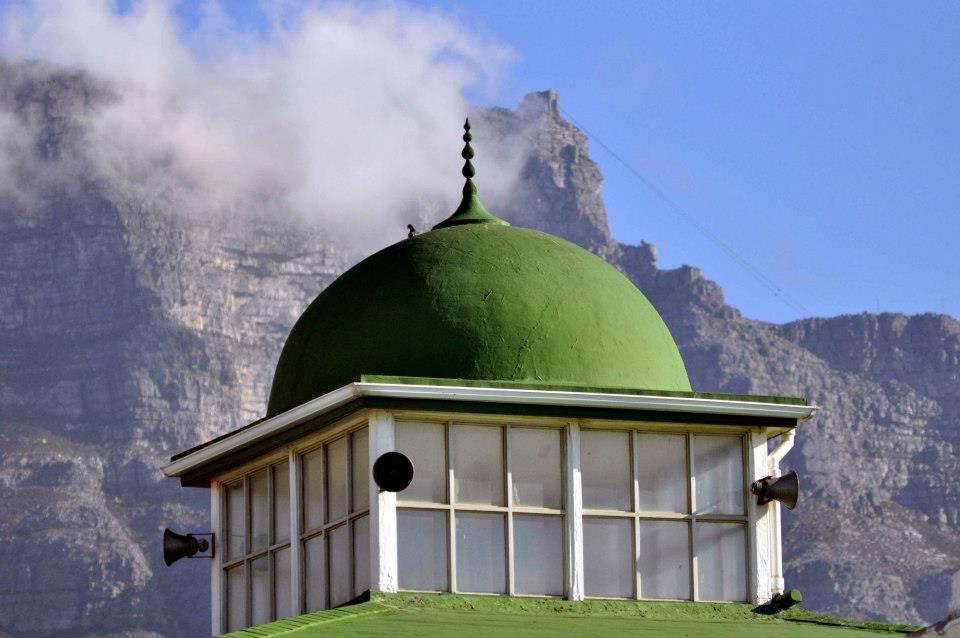
    The green dome of Azzawia Masjid rises like a lantern against the stone face of Table Mountain, a reminder that Cape Town’s spiritual horizon is as enduring as its natural one. From here, the call to prayer has travelled across decades of wind and history, mingling with the clouds that crown the mountain. Under this dome, chains of knowledge are kept alive — voices of teachers, pages of sacred texts, and the quiet remembrance of Allah, all anchored in the heart of the city. [Pic: Shafiq Morton]

    Closing line:
    And so the circles of Azzawia turn — each dars a link, each link a step — until the seeker finds that the journey was not only to the masjid on the hill, but deeper into the heart of the chain itself.