Tag: Heritage Month

  • Camissa: The River That Remembers Us

    Camissa: The River That Remembers Us

    Camissa: The River That Remembers Us

    Heritage Month Reflections on Water, People, and Becoming

    The Forgotten River Beneath Our Feet

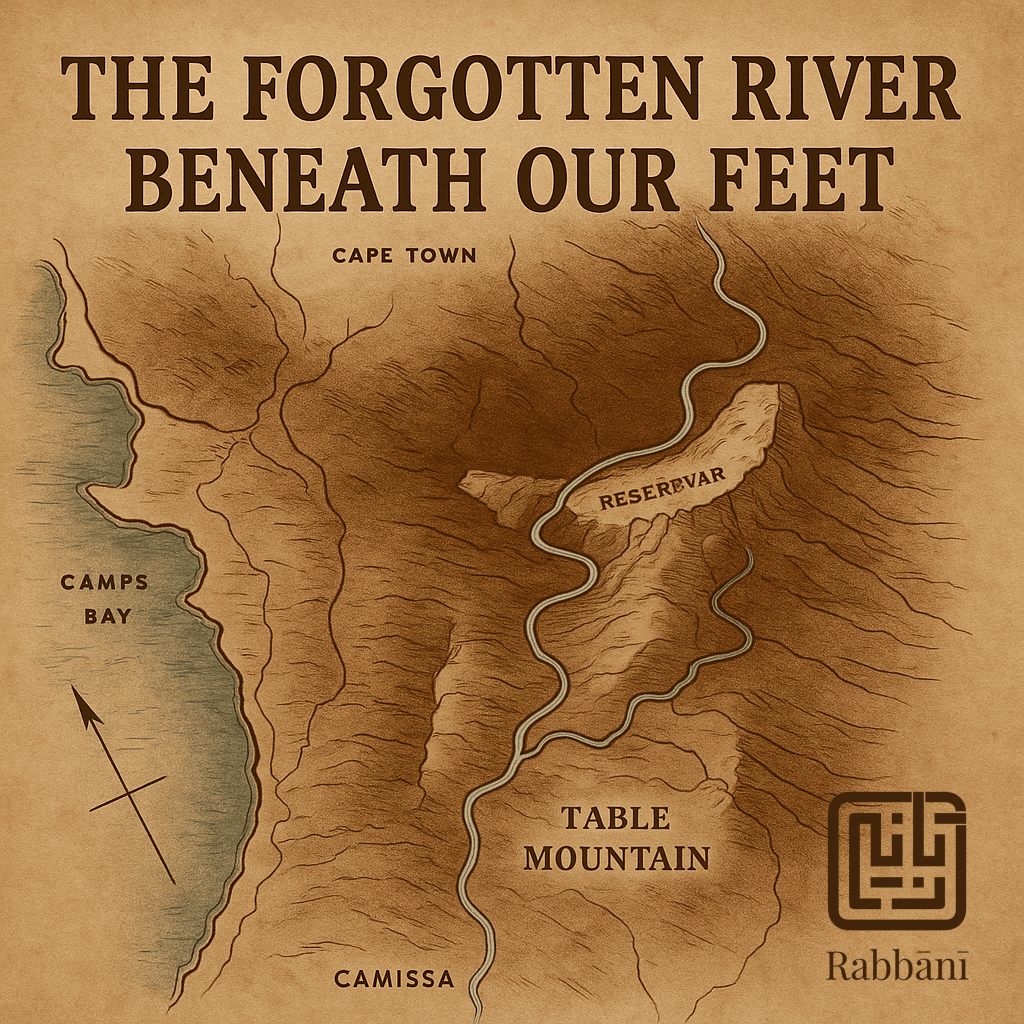
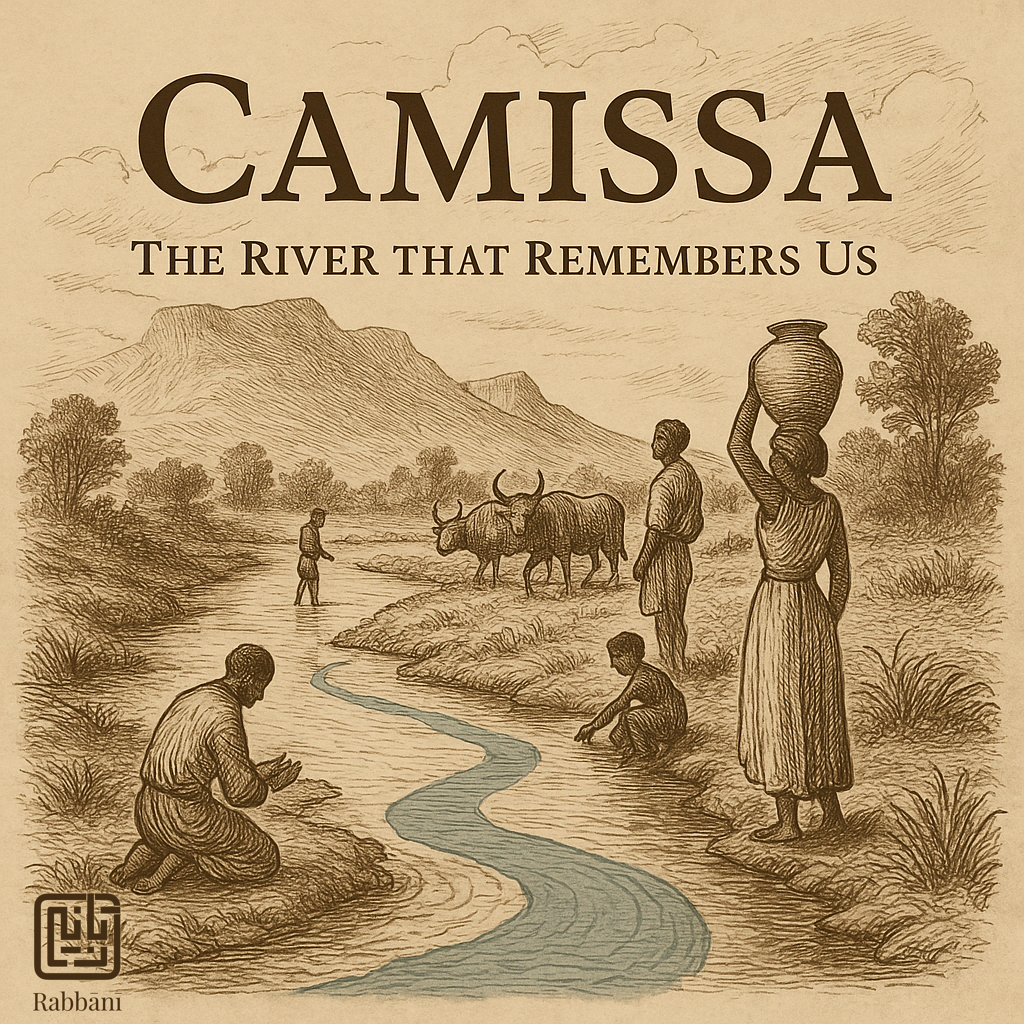
    Before there were streets and buildings, before Company Gardens and canals, there was water. It rose from the springs of Table Mountain and came tumbling down in streams, gathering into what the Khoi called Camissa — the place of sweet waters. For centuries, this river sustained life at the Cape. The Khoi and San drank from it, rested by its banks, told stories in its shade. Later, enslaved men and women from Java, Bengal, Madagascar, Mozambique, and India touched its current as they bent under forced labour. Fresh water was the first mercy, and the first demand.

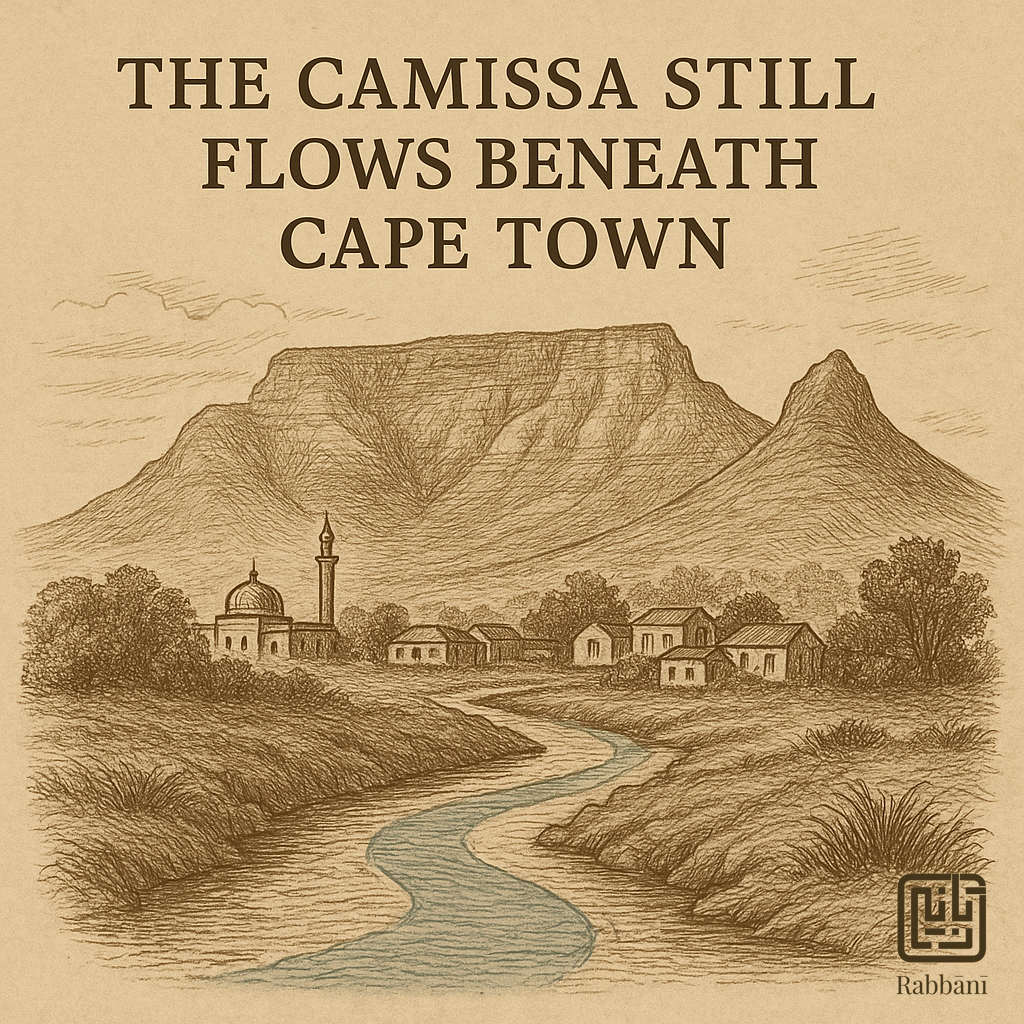
    Camissa once ran openly down into the town. The Dutch East India Company carved it into canals, forcing its body into stone, bending it to their fort and gardens. But water has memory. It seeps under walls, reappears in unexpected places, refuses to be silenced. Today, buried beneath tar and pavement, Camissa still flows. And if you pause long enough, you might hear it whisper under your feet.

    At the River’s Edge: A People Gathered

    The river was never just water. It was a meeting place, a barzakh — a threshold where lives, languages, and faiths collided. Khoi pastoralists led cattle to drink. San hunters rested with skins and stories. Dutch settlers drew buckets to quench their fort. Slaves dug trenches, carried wood, and planted gardens for a company that claimed the river as its own.

    Yet at the same banks, something else was happening. Free Blacks, exiles, manumitted slaves, and the first Muslims of the Cape gathered here. The Auwal Mosque — our first mosque — rose near the Camissa’s streams. Qur’an recitation and children’s laughter mingled with the sound of water. Out of pain, a people began to form.

    African Camissa: A Wider Circle

    Patric Tariq Mellet calls this heritage African Camissa. It is more than geography; it is an identity — a wider circle of becoming. In his telling, Camissa is the place where Khoi, San, enslaved Africans, Asian exiles, and their descendants all drank from the same stream, forming a new community beyond the colonial word “Coloured.”

    Stuart Hall once said identity is not a fixed thing we inherit, but a process of becoming. Camissa is that process made visible in water — always moving, always reshaping, carrying traces of every stone it has touched.


    The River of Resistance and Remembrance

    Water has always been resistance. Hājar ran between the hills in desperation, and Zamzam burst forth in the desert — the well that still feeds millions of pilgrims. Camissa, too, gave life to those who were bound in chains. The VOC tried to control it, but enslaved hands touched it daily, and their songs flowed into it.

    In my own writing, I have tried to follow these streams:

    • The Legend of the Silver Tree — a story of shimmering roots in mountain mist.
    • The Mother Tongue of Tasbih — where Afrikaans, written in Arabic script, became a stream of prayer.
    • Tamat — a reminder that completion is never an ending, but a living beginning.
    • Hājar — the Black mother whose faith turned thirst into a sacred inheritance.

    All these pieces flow back into Camissa. The river is not only history — it is memory itself, resisting erasure.


    Heritage Month: Listening for the Water

    September often gives us monuments, parades, and neat stories of “unity in diversity.” But heritage is not polished granite or rainbow slogans. It is water that refuses to stay in its channel.

    Camissa is buried, but not gone. It still seeps under Cape Town, carrying whispers of Khoi clans, slave lullabies, Qur’an verses, and the rhythm of ghoema drums. It reminds us that heritage is not just what we are handed, but what we choose to remember and honour.

    Closing Reflection

    The Camissa River still remembers us. It does not flow in straight lines. It curves, divides, disappears, and resurfaces — like our histories, like our families, like our faiths. To walk in Cape Town is to walk above water, on layers of memory that never dry out.

    The tree shimmers still, for those who know where to look.
    The river flows still, for those who choose to listen.


    🎥 This reflection also lives as a video.
    Watch it on [Instagram]
  • In Our Veins, In Our Graves: Mawlud and Memory

    In Our Veins, In Our Graves: Mawlud and Memory

    In Our Veins, In Our Graves: Mawlud and Memory

    A Season of Scent and Song

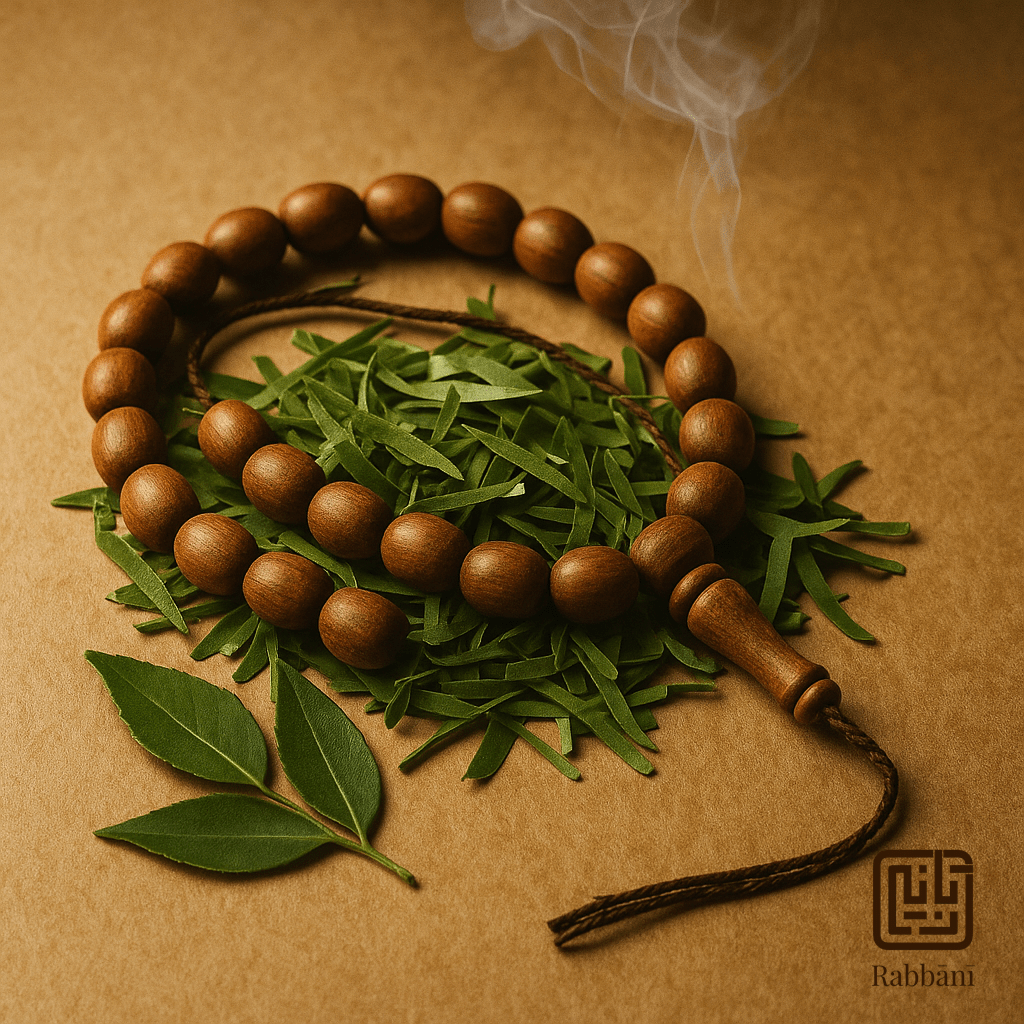
    Every Rabiʿ al-Awwal, Cape Town breathes differently. The air is heavy with sandalwood smoke, the sny of rampies, the melody of the Riwayat al-Barzanji. Children once practised their lagu at home, correcting one another — because to sing the Prophet ﷺ was to sing him beautifully. Even cutting lemon leaves became dhikr.

    This is Cape devotion: love woven into scent, sound, and preparation. It was never by chance. Preparation itself was worship.


    The Beauty of Riwāyah

    The Arabic word riwāyah (رِوَايَة) means narration. But in the Cape it became more: the sung retelling of the Prophet’s ﷺ life.

    Imām Jaʿfar al-Barzanji (d. 1763), Chief Mufti of Madinah and a Kurd from Barzan, composed ʿIqd al-Jawāhir (The Necklace of Jewels). Written in rhythmic prose and poetry, it tells the noble birth and qualities of the Prophet ﷺ. From Madinah it travelled to East Africa, Southeast Asia, and the Cape, where it became the heartbeat of Mawlud gatherings — always with sandalwood burning, rampies cut, and voices rising in lagu.

    How beautiful is thy face,
    Shining brighter than the sun.
    This night is lit by your light —
    A night of joy, a day of pride.
    The givers of glad tidings cried out:
    “The Chosen One, the Beloved, has come — rejoice!


    From Barzan to Jerusalem to the Cape

    The same Kurdish soil that gave us Barzanji also gave us Ṣalāḥuddīn al-Ayyūbī (Saladin) — the liberator of Jerusalem in 1187. One carried the pen of devotion, the other the sword of justice.

    🌿 The Cape inherited both: singing the riwāyah with love, and resisting injustice with courage. Devotion is never only ritual — it is also justice.


    Mawlud and the Question of Evidence

    Every year, voices say: “Mawlud is bidʿah. It is ḥarām.” But as Shaykh Allie Khalfe reminds us, declaring something ḥarām requires qatʿī (decisive) proof in both chain (thubūt) and meaning (dalālah). No such text exists.

    Instead, the Qur’an itself honours prophetic birthdays:

    • “Peace be upon him the day he was born” (Q 19:15) — Yaḥyā.
    • “Peace be upon me the day I was born” (Q 19:33) — ʿĪsā.

    The Prophet ﷺ also endorsed gratitude for sacred days. When the Jews fasted to commemorate Musa’s deliverance, he said: “We have more right to Musa than you” — and he fasted (Bukhārī, Muslim).

    If deliverance is worthy of commemoration, how much more the birth of Muhammad ﷺ, mercy to the worlds (Q 21:107).


    Graves, Memory, and Reverence

    Some argue: “Level the graves.” They quote hadith forbidding plastering or building on tombs. But the Qur’an records that when the People of the Cave were discovered, those who prevailed said: “We will surely build a masjid over them”(Q 18:21).

    Our sacred sites confirm this:

    • The Hijr Ismāʿīl beside the Kaʿbah contains the graves of Hājar and Ismāʿīl.
    • Masjid Nabawī encloses the Prophet ﷺ, Abū Bakr, and ʿUmar.
    • The Cape’s kramats — Tuang Yusuf, Tuang Guru, Tuang Mahmud — stand as circles of remembrance.

    These are not shirk but reverence, places of memory and duʿāʾ. To erase them is to erase ourselves.


    Activism as Sunnah

    The Prophet ﷺ left us more than rituals. He left us justice. The Constitution of Madinah established a civic community across religions and tribes.

    That spirit carried into the Cape’s struggle against apartheid. In the Call of Islam, the Muslim Youth Movement, and the National Muslim Conference at UWC (1992), activists remembered the Prophet ﷺ not only with salawāt but with action — defending equality, insisting on women’s inclusion, placing youth at the centre. To live his Sunnah is to resist injustice.


    The Everyday Sunnah

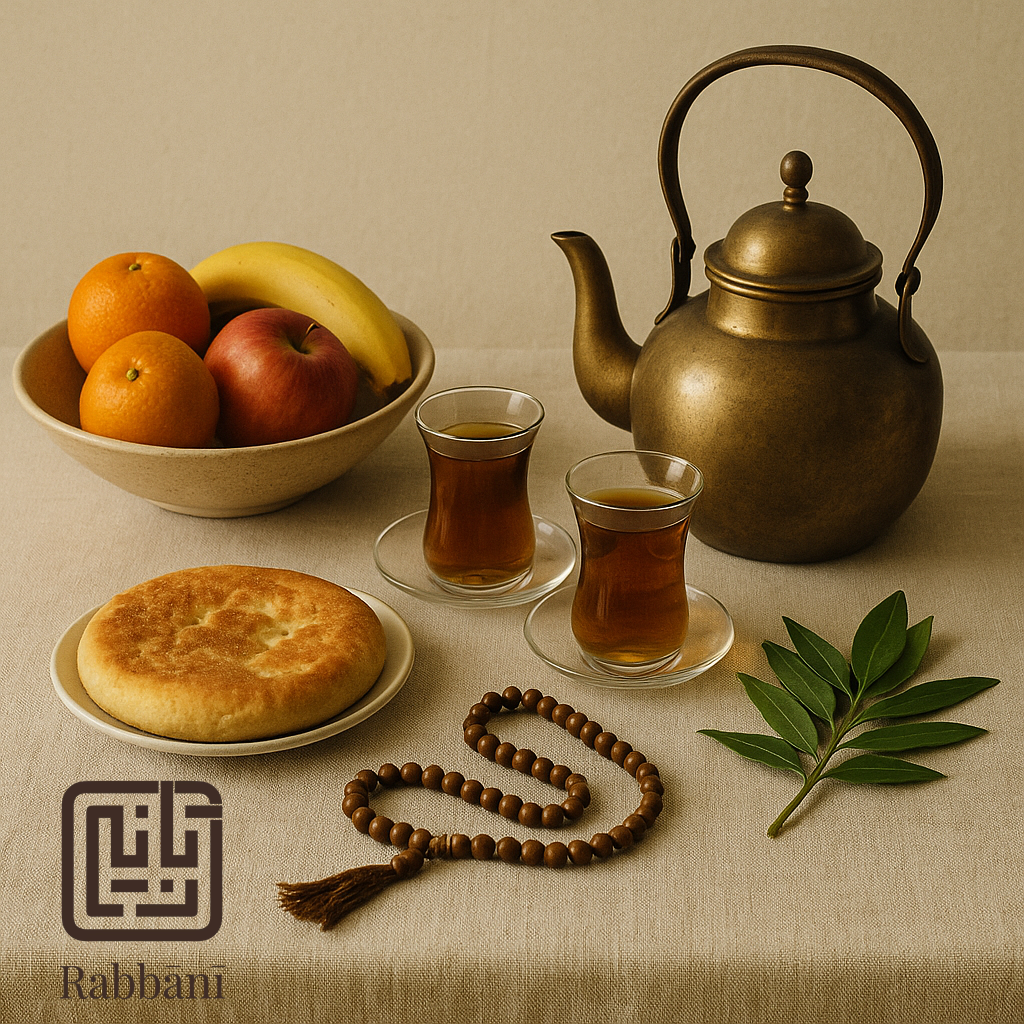
    And yet, his legacy is also small, intimate. To say “Ahlan wa sahlan” at the door is prophetic. To put on the kettle and share food is prophetic. To dress with dignity, to smile, to eat together — these are echoes of the Prophet ﷺ at the table.

    That was my final note on Radio 786: Mawlud is not just once a year, but lives in every act of welcome, in every gathering, in the rhythm of our homes.


    Gadija’s Reflection

    At the close of our conversation, Gadija Ahjum reminded listeners that these traditions are not nostalgia but a living inheritance. They still speak to Cape Town today — in song, in struggle, in everyday acts of kindness. Her words were a benediction: that we must hold on to these echoes, because they remind us who we are, and whose love runs in our veins.


    Closing: In Our Veins, In Our Graves

    The Prophet ﷺ is not only in our books. He is in our veins — in sandalwood tasbihs from Makkah, in rampies leaves cut by children, in songs sung through the night. And he is in our graves — in the kramats that guard our Cape, in the Hijr Ismāʿīl, in Masjid Nabawī itself.

    This is the beauty of riwāyah: history retold in the key of love, memory carried on the breath, the Prophet ﷺ remembered not only in books, but in song.

    And then comes the moment every Cape gathering knows. The reciter enters the salawāt, and we rise. To stand in qiyām is to welcome the Beloved ﷺ into the room. Voices swell, hearts open, and it feels as though his light enters the gathering like fragrance. This is not metaphor — it is inheritance. In standing, we join generations before us, declaring with our bodies and our voices: the Prophet ﷺ lives in our veins, and in our graves.


    🔗 Related Blogs & Reflections

    • 🌿 The Prophet in Our Veins — Cape Mawlud traditions, sandalwood, inheritance: Read here
    • 🧭 Tourist in My City — walking Cape Town’s sacred geography: Camissa, Slave Lodge, Bo-Kaap, Tana Baru: Read here
    • 🕊️ A Family Dhikr Between Birth and Remembrance — names, dreams, duʿāʾ across generations: Read here
    • 🌊 Get Rooted, Walk Through the Sea — faith at life’s thresholds: Read here
    • 🕌 Streams of Ink and Streams of Light — reflections on adab, ink, and the mosque as living memory: Read here