Tag: islam

  • Our Inheritance: The African and Islamic Civilisations That Shaped the World
    Our Inheritance: The African and Islamic Civilisations That Shaped the World

    Our Inheritance: The African and Islamic Civilisations That Shaped the World

    Our Inheritance: The African and Islamic Civilisations That Shaped the World

    “We don’t just have history. We have receipts.” — Yaw Kissi

    For generations, our textbooks — even in Islamic schools — handed down a version of history in which Europe alone was cast as the cradle of civilisation, and Africa into darkness. This colonial retelling stripped countless people of their confidence and belonging.

    As Shaykh Allie Khalfe insightfully reminds us, even the academic traditions we take for granted — like graduation caps and gowns — trace back to the Islamic ijāzah system, where a teacher would bestow a turban and robe upon a student to mark their mastery.

    Europe adopted these symbols while erasing their origins.
    But today, the veils are lifting.
    And as African memory resurfaces — in scrolls, dreams, and digitised manuscripts — we realise something essential:

    We don’t just have history. We have receipts.
    Mathematics and Science

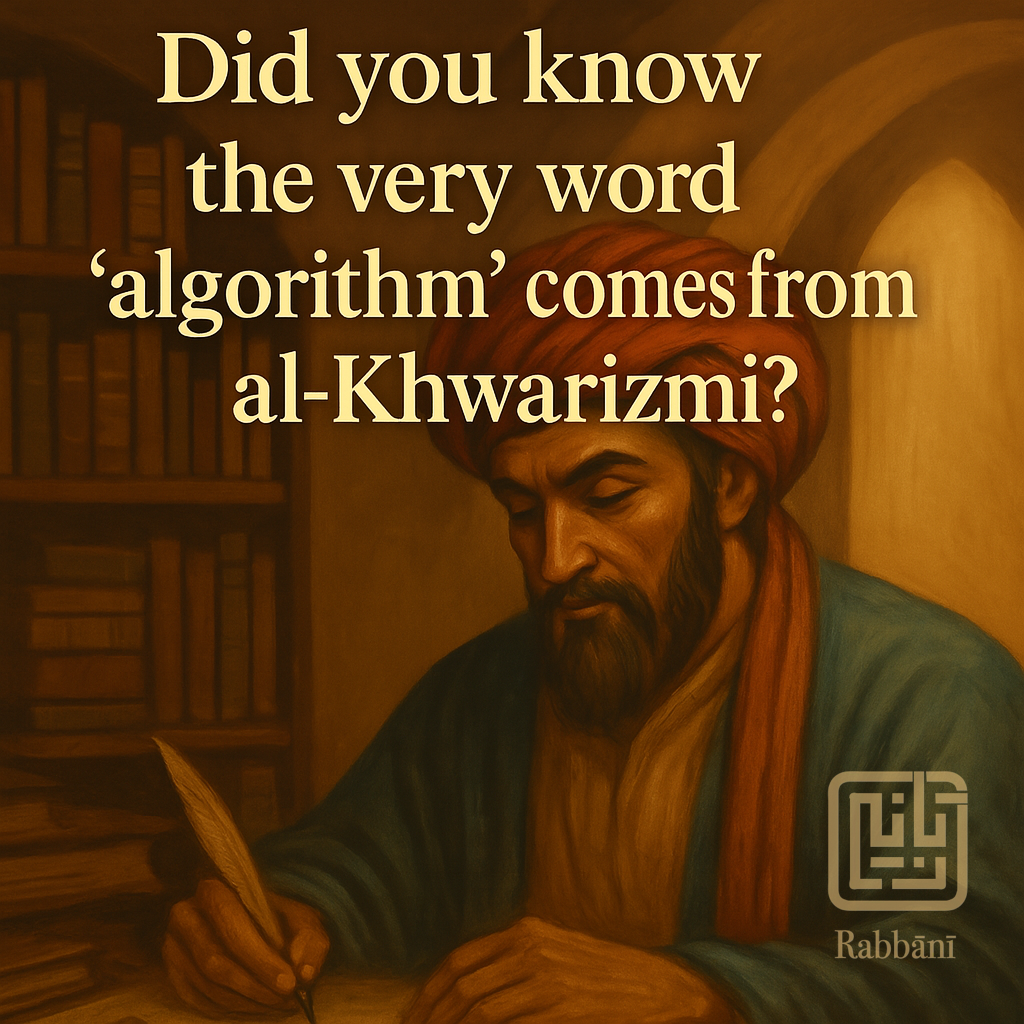
    Consider al-jabr, or algebra — a foundational pillar of modern science, engineering, and finance. Muhammad ibn Musa al-Khwarizmi, working in 9th-century Baghdad, formalised its rules, giving his name to the word algorithm — the very basis of every modern computer. His systematic approach to equations transformed the world.

    In medicine, Ibn Sina (Avicenna) produced the Canon of Medicine, a monumental text synthesising anatomy, treatments, and psychology, taught across Europe for over 600 years. Abu al-Qasim al-Zahrawi (Albucasis) in Andalusia created a 30-volume encyclopedia on surgical techniques, designing more than 200 surgical instruments that still influence modern practice.

    Ibn al-Haytham (Alhazen), known as the “father of optics,” shattered ancient Greek theories by proving that light enters the eye to produce vision, and he introduced experimental methods that would inspire Europe’s later scientific revolutions. These figures were not footnotes in history — they were its authors.


    Astronomy and Navigation

    Muslim astronomers transformed the night sky into a navigational map, extending humanity’s reach across oceans and deserts. They refined Greek, Persian, and Indian observations and built on them with powerful new instruments and methods.

    Al-Zarqali (Arzachel) of 11th-century Toledo developed the Toledo Tables — astronomical data so precise they became a cornerstone for European science, inspiring Copernicus and others. His universal astrolabe could be used at any latitude, freeing navigation from local constraints.

    Mariam al-Asturlabi, a 10th-century woman scientist in Aleppo, constructed exquisitely precise astrolabes, allowing people to determine prayer times, measure the positions of stars, and navigate across continents. These tools formed the backbone of Muslim maritime routes linking East Africa, Arabia, and South Asia — centuries before Europe was ready to cross the Atlantic.

    It is no exaggeration to say that the so-called Age of Discovery — Columbus, da Gama, Magellan — was made possible through navigational science and star charts inherited from the Muslim world. Yet most schoolbooks erase these global contributions.

    Education and Intellectual Institutions

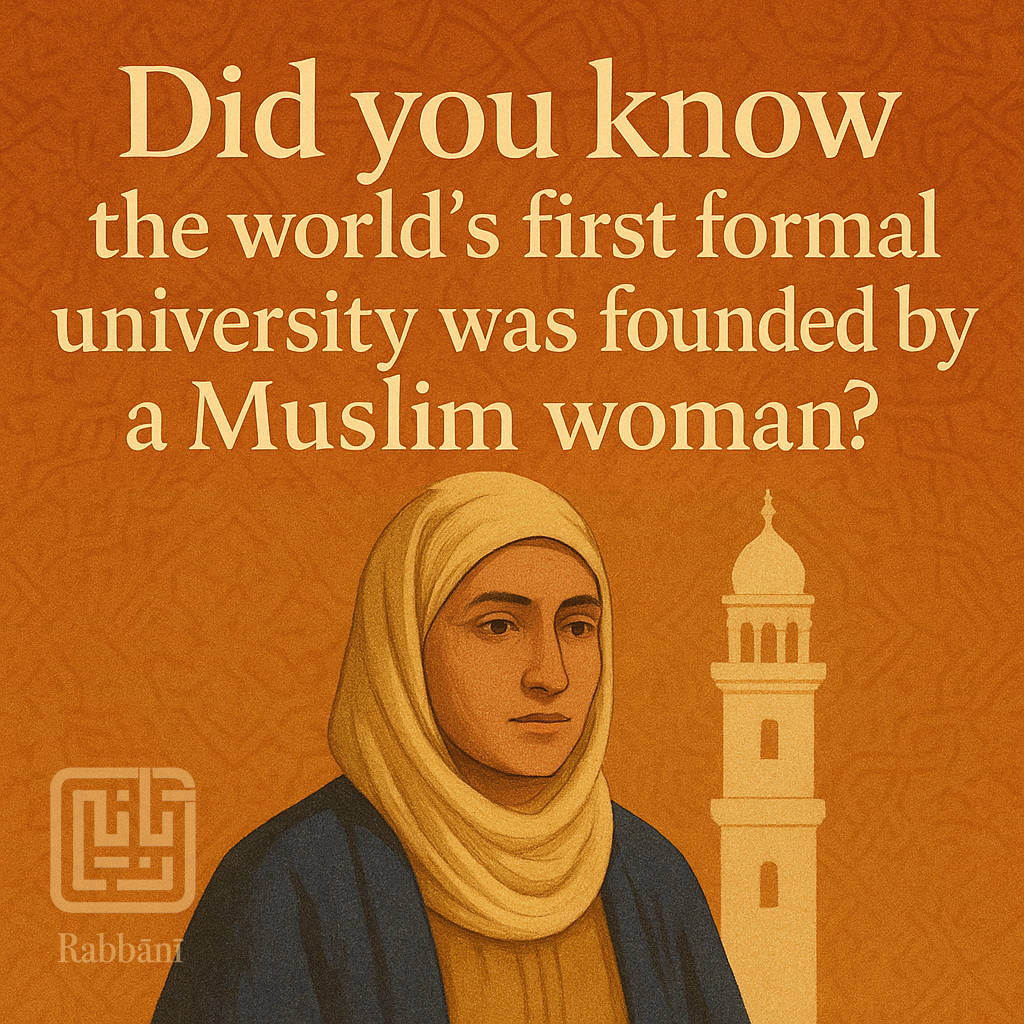
    Muslim civilisation revolutionised education by designing institutions that united spiritual, legal, and scientific learning. Fatima al-Fihri, a Muslim woman in Morocco, founded the University of al-Qarawiyyin in 859 CE, the world’s oldest continually operating degree-granting institution. Her legacy shows how women helped sustain and fund educational excellence.

    In West Africa, Ahmed Baba of Timbuktu, who authored more than 40 books on law, biography, and ethics, embodied the intellectual brilliance that made Timbuktu as respected as any European centre of learning. Even when Moroccan invaders exiled him to Marrakesh, his scholarship commanded respect, and he eventually returned to revive Timbuktu’s traditions.

    Equally inspiring, Nana Asma’u of 19th-century Nigeria trained networks of female educators (yan-taru) and wrote poetry and theology in Arabic, Hausa, and Fulfulde, extending literacy and spiritual knowledge throughout the Sokoto Caliphate.

    These institutions offered far more than theology: their curricula included medicine, astronomy, mathematics, grammar, and philosophy, attracting scholars from across Africa, the Middle East, and even Europe. They were open, cosmopolitan spaces that nurtured critical thinking and diversity, centuries before Europe’s universities caught up.

    Art, Culture, and Daily Life

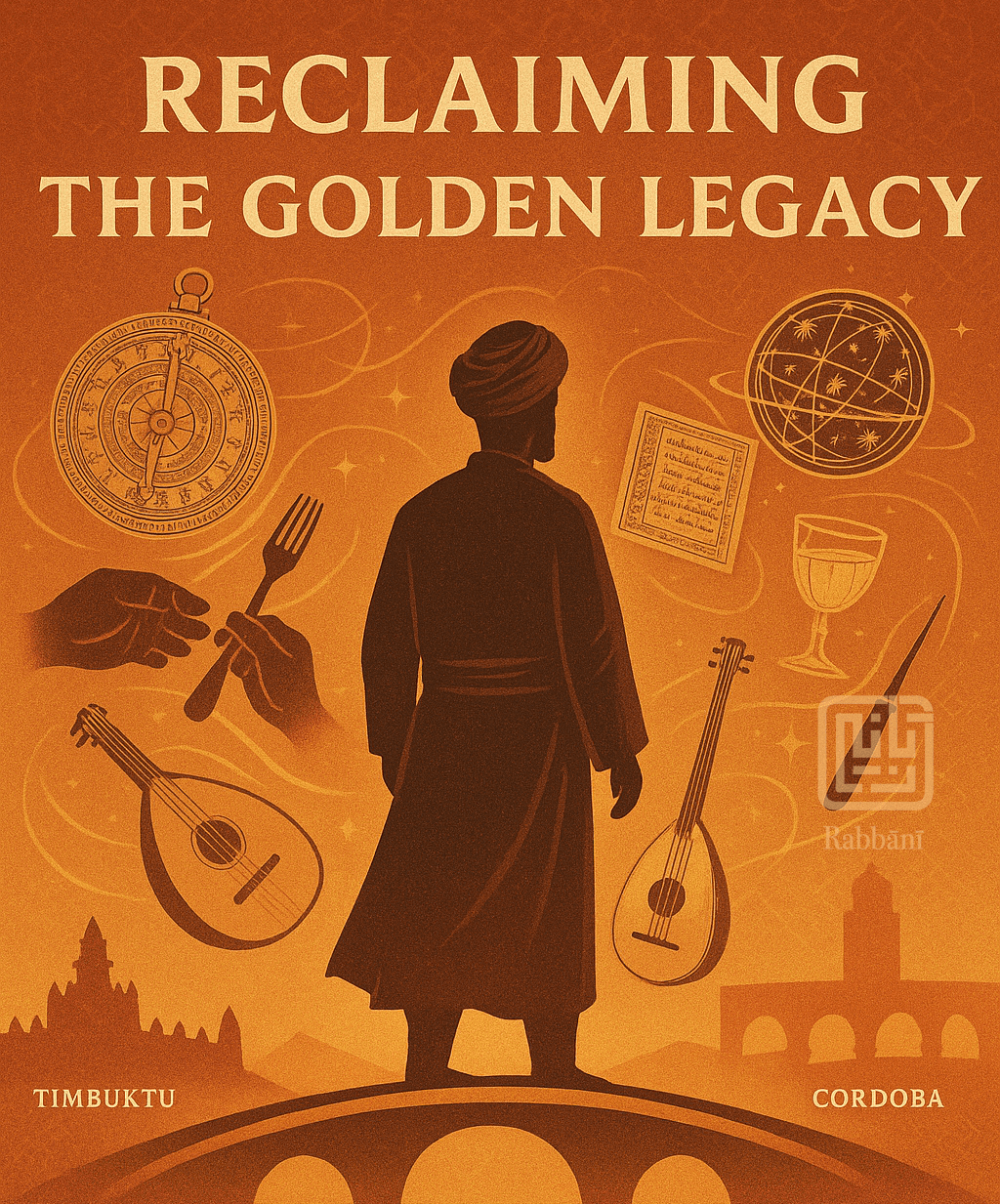
    Perhaps nowhere was cultural brilliance more visible than in the story of Abu l-Hasan ʿAli Ibn Nafiʿ — known as Ziryab, the ‘Black Bird’. Born to a family who had been enslaved, most likely of Black African descent, Ziryab arrived in Cordoba in the 9th century and redefined taste itself. He expanded musical scales, added a fifth string to the oud, and established a structured method of teaching music that would echo through Europe for centuries.

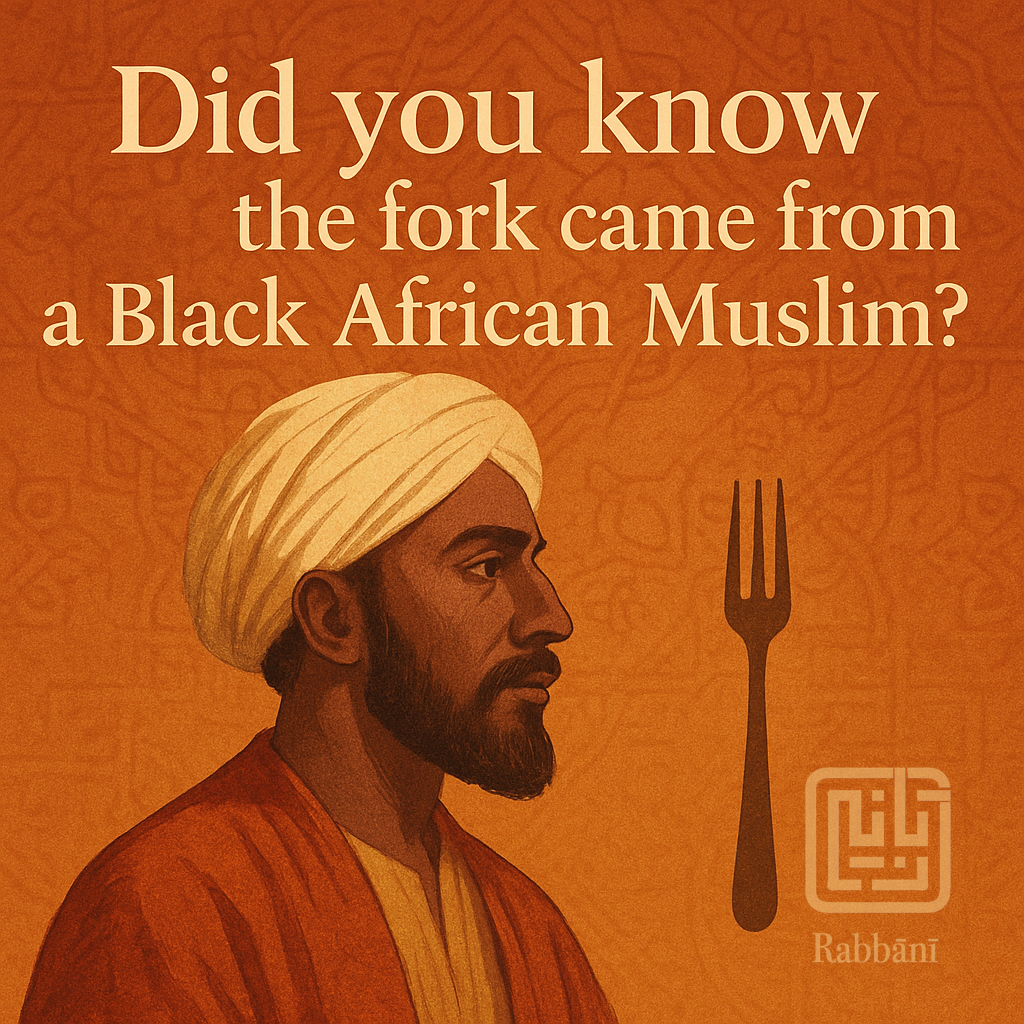
    “The fork, now held up as the badge of ‘civilisation,’ was popularised in Europe by a Black African Muslim.”
    — from the section on Ziryab

    “They weren’t relics. They were receipts.”
    — on the Timbuktu manuscripts

    He also transformed daily life by introducing crystal drinking vessels, organising meals into separate courses, encouraging regular hygiene, designing seasonal wardrobes, and even popularising the small two-pronged fork for delicate foods — centuries before Europe claimed it as its own. That fork would eventually spread across France and the continent, yet no one credited its origins.

    In today’s world, where politicians shame people like Zohran Mamdani for eating with their hands, there is a profound irony: the fork, now held up as the badge of “civilisation,” was popularised in Europe by a Black African Muslim.


    A Note on Eating With the Hand

    The uproar over Zohran Mamdani’s video of eating rice with his hands shows how colonial thinking still lingers. Across Africa, India, and the Arab world, eating with the hand is rooted in ancient tradition, mindfulness, and even spiritual symbolism — linking the five fingers to the five elements of nature.

    Western colonisers once labelled this practice “uncivilised,” forgetting that their prized utensil, the fork, came into European culture through Ziryab’s refined innovations. France and other parts of Europe embraced the fork over centuries, yet rarely acknowledged its roots.

    As Shaykh Allie Khalfe wisely reminds us, the problem is not about etiquette, but about power, prejudice, and historical amnesia — a colonial hierarchy that still tries to shame non-European cultures while quietly living on their forgotten innovations.

    Conclusion

    The Golden Age of Africa and Islam was never lost — it was hidden, buried beneath centuries of colonial arrogance, racism, and cultural erasure. From the hospitals of Cairo to the libraries of Timbuktu, from the universities of Fez to the concert halls of Cordoba, from the Grand Library of Baghdad — Bayt al-Ḥikmah — to the scholars who charted the stars, our ancestors nurtured a world of knowledge, beauty, and moral excellence that still resonates today.

    These contributions were not accidental: they were born of a civilisation that valued intellectual curiosity, hospitality, faith, and human dignity. In their pursuit of learning, these scholars and visionaries created bridges between continents and cultures, carrying forward a spirit of trust in God (tawakkul) and service to humanity.

    Today, recovering these stories is not about boasting or chasing nostalgia — it is an act of healing, of reclaiming the confidence, pride, and resilience that colonial narratives tried to crush. Our children deserve to inherit a truthful memory of who we are: people who illuminated the world, built institutions of compassion and reason, and shaped the very frameworks of science, art, and law.

    Let us honour this legacy not with empty slogans, but by living it — teaching it, protecting it, and carrying it forward as a sacred trust (amanah). For if our ancestors could rise from the chains of conquest and slavery to become authors of civilisation, then we too can rise, with God’s help, to build a world of justice, knowledge, and mercy once more.

    We were never just subjects of someone else’s story.
    We wrote. We built. We mapped. We healed.

    And the pages are still here.

    We don’t just have history. We have receipts.

    And now — we remember.


    References

    • 1001 Inventions: The Enduring Legacy of Muslim Civilisation, ed. Salim T.S. Al-Hassani
    • George Saliba, Islamic Science and the Making of the European Renaissance (2007)
    • John Hunwick, “Ahmed Baba: Intellectual of Timbuktu,” Sudanic Africa (1997)
    • Beverly Mack & Jean Boyd, One Woman’s Jihad: Nana Asma’u, Scholar and Scribe (2000)
    • Amira K. Bennison, The Great Caliphs: The Golden Age of the Abbasid Empire (2009)
    • Gülru Necipoğlu, The Age of Sinan (2005)
    • Toby Green, A Fistful of Shells: West Africa from the Rise of the Slave Trade to the Age of Revolution (2019)
  • The Ratib al-Haddad: A Symphony of Spiritual Resilience

    The Ratib al-Haddad: A Symphony of Spiritual Resilience

    The Ratib al-Haddad: A Symphony of Spiritual Resilience

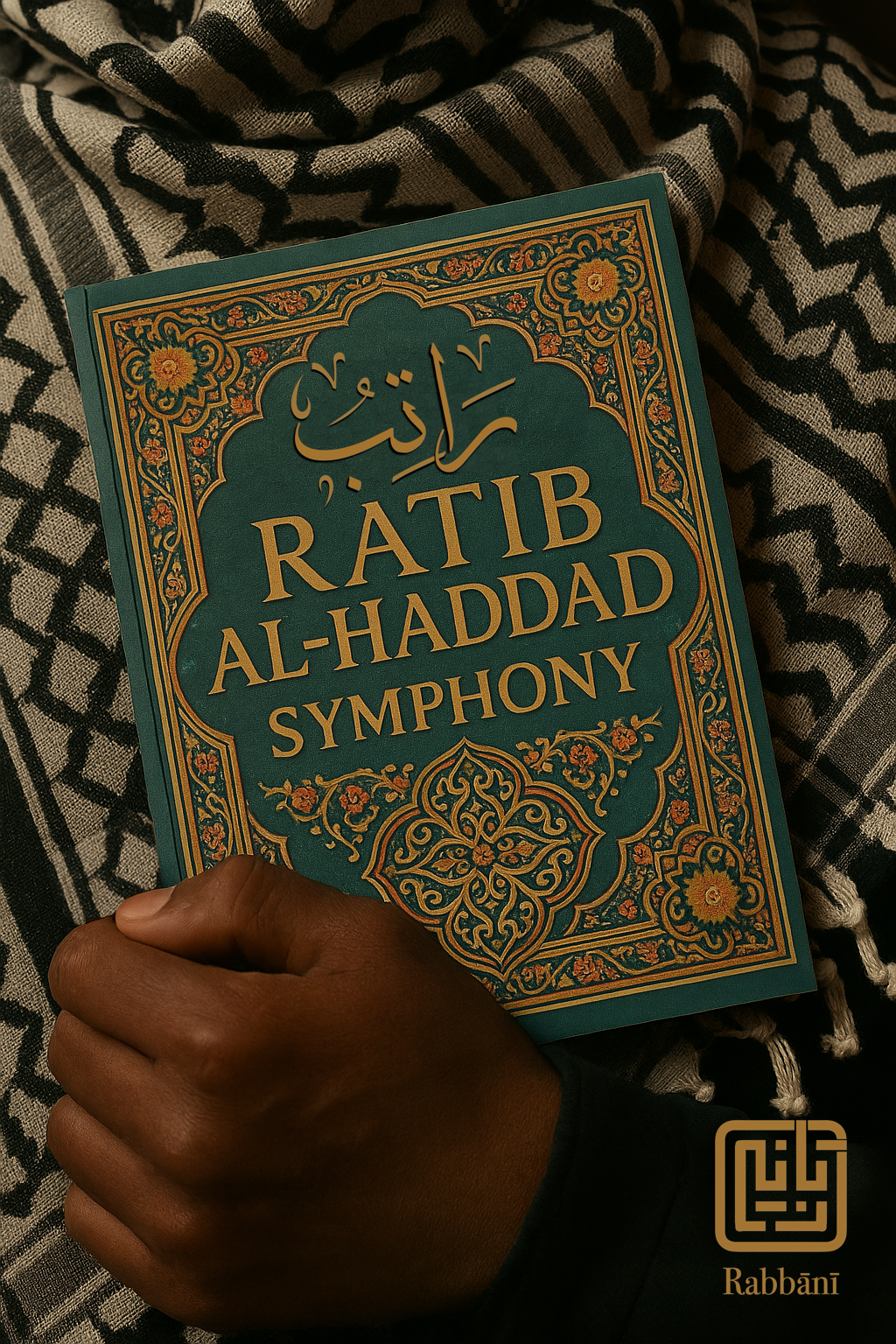
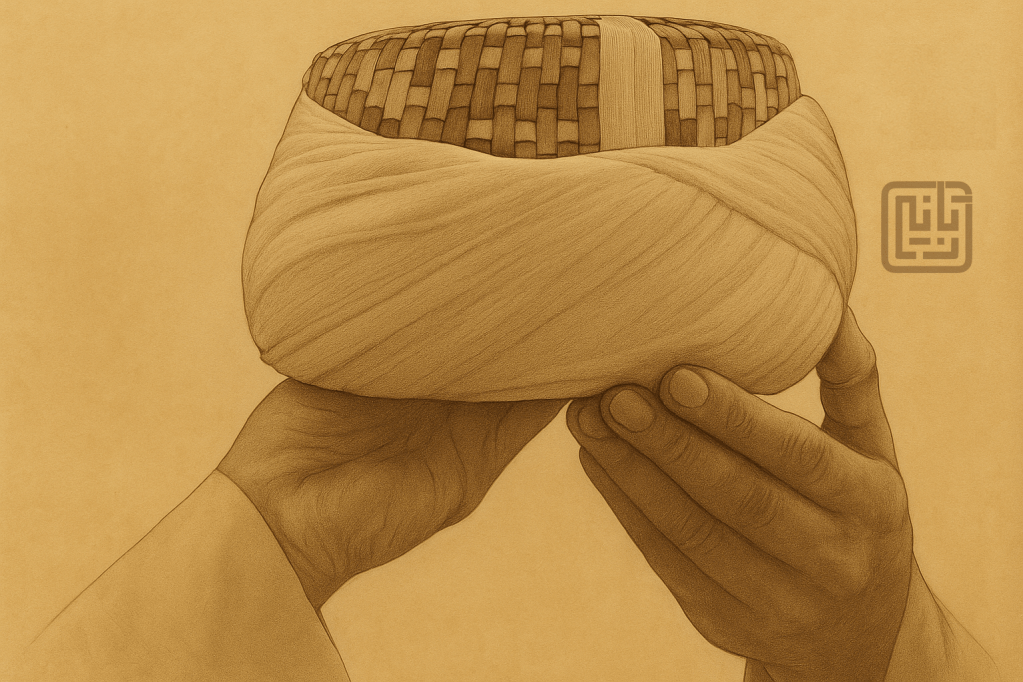
    Close-up of hand holding Ratib al-Haddad booklet with black-and-white keffiyeh

    Introduction

    In the centuries-old Cape Muslim tradition, the Rātib al-Ḥaddād stands as a spiritual symphony. Its composer, Imam ʿAbd Allāh ibn ʿAlawī al-Ḥaddād, drew upon a Qur’anic verse known as the Verse that Faces Outward at the Rawdah of the Prophet ﷺ, giving it a protective resonance. This rhythmic litany unfolds like movements of a musical masterpiece, each moment drawing the heart closer to Divine presence. Inspired by Imam al-Haddad’s mission to guide believers through fear and trial, the Ratib remains a living masterpiece of faith.


    Movement I: The Prelude of Protection

    O you who fear, gather at the gate of forgiveness; Bismillah like a banner above your heart, Ayatul Kursi as your armour, verses of Baqarah as your shield. In this dawn of remembrance, let salawat fall on your lips like rain upon a thirsty earth, and trust flow through your veins until your soul is clothed in light. This is the first movement: a prayer of protection woven from the very breath of Revelation.


    Movement II: The Rhythms of Remembrance

    Subḥānallāh, transcendence like the sky’s endless horizon; Alḥamdulillāh, gratitude flowing through every breath; Allahu Akbar, awe striking the heart; Lā ilāha illallāh, unity beyond all boundaries. These dhikr, recitations, rise and fall like ocean waves, polishing the mirror of the heart until it shines with trust and surrender.


    Movement III: The Pulse of Tawhid

    Al Maʿbūd, meaning The Worshipped One, calls the believer to recite Lā ilāha illallāh fifty times, each repetition chiseling away fear and confirming pure oneness. It circles the heart like a crown of certainty. The three Quls stand as guardians, their verses sealing every crack against doubt. This movement is a fortress of tawhid, where the soul forgets every other reliance and trusts only Allah.


    Movement IV: The Prayerful Crescendo

    Duas rise like incense, interlaced with Al-Fātiḥa, each plea a petition for healing, protection, mercy, and light. The tongue becomes a river of hope, carrying the soul to a calm shore. Here the believer surrenders every burden, resting in the assurance that Allah is the One who hears and responds.


    Closing Invocations

    • Al-Fātiḥa on the soul of our master, our beloved, our intercessor, the Messenger of Allah, Muhammad ibn Abdillah, his family, his Companions, his wives, and all his noble household.
    • Al-Fātiḥa on the soul of our master al-Muhajir Ahmad ibn Isa and his descendants.
    • Al-Fātiḥa on the soul of our great teacher, the jurist al-Muqaddam Muhammad ibn Ali Ba Alawi and his lineage.
    • Al-Fātiḥa on the souls of our noble Sufi masters wherever they may be, east or west, that Allah may raise their ranks.
    • Al-Fātiḥa on the soul of the compiler of the Ratib, the Axis of Guidance, Abdullah ibn Alawi al-Haddad and his family line.
    • Al-Fātiḥa on the souls of all the pious servants of Allah, our parents, our teachers, those who have rights upon us, and the believers who have passed away in this land.
    Decorative cover design for Ratib al-Haddad Symphony in traditional Islamic style

    Cape Ritual Practice

    In South Africa, especially in the Cape, families often recite the Ratib al-Haddad after a loved one passes away, beginning from the first night and continuing for seven nights, then gathering on the fortieth day, the hundredth day, and each year on the anniversary of the passing. The Ratib is also recited at birthdays, during Mawlud celebrations, generally every Thursday night, sometimes Sunday mornings, a week before weddings, at engagements (known as lambary), and at naming ceremonies (doekmal or doopmal). This tradition anchors the community in remembrance and prayers for all occasions of joy, transition, and remembrance.


    About Dhikr

    The term dhikr refers to remembering, remembrance, or reciting and chanting the names of Allah, specific prayers, or Qur’anic verses. It is a rhythmic practice that roots the soul in the Divine, and is central to the Ratib al-Haddad tradition.


    Individual or Group Practice

    The Ratib al-Haddad can be recited alone or in a group, with equal blessing. Allah says in the Qur’an: “And men and women who remember Allah often — for (all of) them Allah has prepared forgiveness and a great reward” (Quran 33:35). The Prophet ﷺ said: “People will not sit in an assembly in which they remember Allah without the angels surrounding them, mercy covering them, and Allah mentioning them among those who are with Him.”


    Decorative cover design for Ratib al-Haddad Symphony in traditional Islamic style

    Foundations

    The Ratib al-Haddad stands upon the firmest pillars of faith, a radiant string of pearls drawn from the Qur’an and Sunnah. It opens with the best Surah — Sūrat al-Fātiḥah, flows into the greatest verse — Āyat al-Kursī, affirms the Shahādah — the finest declaration of oneness, and continues with the enduring praises of al-Bāqiyāt al-Ṣāliḥāt. It includes the daily istighfār of the Prophet ﷺ, abundant ṣalawāt upon the Beloved ﷺ, and concludes with the dhikr by which Imām al-Bukhārī sealed his Ṣaḥīḥ.

    Composed in sacred sequence by Imām ʿAbd Allāh ibn ʿAlawī al-Ḥaddād — a noble grandson of the Messenger ﷺ — this Ratib is not merely a litany, but a luminous map of remembrance. It is a symphony of Qur’anic light and Prophetic rhythm, preserved across centuries as a living trust.

    And its resonance reached far beyond Ḥaḍramawt: both the Wird al-Laṭīf and the Ratib al-Ḥaddād were introduced and supported within the Harams of Makkah and Madinah under the patronage of Sultan Muḥammad IV of the Ottoman Empire (r. 1648–1687). This formal recognition affirms the Ratib’s deep-rooted legitimacy — not as invention, but as a distillation of the best of revelation, transmitted and treasured by the global Ummah.


    Ijāzah: A Living Trust of the Ratib

    For those who wish to benefit from the Ratib al-Haddad, we carry with us a sacred ijāzah — a scholarly and spiritual transmission — conveyed through four chains (asanīd) that reach back to the Composer of the Ratib, Imām ʿAbdullāh ibn ʿAlawī al-Ḥaddād**, may Allah sanctify his soul.

    Shaykh Jamiel Abrahams writes:

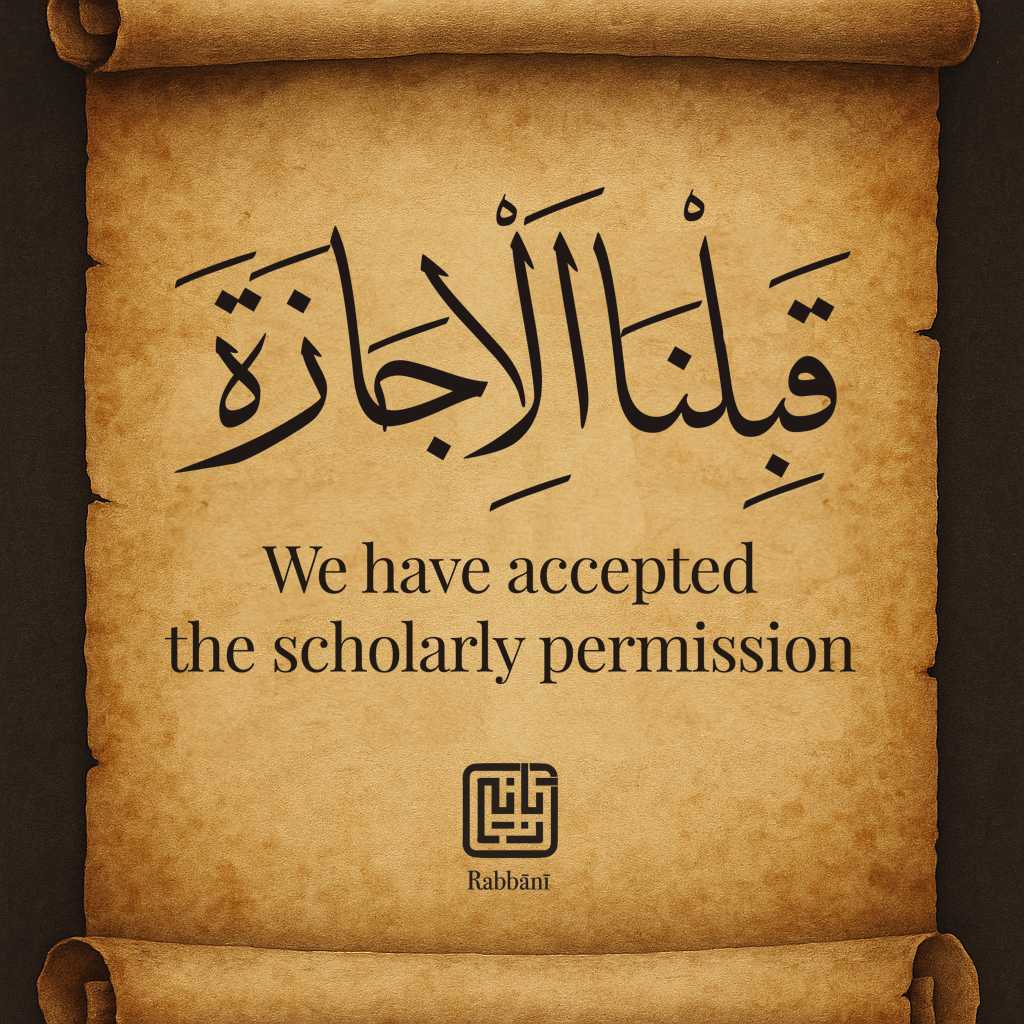
    “Ijāzah for those who wish to benefit from the four asānid to the Composer of the Ratib… Say: Qabilnā al-Ijāzah — ‘We have accepted the scholarly permission to recite the Ratib of Imām al-Ḥaddād.’”

    “We say Composer, not Author — for the adhkār are drawn from the finest pearls of the Qur’an and the most radiant lights of the Prophetic Sunnah.”

    This ijāzah is not just scholarly — it is a living trust passed down through centuries of remembrance. To receive it is to stand in the river of continuity, with the awliyāʾ and scholars who preserved this path of dhikr through love, hardship, and sincerity.

    And as for those who label such remembrance a bidʿah

    رَغِمَ أَنْفُ مَن صَرَّحَ بِأَنَّهَا بِدْعَةٌ
    “May the nose be rubbed in dust of the one who declares it an innovation.”

    Let the river flow. Let the remembrance remain. And let every breath that utters His Name be a proof of mercy, not division.


    My Personal Ijazah

    This symphony carries my own transmission: an ijāzah granted by Zaid ibn Umar to me, Adli ibn Ibrahim, written in his own hand, linking me to the chain of Imam al-Haddad. That blessing lives within every note of this symphonic meditation, reminding me of the trust, humility, and sacred responsibility that this heritage confers. This ijazah is more than a note: it is a living chain, a breath carried from master to student across centuries, reaching back to Imam al-Haddad and forward into my heart. It binds me to the rhythm of this Ratib as if to a heartbeat, reminding me to hold it with care, reverence, and gratitude, so its protection and blessing might continue to resonate for future generations.


    Historical Echoes

    The Ratib was recited by enslaved Muslims at the Cape as a shield of hope and protection during times of oppression, helping them hold fast to faith. Generations later, it became a spiritual companion for many who resisted apartheid, its verses reminding them of divine justice, courage, and unity against all forms of tyranny. It is said that in the darkest nights of slavery at the Cape, the Ratib became a quiet liberation, whispered in hidden corners. Its rhythms reminded believers they were still seen by Allah, still dignified. During the anti-apartheid struggle, activists turned to these same verses, finding courage and calm as they faced injustice, with the Ratib a spiritual sword against oppression and despair.


    Conclusion

    From Yemen to the Cape, from ancient gatherings to modern hearts, the Ratib al-Haddad remains a living breath of resilience and unity. Its movements still guide communities to remember Allah, to stand together in hope, and to place trust in Divine mercy across the centuries. Like a living river, its currents still flow, nourishing communities with remembrance and calling them to a higher trust in Allah’s mercy. Imam al-Haddad, inspired by the symbolism of the Verse that Faces Outward, wove its spiritual meanings into the Ratib, transforming it into a shield that echoed both the Prophetic sanctuary and the everyday lives of worshippers from Yemen to the Cape.

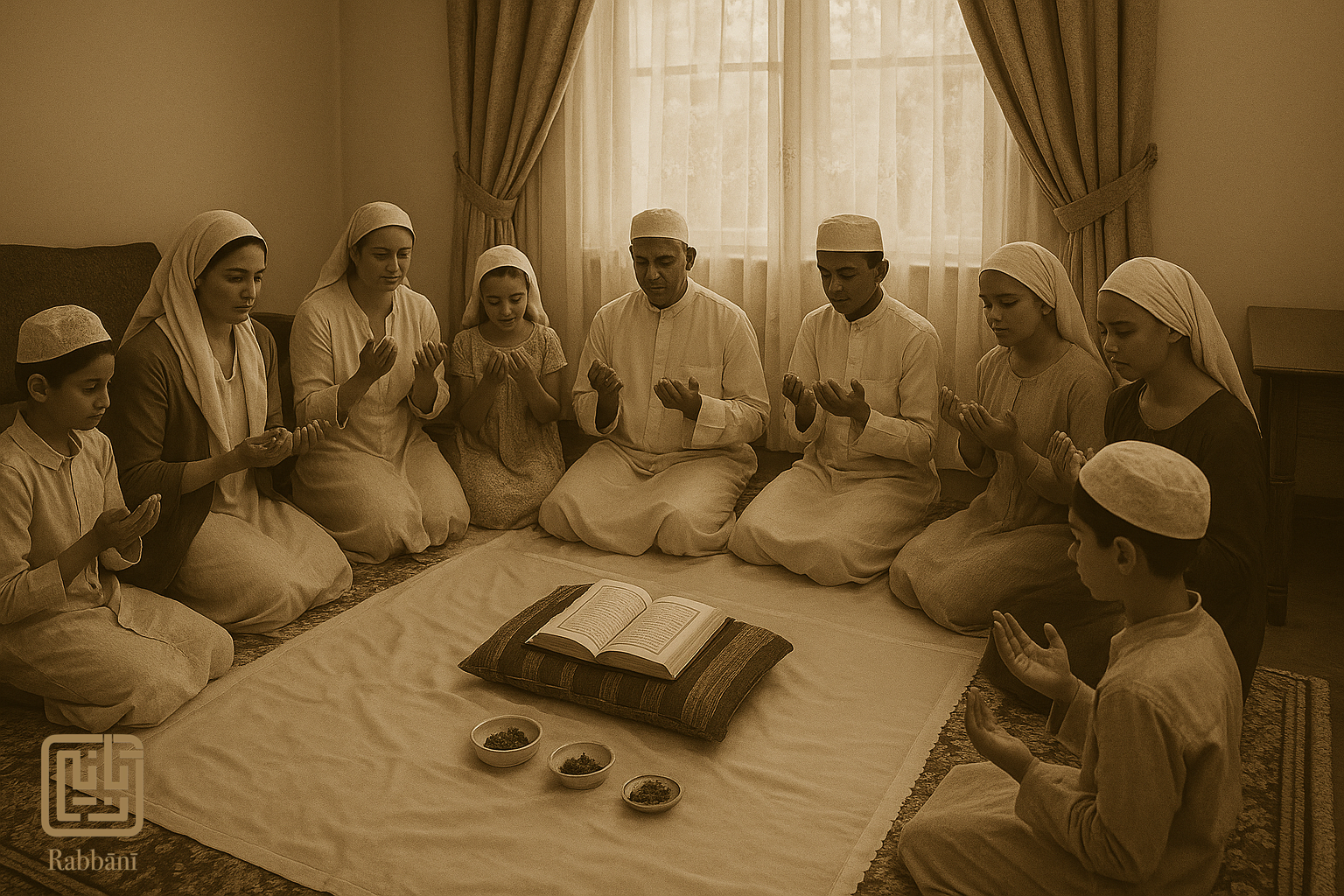
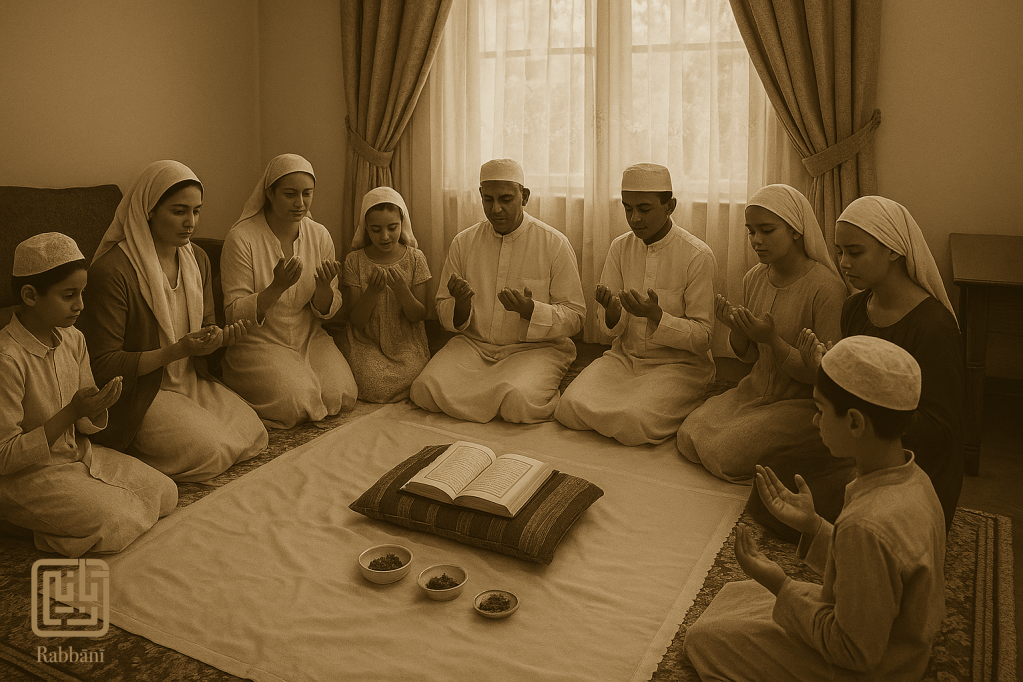
    Family reciting Ratib al-Haddad together on white linen with pillows and Qur’an

    May its verses guard every heart, and may its blessings gather our children and their children into the same ocean of divine love, until the final day.


    You Might Also Like These Cape Memories

    ✨ Scroll of the Sorbaan & Medora – Worn in Sound, Washed in Meaning
    Exploring the sacred cloths and their living resonance.

    ✨ The Verse That Faces Outward
    A glimpse into the calligraphic verse guarding the Rawdah.

    ✨ Hy Lyk Soos ’n Wolf: The Sorbaan and the Teacher Who Raised Me
    A tribute to a teacher’s quiet strength and Cape heritage.

    ✨ Tamat: A Sacred Completion, A Living Beginning
    The meaning of tamat in Cape Qur’an recitation tradition.

    ✨ From Chains to Qur’an: The Cape’s First Pilgrim and My Bloodline
    Tracing the story of Cape Islam through my family’s journey.


    Coming Soon

    ✨ The Grandmothers Who Raised the Qur’an — celebrating Cape matriarchs who preserved Qur’anic recitation.

    ✨ Echoes of Arafah: Pilgrim Voices from the Cape — reflections from local hujjaj returning with spiritual stories.

    ✨ The Kramats: Guardians of the Cape — the circle of Cape saints who protect and inspire.

    ✨ Barakah Before Business: The Forgotten Blessing — Cape Muslim traders and their rituals before opening shop.

    ✨ The Secret of Rampies Sny — unveiling the Cape’s scented floral traditions linked to dhikr gatherings.


  • Hy Lyk Soos ’n Wolf: The Sorbaan and the Teacher Who Raised Me

    Hy Lyk Soos ’n Wolf: The Sorbaan and the Teacher Who Raised Me

    Allah is Sublime.

    The other day, I told my brother-in-law, Al-Ameen, how we need to promote the sorbaan again—that sacred cloth of knowledge and dignity that once crowned the heads of our teachers and storytellers. Without missing a beat, he said, “Do you want one? I’ll give you mine.”

    I was taken aback. “Really? Don’t you wear it?”

    He smiled. “It’s too garish for my style.”

    Then he added, almost casually, “It’s from my dad. From Boeta Junain.”

    And suddenly, I was no longer standing in conversation. I was nine years old again, my hand tucked in my mother’s, walking down Olifants Street in Primrose Park. We were on our way to meet my new khalifa.

    My mother, Hi’ Rugaya, had decided it was time for me to learn Qur’an properly. We walked all the way down the road, right to the edge where Primrose Park brushes up against Manenberg. That place where the road thins out, where the houses change tone.

    We met him at the doorway. Tall. Stern. A presence.

    On the way back, she asked me gently, “So what do you think?”

    I paused, looked up at her, and said with wide eyes, “Met sy grou oë en grys baard, hy lyk soos ’n wolf.” (With his gray eyes and silvery beard, he looks like a wolf.)

    She laughed. But we went back the next day. And the next. And the next.

    Boeta Junain became my khalifa — more than just a madrasa teacher. He taught me the Qur’an. He taught me tauhidtahara, and how to perfect my salah. But most of all, he taught me the stories. Hundreds of them. Stories of the awliya, of lovers of God, of hidden saints, of miracles wrapped in humility.

    He loved me like a son. I stayed in his madrasa well into high school. When I was seventeen, I left to study at As-Salaam Institute in Braemar, KwaZulu-Natal. There I met another teacher who helped refine my Qur’anic pronunciation. A year later, after completing matric, I came back.

    And I returned to Boeta Junain.

    He asked me to recite. Listened deeply. Then called his older students, saying, “Come. Let Adli help you improve your recitation.”

    That day I knew what tarbiyah meant: to be raised, then trusted, then made to raise others.

    Some of those students, like members of the Browns family, went on to become among South Africa’s well-known huffaadh.

    And now, all these years later, his sorbaan has surfaced again—offered from father to son, and from brother to brother. A gift wrapped not only in cloth, but in memory.

    Today, three of his children, Salama, Cassiem and Juleiga are now continuing this legacy teaching young children in Qur’an and Islam.

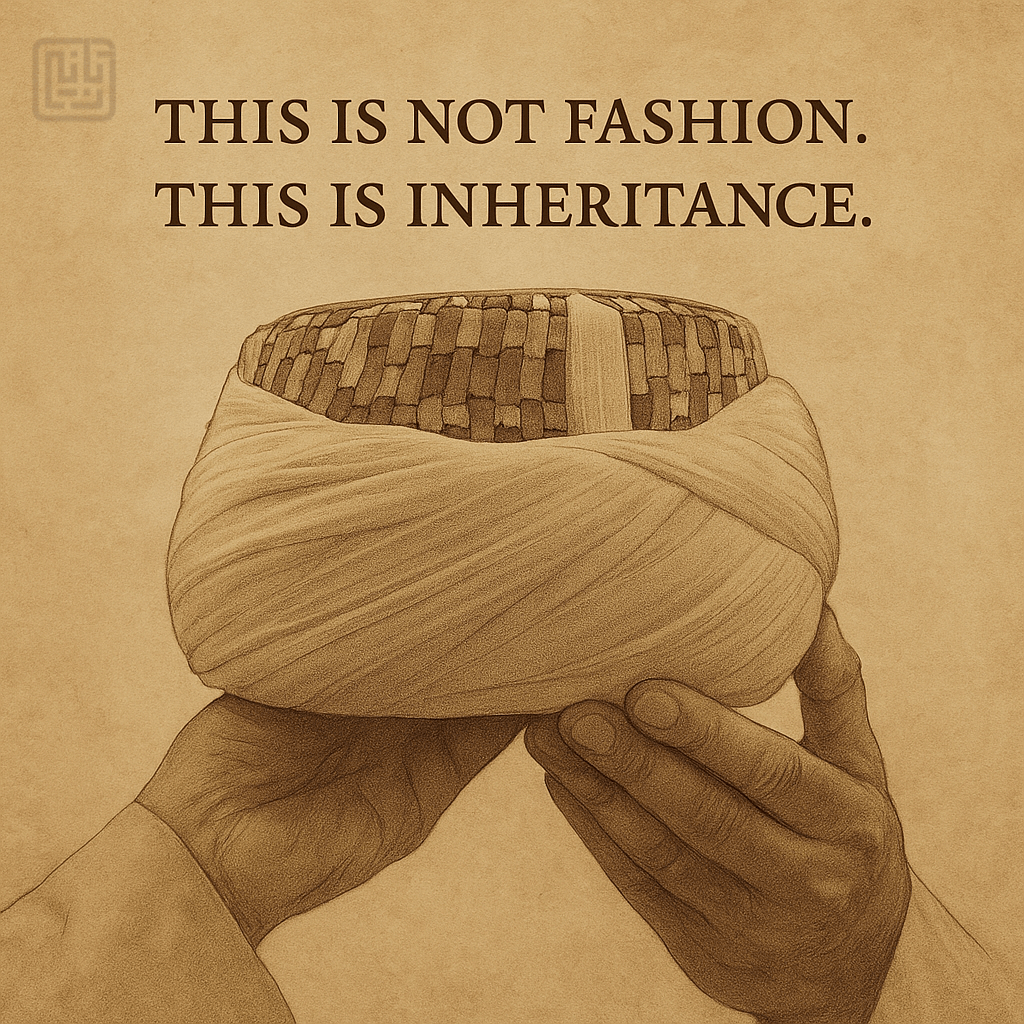
    The sorbaan is not fashion. It is not costume. It is voice made visible.

    It is the texture of trust. The curve of tradition.

    It says: I have received. I have remembered. I will return.

    When I look at it now, even in another’s hands, I see something eternal: gold thread, cotton wrap, and the quiet humility of a teacher who looked like a wolf, but raised a whole den of cubs.

    Acknowledgement
    Tramakasi to Sh. Jamiel Abrahams, Sadia Fakier, Zaid Nordien, and Al-Ameen Marley — for helping carry this cloth of memory into the light.

    Postscript
    If Al-Ameen does send me the photo of the original sorbaan, I will share it. But even now, the memory is vivid enough to wear.

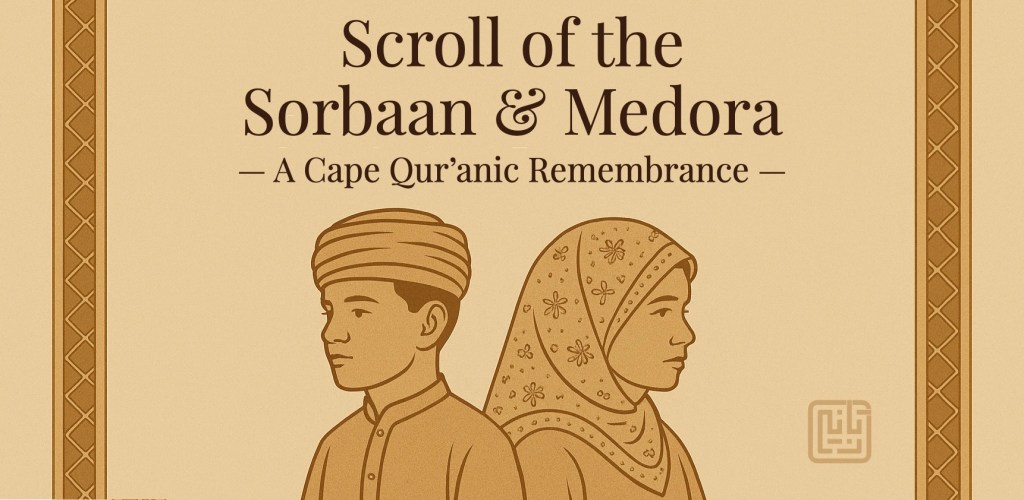
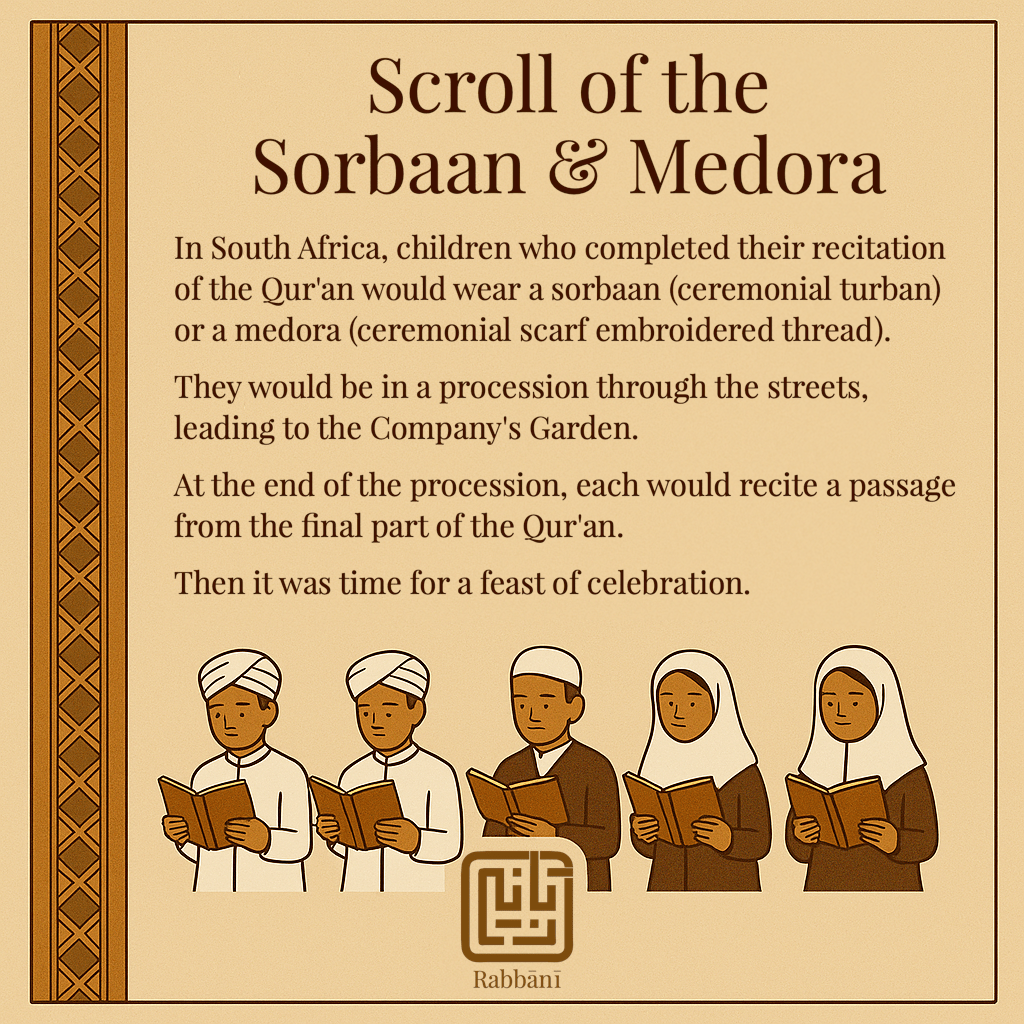
  • Scroll of the Sorbaan & Medora – Worn in Sound, Washed in Meaning

    Scroll of the Sorbaan & Medora – Worn in Sound, Washed in Meaning

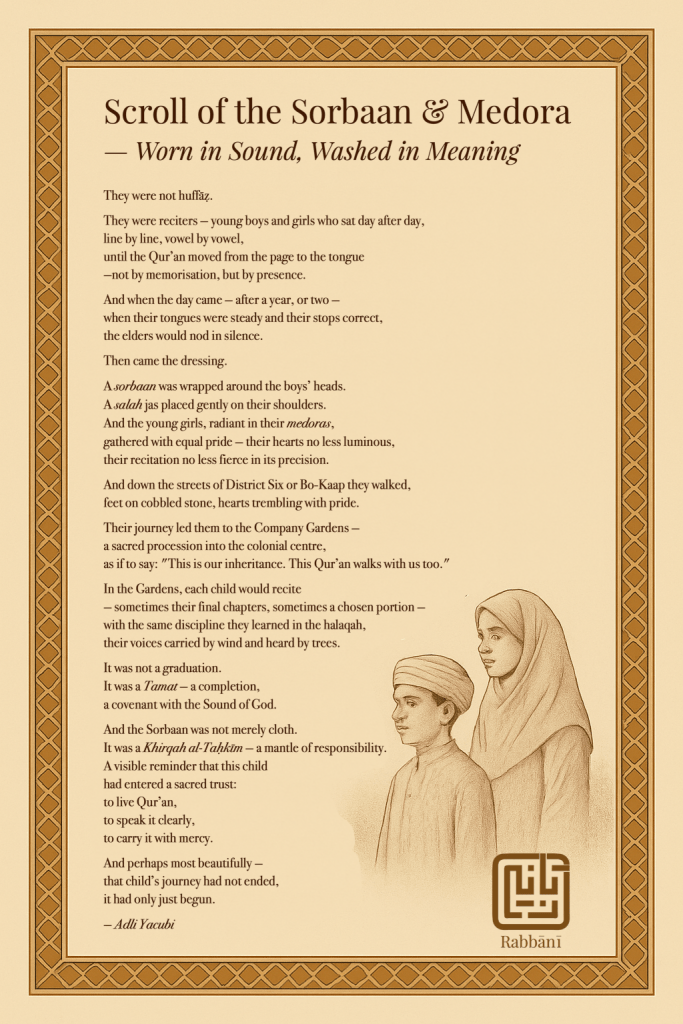
    They were not huffāẓ.

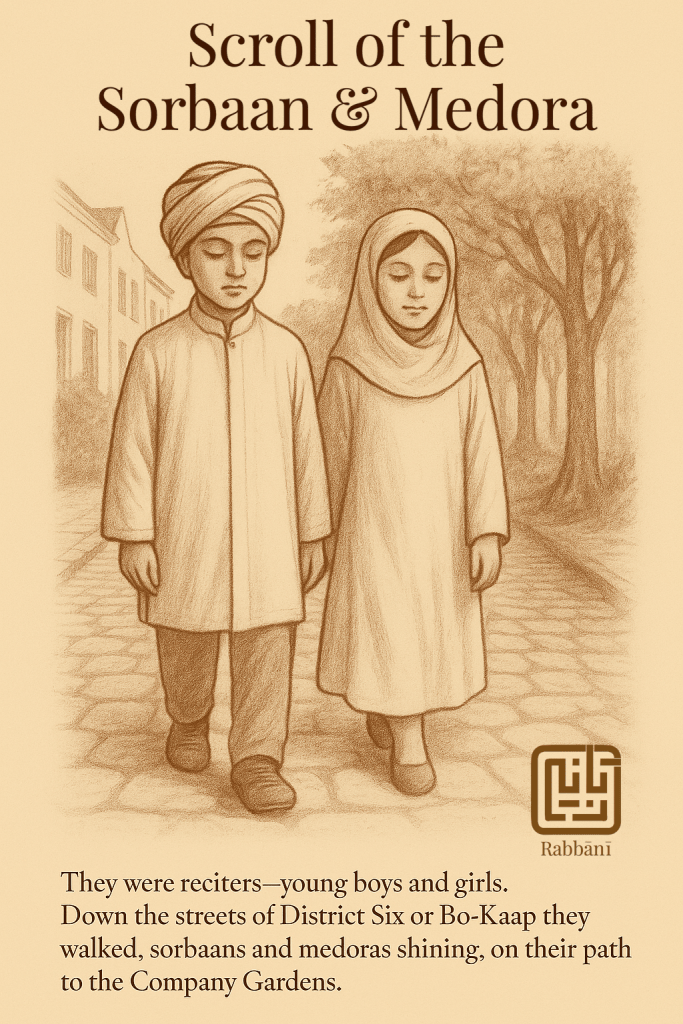
    They were reciters — young boys and girls who sat day after day,
    line by line, vowel by vowel,
    until the Qur’an moved from the page to the tongue
    —not by memorisation, but by presence.

    And when the day came — after a year, or two —
    when their tongues were steady and their stops correct,
    the elders would nod in silence.

    Then came the dressing.

    A sorbaan was wrapped around the boys’ heads.
    A salah jas placed gently on their shoulders.
    And the young girls, radiant in their medoras,
    embroidered in silver and gold threads,
    gathered with equal pride — their hearts no less luminous,
    their recitation no less fierce in its precision.

    And down the streets of District Six or Bo-Kaap they walked,
    feet on cobbled stone, hearts trembling with pride.

    Their journey led them to the Company Gardens —
    a sacred procession into the colonial centre,
    as if to say: “This is our inheritance. This Qur’an walks with us too.”

    In the Gardens, each child would recite
    — sometimes their final chapters, sometimes a chosen portion —
    with the same discipline they learned in the halaqah,
    their voices carried by wind and heard by trees.

    It was not a graduation.
    It was a Tamat — a completion,
    a covenant with the Sound of God.

    And the Sorbaan was not merely cloth.
    It was a Khirqah al-Taḥkīm — a mantle of responsibility.
    A visible reminder that this child had entered a sacred trust:
    to live Qur’an,
    to speak it clearly,
    to carry it with mercy.

    And perhaps most beautifully —
    that child’s journey had not ended,
    it had only just begun.

    Acknowledgement

    Tramakasi to Sh. Jamiel Abrahams, Sadia Fakier, Zaid Nordien, and Al-Ameen Marley — for helping carry this cloth of memory into the light.

    Postscript: This scroll is inspired by the memory of Boeta Junain, who told stories of the Tamat and the children’s walk to the Gardens.
    Our next post will honour him directly — a keeper of sacred echoes.

    📖 Read more at: Tamat: A Sacred Completion, A Living Beginning

  • From Chains to Qur’an: The Cape’s First Pilgrim and My Bloodline

    From Chains to Qur’an: The Cape’s First Pilgrim and My Bloodline

    The Whisper of a Name

    Somewhere between the worn edges of oral history and the crisp pages of archived journals, I began to trace the journey of my ancestor — Hadjie Gasanodien, also known as Carel Pelgrim. It is said he was the first Muslim from the Cape to perform the sacred pilgrimage of Hajj, sometime between 1834 and 1837, a period just after the abolition of slavery, when its wounds were still fresh. For years, his story lived quietly in our family’s memory, surfacing in fragments and whispered recollections — until now. I write to honour that legacy, to weave together the strands of fact, faith, and feeling that shaped a man, a pilgrimage, and a community still finding its voice in the aftermath of bondage.

    Pilgrimage of Discovery

    I first heard his name as a child, tucked into a conversation between my sister Yasmine and our aunts. Years later, Yasmine would take those threads and stitch them into a short family tree, dated July 2004. At the time, it felt like the last echo of a fading past. We had little else to go on. But something stirred in me after I returned from my own pilgrimage. A fever of purpose, a longing to know more. I began writing and publishing reflections under Al Hujjaj Magazine, not yet knowing that my footsteps had mirrored those of my own forebear, nearly two centuries earlier.

    Echoes in Academic Footsteps

    The name “Carel Pelgrim” returned to me unexpectedly through the work of a neighbour and friend of my father — the late Mogamat Hoosain Ebrahim, a community scholar from Primrose Park. He had long been documenting the Hajj stories of Cape Muslims. In his thesis, The Cape Hajj Tradition: Past and Present (2009), Ebrahim writes: “Hajji Gassonnodien, more popularly known as Carel Pilgrim, enjoys the distinction of having been the first Cape Muslim to have successfully completed the Hajj.” Although I first encountered his name in Ebrahim’s thesis, the full significance didn’t strike me until later — during conversations with the researcher Abdud-Daiyaan Petersen. It was through our exchanges that the identity of Carel Pelgrim truly crystallised. This was not just a figure in history — he was my ancestor. A man who left the Cape between 1834 and 1837 to walk the sacred path when few could even imagine such a journey.

    It was through Ebrahim’s meticulous work that I began to understand the context of that time. Hajj was not simply a religious obligation; it was an act of defiance, endurance, and transcendence. For formerly enslaved Muslims in the Cape, to make the pilgrimage was to reclaim a spiritual identity that colonial systems tried to erase. And Carel Pelgrim, in going, carried more than personal faith — he carried the hopes of a generation emerging from bondage.

    A Lineage Remembered

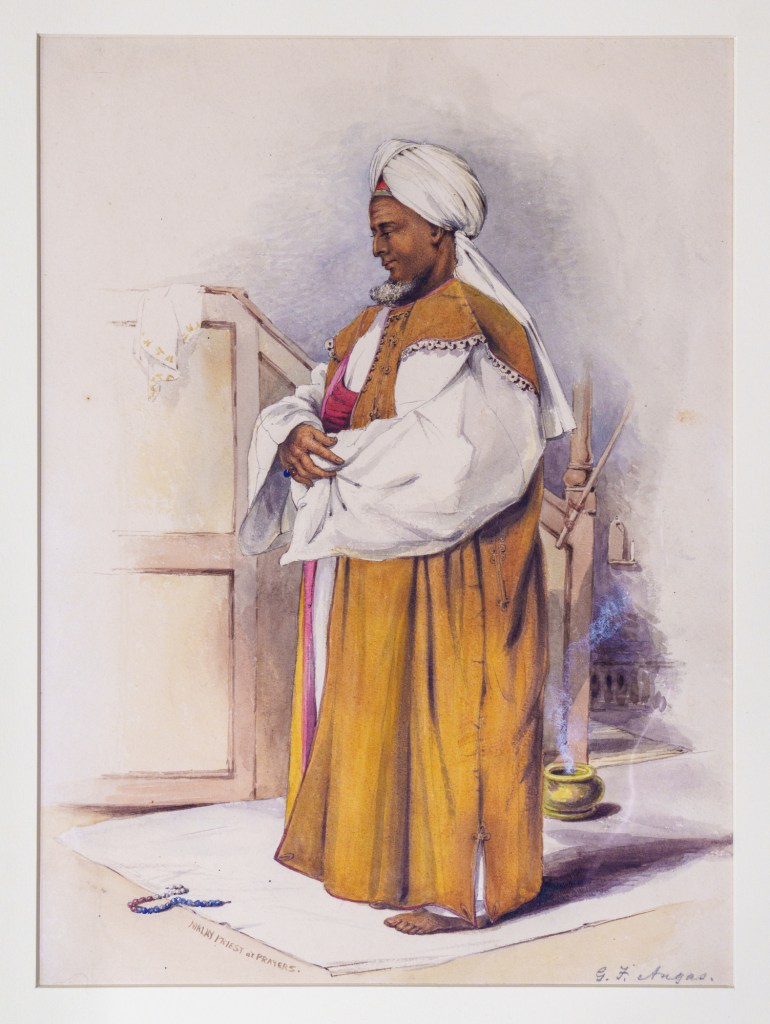
    George F. Angas (1822-1886). ORIGINAL 1849 Hand Coloured Stone Lithograph. A Malay Priest Prays.

    Abdud-Daiyaan Petersen’s research added an entirely new dimension to the story. In collaboration with Turkish scholar Halim Gençoğlu, he co-authored a paper titled Was Imam Gasanodien Carel Pelgrim an Ottoman Descendant?, published in the Bulletin of the National Library of South Africa in 2021. They explored the possibility that Carel Pelgrim may have had ancestral ties to the Ottoman world — a lineage once obscured by slavery and colonial re-naming. Through Petersen, I learned not only of the archival traces, but also of the living memory carried in Cape Town’s communities — stories that had waited generations to be heard.

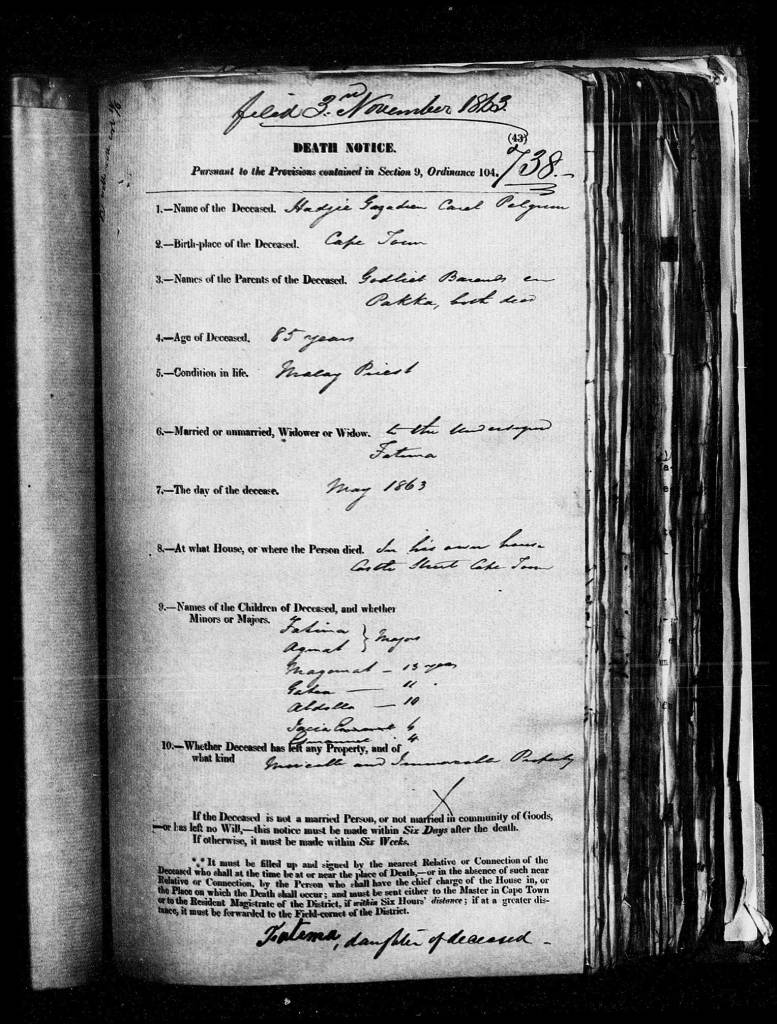
    Petersen’s careful investigations, supported by old burial notices and public records, pointed with growing clarity to the fact that Carel Pelgrim and Hadjie Gasanodien — the man known for teaching Islam and the Qur’an to children in early Cape Town — were one and the same. The fragments were falling into place. What had once been academic became intimate. What had once been folklore became family history.

    The Pain Beneath the Pride

    The history of Carel’s mother, Pakka, adds further complexity and depth. As documented in Echoes of Slavery: Voices from South Africa’s Past by Jackie Loos, Carel — born into slavery — was the son of Pakka, a slave woman, and Jan Gottlieb Barends, a Christian man of German descent. Their relationship was informal and illegitimate, as was often the case in that era. Carel and his brother Philip inherited their mother’s status as slaves. In 1801, a notarial protocol records their transfer to a burgher, and upon his death, their eventual manumission was stipulated in his will.

    Pakka’s exact identity remains debated, though one likely candidate is Janpakka of Batavia, who ran a shop in the Waterkant in the 1820s. Death records from the time, often unreliable, do not mention Carel or Philip, but their presence in community memory is clearer than archival certainty. Pakka’s story, like that of many enslaved women, survives in fragments — yet she remains the root from which this extraordinary lineage emerged. And it is here, in the shadows of that history, that I must pause. My heart aches at the likely truth: Pakka, my great-grandmother, was not loved — she was owned. The man who fathered her children, Jan Gottlieb Barends, did not protect her. He did not free her. Instead, he allowed her and their children to be sold on to another man. Was she raped? Exploited? Discarded? The records are silent, but the silence itself screams.

    This is the pain we inherit alongside the pride — the wounds interwoven with the honour. In naming Pakka, I do not just trace bloodlines. I reclaim her dignity, speak her name with reverence, and acknowledge that even in bondage, she gave rise to a lineage that would one day teach Qur’an, lead prayer, and inspire generations. Her story, though faint, demands to be held — not with shame, but with solemn truth and fierce remembrance.

    A Husband’s Grief

    Carel’s transformation from a slave to a respected teacher, tailor, and hajji is all the more remarkable against this background. And among the most beautiful parts of his story is his deep love and reverence for his first wife, Japoera. Though she was childless, their bond was strong — spiritually and emotionally. When she passed away in their large home in Buitengracht in early 1841, Carel composed a public obituary in the South African Commercial Advertiser. It read: “The Heavenly Father, Lord of Life and Death, was pleased on the 16th instant to call from me my beloved wife Japoera, aged 64 years, 4 months and 16 days, after a happy union of [blank space] years. All who knew her virtuous character will sympathise with my loss, of which I hereby give notice to friends and relatives, requesting to be excused the visits of condolence.” He signed it: Carel of the Cape, the first Pilgrim and Priest.

    Death certificate of Hadjie Gasnodien Carel Pelgrim.

    In this short but poignant notice, we see not just a man grieving his beloved, but a heart refined by faith and loss. It reminds me that while history often records what men did, it rarely shows how deeply they loved. He eventually adopted the Islamic name ‘Hassan al-Din’ — appearing in records under numerous variations such as Gasnodien and Gasanodien — yet he signed himself proudly as ‘Carel Pelgrim.’ His ability to read and write in both Arabic and European script shows a deep level of literacy and determination to bridge worlds. While some have speculated that he may have spent up to three years in Makkah — a duration not firmly evidenced — what we do know is that he returned with the ability to teach Arabic and Qur’an, and left an imprint as a man of knowledge and devotion. It’s possible that his early literacy was shaped by Cornelis van der Poel, the burgher who once held legal ownership over him and later stipulated Carel’s manumission. Whether through formal tutoring or exposure to Dutch literacy, this early learning may have paved the way for his later mastery of both Islamic and colonial languages.

    The directories list Carel van de Kaap as a free tailor living in Hout Street in 1816 and as a Malay schoolmaster in 1830. His brother Philip, born in 1789 and passing in 1844, was also a tailor, but unlike Carel, Philip was not a practicing Muslim. Some of Philip’s children were baptised, and in 1838 he married their mother, Carolina Marteyn of the Cape, in the Dutch Reformed Church.

    Meanwhile, Carel was charting a different course. Once free, he began to prosper. In 1817, he loaned Seymen of the Cape 600 Ridollars (a substantial currency at the Cape in the early 1800s, equivalent to several months of wages for a labourer) to enable him to free his slave daughter, Cananga. By 1822, he had purchased his own home in Matfeld Lane. Then, in October 1833, Carel and his wife made a joint will, identifying themselves as the free man Carel of the Cape, alias Gaszimoedien — formerly a tailor, now a teacher in the Arabic language — and Johanna Salomonse, alias Japoera, born at the Cape.

    Japoera seems to have been an exemplary Muslim wife, and Carel held her in high esteem. He set out for Mecca soon afterwards, and her encouragement must have been crucial to the success of his pioneering journey.

    When Art Becomes Revelation

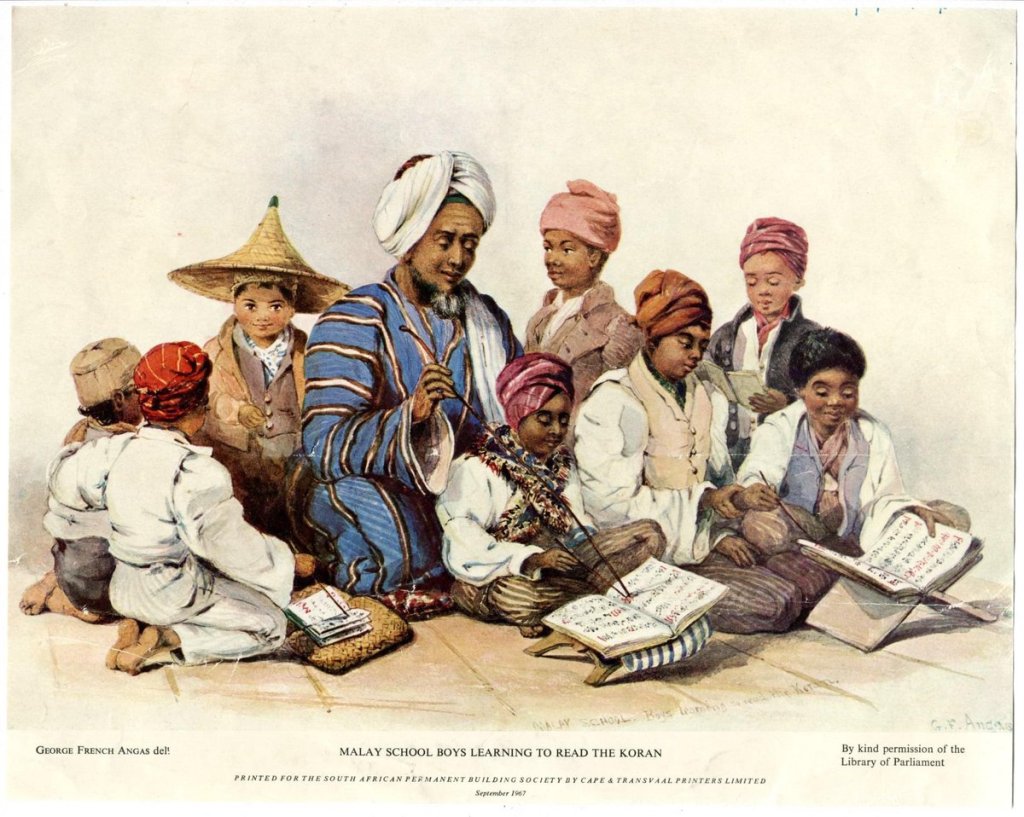
    That intimacy deepened when I looked again at a familiar image — one I had seen countless times in Cape Town homes, books, and exhibitions, without ever imagining a personal connection. It is a watercolour painting by George French Angas, an English artist who visited the Cape in the 1840s. The scene is gentle but profound: a bearded man seated cross-legged, surrounded by children, teaching them the Qur’an. For years, this portrait was simply referred to as a depiction of a “Malay teacher.” But now, thanks to community scholarship and genealogical evidence, we know the truth — that teacher was Hadjie Gasanodien. My ancestor.

    Another portrait, also by Angas, is held at the Castle of Good Hope in Cape Town. In it, Hadjie Gasanodien is more formally posed, with dignified composure. What amazes me most is his attire — a flowing Arabic coat, or abaya, layered over a long-sleeved thawb. The painting is filled with symbolic richness: incense burners still glowing in the frame, a minbar placed behind him as if ready for the next call to gather and reflect. To stand before that painting is to encounter the past as presence — not as myth or metaphor, but as family. His face, once anonymous to me, now echoes through mine. The ink of his story has always been part of my blood. Only now am I learning how to read it.

    The Living Links

    One of the most tender links between this legacy and the living was shared in Lawrence Green’s 1964 book, I Heard the Old Men Say. In Chapter Two, titled “The Living Links,” he introduces a woman named Gatea Jacobs — my great-grandmother and the daughter of Hadjie Gasanodien. In a touching passage, she recalls her father’s return from the pilgrimage to Mecca. She tells of the white robes he wore, the gentle way he taught, and how the community revered him not just as a teacher, but as a man who had seen the heart of Islam and brought its light home.

    Yet there is something poignant here: on the death notice of Hadjie Gasanodien, Gatea was listed as his daughter — and she was just 11 years old at the time. Her recollections, as recorded by Green, must have been shaped not only by her own memory but also by the atmosphere that surrounded her father’s name: the reverence of others, the stories repeated in the family, the aura of a man who had left a sacred legacy. In this way, memory extends beyond personal recall — it becomes communal.

    Her memories reach across generations with quiet dignity. She spoke not in grand declarations, but in lived detail — the scent of his clothes, the rhythm of his voice in prayer, the gatherings around him at dusk. Through her, his presence remained alive in the bones and breath of our family, long before any of us knew the fullness of his historical significance. It was always there — waiting for us to remember.

    Incredibly, Gatea Jacobs lived nearly a hundred years, a living bridge between the earliest days of Islam at the Cape and our present time. In that same chapter, Lawrence Green recounts a remarkable scene: “One afternoon while she was still able to see and hear and talk to her family she called everyone round her. ‘I am too old to live any longer,’ she told them. Then she folded her hands as prescribed in the Islamic death ritual and passed away.” Her funeral drew thousands of mourners, and services were held in mosques across the Peninsula. It was a farewell not only to a beloved matriarch, but to an era.

    Her final act — serene, faithful, and deliberate — echoed the strength of the lineage she carried. It is this spirit I now seek to honour, not only in rediscovering our ancestor, but in holding open the doorway for others to trace their own roots, to reclaim the sacredness of our past, and to remember that we, too, are living links.


    Author’s Note
    Written by Adli Yacubi (pen name), descendant of Hadjie Gasanodien, also known as Carel Pelgrim. This article forms part of a continuing journey to rediscover, honour, and share the stories of Cape Muslim pioneers. May it serve as both record and remembrance.

    References

    1. Yasmine Jacobs, Jacobs Family Tree (Oral History), July 2004
    2. Mogamat Hoosain Ebrahim, The Cape Hajj Tradition: Past and Present, 2009
    3. Jackie Loos, Echoes of Slavery: Voices from South Africa’s Past, 2024
    4. Habib Shaikh, “First of Cape Hajis came 3 years after abolition of slavery,” Arab News, 11 October 2013
    5. Lawrence Green, I Heard the Old Men Say, Chapter Two: “The Living Links,” 1964
    6. Halim Gençoğlu & Abdud-Daiyaan Petersen, “Was Imam Gasanodien Carel Pelgrim an Ottoman Descendant?”, Bulletin of the National Library of South Africa, vol. 75, no. 2, December 2021
    7. Helen Swingler, “Piracy, slavery and a Mecca pilgrimage,” UCT News, 17 March 2021
    8. “Portraits stoke mystery of Hajji Gasnodien,” Cape Argus, 26 February 2021
  • The Womb of Mercy: Unveiling the Secret of Bismillah

    The Womb of Mercy: Unveiling the Secret of Bismillah

    “In the name of Allah, the Entirely Merciful, the Especially Compassionate”
    — every beginning echoes the womb of creation, where mercy overcomes all. 

     At the beginning of every chapter of the Qur’an (except one), and at the start of every act of meaning, Muslims invoke the sacred words: bismillāhir raḥmānir raḥīmIn the name of Allah, the Entirely Merciful, the Especially Compassionate. It is not merely a formula. It is a return. A remembrance of the womb of mercy from which all existence flows.

    The Love Letter of Bismillah

     In Surah An-Naml, we are told the story of the Prophet Solomon (Sulayman, peace upon him) sending a letter to the Queen of Sheba. He instructs the hoopoe bird:
    “Go with this letter of mine and deliver it to them, then stand aside and see how they will respond.” (27:28)

    When the Queen reads the letter, she declares:
    “O you chiefs! A truly distinguished letter has been conveyed unto me. Behold, it is from Solomon, and it says, ‘In the name of Allah, the Entirely Merciful, the Especially Compassionate. Do not be arrogant with me, but come to me, fully submitting to Allah.’” (27:29–31)

    Before asserting power, before making demands, Solomon begins with mercy. Even in politics and statecraft, mercy frames the dialogue. Every relationship — between people, between nations, between heart and heart — is meant to begin in the name of mercy.

    The Womb of Creation

    The Arabic root ر ح م (rā ḥā mīm) — from which Raḥmān and Raḥīm are derived — is intimately connected to raḥm, the womb.

    Allah reminds humanity:
    “O humanity! Be mindful of your Lord Who created you from a single soul, and from her He created her mate, and through both He spread countless men and women. And be mindful of Allah—in Whose Name you appeal to one another—and the wombs. Surely Allah is ever Watchful over you.” (4:1)

    The womb is not just a biological vessel; it is a sign, a sacred reality. The Prophet, peace and blessings be upon him, said in a sacred narration (Hadith Qudsi):
    “When Allah decreed the creation, He pledged Himself by writing in His Book, which is laid down with Him: ‘My Mercy prevails over My Wrath.’”
    (Muslim, Bukhari, an-Nasa’i, Ibn Majah)

    Mercy is the origin of all things.
    The womb is the first mercy a soul encounters in existence — a place of absolute protection, nourishment, and unseen care. No wonder the Prophet narrated this to his companions.

    Jahima (r.a.) came to the Prophet, peace and blessings be upon him, and he said, “O Messenger of Allah, I intend to join the military expedition, and I seek your counsel.” The Prophet said, “Do you have a mother?” He said yes. The Prophet said, “Stay with her, for paradise is beneath her feet.”
    (Sunan al-Nasā’ī)

    In another Hadith Qudsi, sacred narration, the Prophet Muhammad (peace be upon him) said that Allah said:
    “I am Ar-Raḥmān and created the raḥm (womb) – And I named it after Me.”
    (Ahmad)

    Pain and Mercy

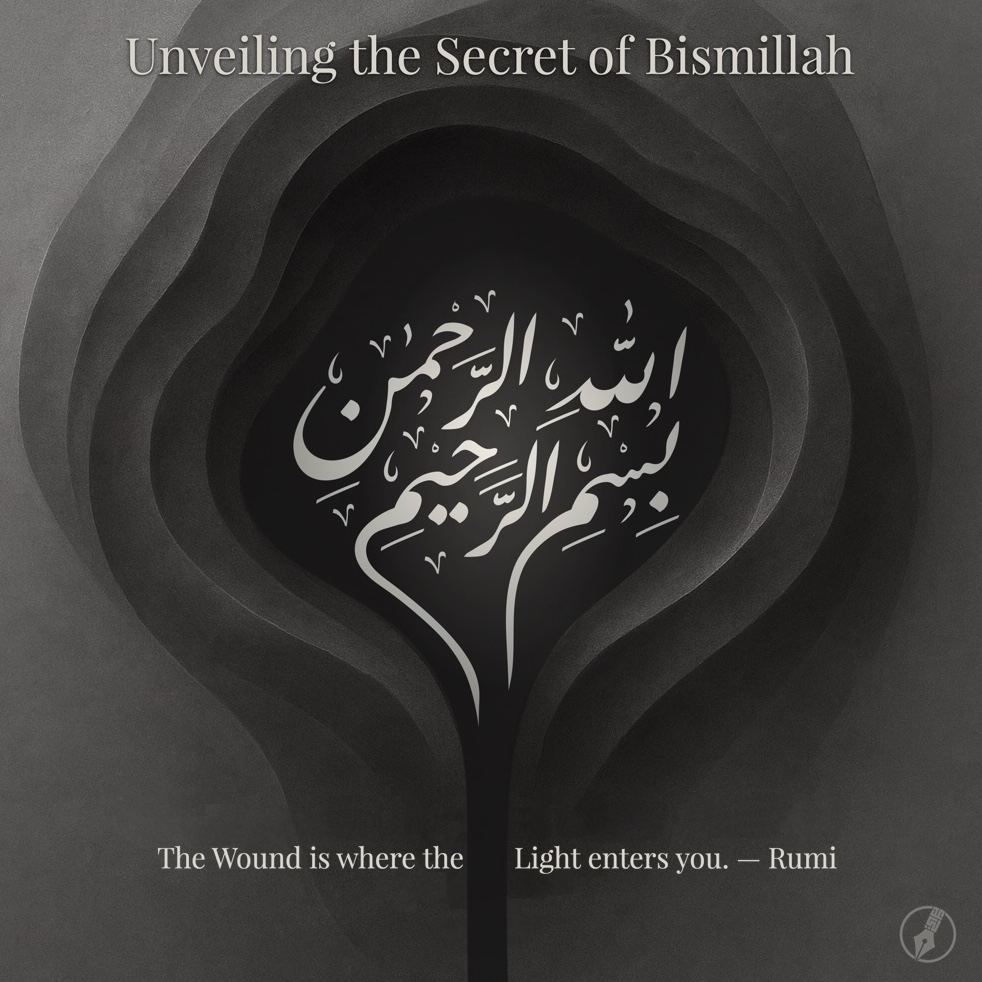
    “The wound is the place where the light enters you.”
    Rumi’s words evoke not only pain but transformation. The womb is a site of life-giving pain — a space where creation ruptures comfort. It is the most literal place where light enters: the emergence of life into a world of awareness, form, love.

    In verse 18:81, the Qur’an speaks of a child being taken away so another, “more virtuous and nearer in affection,” may come. Pain and replacement. Loss and mercy. Mercy is not always softness — it may come dressed in fire, thunder, or sacrifice.

    No wonder Allah states, “And My Mercy encompasses everything” (Quran 7:156). This verse reinforces the idea that God’s mercy is vast and all-encompassing, extending to every aspect of existence. This verse highlights the inclusive nature of divine mercy, encouraging believers to seek forgiveness and strive for a compassionate life. It serves as a call for Muslims to practice mercy in their daily lives, fostering a community built on compassion and understanding.

    Bismillah in Everyday Life

    The Messenger of Allah, mercy of God and peace upon him, taught:
    “Any matter of importance that is not begun with ‘In the name of Allah’ will remain devoid of blessing.”
    (Sunan Abi Dawud, Sahih Ibn Hibban)

    And regarding daily purification (wudhu), he said:
    “There is no valid ablution for he who did not mention Allah’s Name.”
    (Ahmad, Sunan compilers)

    Every act, every moment, every step must be wrapped in remembrance. By invoking Bismillah, we are not just seeking blessing; we are anchoring ourselves back to the womb of mercy — to the beginning of all things — where Allah’s Compassion and Care cradle us unseen.

    Closing Reflection: A Womb of Light

    To begin with Bismillah is to step into the womb of mercy. A place where something is made of us. A place of constriction, gestation, and eventual emergence.

    Ibn al-ʿArabī described mercy as the first veil between us and the Real. To know mercy is to be veiled, yes — but also to be protected, incubated until we are ready to face the fullness of the Divine.

    And so, like the Queen of Sheba, we receive the letter.
    And like the hoopoe, we deliver it.
    And like the child, we are born through pain.
    And like Rumi, we remember that it is the wound — the rupture — that lets in the Light.

    And this is why we celebrate the wombs.