Tag: Khoi and San

  • Camissa: The River That Remembers Us

    Camissa: The River That Remembers Us

    Camissa: The River That Remembers Us

    Heritage Month Reflections on Water, People, and Becoming

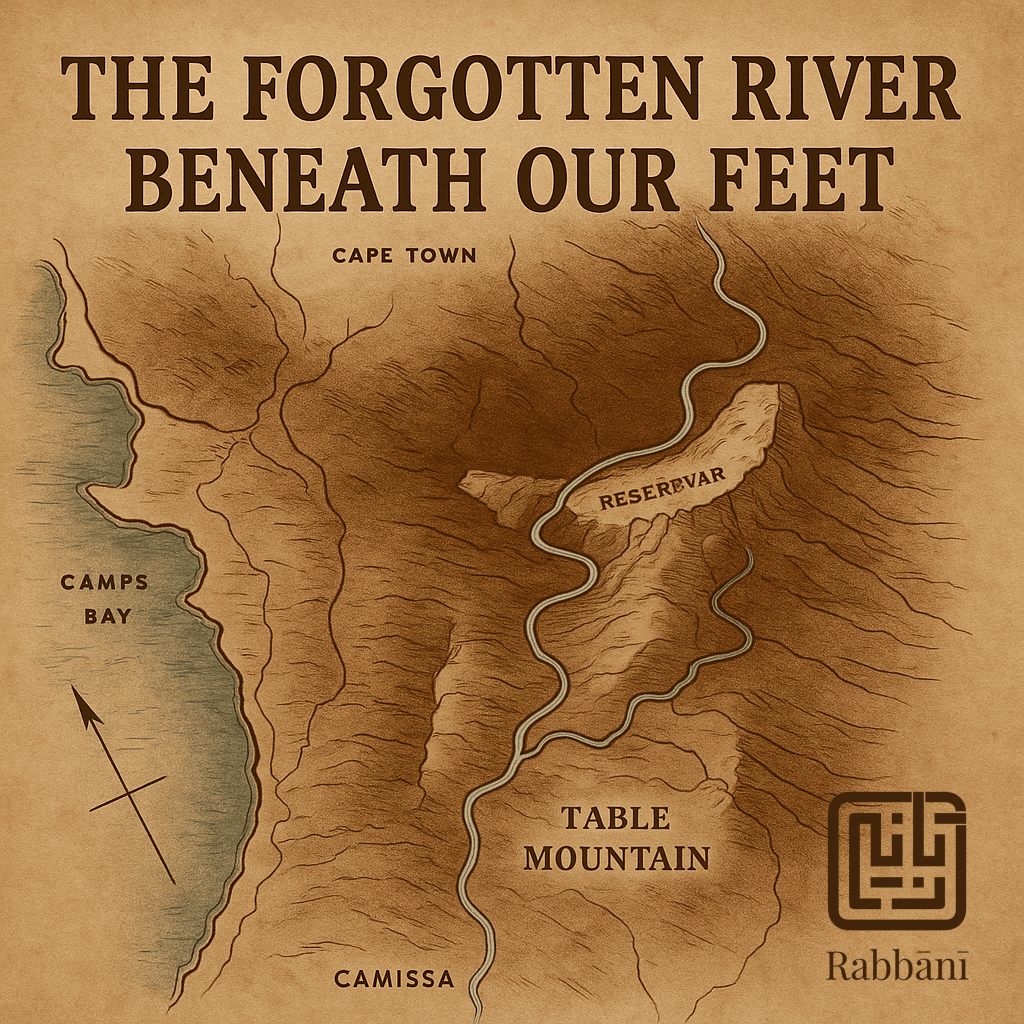
    The Forgotten River Beneath Our Feet

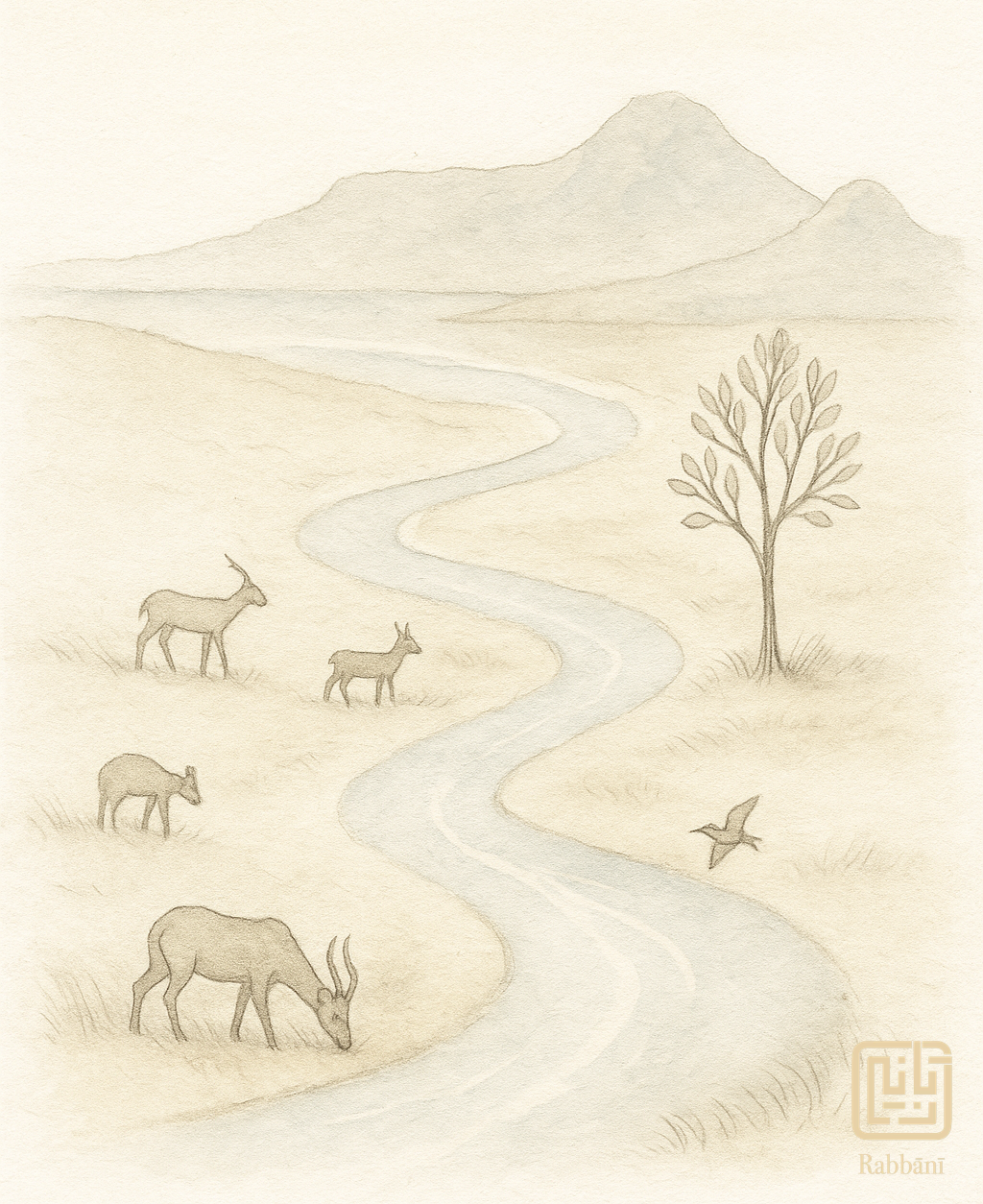
    Before there were streets and buildings, before Company Gardens and canals, there was water. It rose from the springs of Table Mountain and came tumbling down in streams, gathering into what the Khoi called Camissa — the place of sweet waters. For centuries, this river sustained life at the Cape. The Khoi and San drank from it, rested by its banks, told stories in its shade. Later, enslaved men and women from Java, Bengal, Madagascar, Mozambique, and India touched its current as they bent under forced labour. Fresh water was the first mercy, and the first demand.

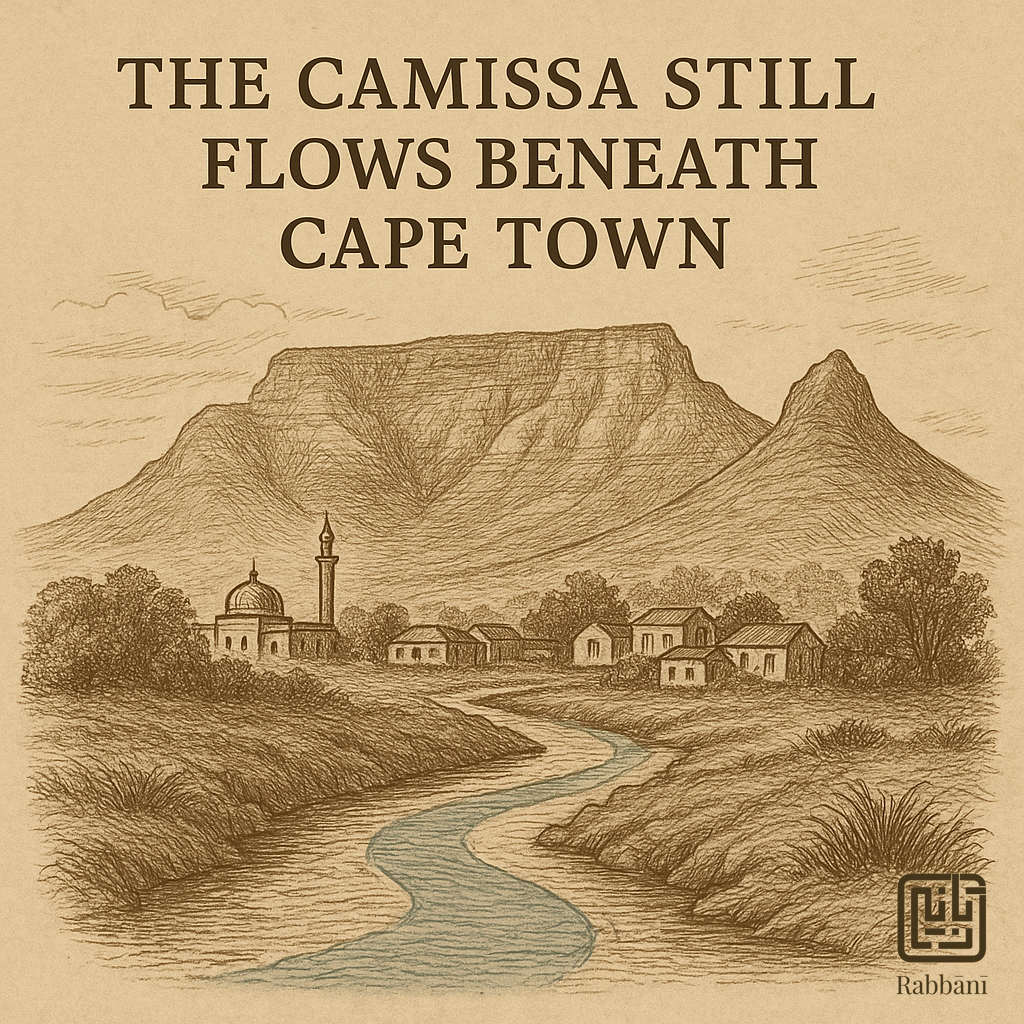
    Camissa once ran openly down into the town. The Dutch East India Company carved it into canals, forcing its body into stone, bending it to their fort and gardens. But water has memory. It seeps under walls, reappears in unexpected places, refuses to be silenced. Today, buried beneath tar and pavement, Camissa still flows. And if you pause long enough, you might hear it whisper under your feet.

    At the River’s Edge: A People Gathered

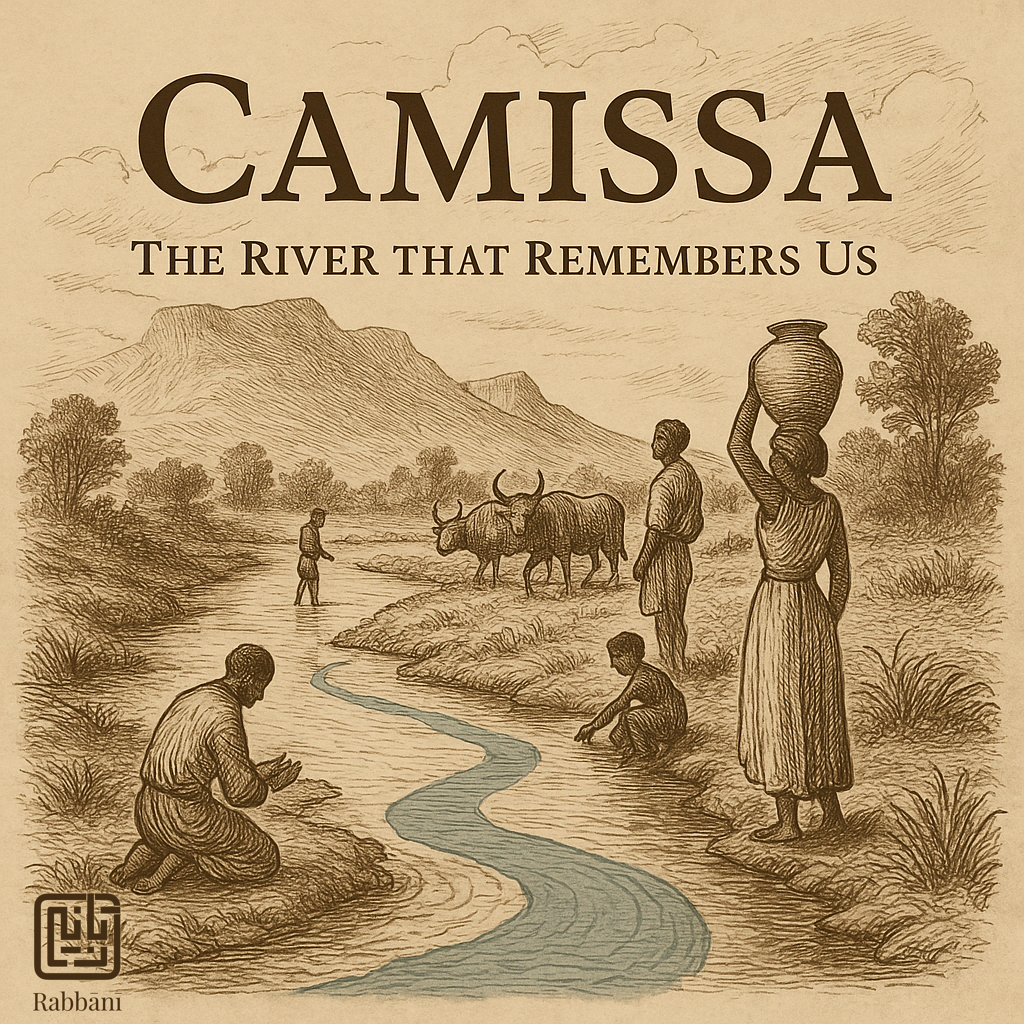
    The river was never just water. It was a meeting place, a barzakh — a threshold where lives, languages, and faiths collided. Khoi pastoralists led cattle to drink. San hunters rested with skins and stories. Dutch settlers drew buckets to quench their fort. Slaves dug trenches, carried wood, and planted gardens for a company that claimed the river as its own.

    Yet at the same banks, something else was happening. Free Blacks, exiles, manumitted slaves, and the first Muslims of the Cape gathered here. The Auwal Mosque — our first mosque — rose near the Camissa’s streams. Qur’an recitation and children’s laughter mingled with the sound of water. Out of pain, a people began to form.

    African Camissa: A Wider Circle

    Patric Tariq Mellet calls this heritage African Camissa. It is more than geography; it is an identity — a wider circle of becoming. In his telling, Camissa is the place where Khoi, San, enslaved Africans, Asian exiles, and their descendants all drank from the same stream, forming a new community beyond the colonial word “Coloured.”

    Stuart Hall once said identity is not a fixed thing we inherit, but a process of becoming. Camissa is that process made visible in water — always moving, always reshaping, carrying traces of every stone it has touched.


    The River of Resistance and Remembrance

    Water has always been resistance. Hājar ran between the hills in desperation, and Zamzam burst forth in the desert — the well that still feeds millions of pilgrims. Camissa, too, gave life to those who were bound in chains. The VOC tried to control it, but enslaved hands touched it daily, and their songs flowed into it.

    In my own writing, I have tried to follow these streams:

    • The Legend of the Silver Tree — a story of shimmering roots in mountain mist.
    • The Mother Tongue of Tasbih — where Afrikaans, written in Arabic script, became a stream of prayer.
    • Tamat — a reminder that completion is never an ending, but a living beginning.
    • Hājar — the Black mother whose faith turned thirst into a sacred inheritance.

    All these pieces flow back into Camissa. The river is not only history — it is memory itself, resisting erasure.


    Heritage Month: Listening for the Water

    September often gives us monuments, parades, and neat stories of “unity in diversity.” But heritage is not polished granite or rainbow slogans. It is water that refuses to stay in its channel.

    Camissa is buried, but not gone. It still seeps under Cape Town, carrying whispers of Khoi clans, slave lullabies, Qur’an verses, and the rhythm of ghoema drums. It reminds us that heritage is not just what we are handed, but what we choose to remember and honour.

    Closing Reflection

    The Camissa River still remembers us. It does not flow in straight lines. It curves, divides, disappears, and resurfaces — like our histories, like our families, like our faiths. To walk in Cape Town is to walk above water, on layers of memory that never dry out.

    The tree shimmers still, for those who know where to look.
    The river flows still, for those who choose to listen.


    🎥 This reflection also lives as a video.
    Watch it on [Instagram]
  • The Legend of the Silver Tree

    The Legend of the Silver Tree

    The Legend of the Silver Tree

    (Passed down through the mothers. Told now in your hands.)

    My mother told me this story.
    She said her own mother heard it from her mother.
    So now, I pass it to you — like a seed in the wind —
    so that you, too, might send it down the line.

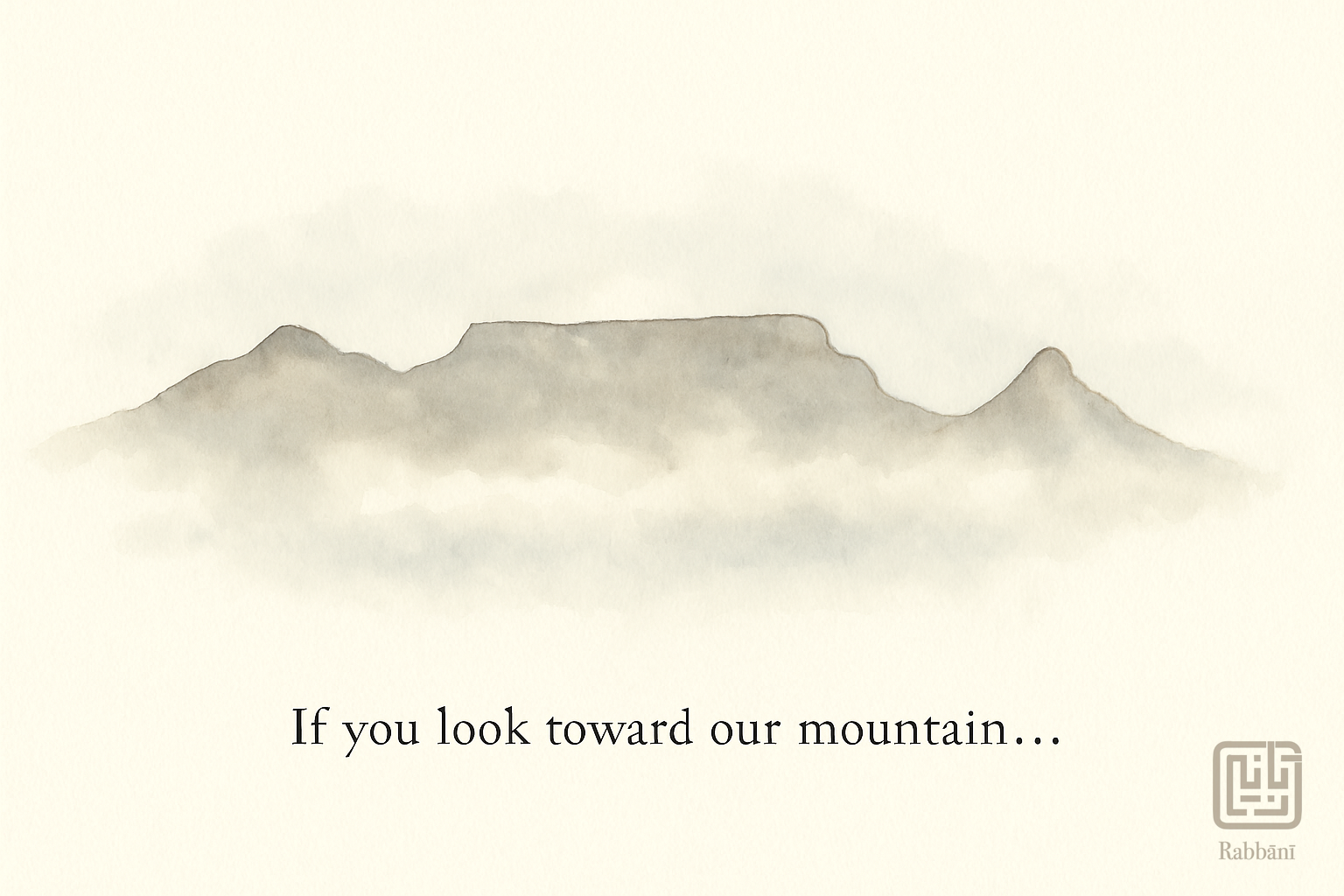
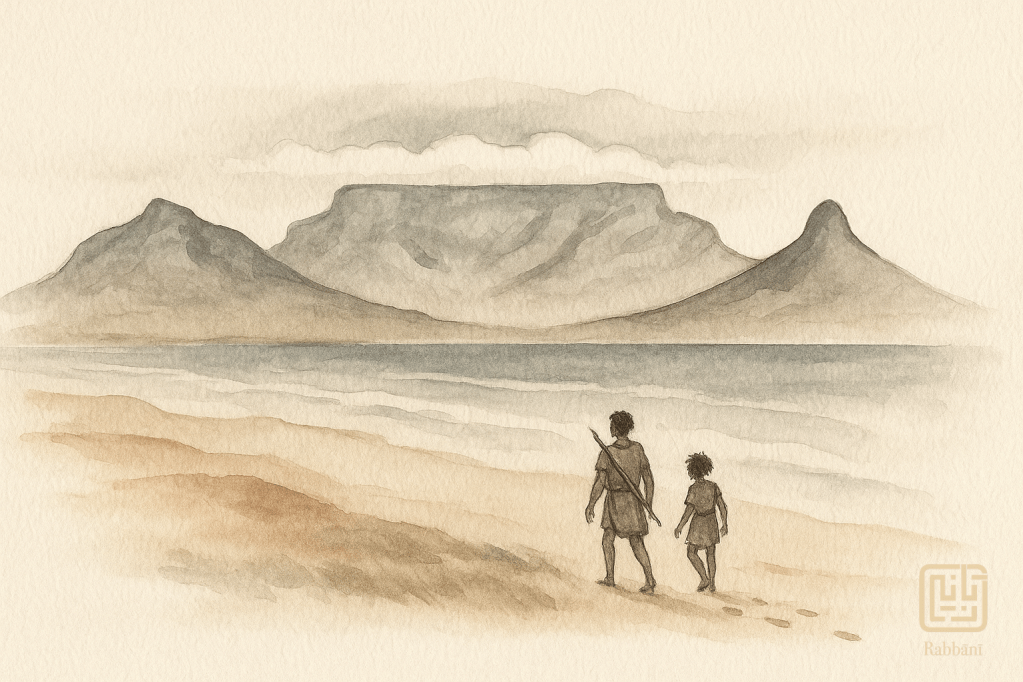
    If you look toward our mountain — Table Mountain —
    you’ll see the cloth of cloud spread across its top like a table set for guests.
    To the right: the lion, his back forming Signal Hill, his mane rising into Lion’s Head.
    To the left: Devil’s Peak, brooding.
    The lion and the devil seated at the same table.
    What a sight for any ship entering Table Bay!

    But this story is older than the ships.
    Older than the settlers who named those peaks.
    Older even than the first Khoi and San who walked these lands.

    Long, long ago — perhaps 22,000 years or more —
    the people lived far inland.
    The land was green. Rivers ran deep.
    Wild animals moved in herds like shadows.
    The earth was generous.

    But then the rains lessened.
    The land grew hotter, harder.
    Some clans became violent.
    The world was shifting.

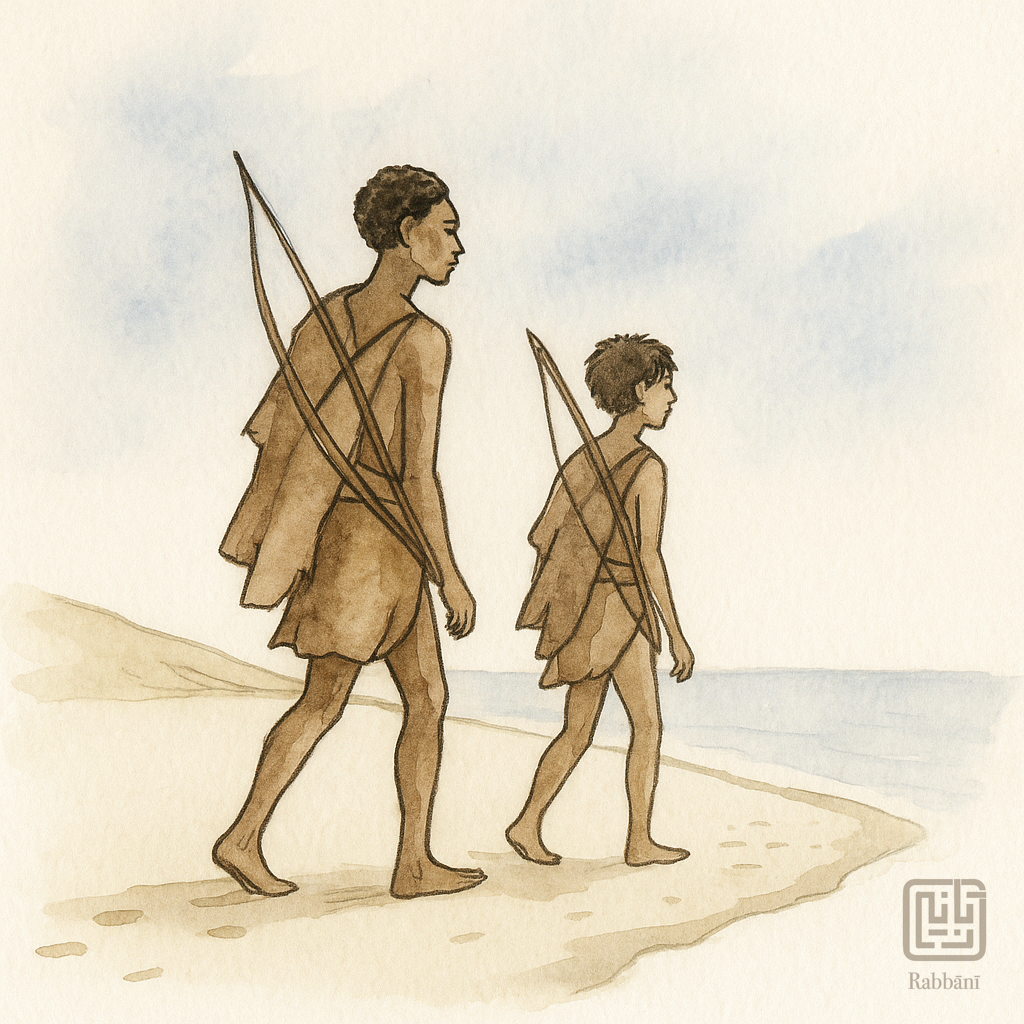
    And so it was that a man named Gubi — a fire-maker, a spark of a man —
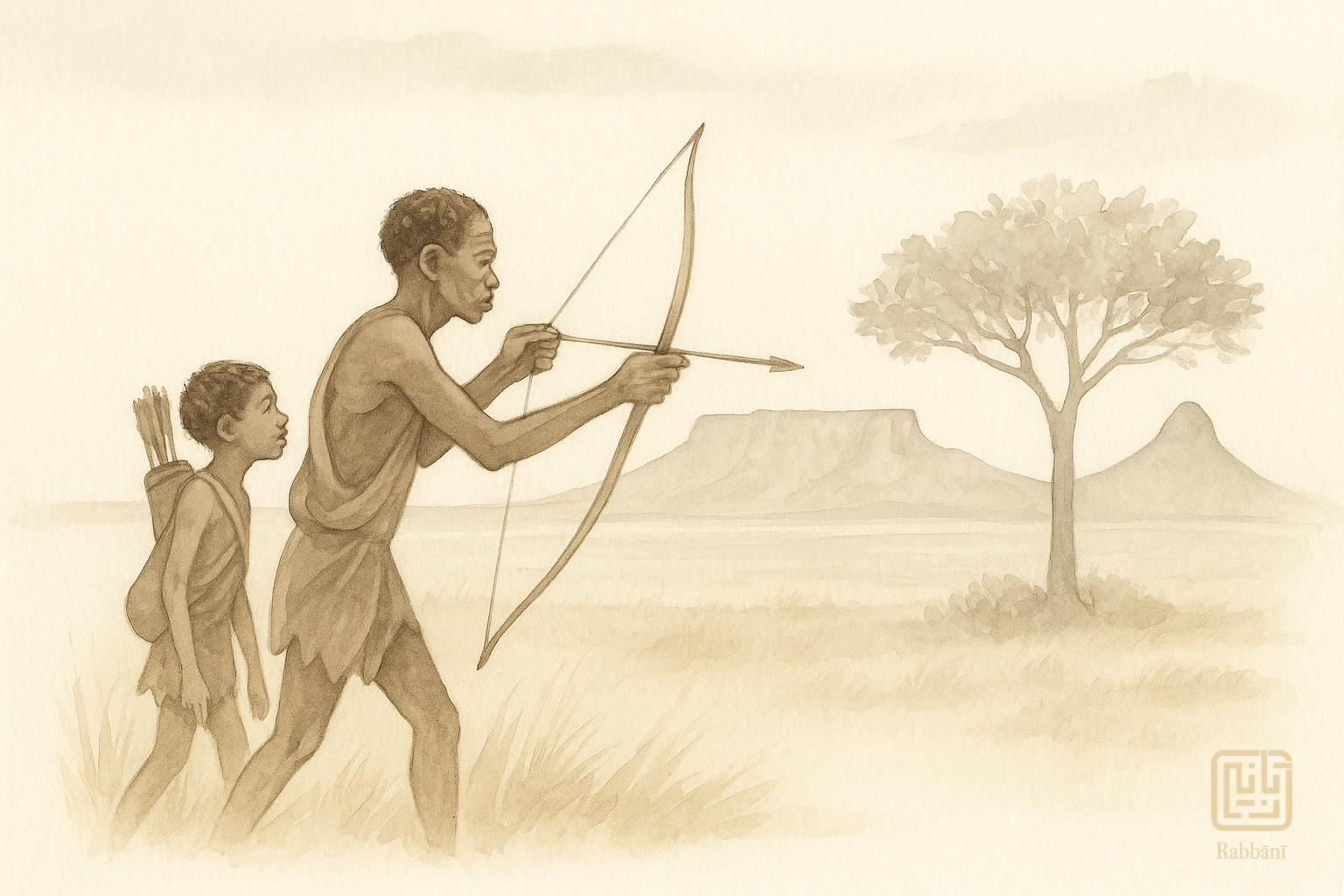
    took his young son, Nori, and journeyed south along the Atlantic edge.
    Not fleeing.
    Seeking.

    Their goods were wrapped in leather.
    Their bows slung across their backs.
    They followed the cold sea winds,
    walking toward a dream of sanctuary.

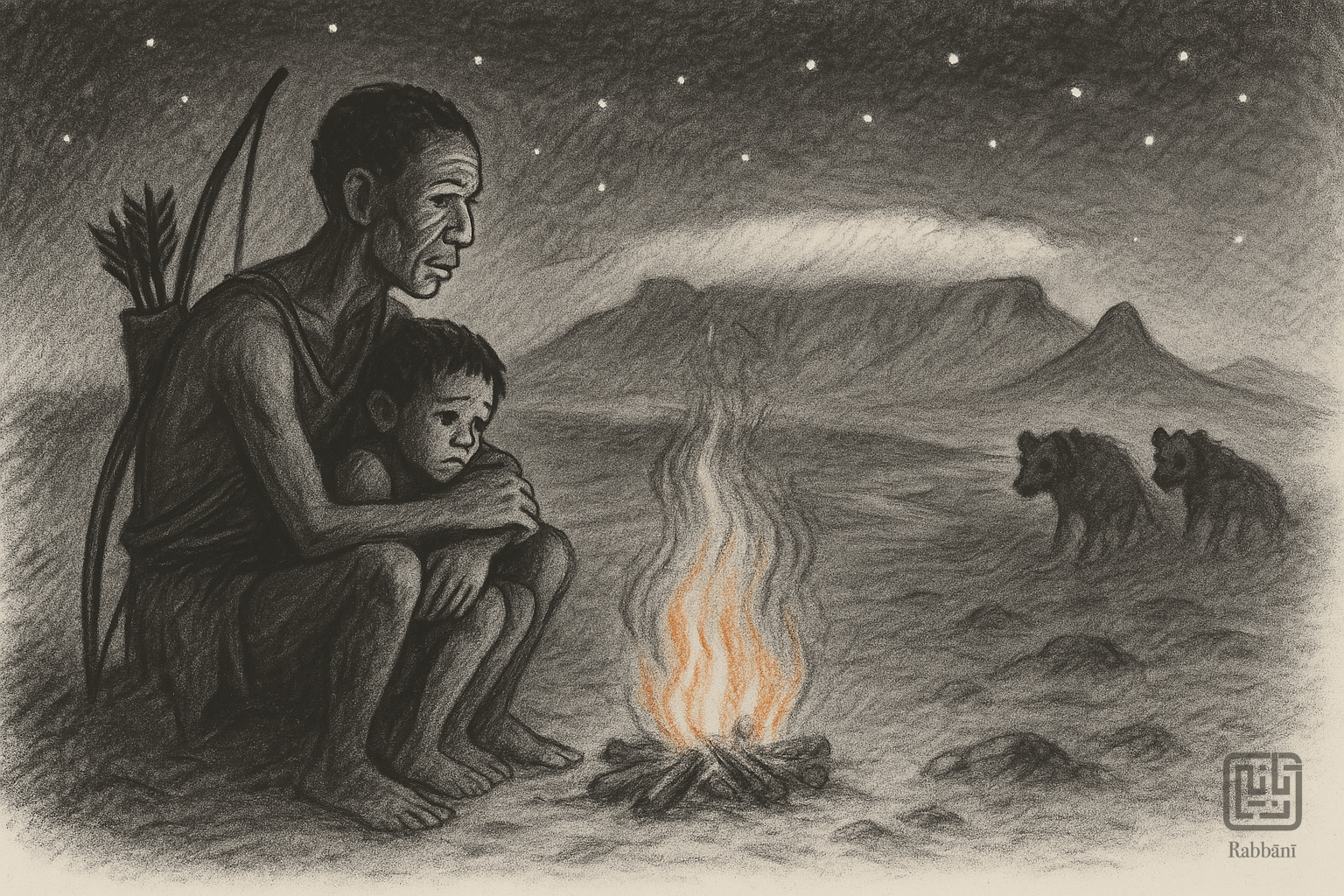
    One night, as their fire danced in the dunes,
    hyenas came snarling through the dark — hunting porcupines.
    Gubi rose with fire in hand, casting its light wide,
    pushing the predators back into the night.

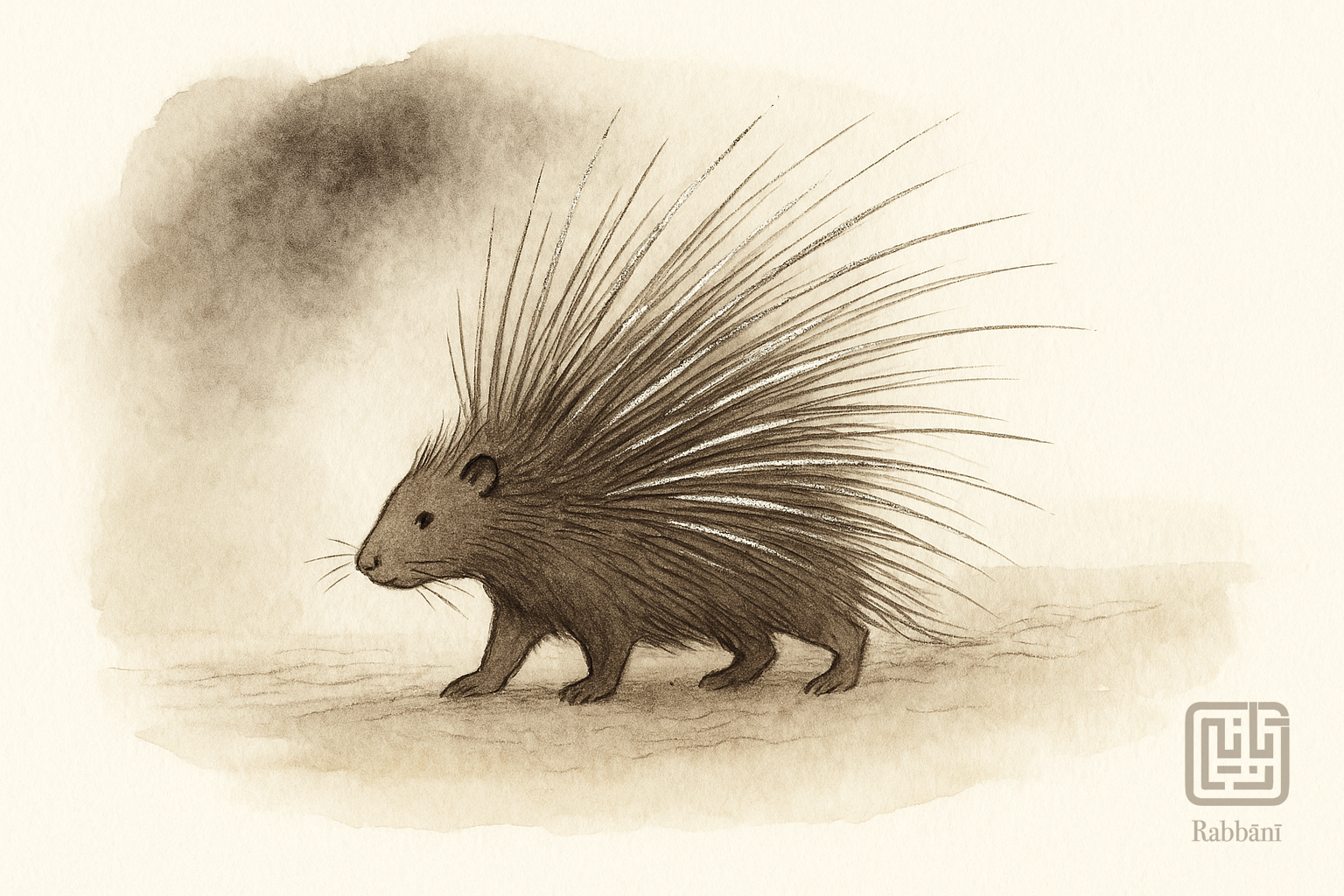
    From the shadows came a porcupine.
    But this was no ordinary porcupine.
    She was old — a sage — her quills silver with wisdom.
    She stepped forward and spoke in a voice like rustling leaves:

    “You have shown courage and care.
    For this, I give you a pouch.”

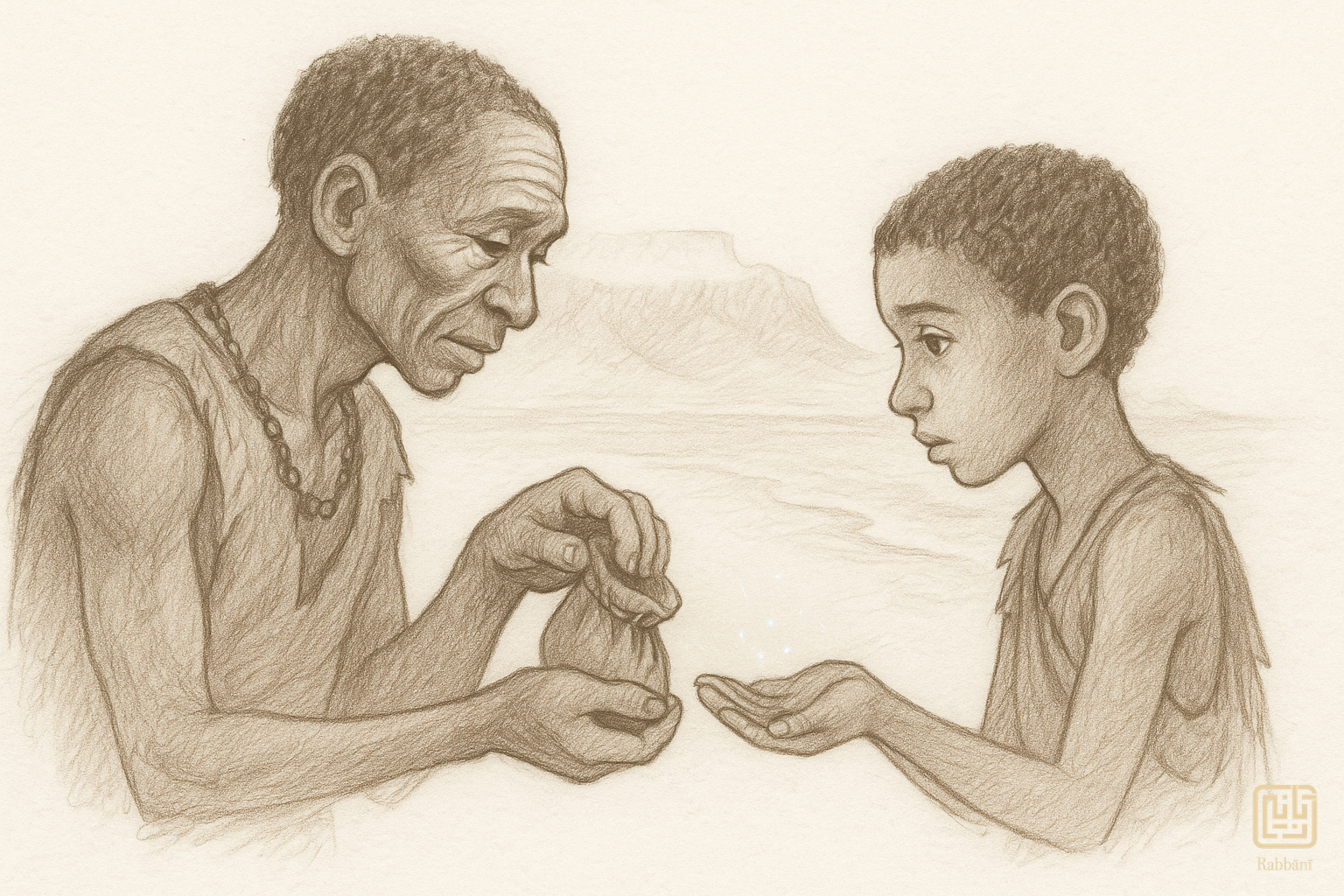
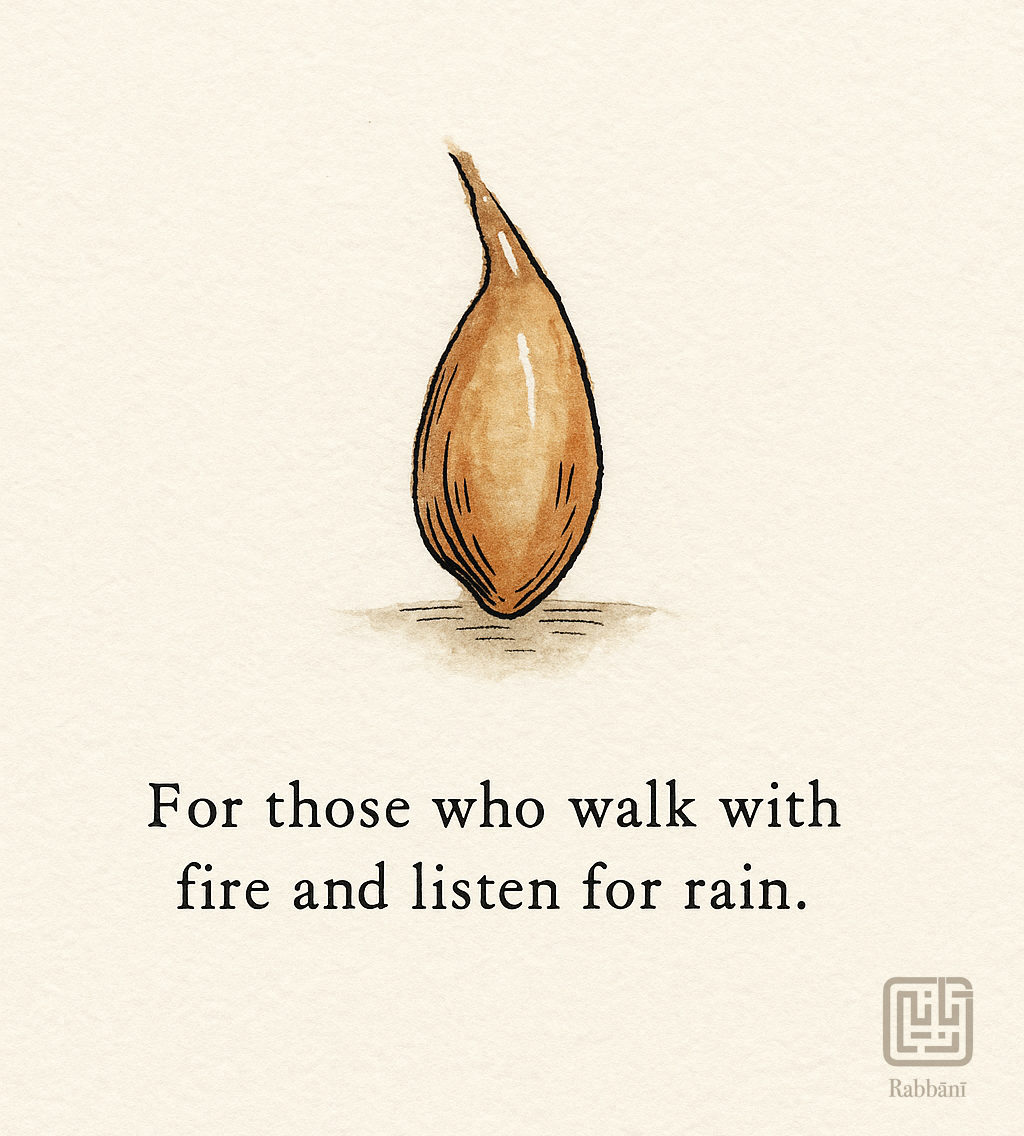
    Inside: a handful of shimmering seeds —
    soft, silver-tipped, unlike anything they had seen.

    She said:
    “As you walk,
    look for the place where the sea makes clouds.
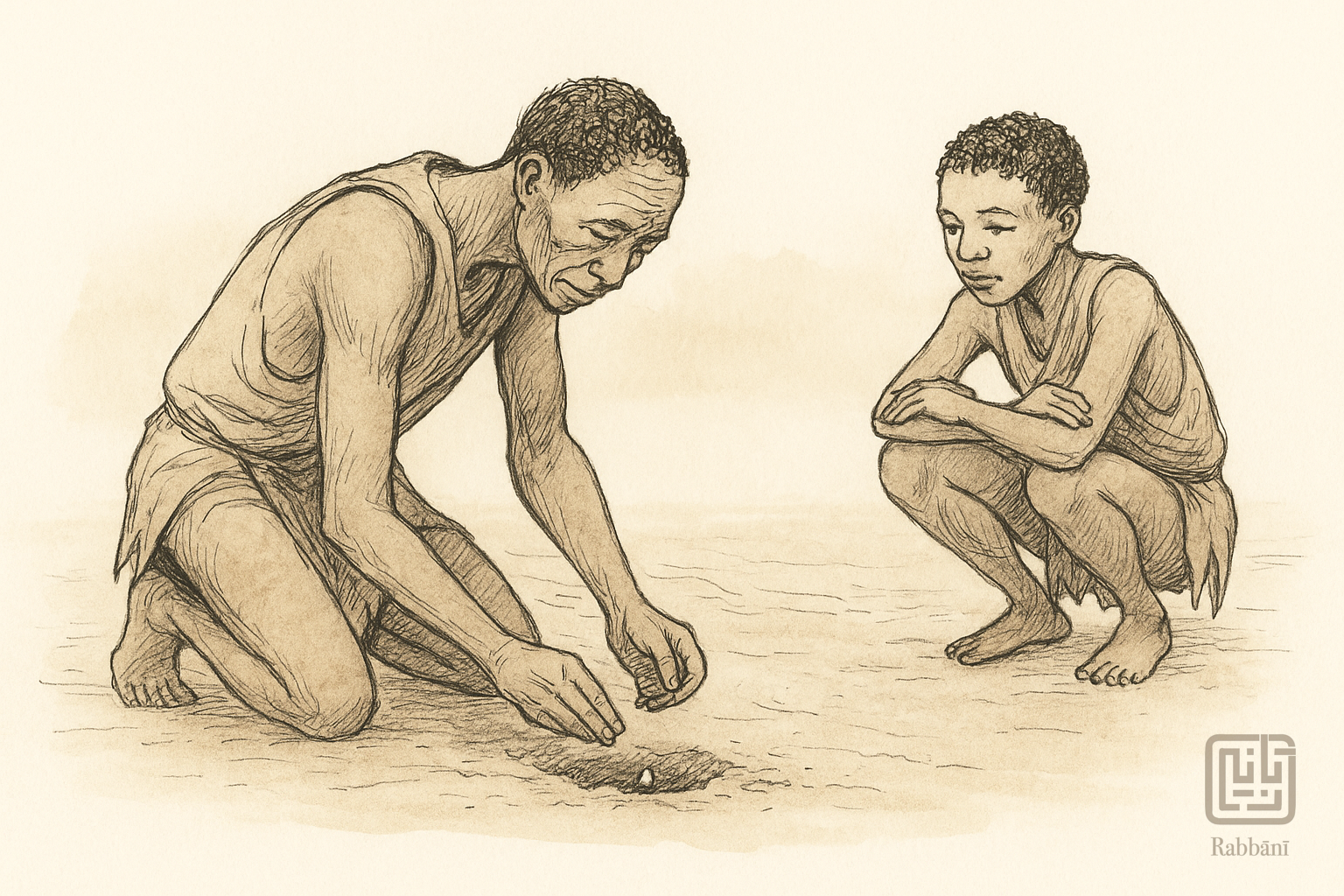
    When you find it, plant these.
    If they grow, you’ll know: this is your place.”

    And so they walked on.

    And when they reached the foot of the mountain —
    flat, cloud-veiled, vast —
    Gubi and Nori felt the truth of it in their bones.

    They planted the seeds.

    And by dawn, the Silver Trees had begun to rise —
    shimmering, breathing, alive.

    Not just plants.
    A blessing.

    And that is how the Silver Tree — found only here —
    came to live beneath Table Mountain.
    Not brought by botanists.
    Not named by settlers.
    But gifted by a porcupine,
    Planted by Gubi and Nori,
    Rooted in fire, story, and seed.

    And when the rains came,
    those Silver Trees
    drank from the river
    that flowed down the mountain —
    the one they called Camissa
    the place of sweet waters,
    rushing underground, murmuring toward the sea.

    Even now, that river runs — quietly —
    beneath the city that forgot it.
    But the mountain remembers.

    It remembers its own name.

    Not Table.
    But Hoerikwaggo — the Mountain of the Sea.
    To its right, the curled-back hill they once called The Sleeping Lion
    its back arched into what settlers would name Signal Hill,
    its mane rising into Lion’s Head.
    To the left, the shadowed one —
    once called Windmaker’s Watch,
    now called Devil’s Peak.

    The land is older than its names.
    And stories, like rivers, find their way back.


    Epilogue

    Some stories are planted, not written.
    They take root in silence.
    They grow in the shade of memory.

    This is one of those.

    Passed from mother to daughter, from father to son,
    from fire-circle to ear, from silence to word.

    The Silver Tree still stands.
    The mountain still watches.
    And somewhere, Gubi and Nori are still walking —
    between cloud and coast,
    between the land’s longing and the sky’s answer.

    So tell this story again.

    When the mountain is misted,
    when the wind shifts,
    when the child beside you asks,
    “Where did we come from?”
    Tell them…

    “Let me tell you the story of Gubi and Nori —
    the spark and the seeker —
    and the tree that shimmered with yes.”


    Postscript

    This story is told in honour of those who remind us that memory is a form of resistance.

    We acknowledge Patric Tariq Mellet, whose book The Camissa Embrace reclaims the deep currents beneath colonial erasure. Through his work, Camissa is no longer hidden — it is remembered as a place of sweet waters, of creolised identity, of sacred convergence.

    We also draw from Stuart Hall, particularly The Fateful Triangle: Race, Ethnicity, Nation, which reminds us that nations are not simply born — they are narrated into being.
    To say I am from Camissa is to resist imposed categories and to speak from the riverbed of relation — to narrate the nation otherwise.

    This reflection flows alongside the companion essay:

    → A Word That Wounds and Wakes Us: Rethinking “Coloured” in the Age of Memory
    which wrestles with the term “Coloured” — its violence, its survival, and the sacred dye of remembrance:
    ṣibghah Allāh — the Colour of God (Qur’an 2:138).

    🌿 Author’s Note

    I wrote this story in honour of a voice passed through many generations — from my mother, to her mother, and beyond. It weaves ancestral memory with imagination, drawing from the wisdom of our lands, our rivers, and our people.

    Gubi and Nori may be characters in legend, but they carry something real: the spirit of all those who walked before names, who travelled with seeds, and who listened deeply to the mountain’s silence.

    I offer this story as a small act of remembering — a quiet prayer that memory may once again run like water beneath the city.

    – Adli Yacubi
    Writer. Listener. Wordsmith of the Sweet Waters.