Tag: Patric Tariq Mellet

  • Camissa: The River That Remembers Us

    Camissa: The River That Remembers Us

    Camissa: The River That Remembers Us

    Heritage Month Reflections on Water, People, and Becoming

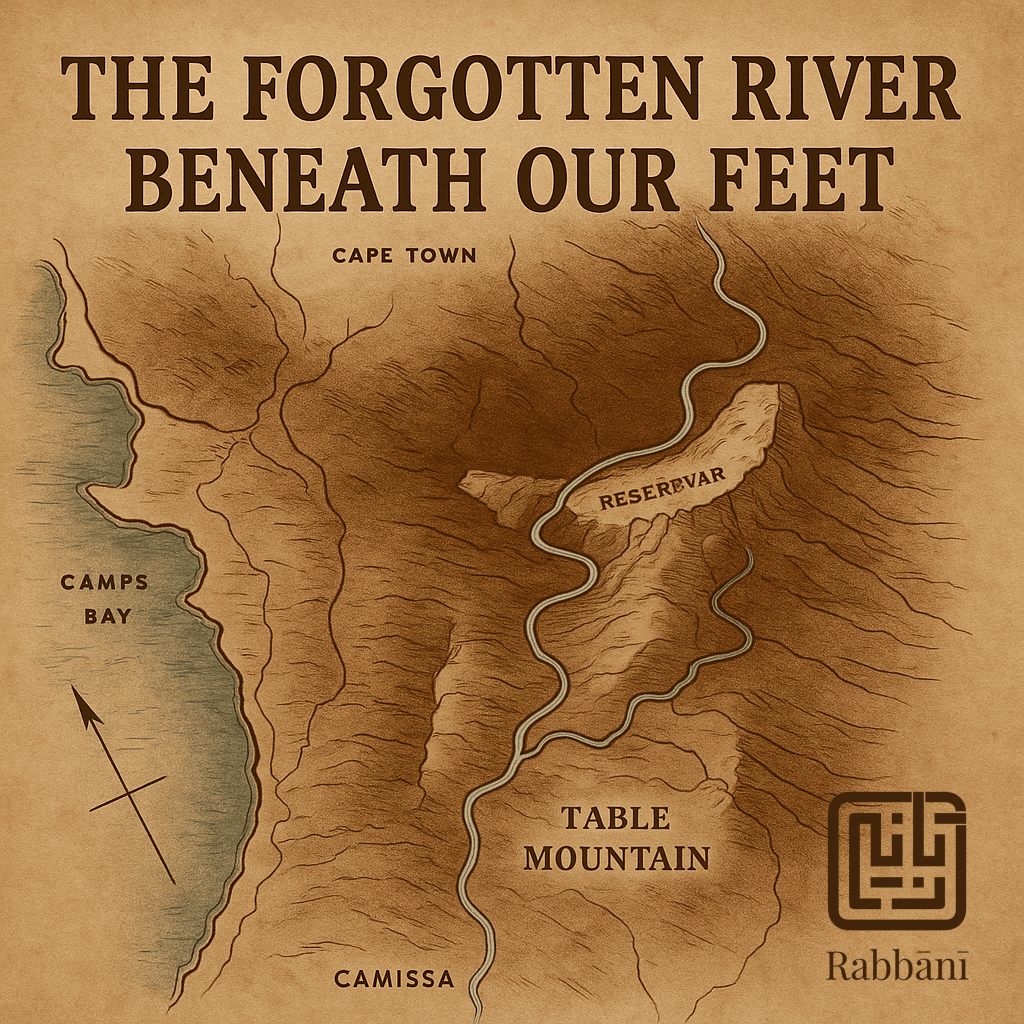
    The Forgotten River Beneath Our Feet

    Before there were streets and buildings, before Company Gardens and canals, there was water. It rose from the springs of Table Mountain and came tumbling down in streams, gathering into what the Khoi called Camissa — the place of sweet waters. For centuries, this river sustained life at the Cape. The Khoi and San drank from it, rested by its banks, told stories in its shade. Later, enslaved men and women from Java, Bengal, Madagascar, Mozambique, and India touched its current as they bent under forced labour. Fresh water was the first mercy, and the first demand.

    Camissa once ran openly down into the town. The Dutch East India Company carved it into canals, forcing its body into stone, bending it to their fort and gardens. But water has memory. It seeps under walls, reappears in unexpected places, refuses to be silenced. Today, buried beneath tar and pavement, Camissa still flows. And if you pause long enough, you might hear it whisper under your feet.

    At the River’s Edge: A People Gathered

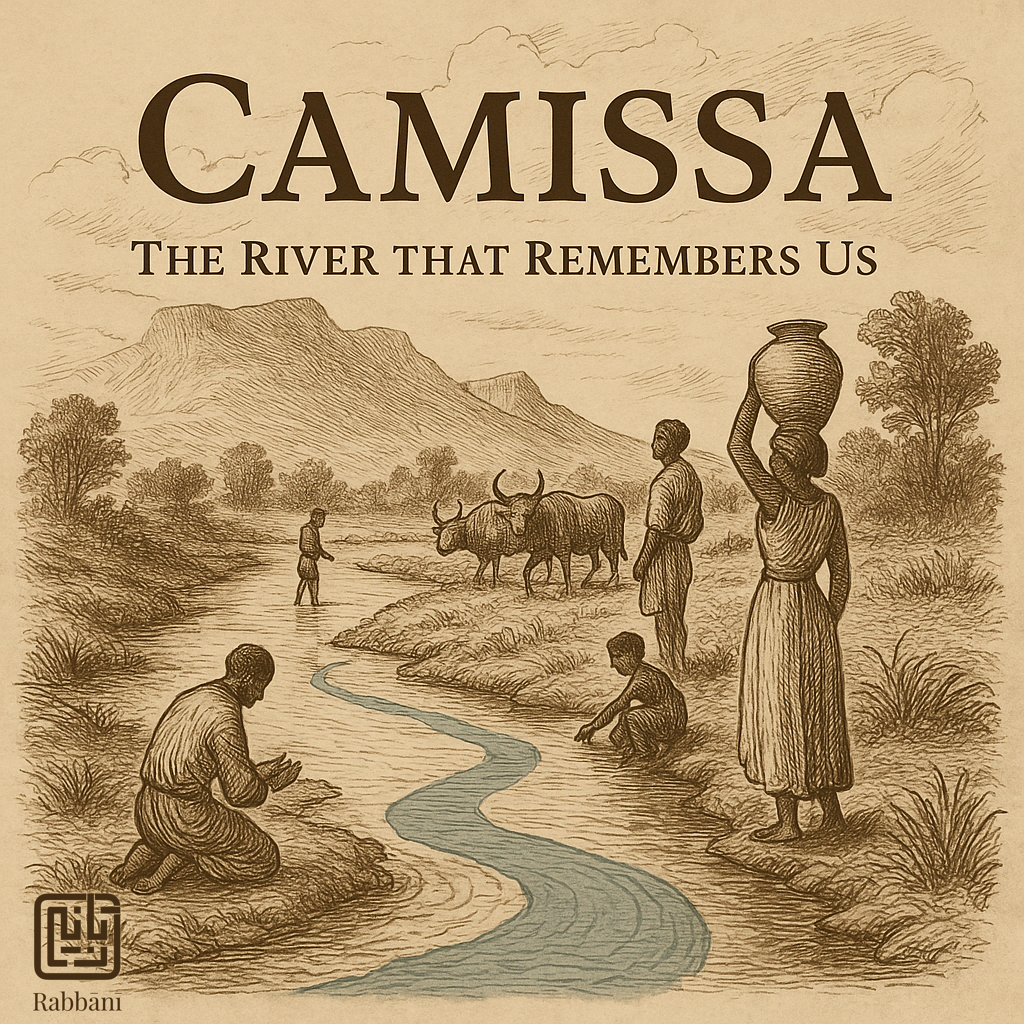
    The river was never just water. It was a meeting place, a barzakh — a threshold where lives, languages, and faiths collided. Khoi pastoralists led cattle to drink. San hunters rested with skins and stories. Dutch settlers drew buckets to quench their fort. Slaves dug trenches, carried wood, and planted gardens for a company that claimed the river as its own.

    Yet at the same banks, something else was happening. Free Blacks, exiles, manumitted slaves, and the first Muslims of the Cape gathered here. The Auwal Mosque — our first mosque — rose near the Camissa’s streams. Qur’an recitation and children’s laughter mingled with the sound of water. Out of pain, a people began to form.

    African Camissa: A Wider Circle

    Patric Tariq Mellet calls this heritage African Camissa. It is more than geography; it is an identity — a wider circle of becoming. In his telling, Camissa is the place where Khoi, San, enslaved Africans, Asian exiles, and their descendants all drank from the same stream, forming a new community beyond the colonial word “Coloured.”

    Stuart Hall once said identity is not a fixed thing we inherit, but a process of becoming. Camissa is that process made visible in water — always moving, always reshaping, carrying traces of every stone it has touched.


    The River of Resistance and Remembrance

    Water has always been resistance. Hājar ran between the hills in desperation, and Zamzam burst forth in the desert — the well that still feeds millions of pilgrims. Camissa, too, gave life to those who were bound in chains. The VOC tried to control it, but enslaved hands touched it daily, and their songs flowed into it.

    In my own writing, I have tried to follow these streams:

    • The Legend of the Silver Tree — a story of shimmering roots in mountain mist.
    • The Mother Tongue of Tasbih — where Afrikaans, written in Arabic script, became a stream of prayer.
    • Tamat — a reminder that completion is never an ending, but a living beginning.
    • Hājar — the Black mother whose faith turned thirst into a sacred inheritance.

    All these pieces flow back into Camissa. The river is not only history — it is memory itself, resisting erasure.


    Heritage Month: Listening for the Water

    September often gives us monuments, parades, and neat stories of “unity in diversity.” But heritage is not polished granite or rainbow slogans. It is water that refuses to stay in its channel.

    Camissa is buried, but not gone. It still seeps under Cape Town, carrying whispers of Khoi clans, slave lullabies, Qur’an verses, and the rhythm of ghoema drums. It reminds us that heritage is not just what we are handed, but what we choose to remember and honour.

    Closing Reflection

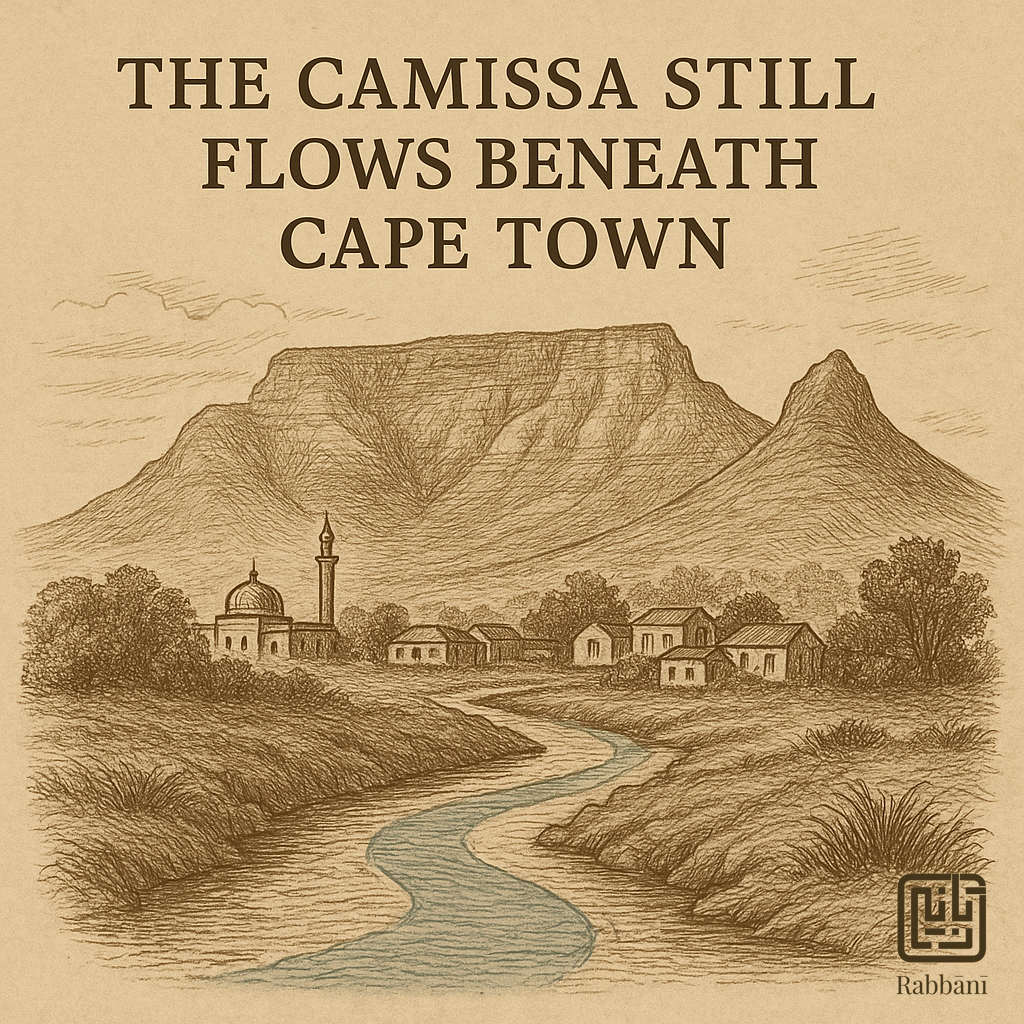
    The Camissa River still remembers us. It does not flow in straight lines. It curves, divides, disappears, and resurfaces — like our histories, like our families, like our faiths. To walk in Cape Town is to walk above water, on layers of memory that never dry out.

    The tree shimmers still, for those who know where to look.
    The river flows still, for those who choose to listen.


    🎥 This reflection also lives as a video.
    Watch it on [Instagram]
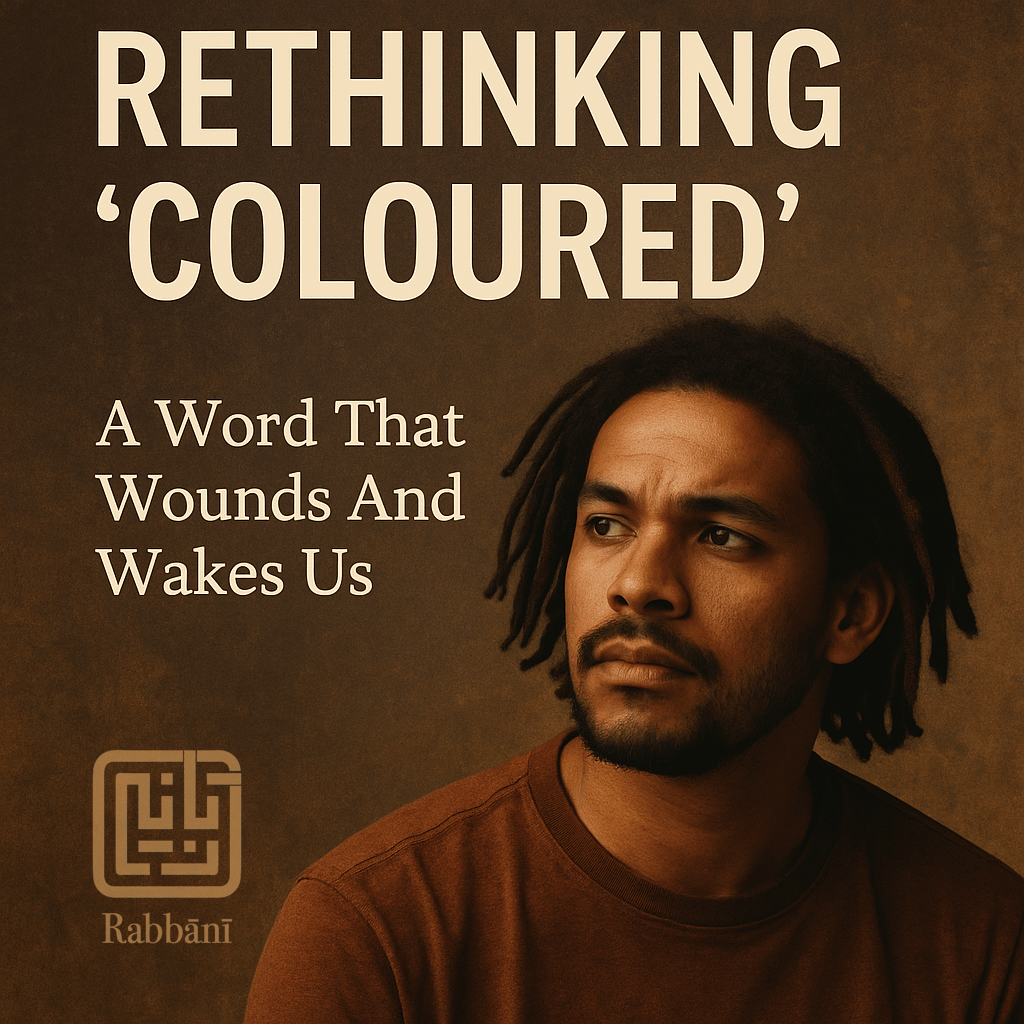
  • A Word That Wounds and Wakes Us: Rethinking “Coloured” in the Age of Memory

    A Word That Wounds and Wakes Us: Rethinking “Coloured” in the Age of Memory

    🟤 A Word That Wounds and Wakes Us: Rethinking “Coloured” in the Age of Memory

    By Adli Yacubi

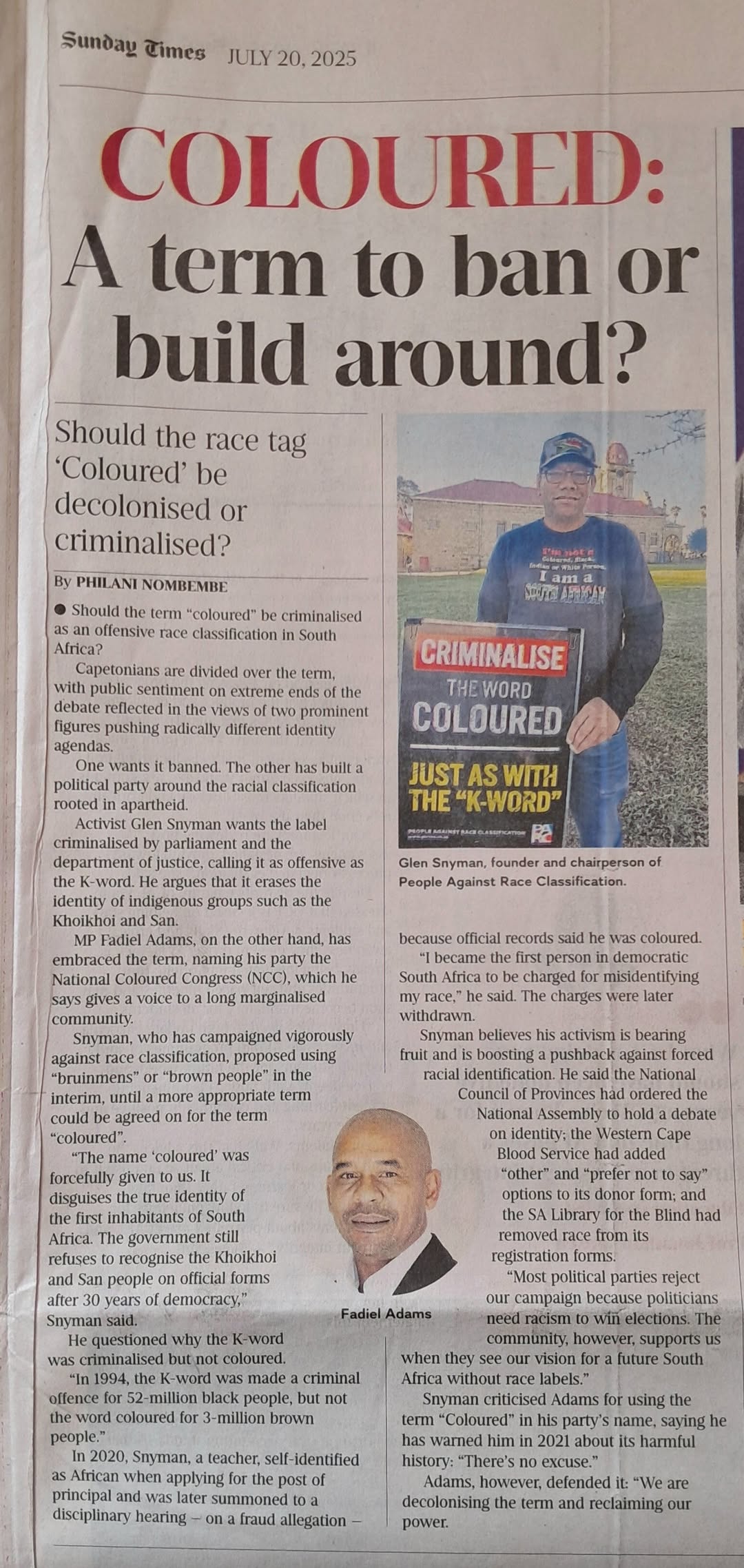
    “The name ‘Coloured’ was forcefully given to us.”
    — Glen Snyman, Sunday Times, 20 July 2025

    Last Sunday’s front page posed a question still burning through our national psyche:
    “Coloured: A term to ban or build around?”

    In bold red and black, the Sunday Times article (20 July 2025) captured a moment of deep fracture — and opportunity. It spotlighted the voices of two public figures, Glen Snyman and Fadiel Adams, whose opposing stances on the term “Coloured” reflect long-simmering tensions within post-apartheid identity politics.

    And yet, beyond the noise, a different current is rising. One that calls not for renaming or romanticising, but for remembering.

    ❌ Criminalise or 🔁 Reclaim?

    Glen Snyman, founder of People Against Race Classification (PARC), argues that “Coloured” is not merely outdated — it is damaging, like the K-word:

    “It disguises the true identity of the first inhabitants of South Africa. The government still refuses to recognise the Khoikhoi and San people on official forms after 30 years of democracy.”

    Snyman’s activism led to national debates in parliament and institutions like the Western Cape Blood Service adding the “prefer not to say” option to racial forms. But his call for criminalising the term has stirred legal and ethical challenges — and provoked a backlash from those who feel erased by the erasure.

    On the other end stands Fadiel Adams, leader of the National Coloured Congress, who says:

    “We are decolonising the term and reclaiming our power.”

    Adams believes in building around the identity — anchoring it in lived pain, community resilience, and political recognition. But critics say this collapses our histories into apartheid boxes, reinforcing labels that were never ours to begin with.

    🪶 What’s In a Name?

    Into this fire, Patric Tariq Mellet, historian and author of The Camissa Embrace, offers clarity beyond polemics:

    “Goringhaicona was never a name people used for themselves. It was a derogatory Dutch term meaning outcast or scavenger. Autshumao’s people were known as the /Kamisons — water traders. They were a sub-group of the Cochoqua. The term Camissa remembers them not as fragments, but as a river of convergence.”

    Mellet’s contribution is not merely semantic — it’s genealogical. It reveals that terms like “Coloured” and even “Brown” are colourist overlays that flatten our multiple ancestries: San, Khoe, Xhosa, enslaved African, Indian, Javanese, and European.

    His critique of both Snyman and Adams is incisive:

    “Both men reflect valid concerns — but both are caught in Apartheid’s trap. One criminalises. The other romanticises. Neither steps fully into the radical work of remembering, beyond state classification.”

    🧬 Memory as Resistance

    To stand in this in-between space — neither erasing the term nor enshrining it — is to do the work of memory. To say: we were misnamed, but we are not unnamed. We are more than what apartheid called us. And we are not only what the census categories offer us.

    This blog, like others before it, is not a position paper. It is a growing reflection rooted in questions I’ve been asking for years:
    — What do we mean when we say “I am Coloured”?
    — Who gets to say so?
    — And what happens when our ancestors whisper different names?

    We are not “non-white.” We are not “Other.”
    We are not “Coloured” in the way the law intended.
    And we are not simply “Brown,” either.

    We are Camissa. We are from the river.
    We are still flowing.

    📝 Postscript

    We acknowledge the work of Patric Tariq Mellet, whose scholarship challenges colonial erasure. Through his writing, Camissa is no longer hidden — it is remembered as a place of sweet waters, of creolised identity, of sacred convergence.

    His reminder to not confuse / reclaim / romanticise pejorative colonial terms (such as “Goringhaicona”) is especially important — and will be reflected in our future revisions.

    We also draw from Stuart Hall, who wrote that nations are “narrated into being.” To say “I am from Camissa” is to resist imposed categories and to speak from the riverbed of relation — to narrate the nation otherwise.

    The story of who we are is still being written. Let it not be in the language of our conquerors — but in the voice of our rivers, mountains, mothers and names.


    💧 The Colour of God

    صِبْغَةَ ٱللَّهِ ۖ وَمَنْ أَحْسَنُ مِنَ ٱللَّهِ صِبْغَةًۭ ۖ وَنَحْنُ لَهُۥ عَـٰبِدُونَ
    “This is the colour of Allah. And who is better than Allah in colouring? And we are His worshippers.” (Qur’an 2:138)

    Not the colours of empire. Not the names imposed by maps or ministries.
    But the silver sap beneath the bark. The scent of rain on root.
    This is the ṣibghah of God. The sacred dye of those who remember.


    📎 Read the full Sunday Times article: “Coloured: A term to ban or build around?” (20 July 2025)

    🧭 This story flows alongside others:
    – “The Mother Tongue of Tasbih”
    – “From Chains to Qur’an”
    – “The Legend of the Silver Tree”