Tag: Rabbānī Scrolls

  • The Good Word as a Good Tree

    The Good Word as a Good Tree

    The Good Word as a Good Tree

    Planting knowledge, remembrance, and companionship in the soil of hearts
    It began not with my own notes, but with a gift.
    A reflection carried to me from a dars (lesson) of Shaykh Allie Khalfe — may Allah preserve him — through the words of his student, Masooda. What reached me was not information but suḥba (companionship in transmission). It felt as if a branch had been placed in my hand, living and fragrant.

    The dars turned on Imam Sharani’s text. At its close, the author prayed for the one who writes, the one who conveys, and the one who listens — sketching in that duʿāʾ (supplication) the hidden architecture of ijāzah (authorisation). Knowledge is never solitary. It requires scribe, voice, and ear.

    When the names of the ʿulamāʾ (scholars) in the sanad (chain of transmission) were recited, it was like witnesses at a nikāh (marriage contract): a chain of trust sealed with al-Fātiḥa (the Opening chapter of the Qur’an) and ṣalawāt (prayers upon the Prophet ﷺ). Not formality, but a bond.

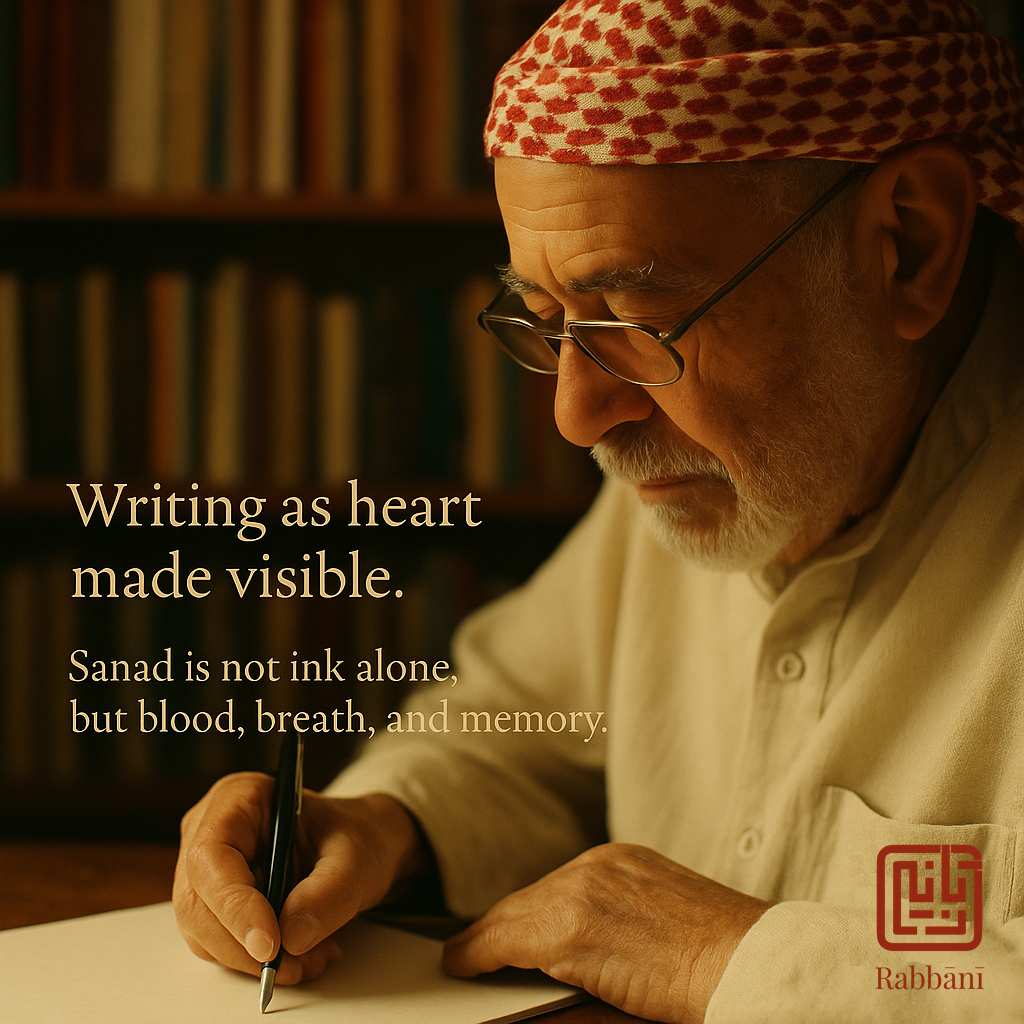
    And then, a detail that stills me: the Shaykh reminded that the index finger carries a vein to the heart. The same finger that cradles the pen. Writing, then, is not merely ink — it is the heart made visible.

    This is adab as-suḥba — the courtesy of companionship. Sometimes a verse must be allowed to enter and sit in the heart until it ripens into fruit. Its meaning multiplies.


    A Good Word, A Good Tree

    The Qur’an says:
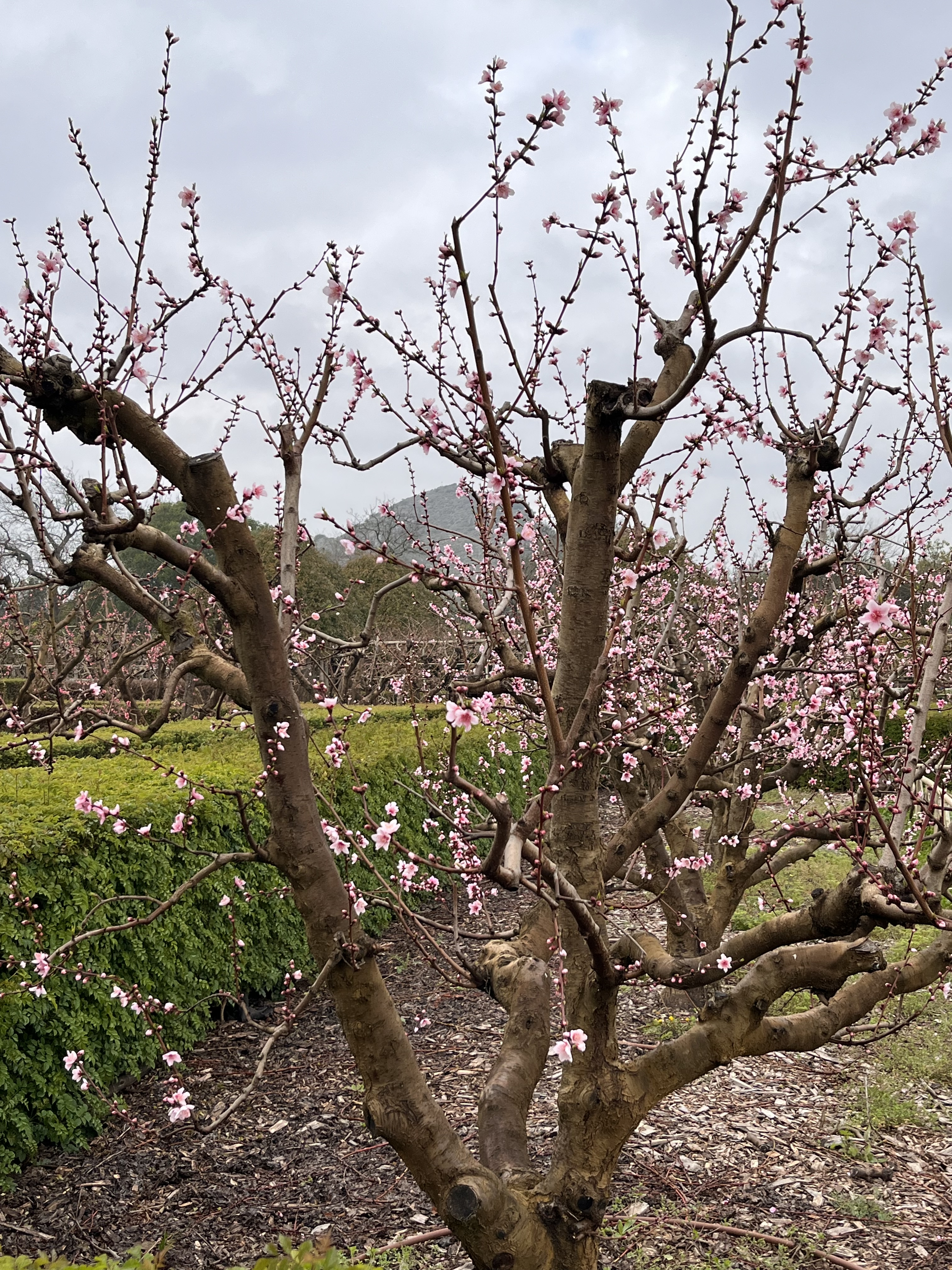
    “A good word is like a good tree whose root is firmly fixed, and whose branches reach the heavens. It gives its fruit at all times, by the permission of its Lord.” (Ibrāhīm 14:24–25).

    Masooda spoke of how the verse itself visited her — once even on a screen in Ramadan, tugging her heart like a breeze that compelled her to sit and drink from it. She returned to it again and again, until its shade and fruit became part of her.

    This is the work of suḥbadhikr (remembrance), and ʿilm (knowledge) braided together: soil, water, sun. Good words are nourishment, shelter, and fruit. They live beyond their first moment, feeding others long after.

    Oceans Without Shore

    “If all the trees on earth were pens, and the ocean were ink, refilled by seven more oceans, still the Words of Allah would not be exhausted.” (Luqmān 31:27).

    The tree becomes pen, the ocean becomes ink — and still it is not enough. Knowledge is boundless, and our writing, reading, and speaking are only drops.

    Ijāzah is like a rope stretched across generations, so we are not stranded with only our nafs (ego-self) in shallow waters. The sanad becomes a coastline, teacher to student, name to name, heart to heart. Waves advance, pens move, yet the ink of Allah’s words runs deeper than we can fathom.

    Bonsai, Hidden Garments, Generational Love

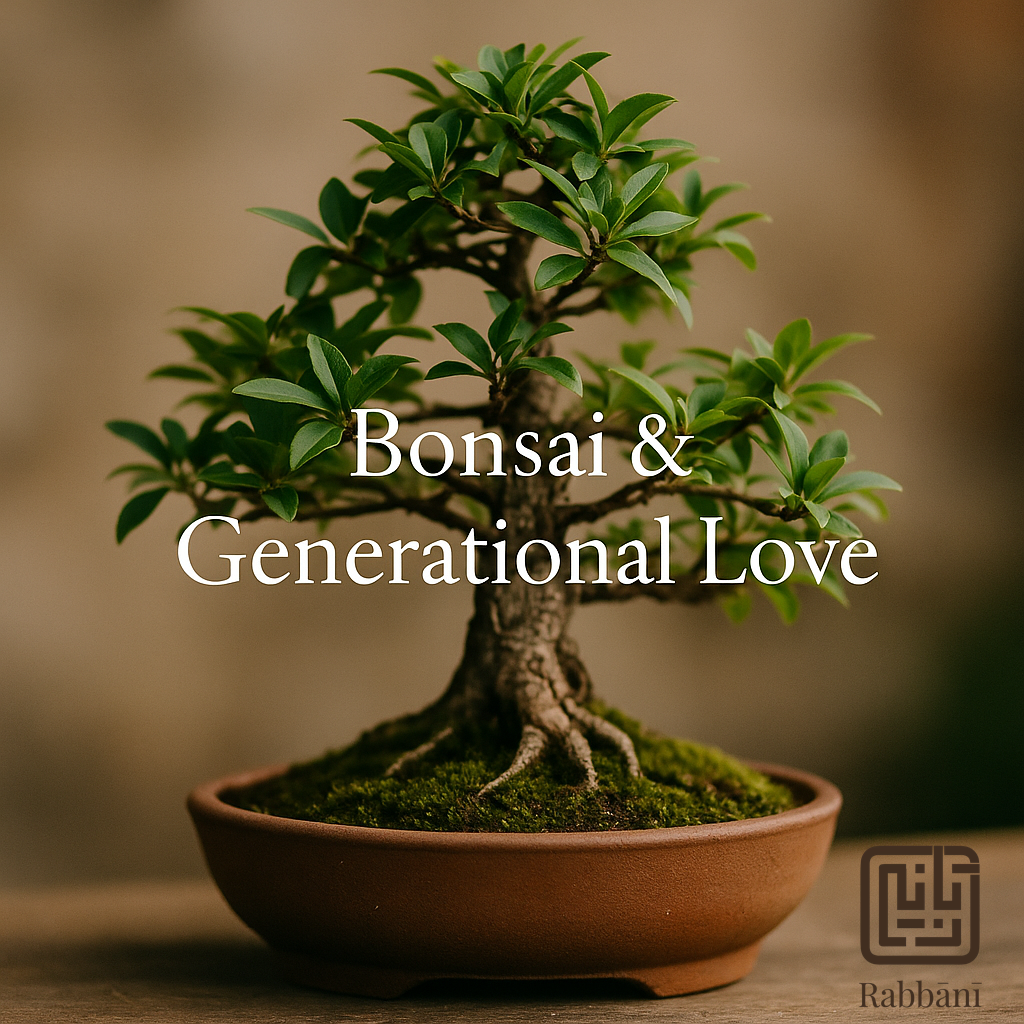
    Not all transmission is vast like oceans or towering like trees. Some is slow and deliberate, like a bonsai — carefully pruned, shaped across years, carrying endurance in its smallness. Generational love can be like this: cut back, tended carefully, yet still alive.

    Charity is like a hidden garment — a warmth felt but not displayed. And the link to Allah is direct, unmediated, suḥbawith the Real.

    Because we began in a garden, we will return to it. To remain a child in the garden — curious, open, growing — is the secret of maturity.

    The Farm with a Heart

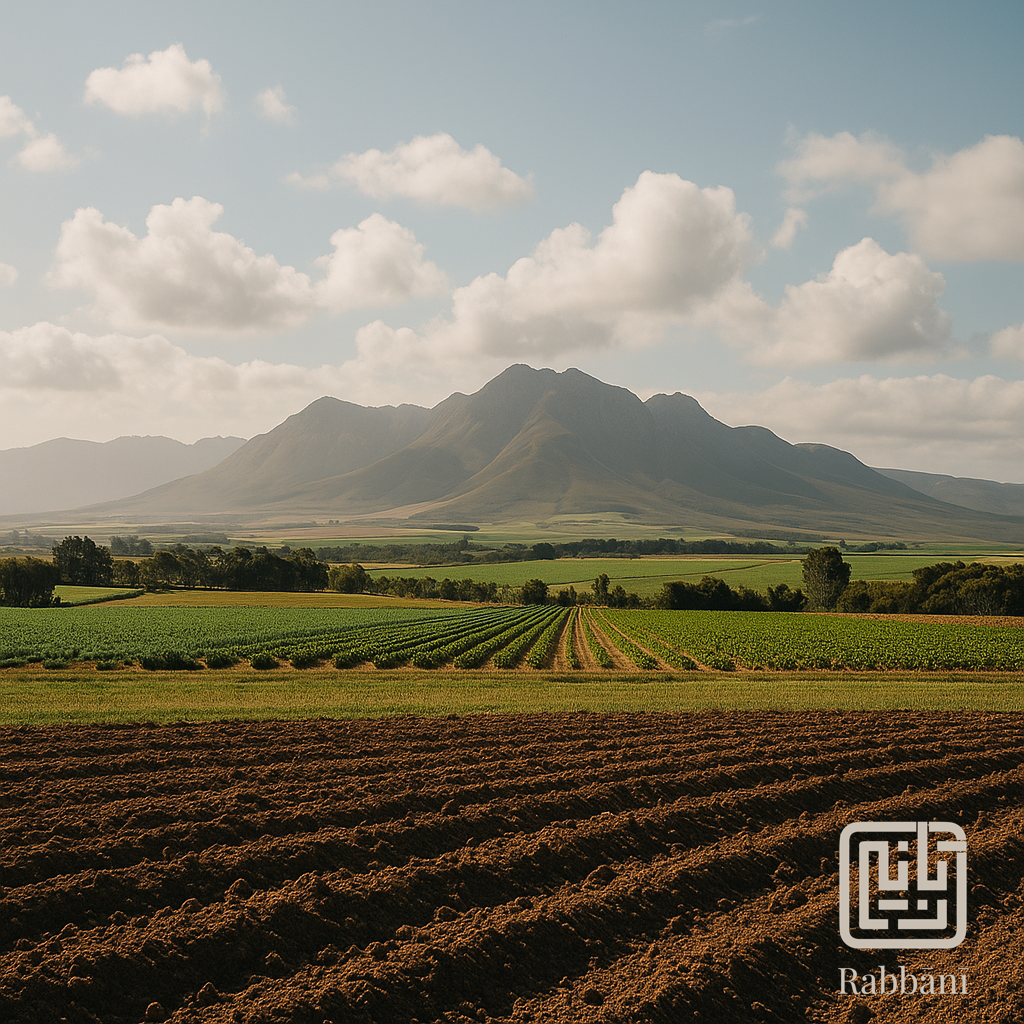
    The land itself was described as a body. One farm to another, the same anatomy: if the brain is sound, the farm is sound. And deeper still, the heart of the farm. It was as though I was hearing the ḥadīth: “Verily, in the body there is a piece of flesh; if it is sound, the whole body is sound. If it is corrupted, the whole body is corrupted. Verily, it is the heart.”

    The farm is a mirror of us, and we are mirrors of the farm. Soil, water, mind, heart — they rise and fall together.

    And another secret: beautiful people are hidden from the world, like seeds in soil waiting to rise. Their signs are etched into the land, into quiet generosity, into living Qur’an carried in silence. Who would have thought that on the first colonial farm one might hear Qur’an spoken back by the soil, the wind, the hidden awliyāʾ (friends of God)?

    Hidden people, hidden farms, hidden saints — Allah scatters them where we least expect.

    Fire and Blossom

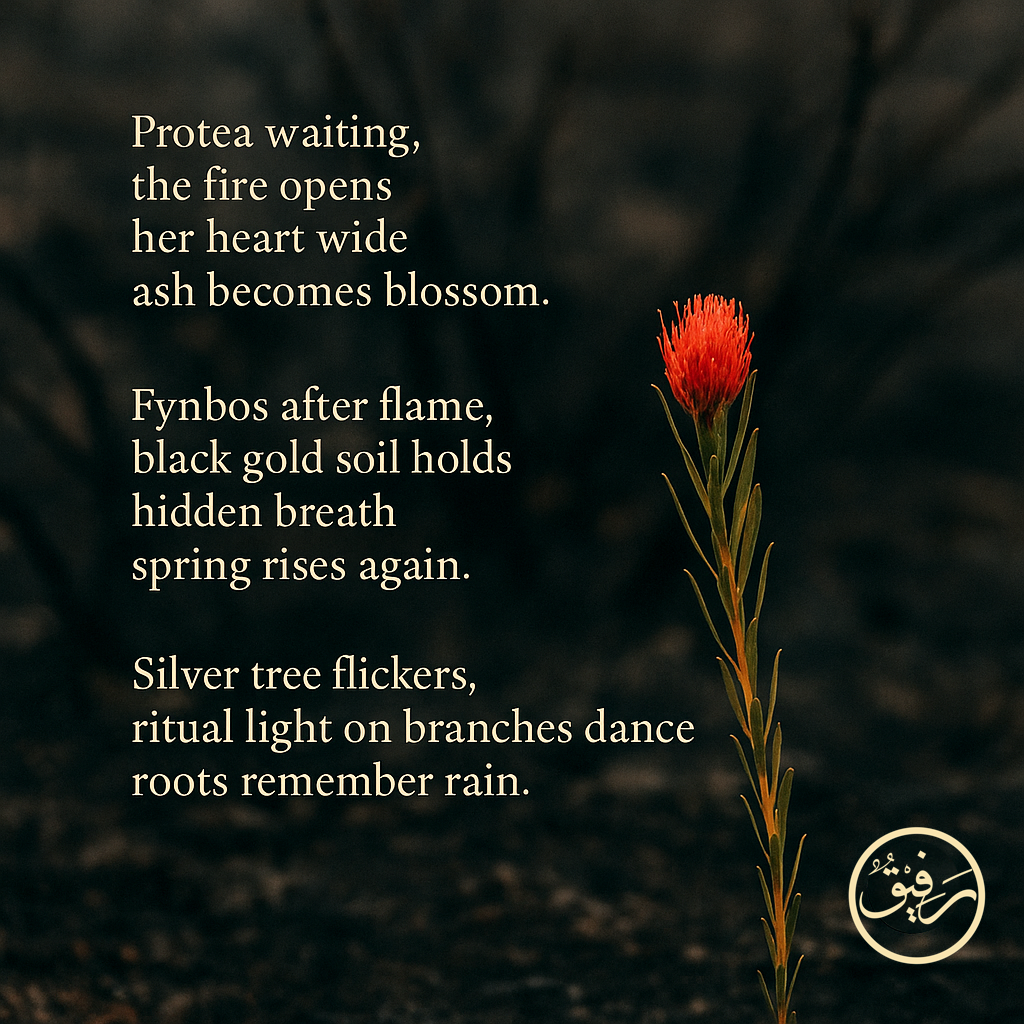
    Here the Cape flora speaks:

    Protea waiting,
    the fire opens her heart wide,
    ash becomes blossom.

    So too is the heart. Fire opens what is hidden; patience reveals what is promised.

    Dhikr as Greater

    All of this — sanadsuḥba, ʿilm, trees, oceans, farms, blossoms — is gathered by one thread: dhikr.

    “Wa la dhikrullāhi akbar” — “And the remembrance of Allah is greater, without a doubt.” (ʿAnkabūt 29:45).

    Greater than what? Greater than the fire that tests the protea, greater than the nafs that bends the farm, greater than even the words we speak when they are empty of Him. Dhikr transforms knowledge into light, suḥba into companionship, trees into nourishment, oceans into signs without end.

    And yet dhikr is even wider than many of us think. It is not only on the tongue, in recitation or chanting. It is also in the body: in breath, in muscle, in tendon, in presence, in stillness. It is kindness, humility, love, and community — whether Muslim, Christian, or Buddhist — meeting each other in harmony and poise.

    This too is dhikr. Treasures we must preserve with care, if we wish to remain bridges to safety.

    Because we began in a garden, we will return to it. The good word remains a good tree. The ocean remains ink that cannot be exhausted. And remembrance — dhikrullāh — is greater than them all.

    Postscript

    There are words from the poet Shabbir Banoobhai that linger here — like water poured into an empty cup, still teaching us what thirst means:

    wisdom in a jug
    an empty cup
    you said
    pour till it’s full

    i tried and tried
    finally sighed
    and said
    it’s empty still

    These lines feel like the secret of suhba itself: to never be satisfied with one sip, to know the thirst itself is part of the gift.


    Acknowledgement

    With gratitude to Shaykh Allie Khalfe, whose dars planted these roots, and to his student Masooda Fadal, who shared these reflections and passed on their fragrance.


    Glossary of Terms

    • uḥba (صُحبة) — Companionship; keeping company with teachers, friends, or the Divine. In Sufi tradition: the courtesy of companionship (adab as-suḥba).
    • Sanad (سند) — A chain of transmission linking teachers and students across generations.
    • Ijāzah (إجازة) — Authorisation or license to transmit a text or knowledge, usually granted by a teacher to a student.
    • ʿUlamāʾ (علماء) — Scholars of Islam; those learned in the sciences of religion.
    • Nikāh (نكاح) — Marriage contract.
    • Al-Fātiḥa (الفاتحة) — “The Opening,” the first chapter of the Qur’an, often recited in prayer and blessings.
    • Ṣalawāt (صلوات) — Prayers and blessings upon the Prophet Muhammad ﷺ.
    • Dhikr (ذكر) — Remembrance of Allah; includes recitation, prayer, and also presence, breath, stillness, and actions of kindness.
    • Nafs (نفس) — The self or ego; the inner self that inclines to desire, distraction, or pride.
    • Awliyāʾ (أولياء) — “Friends of God”; saints, those close to Allah through devotion and purity of heart.
  • The Prophet in Our Veins: On the Scent, Sound, and Song of Cape Devotion

    The Prophet in Our Veins: On the Scent, Sound, and Song of Cape Devotion

    The Prophet in Our Veins: On the Scent, Sound, and Song of Cape Devotion

    Introduction: Rabi al-Awwal and the Living Presence

    Rabi al-Awwal has arrived — the month in which many commemorate the birth of the Prophet Muhammad ﷺ. But beyond the formal gatherings and public sermons, there are other ways his presence is felt.

    This blog reflects on three threads of remembrance: the Prophet ﷺ as a guide in our political struggles, a source of poetic longing, and a quiet presence in our daily lives — folded into our homes, habits, and inherited silences.


    I. The Constitution of Madinah and the Call of Islam: A Political Sunnah of Justice

    In the 1980s, the anti-apartheid movement in South Africa gave birth to many political and religious formations. Among them was the Call of Islam, a progressive Muslim organization that took inspiration from the Prophet Muhammad’s ﷺ example as a political and ethical leader.

    At the heart of its formation was a sense that Islam was not simply a private affair, but a force for justice. The Prophet’s ﷺ Constitution of Madinah — a model for pluralism, shared civic belonging, and accountability — offered a living blueprint. In our reading circles and public addresses, we didn’t only study fiqh. We studied the Sunnah of justice, the Sunnah of solidarity, and the Sunnah of standing with the oppressed.

    This legacy reached a milestone in the 1992 National Muslim Conference, where Muslims from diverse traditions gathered to imagine a future democratic South Africa. The Prophet’s ﷺ example was not presented as abstraction but as compass — guiding how Muslims might live in plural, equal dignity with others.

    Today, the landscape is very different. There are Muslim judges, radio stations, political parties. But let us remember: these were not always guaranteed. Many of the freedoms now enjoyed were carried on the shoulders of those who took risk — and who understood the Prophet ﷺ not only as a man of prayer, but as a statesman of vision.


    II. Verse as Vessel: Poetic Devotion and Madīḥ

    In the lands of Africa, madīḥ — praise poetry — has always been more than art. It is invocation, love-letter, protest, and memory. In my own work, I’ve found that poetry often says what footnotes cannot.

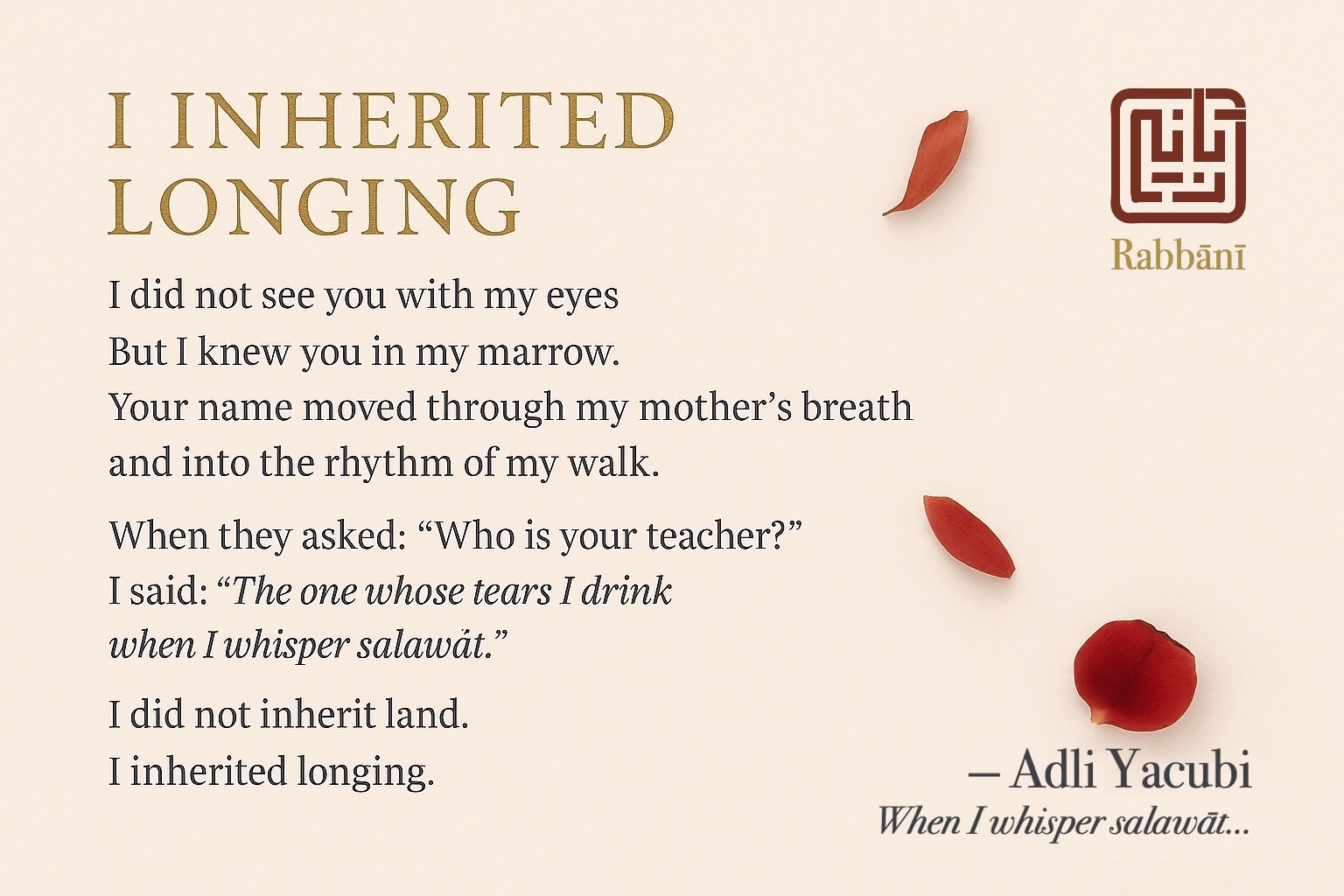
    Take for example this poem, I Inherited Longing:

    I did not see you with my eyes
    But I knew you in my marrow.
    Your name moved through my mother’s breath
    and into the rhythm of my walk.

    When they asked: “Who is your teacher?”
    I said: “The one whose tears I drink
    when I whisper salawāt.”

    I did not inherit land.
    I inherited longing.

    This is not biography. It is embodiment.

    Across Cape Town and Johannesburg, poets still recite verses that draw the Prophet ﷺ close — not as distant figure, but as intimate companion. This is how many of us came to know him: not through doctrine alone, but through dhikr, dreams, rhythm, and rhyme.


    III. The Prophet Among the People — Salawāt and Everyday Sunnah

    If sīrah shapes our public imagination and verse stirs our hearts, then the most enduring presence of the Prophet ﷺ lies not in the pages of a book, but in the lived habits of South African Muslims. In Cape Town especially, his memory is invoked not only in grand commemorations but in the daily, quiet acts of care, courtesy, and devotion.

    From the kettle always on the boil to the salawāt murmured in pre-dawn hours, the Prophet’s ﷺ legacy breathes through a tradition of service and subtlety. One sees his trace in janāzah preparations, in unspoken generosity, and in how the kitchen is cleaned before Maghrib. These are not mere habits. They are sacred echoes — practices with deep Prophetic roots.

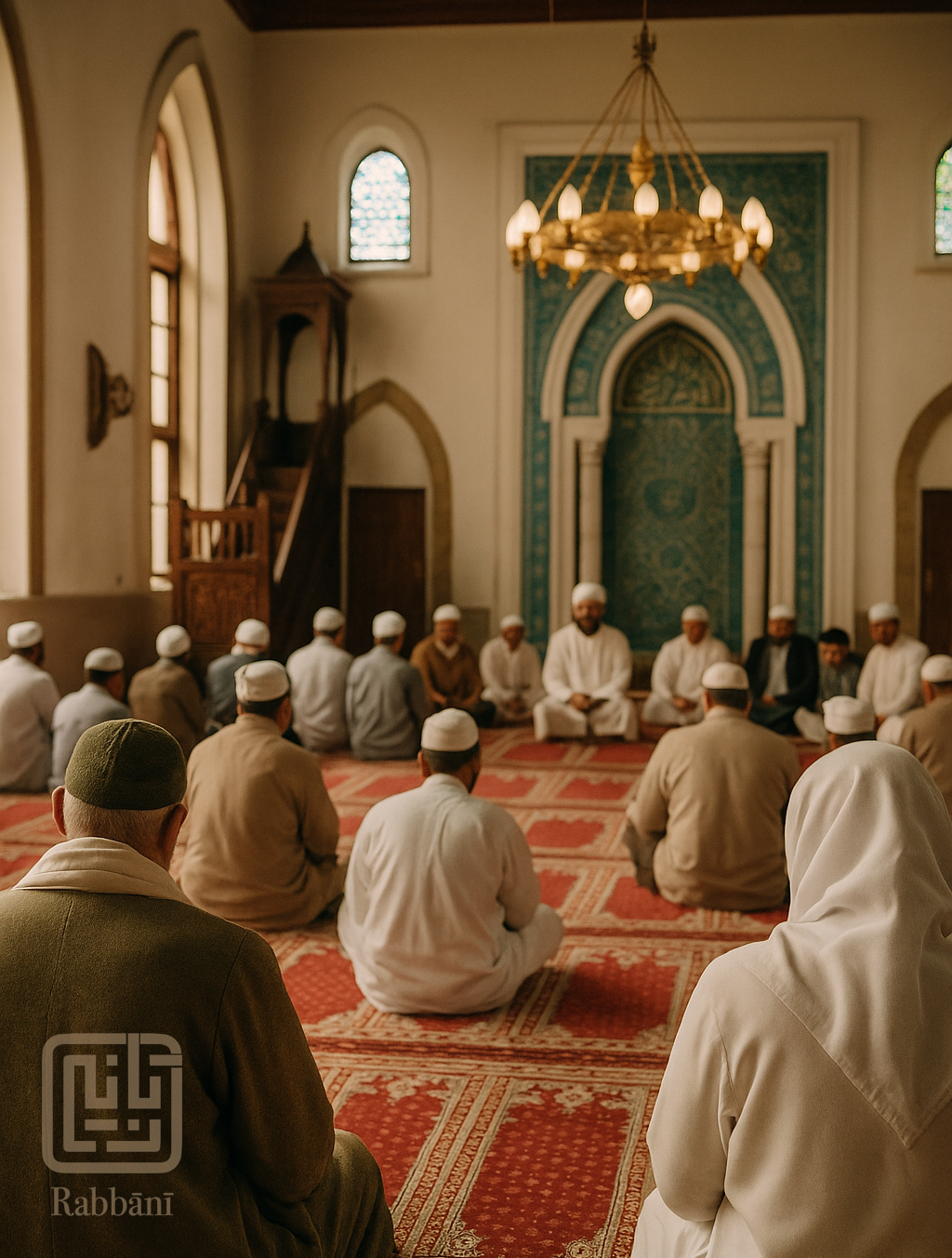
    Among the Cape’s most enduring spiritual inheritances is the Ratib al-Haddād, chanted for decades — if not centuries — in mosques and homes. This litany, associated with the Ba ʿAlawī tradition of Hadhramaut, Yemen, is recited rhythmically, often in gatherings after Maghrib or ‘Ishā’. Alongside it, a particular standing salawāt is recited with heartfelt rhythm, in the deep belief that the light and rūḥ of the Prophet ﷺ enters the space when we call upon him. This is not metaphor. It is presence.

    The Cape is also home to a rare spiritual text: an Afrikaans Ratib al-Haddād written in Arabic script. In it, Kaaps-Afrikaans phrases — such as Onse Here is Groot and Help ons met die dode — appear with Qur’anic reverence. The tasbīḥ, duʿā’, and barakah of our forebears were carried in a mother tongue now often dismissed. But they knew what they were doing: encoding devotion into daily speech, transmitting Prophetic rhythm in a creole born of struggle and longing.

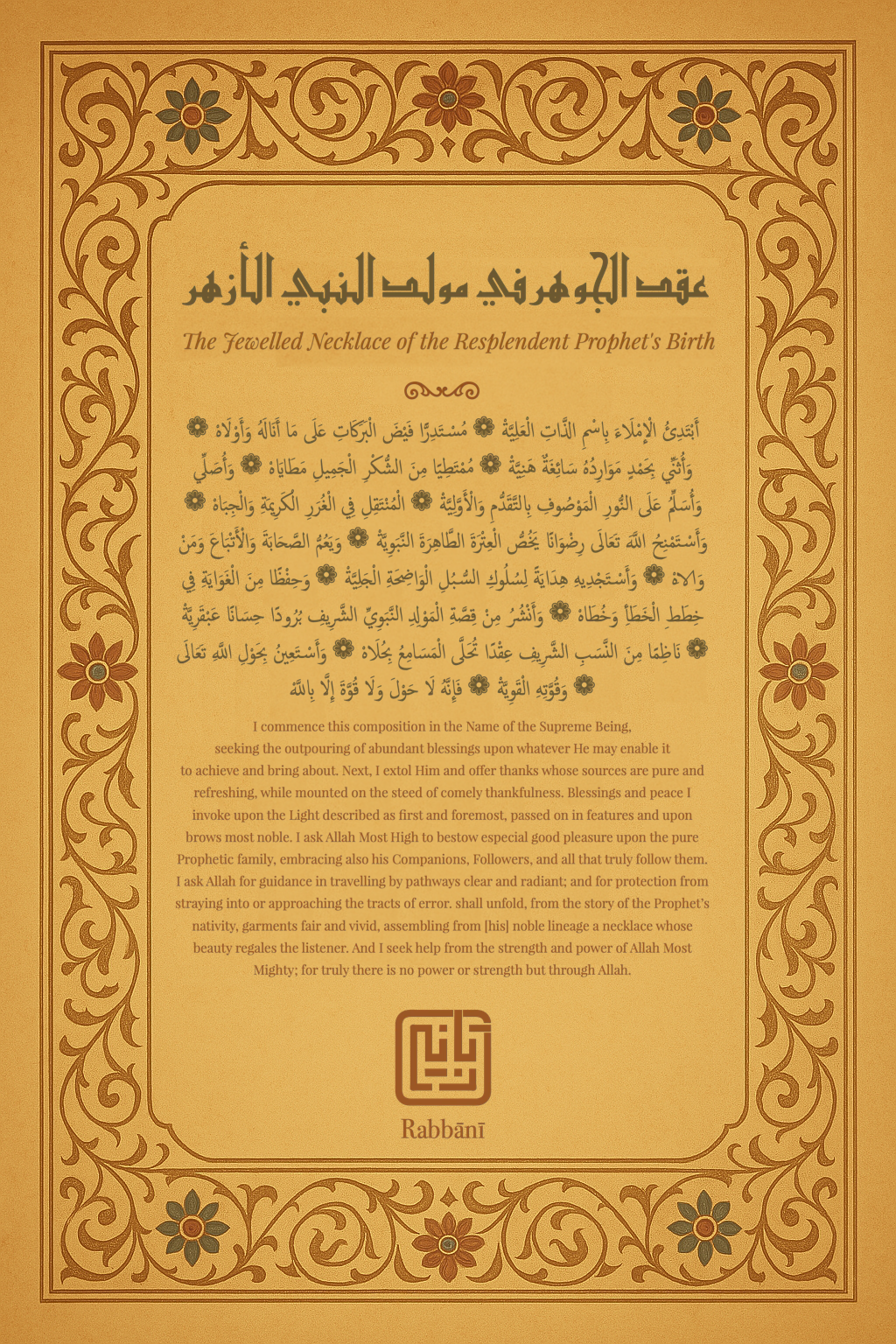
    Perhaps most evocatively, the Riwayat al-Birzanji — a melodic storytelling of the Prophet’s ﷺ birth and life — is performed during Moulood celebrations. My sisters would sing the first Riwayah in rich melody, sometimes referred to as laaghoe, or in Arabic terms, maqāmāt. These musical modes carried not only tune but transmission, passing down a soundscape of longing across generations.

    These gatherings — echoing devotional practices from South Asia, East and North Africa, and Southeast Asia — show that Cape Muslims are not an isolated outpost. We are part of a vast archipelago of Prophetic love, linked not only by history but by rhythm, breath, and remembrance.

    The First Riwayah composed by Sayyid Ja’far Ibn Hasan Al-Barzanji. In Arabic and English translation.

    IV. Kramats and Cape Saints: Circles of Protection

    If you trace a map around Cape Town, you will find sacred sites known as kramats — shrines of saintly Muslims, many of them exiled scholars or spiritual leaders, whose presence shaped the region’s barakah.

    Among the most revered is the kramat on Robben Island, believed to be the resting place of Tuang Mahmud Moturu, a 17th-century imam from Indonesia exiled by the Dutch. According to oral tradition, he carried with him the Qur’an and the example of the Prophet ﷺ. Even Nelson Mandela is said to have visited the kramat while imprisoned — a quiet act of respect for the spiritual presence that surrounded him.

    These kramats, stretching from Robben Island to Constantia, Faure to Bain’s Kloof, form what many refer to as a Circle of Islam, a protective perimeter believed by many Cape Muslims to spiritually guard the city. Even today, before departing for Hajj, many families visit these shrines to offer fātiḥah, seeking barakah and requesting the intercession of these tuangs — elder scholars and saints who represent a spiritual lineage of struggle, exile, remembrance, and return.

    It is no accident that these saints were also poets, teachers, and bearers of the sunnah. Their legacies weave the political with the spiritual, the literary with the lived. They stand as embodied representations of Prophetic devotion: not merely followers, but inheritors — those who carried the scent, the sound, and the story of the Beloved ﷺ into the soil of the Cape.

    These shrines are not merely gravesites. They are circles of remembrance. People visit with incense and duʿā’. Children are told stories. Salawāt is recited softly in the wind. In these spaces, the Prophet’s ﷺ spirit is invoked not as metaphor, but as living memory — guiding, protecting, witnessing.


    V. The Prophet at the Table

    When guests arrive in Cape Muslim homes, the first word is often “Ahlan wa sahlan.” It means “Welcome,” but more than that, it means: “Come as one whose path has been made smooth.” This is the spirit of the Prophet ﷺ at the table.

    Food is sacred here. When someone leaves for Hajj, families gather to recite salawāt and Qur’an. At weddings, a murmur of salawāt often follows the couple as they walk out — not choreographed, just habit. These are rhythms inherited, not invented.

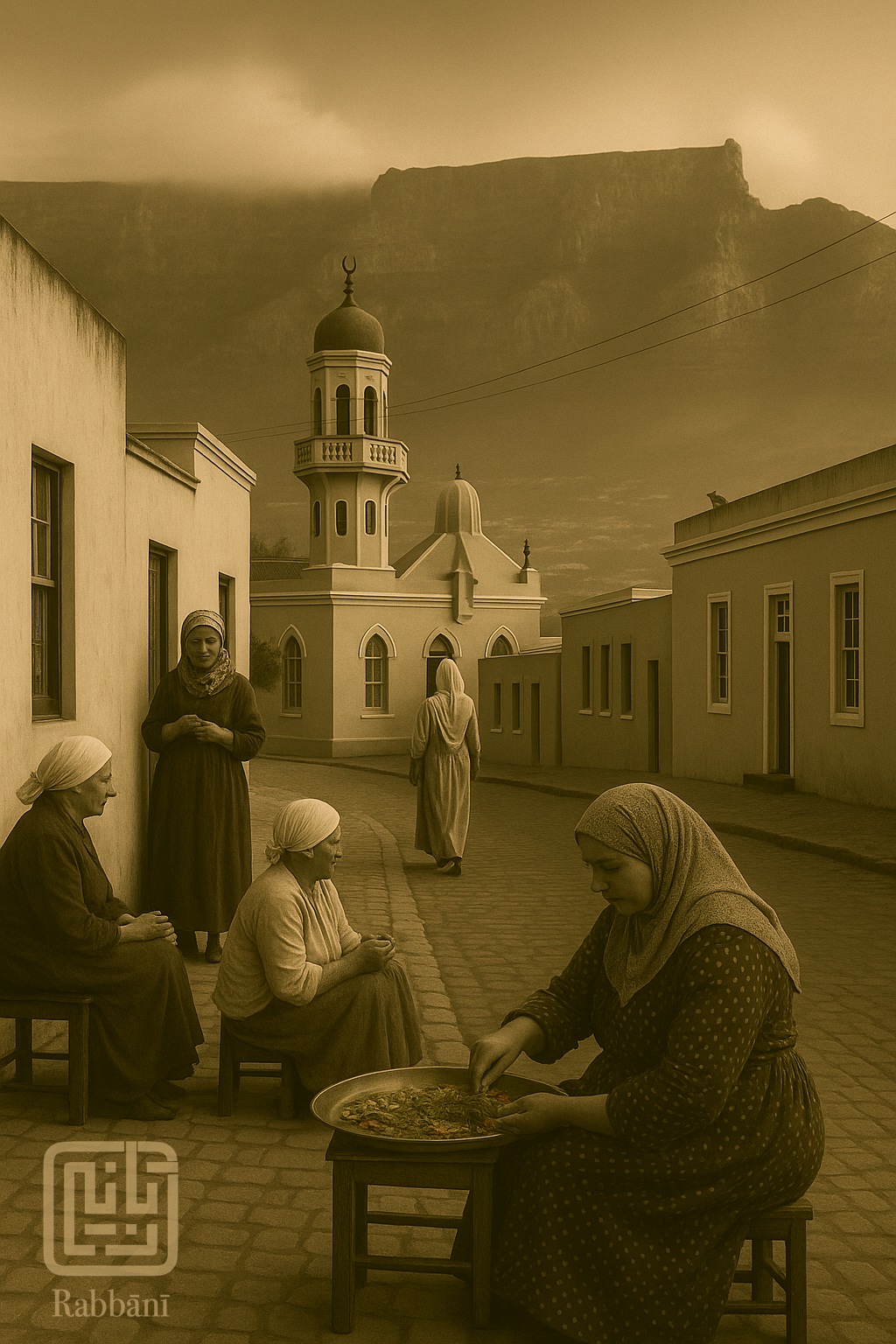
    One of the most fragrant practices is the rampies sny — the cutting and perfuming of rose petals and leaves in preparation for the Moulood. Elders and children sit together, scenting the petals with rosewater, folding them into small cloths, whispering praises. It is not performance. It is love.

    The Prophet ﷺ is not only remembered here. He is welcomed — into the threshold, into the breath, into the heart of the home.


    Conclusion: The Prophet in Our Veins

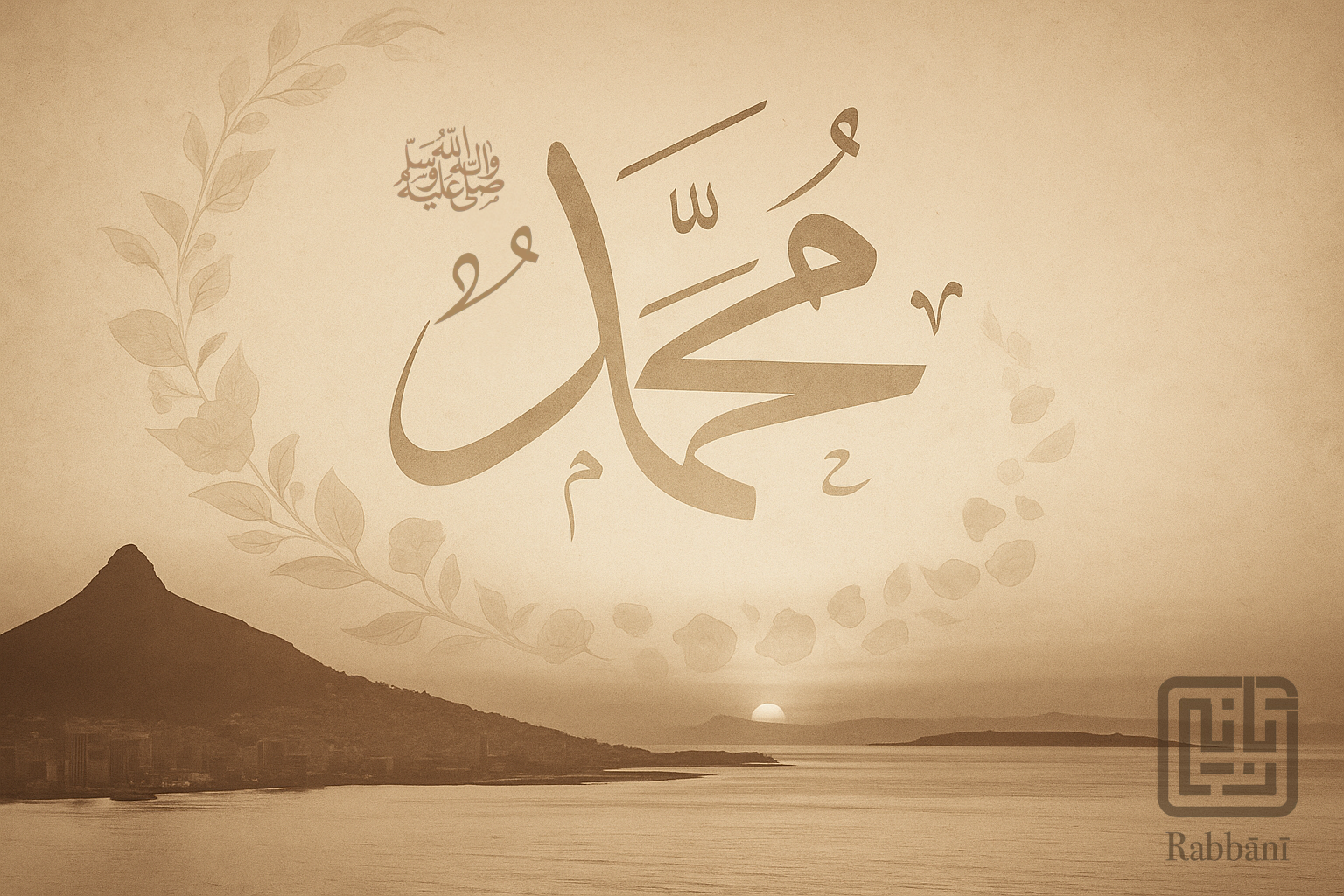
    Prophet Muhammad ﷺ is with us — in scent, sound, and song. He is in our veins.
    Pic: Shafiq Morton

    We began with the idea that the Prophet Muhammad ﷺ is not a distant figure. Not only in the libraries, not only in the inherited manuscripts or well-attended Mawlid halls. He walks with us still — in our struggles for justice, in our poetry of longing, and in the subtle ways we greet, grieve, and gather.

    In South Africa — and especially in the Cape — this presence is not always announced from the pulpits or debated in institutions. It is poured into tea. It is stitched into janāzah cloth. It is recited in whispered salawāt and sung in melodies passed down from mother to daughter, uncle to nephew.

    The Prophet’s ﷺ legacy here has always been both principled and poetic — shaped by anti-apartheid resistance as much as by spiritual yearning. And in the rampies of Moulood, the maqāmāt of the Riwayah, and the rhythm of the Afrikaans Ratib, we find not just echoes of his name, but traces of his light.

    He is with us — in scent, sound, and song. He is in our veins.


    PostScript

    Here is a beautiful salawāt from Salat an-Nuraniyya of Ahmad al-Badawi; also called Salawat Badawi Kubra…

    O Allah! Exalt, greet and bless our master and liege lord Muḥammad, the Tree of Original Light, the Sparkle of the Handful of Divine Mercy, the Best of All Humankind, the Noblest of Physical Frames, the Vessel of the Lord’s Secrets and Storehouse of the Sciences of the Elect, the Possessor of the Original Divine Grasp, Resplendent Grace, and Uppermost Rank, under whose flag line up all the prophets, so that they are from him and point to him. 

    🌿

  • The Forgotten Tongue of Remembrance

    The Forgotten Tongue of Remembrance

    The Forgotten Tongue of Remembrance

    Afrikaans in Arabic Script and the Ratib al-Haddad

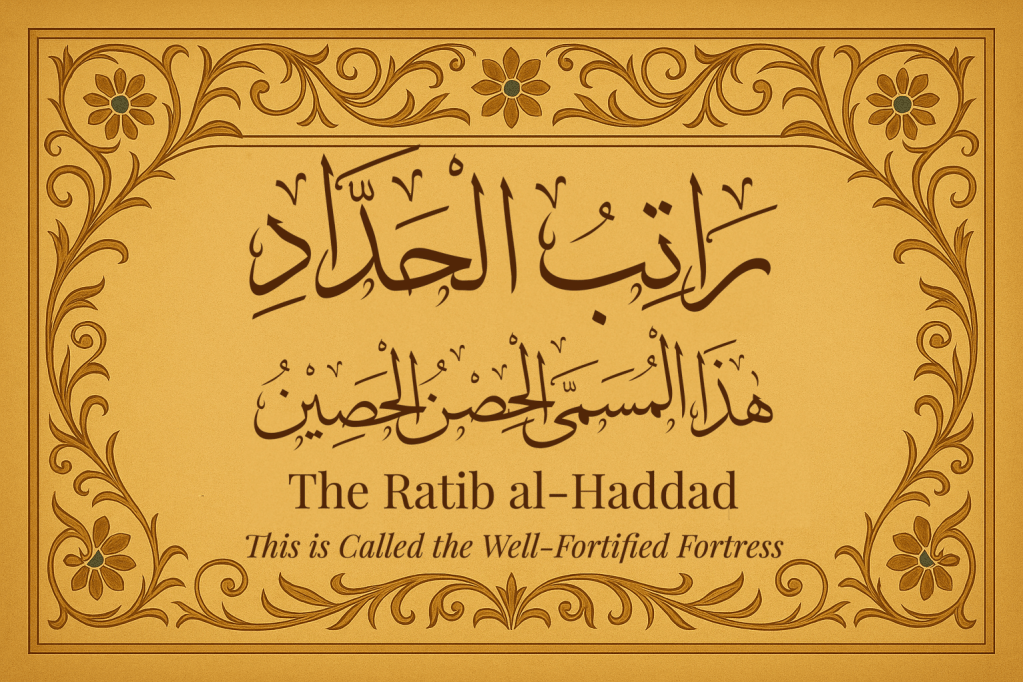
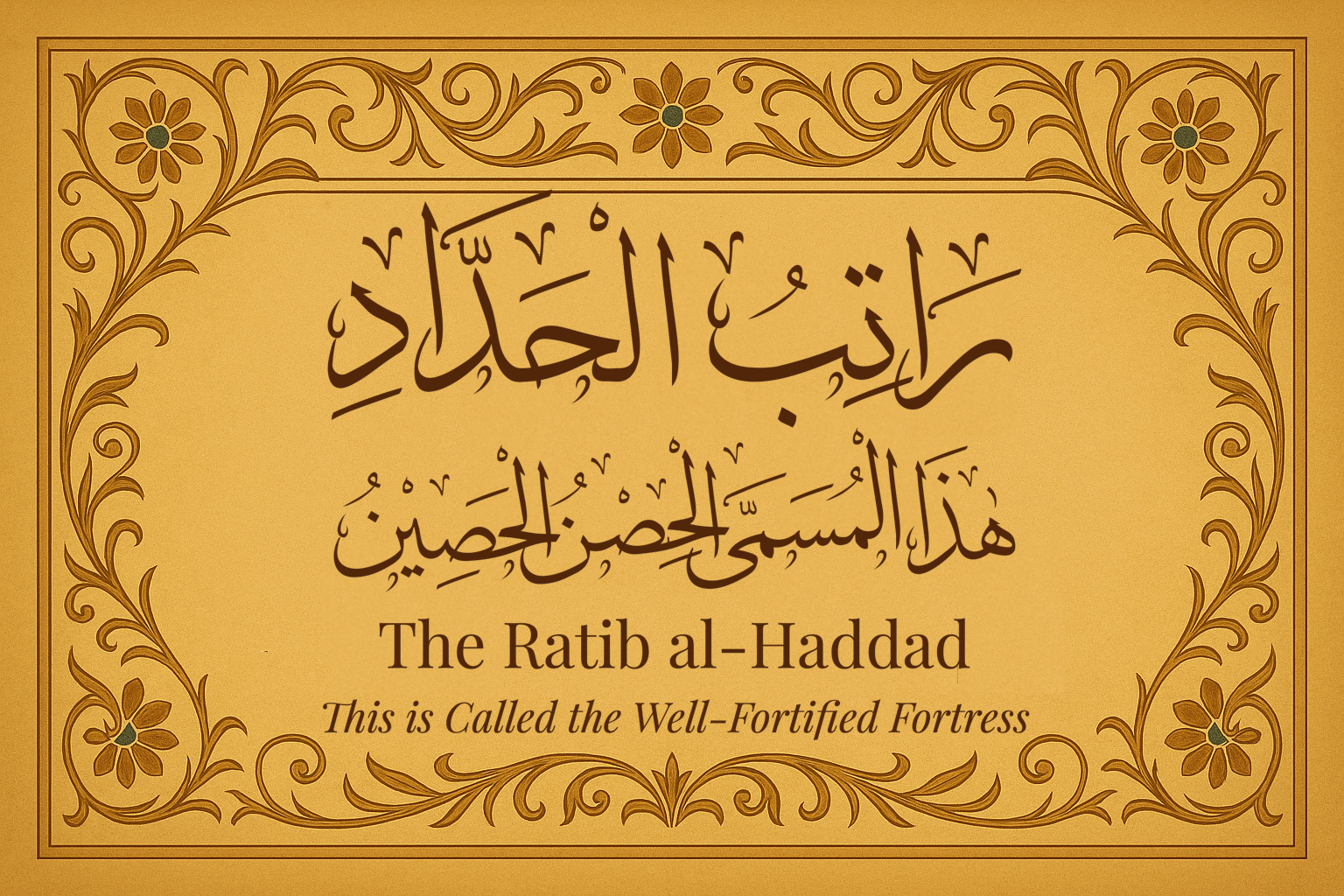
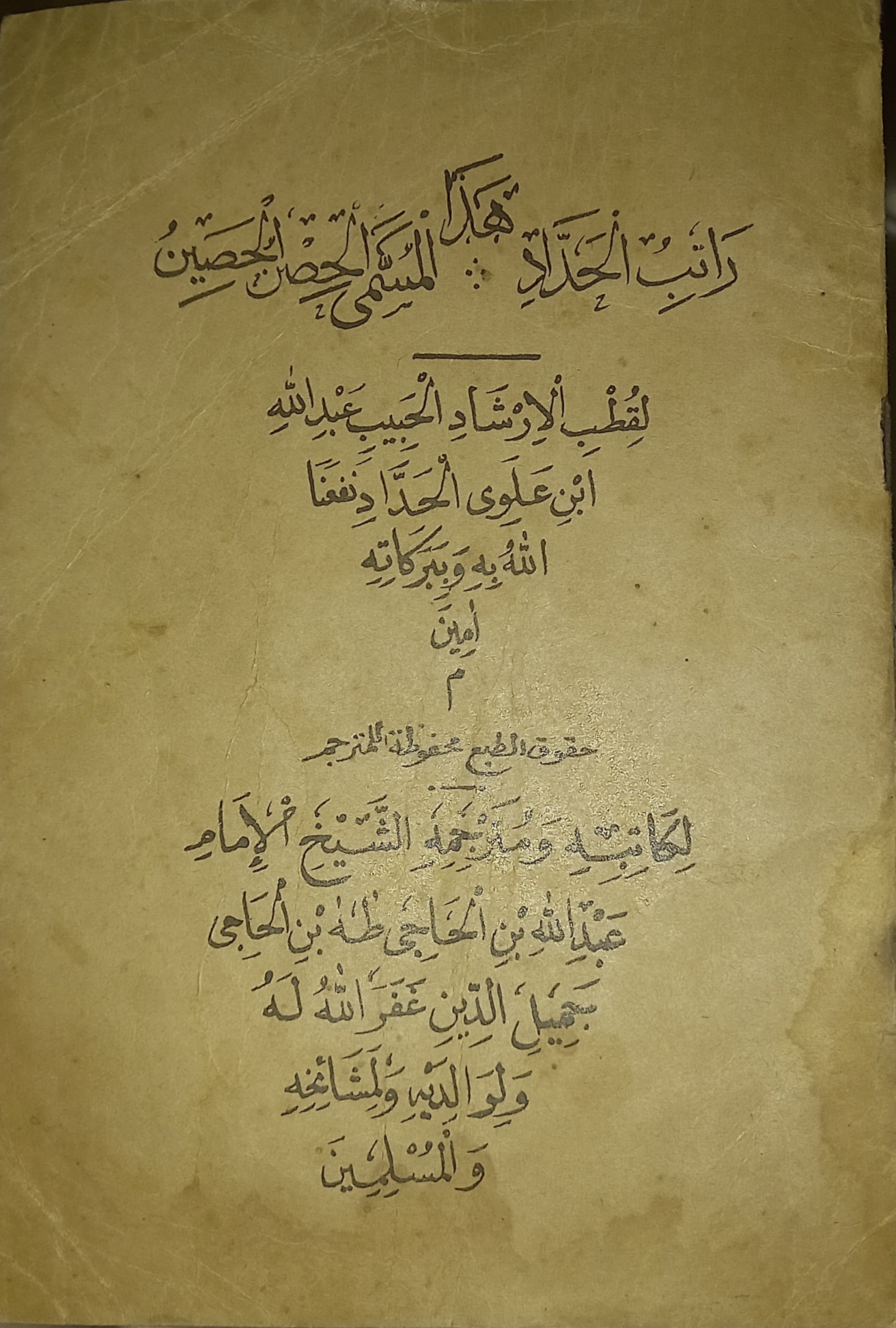
    Bismillah. Among the rarest cultural gems of the Cape is this handwritten or printed Ratib al-Haddad in Arabic script — and beneath each sacred verse, a transliteration and translation in Afrikaans, also in Arabic script. This devotional work bears the title:

    رَاتِبُ الْحَدَّادِ
    هَذَا الْمُسَمَّى الْحِصْنُ الْحَصِيْنُ
    The Ratib al-Haddad – This is Called the Well-Fortified Fortress.

    It is more than just a document — it is a linguistic relic, a spiritual practice, and a memory map of how Qur’anic dhikr was carried across generations, even when Arabic as a language was no longer spoken fluently. The presence of Afrikaans — lovingly scribed in Arabic letters — reminds us that remembrance found its voice even in colonised tongues. This text is proof: the Divine was praised in the language of those who suffered, resisted, and healed.

    This is no ordinary translation. It is a trace of the Cape’s earliest Muslim educational systems, where a now-suppressed form of Kaapse Afrikaans was used to teach, explain, and transmit the Qur’an and dhikr — long before formal Arabic learning was accessible.

    This copy, sourced and shared by Sheikh Jamiel Abrahams, is one of the most exquisite I have seen. It is more than a relic. It is the visual embodiment of a living legacy.

    The Arabic-AfriKaaps hybrid in these pages is not just linguistics — it is resistance, devotion, and adaptation in motion. A tongue formed in the shadows of empire, now remembered in the radiance of dhikr.

    This post offers a glimpse — a few carefully selected lines, an image scroll, and finally, the full PDF. We will not translate every line, for that would dilute the power of seeing, hearing, and feeling them in their original form. But we will linger on a few pages to taste the spiritual flavour of this inheritance.

    One of the first lines to appear in the Ratib is the luminous opening:

    بِسْمِ اللهِ الرَّحْمـٰنِ الرَّحِيمِ
    Bismillāhir-Raḥmānir-Raḥīm
    In die Naam van Allah, die Meest Genadige, die Meest Barmhartige

    Even this sacred formula, transliterated and translated into Afrikaans using Arabic script, glows with the care and creativity of the Cape’s early Muslim scribes. It reveals how rahmah—Divine Mercy—was not only recited, but lovingly inscribed in the mother tongue of those who carried it. A tongue made tender through hardship, and made holy through remembrance.

    🕯️ Download the complete PDF of the Afrikaans–Arabic Ratib al-Haddad here.


    Epilogue: The Ink of the Ancestors

    These pages are not just recitations — they are archives of survival.

    The Cape’s Muslim community, born out of bondage and exile, did not merely memorize. They engraved, translated, sounded out — in their own accents, on their own terms. They bent Arabic script to capture the cadence of their Afrikaans. They bent Afrikaans to serve the memory of Allah.

    In this Ratib, we witness the divine echo across generations.

    To read it is to hear our grandparents whispering in candlelight, gathering children close, turning pages that looked like home.

    This is not nostalgia. It is testimony.

    May we become worthy inheritors of their voices.


    Living Chains: A Note of Gratitude and Transmission

    We are humbled to acknowledge those who have preserved and transmitted this treasure across generations.

    Our deep thanks to Zaid Nordien, who reminded us that this version of the Ratib al-Haddad — written in Arabic-Afrikaans script — was transliterated and rendered by Shaykh Taha Gamieldien, the grandfather of Shaykh Faiek Gamieldien. It was widely copied and circulated in Cape Town, including in black-and-white prints. Zaid shared that his own journey began at the age of three, attending Gadat with his uncle, the late Boeta Faldie Behardien, and that his grandfather, Galiefa Ebrahim Nordien (Brayma Bokbaard), had received ijāzah for the Ratib from Shaykh Ismail Ganief. His father also received ijāzah from Shaykh Omar Abdullah of the Comoros — known throughout Africa as Mwyini Baraka — as well as from the late Shaykh Muhammad Alawi al-Maliki.

    And here the circle returns home:

    Zaid Nordien relayed that Shaykh Omar Abdullah gave express permission to grant ijāzah to all who recite the Ratib, all who love it, and all who seek it. He conveyed this instruction to me personally in Glen Austin, Midrand, during my recovery from a stroke. Now, alḥamdulillāh, it is finally recorded.

    Even more striking: the ancestor of this very Shaykh — the deposed Sultan Abdallah II ibn Alawi of Anjouan, from the noble Ba ʿAlawī lineage — was exiled to Cape Town around 1834. Local oral tradition holds that he met Carel Pelgrim (Hassanuddin), the Cape’s first known Muslim pilgrim to Makkah, and may have encouraged him on his sacred journey. The silsila, both spiritual and historical, reveals itself in astonishing ways — alive, pulsing, and unfolding across time.


    The Salawāt of Mwyini Baraka

    We close with a salutation upon the Prophet ﷺ, taught by Shaykh Omar Abdullah — a direct descendant of the Messenger ﷺ through Sayyid Abu Bakr bin Salim.

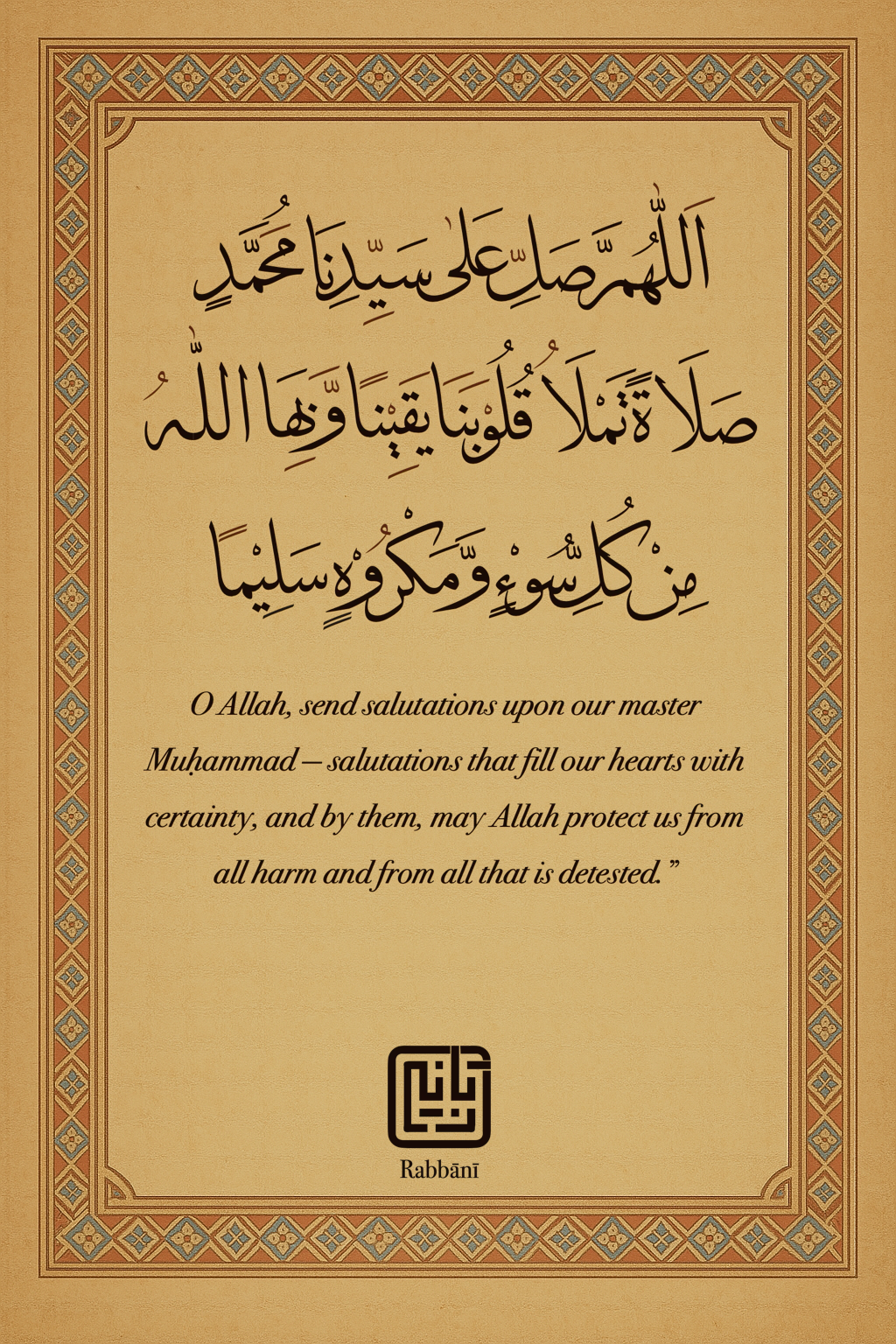
    Here is the salawāt he shared:

    Arabic:

    اللّهُمَّ صَلِّ عَلَى سَيِّدِنَا مُحَمَّدٍ صَلَاةً تَمْلَأُ قُلُوبَنَا يَقِينًا وَبِهَا اللهُ مِنْ كُلِّ سُوءٍ وَمَكْرُوهٍ سَلِيمًا

    Transliteration:

    Allāhuma ṣalli ʿalā Sayyidinā Muḥammadin ṣalātan tamlaʾu qulūbanā yaqīnan
    wa bihā Allāhu min kulli sūʾin wa makrūhin salīm
    ā.

    Translation:

    “O Allah, send salutations upon our master Muḥammad — salutations that fill our hearts with certainty, and by them, may Allah protect us from all harm and from all that is detested.”


    📜 Other Paths of Remembrance

    This scroll is only one leaf in a growing tree of spiritual memory.

    If this piece stirred something in you, you may also wish to explore:

    🌿 Tamat: A Sacred Completion, A Living Beginning – A reflection on the Cape tradition of tamat and Qur’anic memorisation
    🌿 The Ratib al-Haddad: A Symphony of Spiritual Resilience – A celebration of the sonic and spiritual power of this litany
    🌿 The Verse That Faces Outward – A meditative scroll on the hidden verses engraved above the Rawḍah, and the inner legacy of Imām al-Ḥaddād

    These are threads in a larger weave — remembering the divine through the tongues of our mothers, the melodies of our fathers, and the whispered prayers of the unseen saints who still walk among us.