Tag: Ratib al-Haddad

  • The Forgotten Tongue of Remembrance

    The Forgotten Tongue of Remembrance

    The Forgotten Tongue of Remembrance

    Afrikaans in Arabic Script and the Ratib al-Haddad
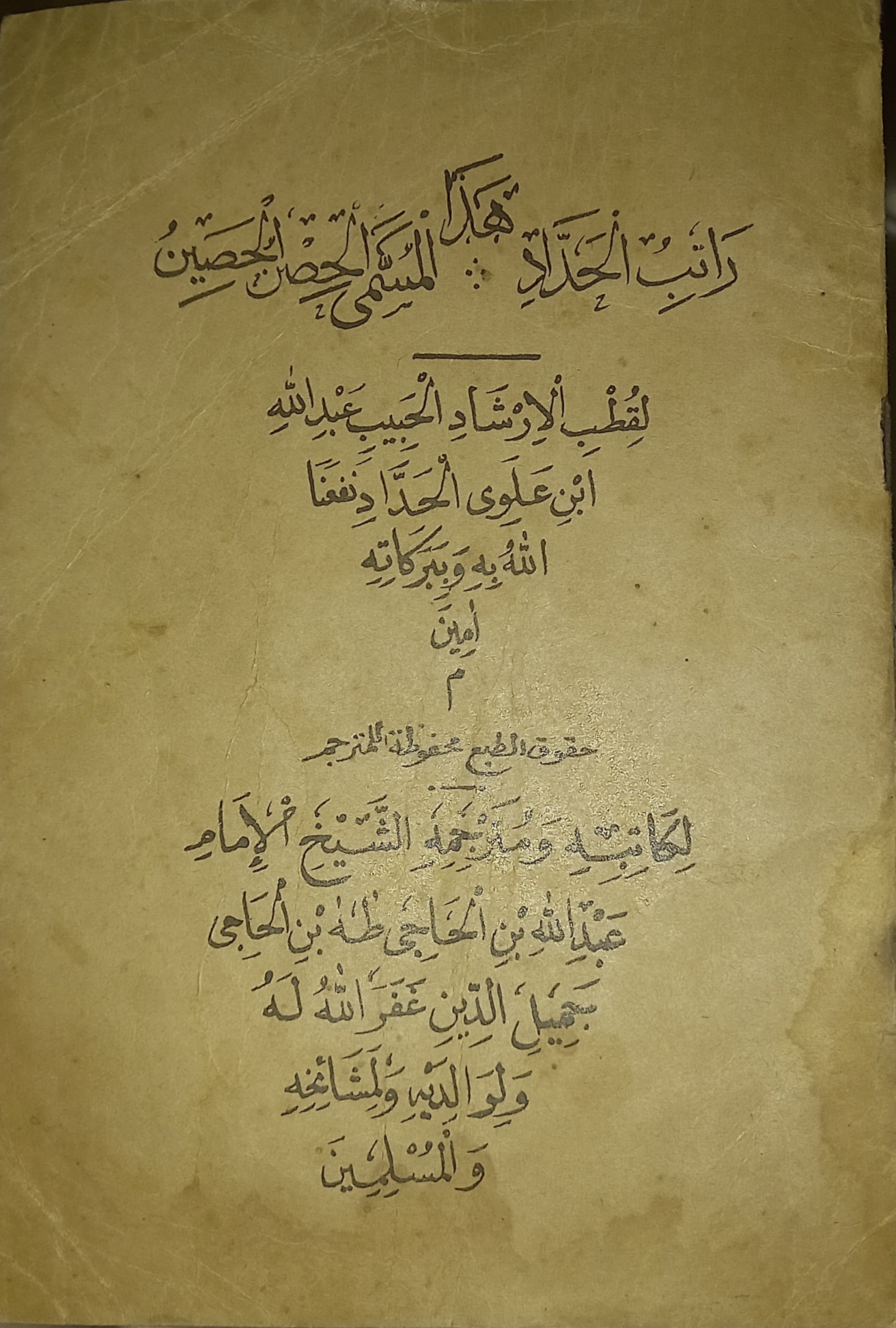
    Bismillah. Among the rarest cultural gems of the Cape is this handwritten or printed Ratib al-Haddad in Arabic script — and beneath each sacred verse, a transliteration and translation in Afrikaans, also in Arabic script. This devotional work bears the title:

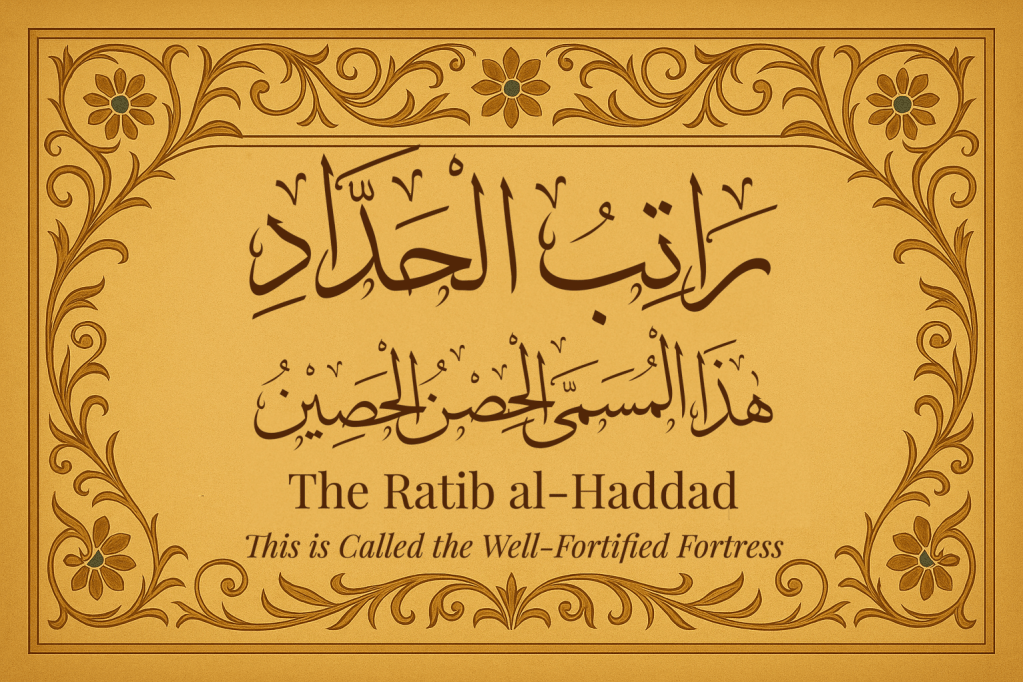
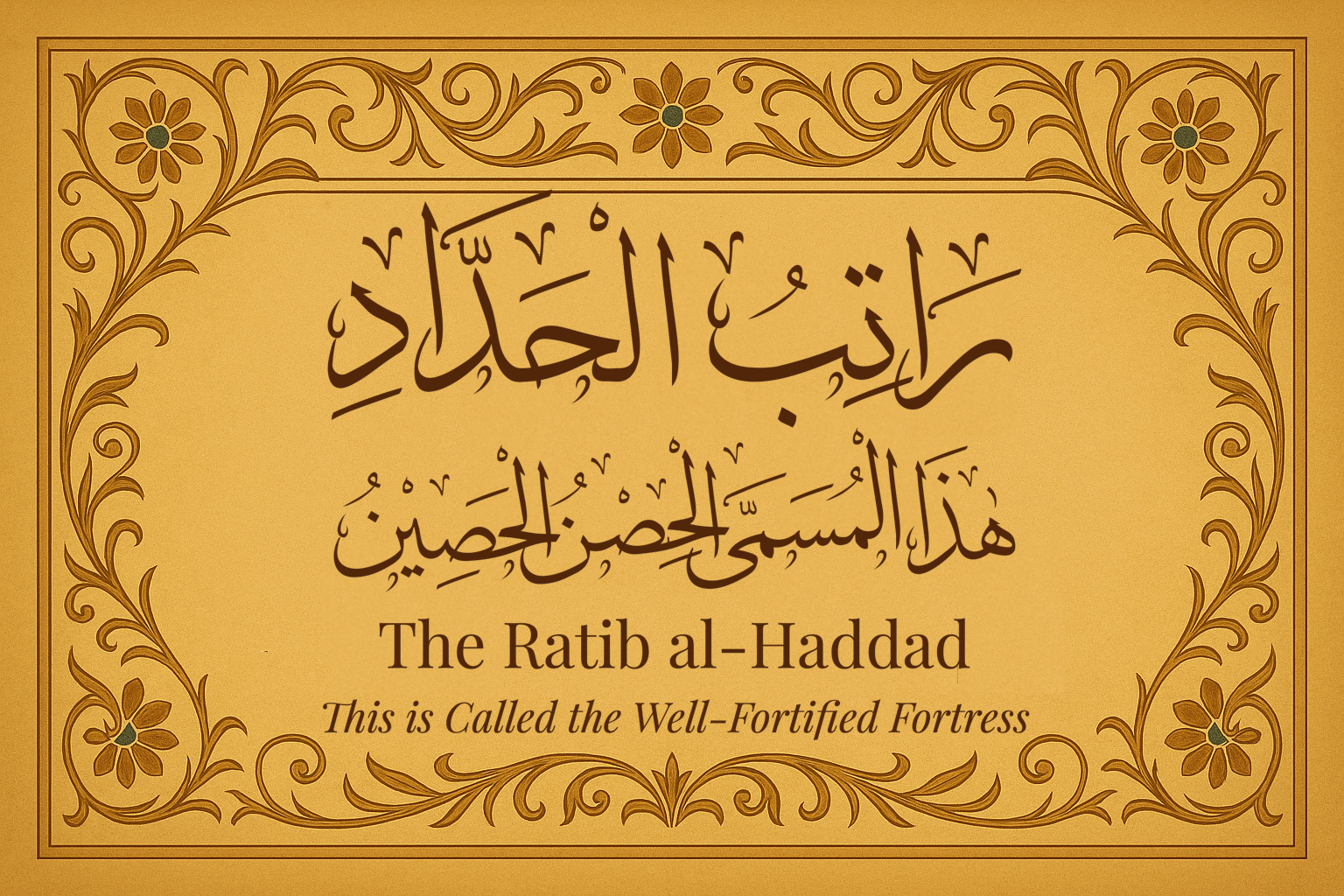
    رَاتِبُ الْحَدَّادِ
    هَذَا الْمُسَمَّى الْحِصْنُ الْحَصِيْنُ
    The Ratib al-Haddad – This is Called the Well-Fortified Fortress.

    It is more than just a document — it is a linguistic relic, a spiritual practice, and a memory map of how Qur’anic dhikr was carried across generations, even when Arabic as a language was no longer spoken fluently. The presence of Afrikaans — lovingly scribed in Arabic letters — reminds us that remembrance found its voice even in colonised tongues. This text is proof: the Divine was praised in the language of those who suffered, resisted, and healed.

    This is no ordinary translation. It is a trace of the Cape’s earliest Muslim educational systems, where a now-suppressed form of Kaapse Afrikaans was used to teach, explain, and transmit the Qur’an and dhikr — long before formal Arabic learning was accessible.

    This copy, sourced and shared by Sheikh Jamiel Abrahams, is one of the most exquisite I have seen. It is more than a relic. It is the visual embodiment of a living legacy.

    The Arabic-AfriKaaps hybrid in these pages is not just linguistics — it is resistance, devotion, and adaptation in motion. A tongue formed in the shadows of empire, now remembered in the radiance of dhikr.

    This post offers a glimpse — a few carefully selected lines, an image scroll, and finally, the full PDF. We will not translate every line, for that would dilute the power of seeing, hearing, and feeling them in their original form. But we will linger on a few pages to taste the spiritual flavour of this inheritance.

    One of the first lines to appear in the Ratib is the luminous opening:

    بِسْمِ اللهِ الرَّحْمـٰنِ الرَّحِيمِ
    Bismillāhir-Raḥmānir-Raḥīm
    In die Naam van Allah, die Meest Genadige, die Meest Barmhartige

    Even this sacred formula, transliterated and translated into Afrikaans using Arabic script, glows with the care and creativity of the Cape’s early Muslim scribes. It reveals how rahmah—Divine Mercy—was not only recited, but lovingly inscribed in the mother tongue of those who carried it. A tongue made tender through hardship, and made holy through remembrance.
    🕯️ Download the complete PDF of the Afrikaans–Arabic Ratib al-Haddad here.


    Epilogue: The Ink of the Ancestors

    These pages are not just recitations — they are archives of survival.

    The Cape’s Muslim community, born out of bondage and exile, did not merely memorize. They engraved, translated, sounded out — in their own accents, on their own terms. They bent Arabic script to capture the cadence of their Afrikaans. They bent Afrikaans to serve the memory of Allah.

    In this Ratib, we witness the divine echo across generations.

    To read it is to hear our grandparents whispering in candlelight, gathering children close, turning pages that looked like home.

    This is not nostalgia. It is testimony.

    May we become worthy inheritors of their voices.


    Living Chains: A Note of Gratitude and Transmission

    We are humbled to acknowledge those who have preserved and transmitted this treasure across generations.

    Our deep thanks to Zaid Nordien, who reminded us that this version of the Ratib al-Haddad — written in Arabic-Afrikaans script — was transliterated and rendered by Shaykh Taha Gamieldien, the grandfather of Shaykh Faiek Gamieldien. It was widely copied and circulated in Cape Town, including in black-and-white prints. Zaid shared that his own journey began at the age of three, attending Gadat with his uncle, the late Boeta Faldie Behardien, and that his grandfather, Galiefa Ebrahim Nordien (Brayma Bokbaard), had received ijāzah for the Ratib from Shaykh Ismail Ganief. His father also received ijāzah from Shaykh Omar Abdullah of the Comoros — known throughout Africa as Mwyini Baraka — as well as from the late Shaykh Muhammad Alawi al-Maliki.

    And here the circle returns home:

    Zaid Nordien relayed that Shaykh Omar Abdullah gave express permission to grant ijāzah to all who recite the Ratib, all who love it, and all who seek it. He conveyed this instruction to me personally in Glen Austin, Midrand, during my recovery from a stroke. Now, alḥamdulillāh, it is finally recorded.

    Even more striking: the ancestor of this very Shaykh — the deposed Sultan Abdallah II ibn Alawi of Anjouan, from the noble Ba ʿAlawī lineage — was exiled to Cape Town around 1834. Local oral tradition holds that he met Carel Pelgrim (Hassanuddin), the Cape’s first known Muslim pilgrim to Makkah, and may have encouraged him on his sacred journey. The silsila, both spiritual and historical, reveals itself in astonishing ways — alive, pulsing, and unfolding across time.

    The Salawāt of Mwyini Baraka

    We close with a salutation upon the Prophet ﷺ, taught by Shaykh Omar Abdullah — a direct descendant of the Messenger ﷺ through Sayyid Abu Bakr bin Salim.

    Here is the salawāt he shared:

    Arabic:

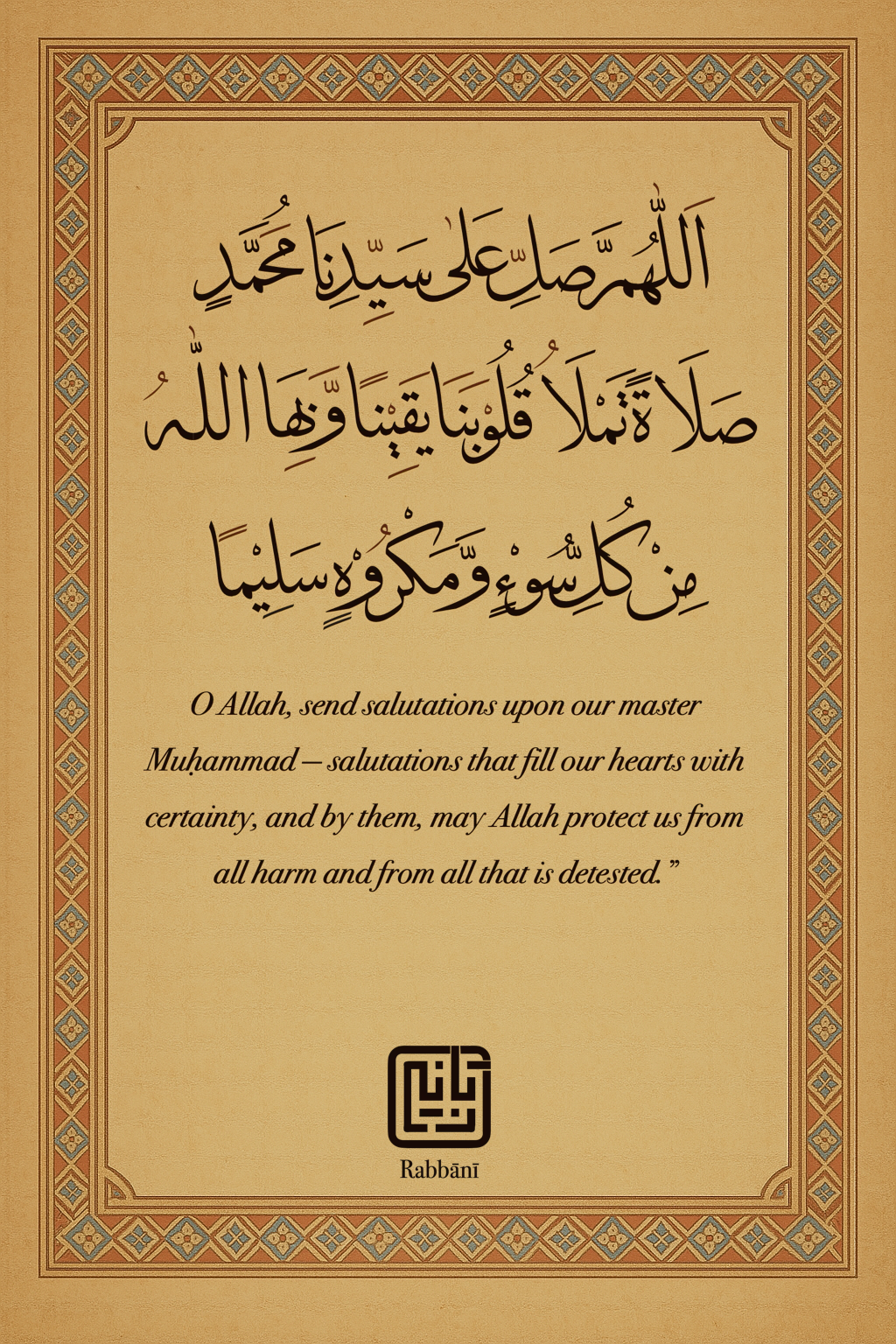
    اللّهُمَّ صَلِّ عَلَى سَيِّدِنَا مُحَمَّدٍ صَلَاةً تَمْلَأُ قُلُوبَنَا يَقِينًا وَبِهَا اللهُ مِنْ كُلِّ سُوءٍ وَمَكْرُوهٍ سَلِيمًا

    Transliteration:

    Allāhuma ṣalli ʿalā Sayyidinā Muḥammadin ṣalātan tamlaʾu qulūbanā yaqīnan
    wa bihā Allāhu min kulli sūʾin wa makrūhin salīm
    ā.

    Translation:

    “O Allah, send salutations upon our master Muḥammad — salutations that fill our hearts with certainty, and by them, may Allah protect us from all harm and from all that is detested.”


    📜 Other Paths of Remembrance

    This scroll is only one leaf in a growing tree of spiritual memory.

    If this piece stirred something in you, you may also wish to explore:

    🌿 Tamat: A Sacred Completion, A Living Beginning – A reflection on the Cape tradition of tamat and Qur’anic memorisation
    🌿 The Ratib al-Haddad: A Symphony of Spiritual Resilience – A celebration of the sonic and spiritual power of this litany
    🌿 The Verse That Faces Outward – A meditative scroll on the hidden verses engraved above the Rawḍah, and the inner legacy of Imām al-Ḥaddād

    These are threads in a larger weave — remembering the divine through the tongues of our mothers, the melodies of our fathers, and the whispered prayers of the unseen saints who still walk among us.
  • The Ratib al-Haddad: A Symphony of Spiritual Resilience

    The Ratib al-Haddad: A Symphony of Spiritual Resilience

    The Ratib al-Haddad: A Symphony of Spiritual Resilience

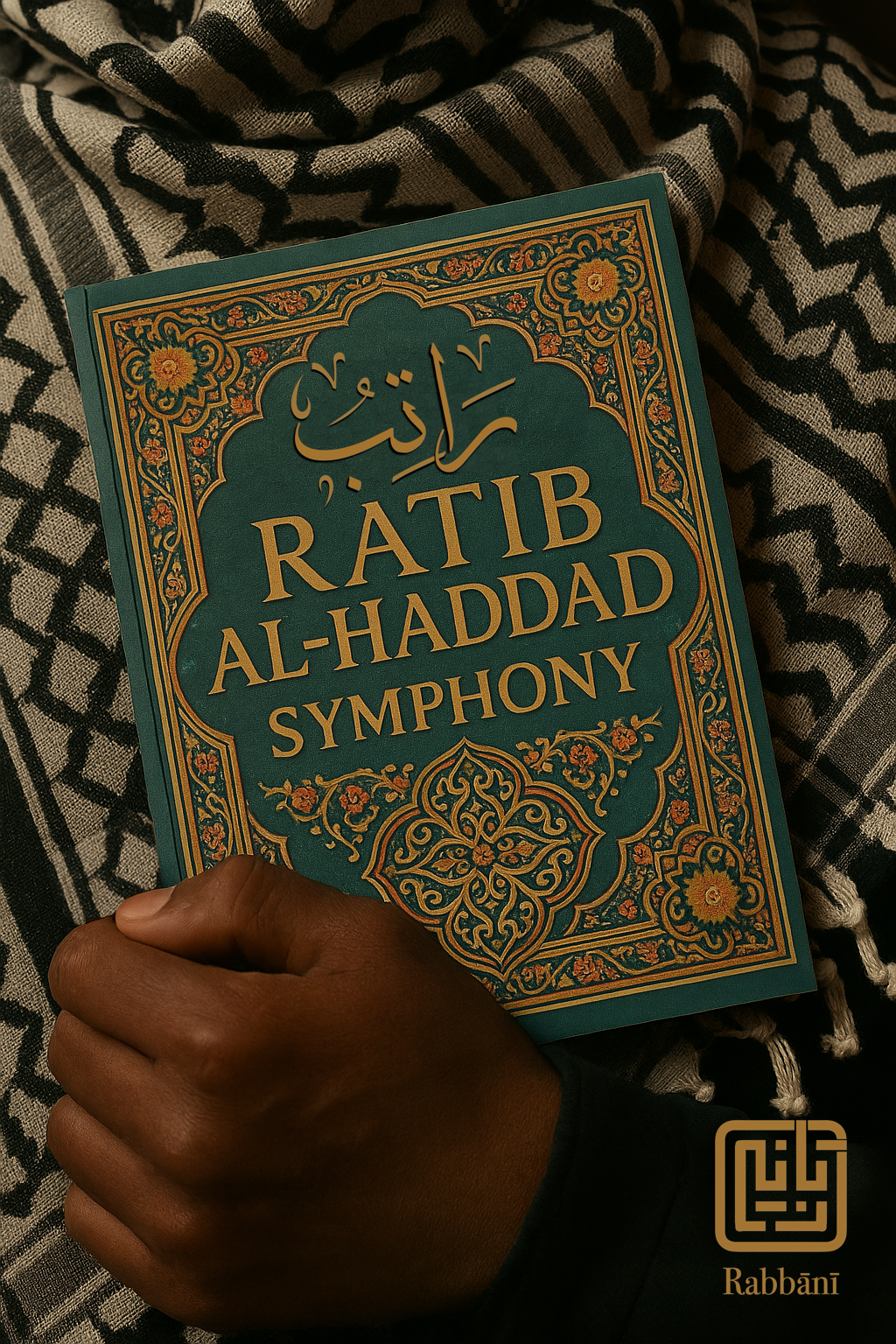
    Close-up of hand holding Ratib al-Haddad booklet with black-and-white keffiyeh

    Introduction

    In the centuries-old Cape Muslim tradition, the Rātib al-Ḥaddād stands as a spiritual symphony. Its composer, Imam ʿAbd Allāh ibn ʿAlawī al-Ḥaddād, drew upon a Qur’anic verse known as the Verse that Faces Outward at the Rawdah of the Prophet ﷺ, giving it a protective resonance. This rhythmic litany unfolds like movements of a musical masterpiece, each moment drawing the heart closer to Divine presence. Inspired by Imam al-Haddad’s mission to guide believers through fear and trial, the Ratib remains a living masterpiece of faith.


    Movement I: The Prelude of Protection

    O you who fear, gather at the gate of forgiveness; Bismillah like a banner above your heart, Ayatul Kursi as your armour, verses of Baqarah as your shield. In this dawn of remembrance, let salawat fall on your lips like rain upon a thirsty earth, and trust flow through your veins until your soul is clothed in light. This is the first movement: a prayer of protection woven from the very breath of Revelation.


    Movement II: The Rhythms of Remembrance

    Subḥānallāh, transcendence like the sky’s endless horizon; Alḥamdulillāh, gratitude flowing through every breath; Allahu Akbar, awe striking the heart; Lā ilāha illallāh, unity beyond all boundaries. These dhikr, recitations, rise and fall like ocean waves, polishing the mirror of the heart until it shines with trust and surrender.


    Movement III: The Pulse of Tawhid

    Al Maʿbūd, meaning The Worshipped One, calls the believer to recite Lā ilāha illallāh fifty times, each repetition chiseling away fear and confirming pure oneness. It circles the heart like a crown of certainty. The three Quls stand as guardians, their verses sealing every crack against doubt. This movement is a fortress of tawhid, where the soul forgets every other reliance and trusts only Allah.


    Movement IV: The Prayerful Crescendo

    Duas rise like incense, interlaced with Al-Fātiḥa, each plea a petition for healing, protection, mercy, and light. The tongue becomes a river of hope, carrying the soul to a calm shore. Here the believer surrenders every burden, resting in the assurance that Allah is the One who hears and responds.


    Closing Invocations

    • Al-Fātiḥa on the soul of our master, our beloved, our intercessor, the Messenger of Allah, Muhammad ibn Abdillah, his family, his Companions, his wives, and all his noble household.
    • Al-Fātiḥa on the soul of our master al-Muhajir Ahmad ibn Isa and his descendants.
    • Al-Fātiḥa on the soul of our great teacher, the jurist al-Muqaddam Muhammad ibn Ali Ba Alawi and his lineage.
    • Al-Fātiḥa on the souls of our noble Sufi masters wherever they may be, east or west, that Allah may raise their ranks.
    • Al-Fātiḥa on the soul of the compiler of the Ratib, the Axis of Guidance, Abdullah ibn Alawi al-Haddad and his family line.
    • Al-Fātiḥa on the souls of all the pious servants of Allah, our parents, our teachers, those who have rights upon us, and the believers who have passed away in this land.
    Decorative cover design for Ratib al-Haddad Symphony in traditional Islamic style

    Cape Ritual Practice

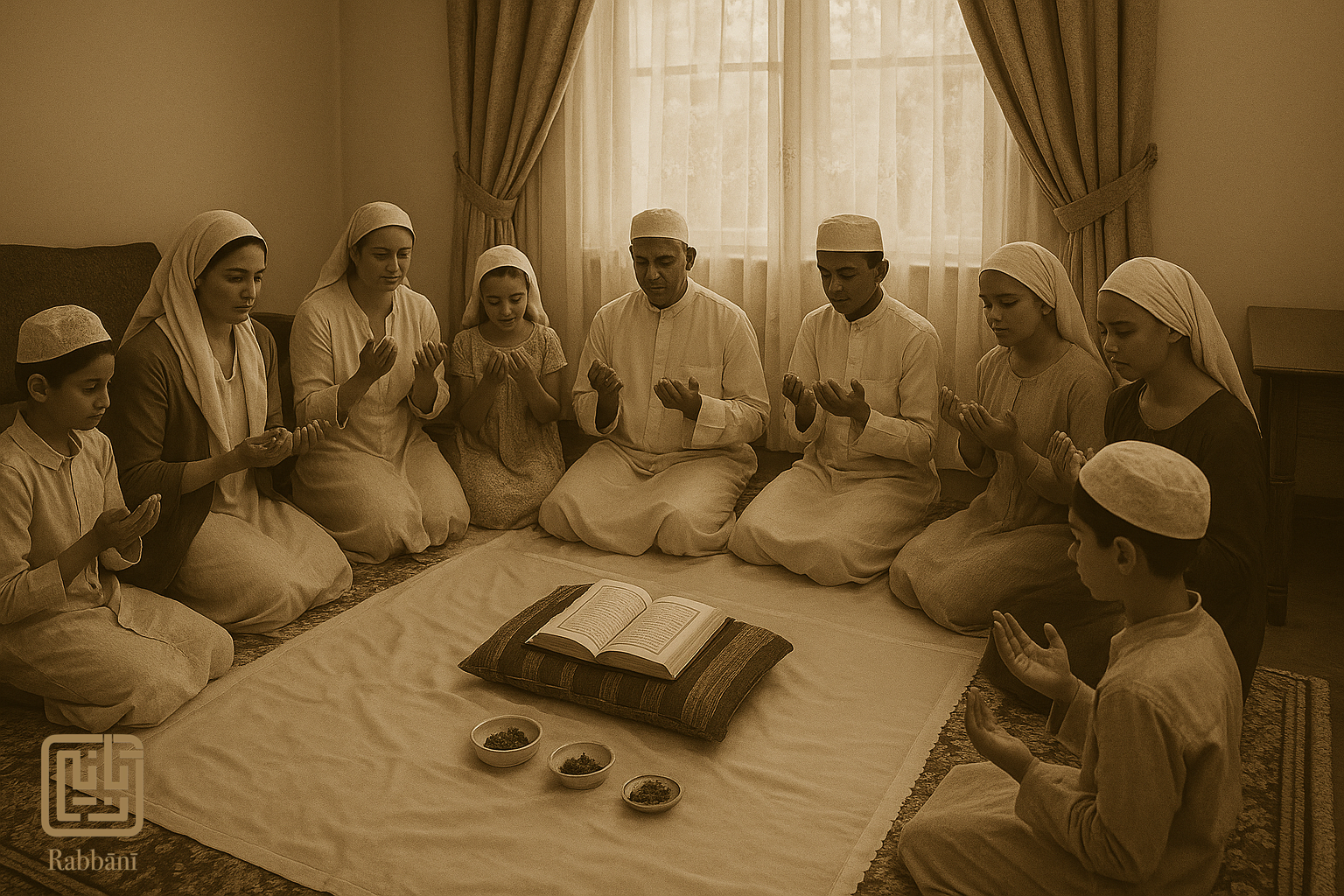
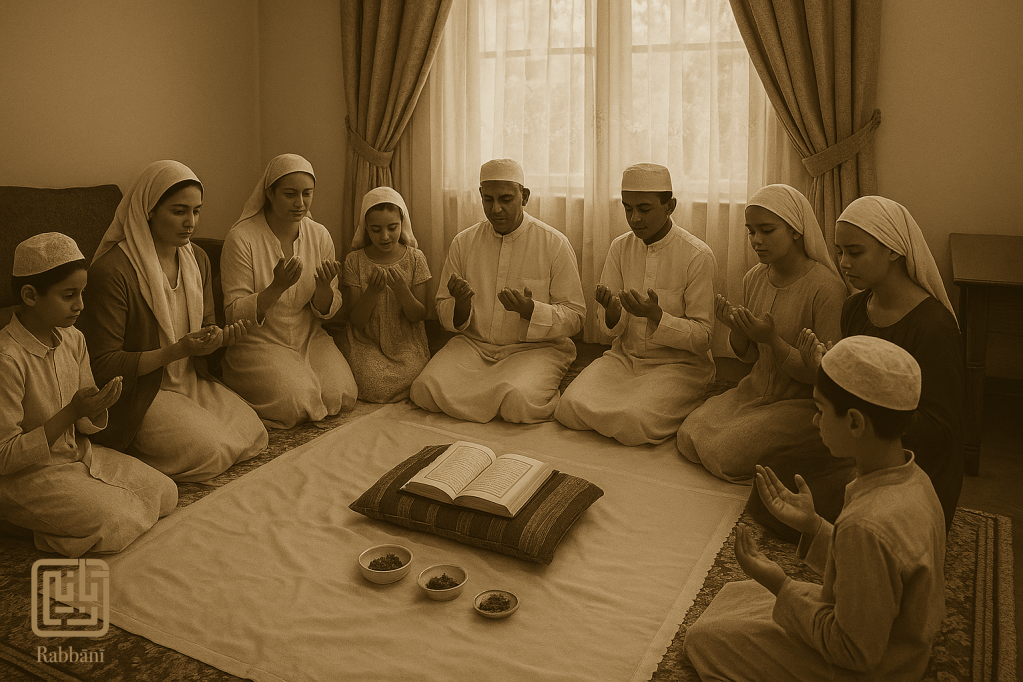
    In South Africa, especially in the Cape, families often recite the Ratib al-Haddad after a loved one passes away, beginning from the first night and continuing for seven nights, then gathering on the fortieth day, the hundredth day, and each year on the anniversary of the passing. The Ratib is also recited at birthdays, during Mawlud celebrations, generally every Thursday night, sometimes Sunday mornings, a week before weddings, at engagements (known as lambary), and at naming ceremonies (doekmal or doopmal). This tradition anchors the community in remembrance and prayers for all occasions of joy, transition, and remembrance.


    About Dhikr

    The term dhikr refers to remembering, remembrance, or reciting and chanting the names of Allah, specific prayers, or Qur’anic verses. It is a rhythmic practice that roots the soul in the Divine, and is central to the Ratib al-Haddad tradition.


    Individual or Group Practice

    The Ratib al-Haddad can be recited alone or in a group, with equal blessing. Allah says in the Qur’an: “And men and women who remember Allah often — for (all of) them Allah has prepared forgiveness and a great reward” (Quran 33:35). The Prophet ﷺ said: “People will not sit in an assembly in which they remember Allah without the angels surrounding them, mercy covering them, and Allah mentioning them among those who are with Him.”


    Decorative cover design for Ratib al-Haddad Symphony in traditional Islamic style

    Foundations

    The Ratib al-Haddad stands upon the firmest pillars of faith, a radiant string of pearls drawn from the Qur’an and Sunnah. It opens with the best Surah — Sūrat al-Fātiḥah, flows into the greatest verse — Āyat al-Kursī, affirms the Shahādah — the finest declaration of oneness, and continues with the enduring praises of al-Bāqiyāt al-Ṣāliḥāt. It includes the daily istighfār of the Prophet ﷺ, abundant ṣalawāt upon the Beloved ﷺ, and concludes with the dhikr by which Imām al-Bukhārī sealed his Ṣaḥīḥ.

    Composed in sacred sequence by Imām ʿAbd Allāh ibn ʿAlawī al-Ḥaddād — a noble grandson of the Messenger ﷺ — this Ratib is not merely a litany, but a luminous map of remembrance. It is a symphony of Qur’anic light and Prophetic rhythm, preserved across centuries as a living trust.

    And its resonance reached far beyond Ḥaḍramawt: both the Wird al-Laṭīf and the Ratib al-Ḥaddād were introduced and supported within the Harams of Makkah and Madinah under the patronage of Sultan Muḥammad IV of the Ottoman Empire (r. 1648–1687). This formal recognition affirms the Ratib’s deep-rooted legitimacy — not as invention, but as a distillation of the best of revelation, transmitted and treasured by the global Ummah.


    Ijāzah: A Living Trust of the Ratib

    For those who wish to benefit from the Ratib al-Haddad, we carry with us a sacred ijāzah — a scholarly and spiritual transmission — conveyed through four chains (asanīd) that reach back to the Composer of the Ratib, Imām ʿAbdullāh ibn ʿAlawī al-Ḥaddād**, may Allah sanctify his soul.

    Shaykh Jamiel Abrahams writes:

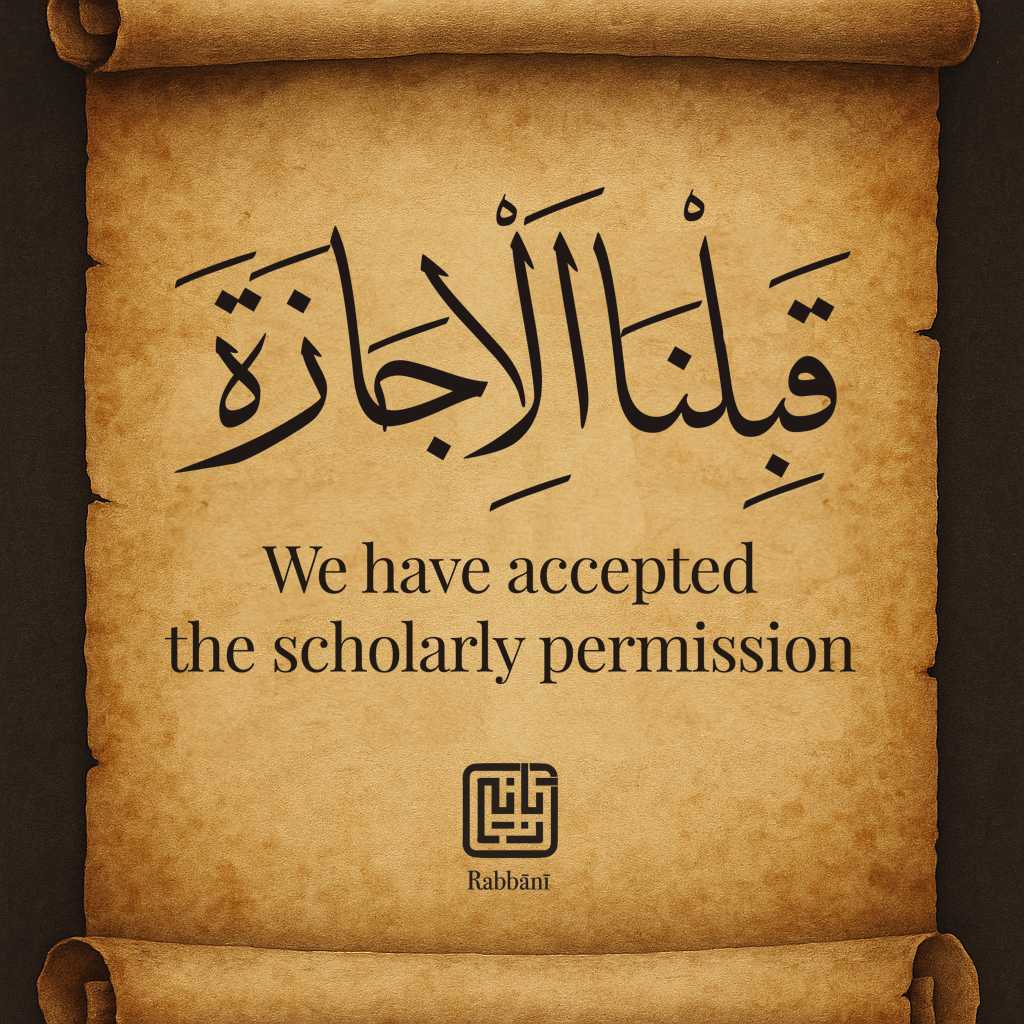
    “Ijāzah for those who wish to benefit from the four asānid to the Composer of the Ratib… Say: Qabilnā al-Ijāzah — ‘We have accepted the scholarly permission to recite the Ratib of Imām al-Ḥaddād.’”

    “We say Composer, not Author — for the adhkār are drawn from the finest pearls of the Qur’an and the most radiant lights of the Prophetic Sunnah.”

    This ijāzah is not just scholarly — it is a living trust passed down through centuries of remembrance. To receive it is to stand in the river of continuity, with the awliyāʾ and scholars who preserved this path of dhikr through love, hardship, and sincerity.

    And as for those who label such remembrance a bidʿah

    رَغِمَ أَنْفُ مَن صَرَّحَ بِأَنَّهَا بِدْعَةٌ
    “May the nose be rubbed in dust of the one who declares it an innovation.”

    Let the river flow. Let the remembrance remain. And let every breath that utters His Name be a proof of mercy, not division.


    My Personal Ijazah

    This symphony carries my own transmission: an ijāzah granted by Zaid ibn Umar to me, Adli ibn Ibrahim, written in his own hand, linking me to the chain of Imam al-Haddad. That blessing lives within every note of this symphonic meditation, reminding me of the trust, humility, and sacred responsibility that this heritage confers. This ijazah is more than a note: it is a living chain, a breath carried from master to student across centuries, reaching back to Imam al-Haddad and forward into my heart. It binds me to the rhythm of this Ratib as if to a heartbeat, reminding me to hold it with care, reverence, and gratitude, so its protection and blessing might continue to resonate for future generations.


    Historical Echoes

    The Ratib was recited by enslaved Muslims at the Cape as a shield of hope and protection during times of oppression, helping them hold fast to faith. Generations later, it became a spiritual companion for many who resisted apartheid, its verses reminding them of divine justice, courage, and unity against all forms of tyranny. It is said that in the darkest nights of slavery at the Cape, the Ratib became a quiet liberation, whispered in hidden corners. Its rhythms reminded believers they were still seen by Allah, still dignified. During the anti-apartheid struggle, activists turned to these same verses, finding courage and calm as they faced injustice, with the Ratib a spiritual sword against oppression and despair.


    Conclusion

    From Yemen to the Cape, from ancient gatherings to modern hearts, the Ratib al-Haddad remains a living breath of resilience and unity. Its movements still guide communities to remember Allah, to stand together in hope, and to place trust in Divine mercy across the centuries. Like a living river, its currents still flow, nourishing communities with remembrance and calling them to a higher trust in Allah’s mercy. Imam al-Haddad, inspired by the symbolism of the Verse that Faces Outward, wove its spiritual meanings into the Ratib, transforming it into a shield that echoed both the Prophetic sanctuary and the everyday lives of worshippers from Yemen to the Cape.

    Family reciting Ratib al-Haddad together on white linen with pillows and Qur’an

    May its verses guard every heart, and may its blessings gather our children and their children into the same ocean of divine love, until the final day.


    You Might Also Like These Cape Memories

    ✨ Scroll of the Sorbaan & Medora – Worn in Sound, Washed in Meaning
    Exploring the sacred cloths and their living resonance.

    ✨ The Verse That Faces Outward
    A glimpse into the calligraphic verse guarding the Rawdah.

    ✨ Hy Lyk Soos ’n Wolf: The Sorbaan and the Teacher Who Raised Me
    A tribute to a teacher’s quiet strength and Cape heritage.

    ✨ Tamat: A Sacred Completion, A Living Beginning
    The meaning of tamat in Cape Qur’an recitation tradition.

    ✨ From Chains to Qur’an: The Cape’s First Pilgrim and My Bloodline
    Tracing the story of Cape Islam through my family’s journey.


    Coming Soon

    ✨ The Grandmothers Who Raised the Qur’an — celebrating Cape matriarchs who preserved Qur’anic recitation.

    ✨ Echoes of Arafah: Pilgrim Voices from the Cape — reflections from local hujjaj returning with spiritual stories.

    ✨ The Kramats: Guardians of the Cape — the circle of Cape saints who protect and inspire.

    ✨ Barakah Before Business: The Forgotten Blessing — Cape Muslim traders and their rituals before opening shop.

    ✨ The Secret of Rampies Sny — unveiling the Cape’s scented floral traditions linked to dhikr gatherings.