
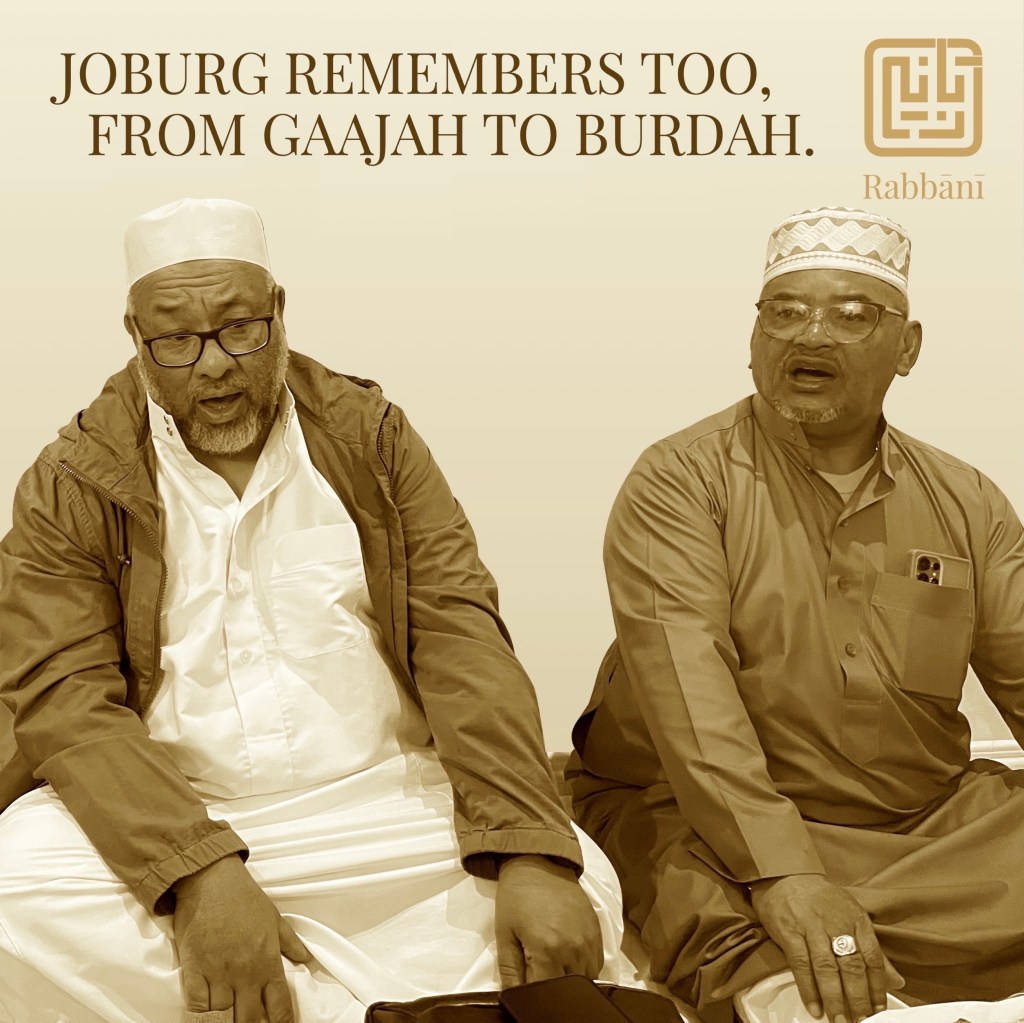
Joburg Remembers Too: From Gaajah to Burdah
Florida North – A Birthday Gaajah
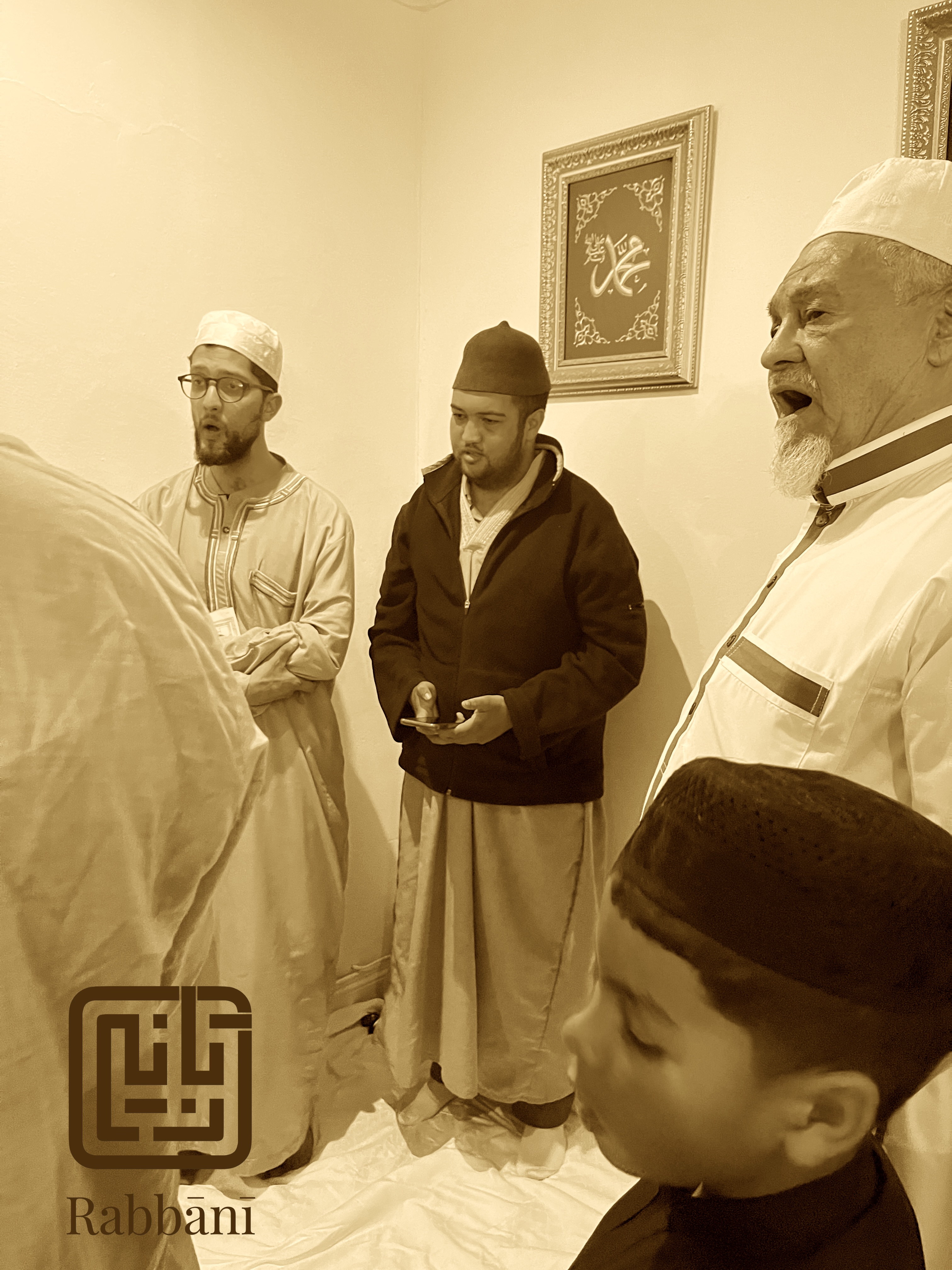
The room was warm with family and remembrance. Qur’ans lay open, voices moving together through Yāsīn, Mulk, the Quls, verses of Ḥashr and Baqara. Then came the Asmāʾ al-Ḥusnā, dhikr in chorus, and a duʿā that softened every heart.
It was called an Arwaag, but as my friend Shakeel Garda reminded me, this was really a Gaajah — from ḥājah, a need. That night the “need” was joy: the birthdays of two young daughters, celebrated with Qur’an and remembrance. In Cape Town, we are used to dhikr circling grief, but here in Joburg, it circled life — proof that dhikr belongs to both birth and remembrance.
Beyond Cape Town
Too often, Cape Town is imagined as the sole custodian of these traditions. But remembrance does not belong to one city. It lives in Worcester, in Uitenhage, in Kimberley, in Joburg — wherever Muslims have gathered to cut rampies, to recite Yā Sīn, to raise salawāt. We must widen the circle, and not let heritage shrink into a single accent or postcode.
Heritage isn’t measured by the size of a crowd, but by the pulse that refuses to stop.
A Wider Map of Memory
I laughed when Shakeel said, “Ek het amper gesamba!” — because sometimes the subtle linkages do astound us.
On language and dialect, PE-born Boeta Yusie – remembers how it felt when hearing old Uitenhage folk speak their Afrikaans, slower than usual, every word taking time to land.
And here in Joburg too, the old families — the Matthews, the Domingos, the Sallies among so many others — have carried remembrance for generations. Some, like the Sallies, trace ties to Port Elizabeth, but all became founding Johannesburg families in their own right.
In Florida North, during the Gaajah, we stood for the salawāt — the Cape inheritance. Voices rose, and in that standing it felt as if the light of Muhammad ﷺ entered the room.
Heritage does not have one accent, one city, one rhythm. It stretches wider — across towns and valleys, across languages and lineages — carried in every echo of lā ilāha illa’Llāh.
Houghton Masjid – The Chorus of the Burdah
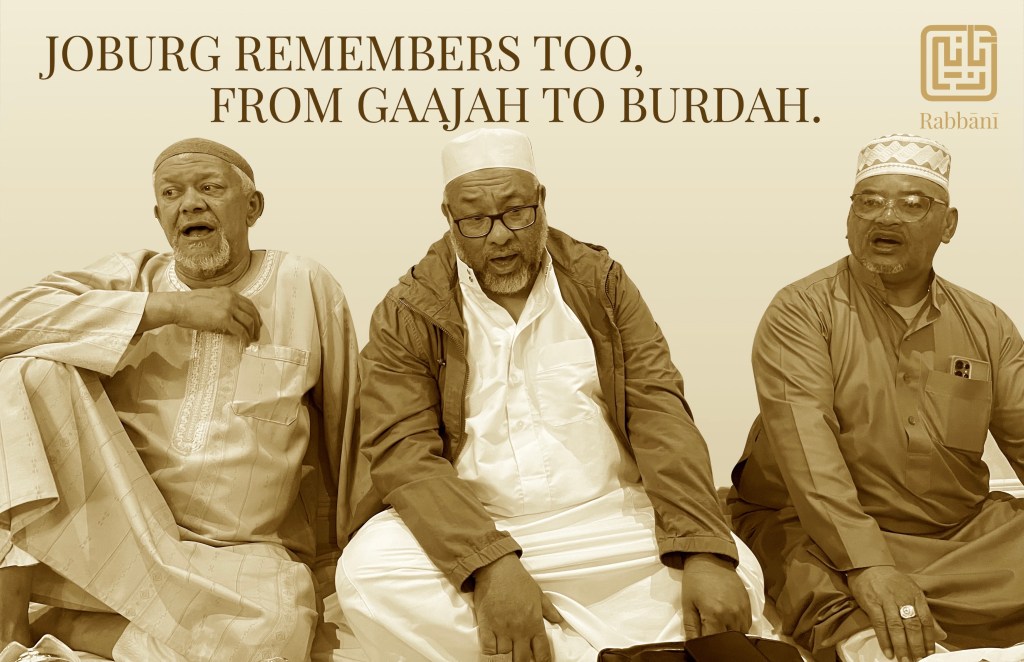
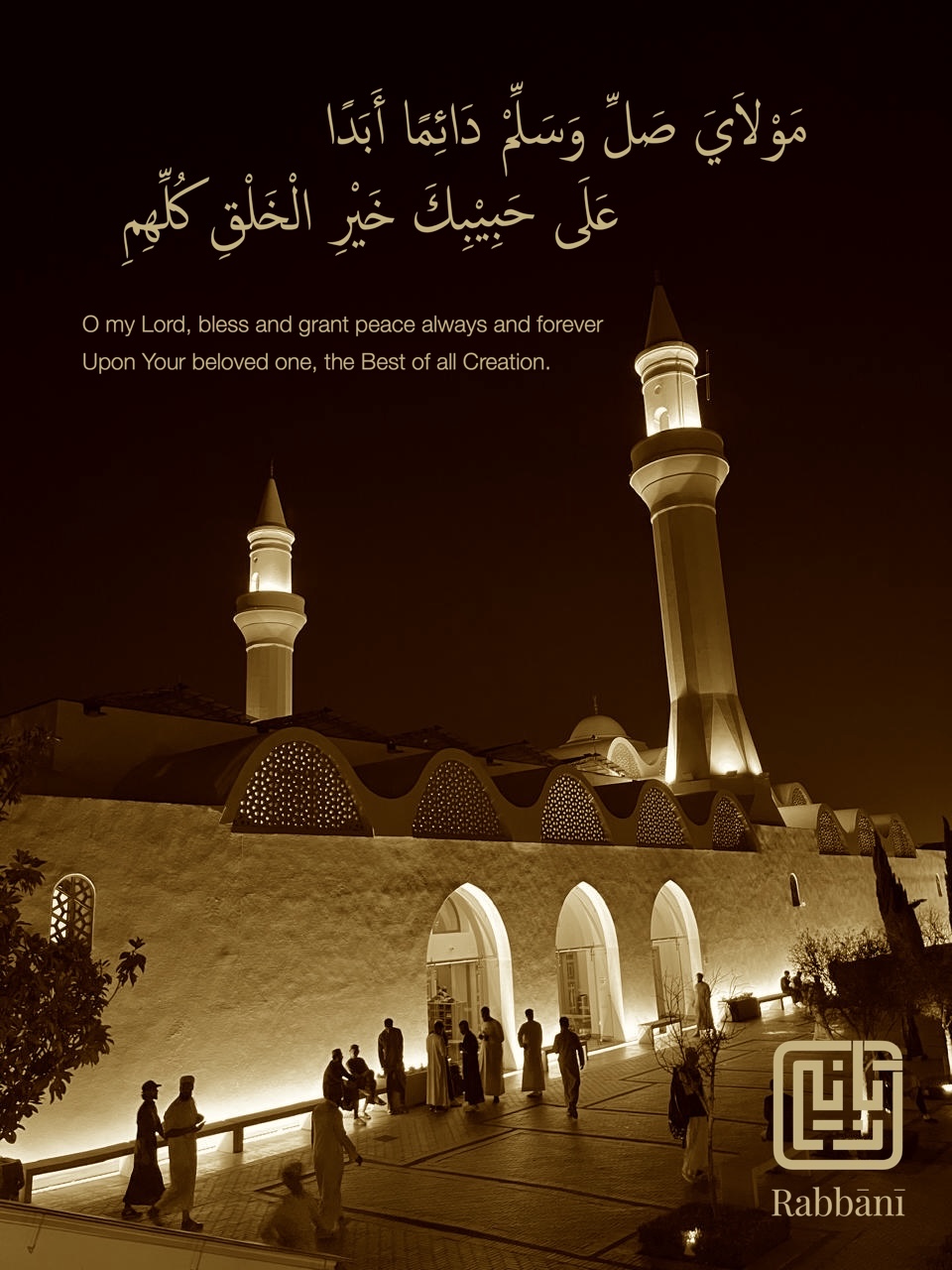
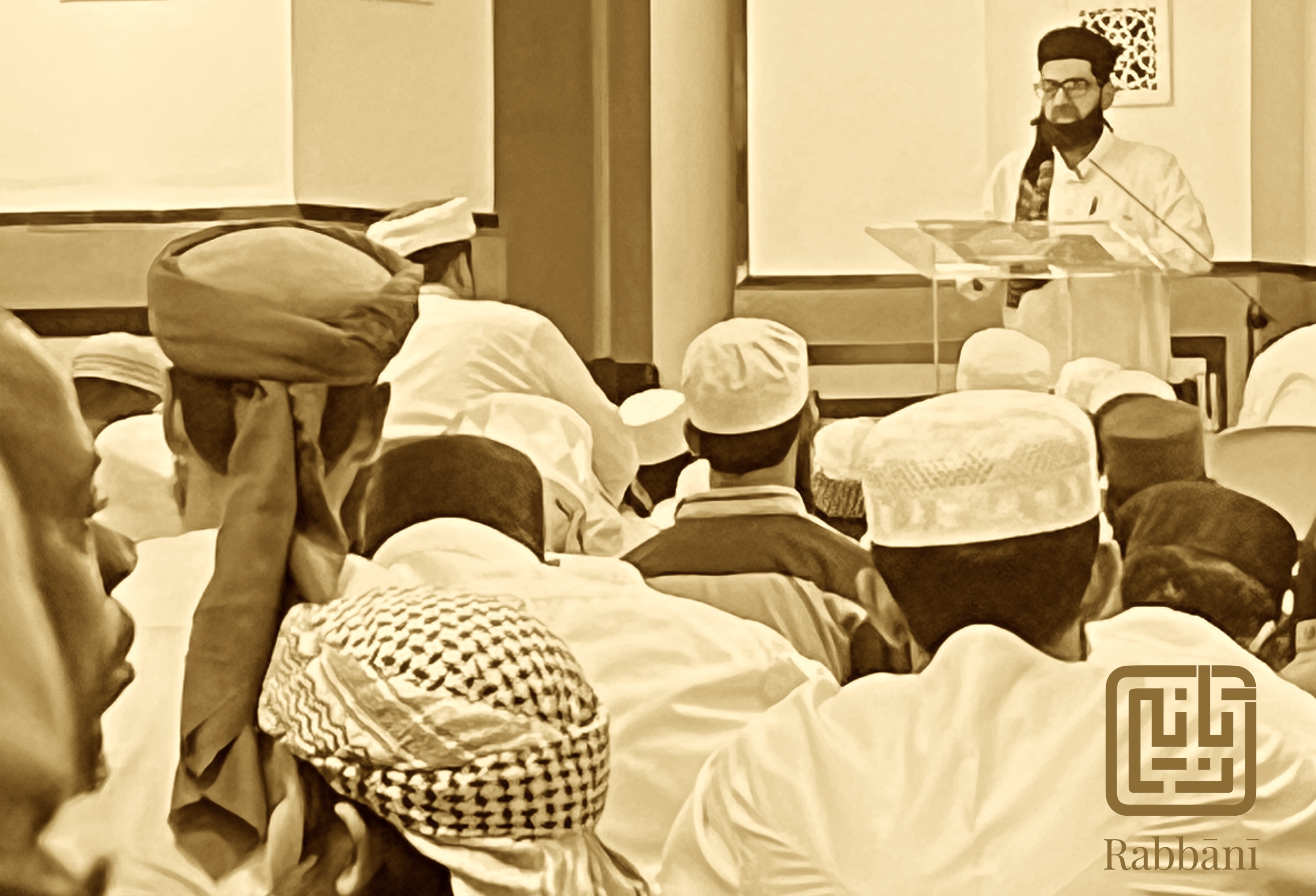
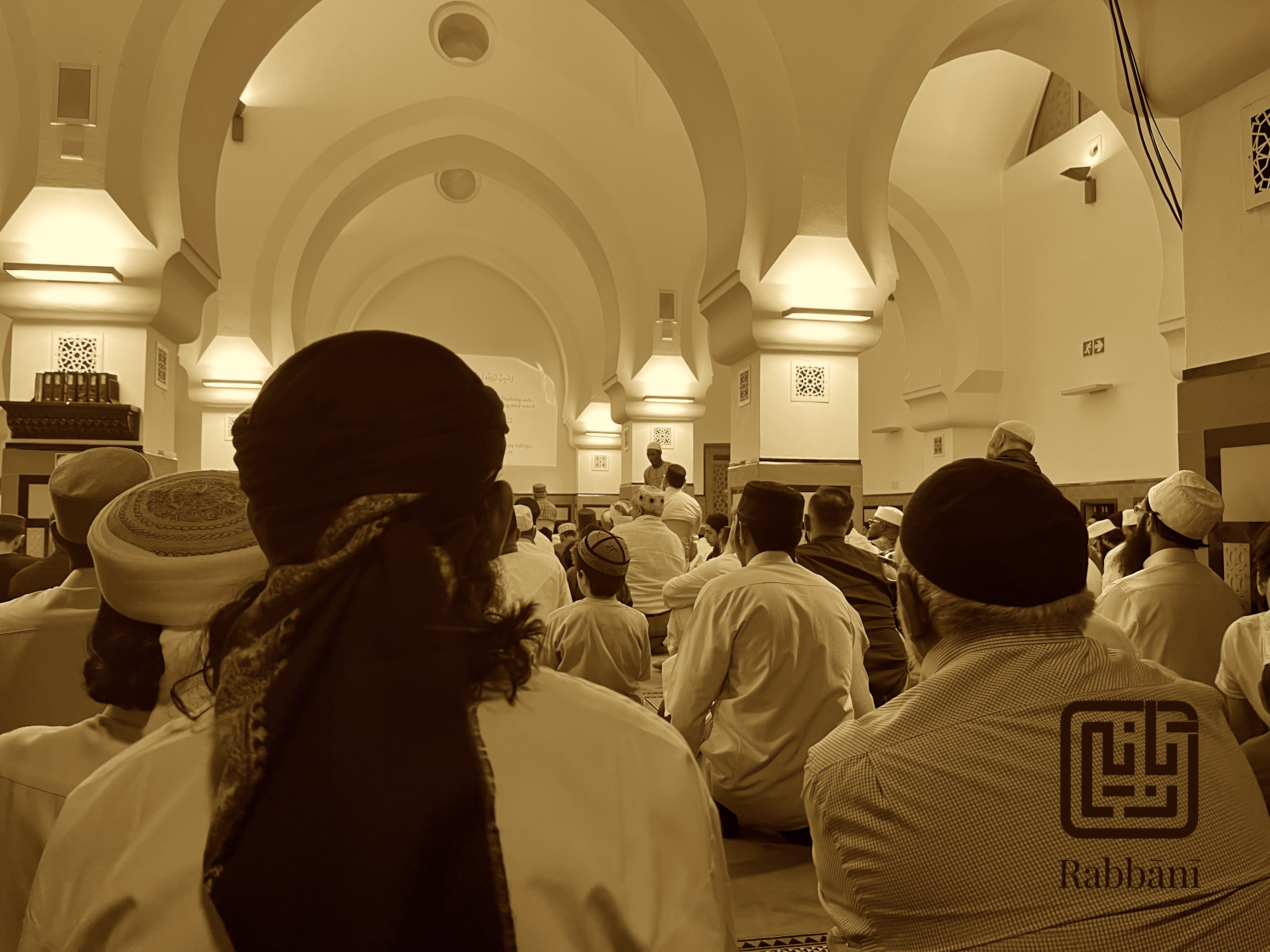
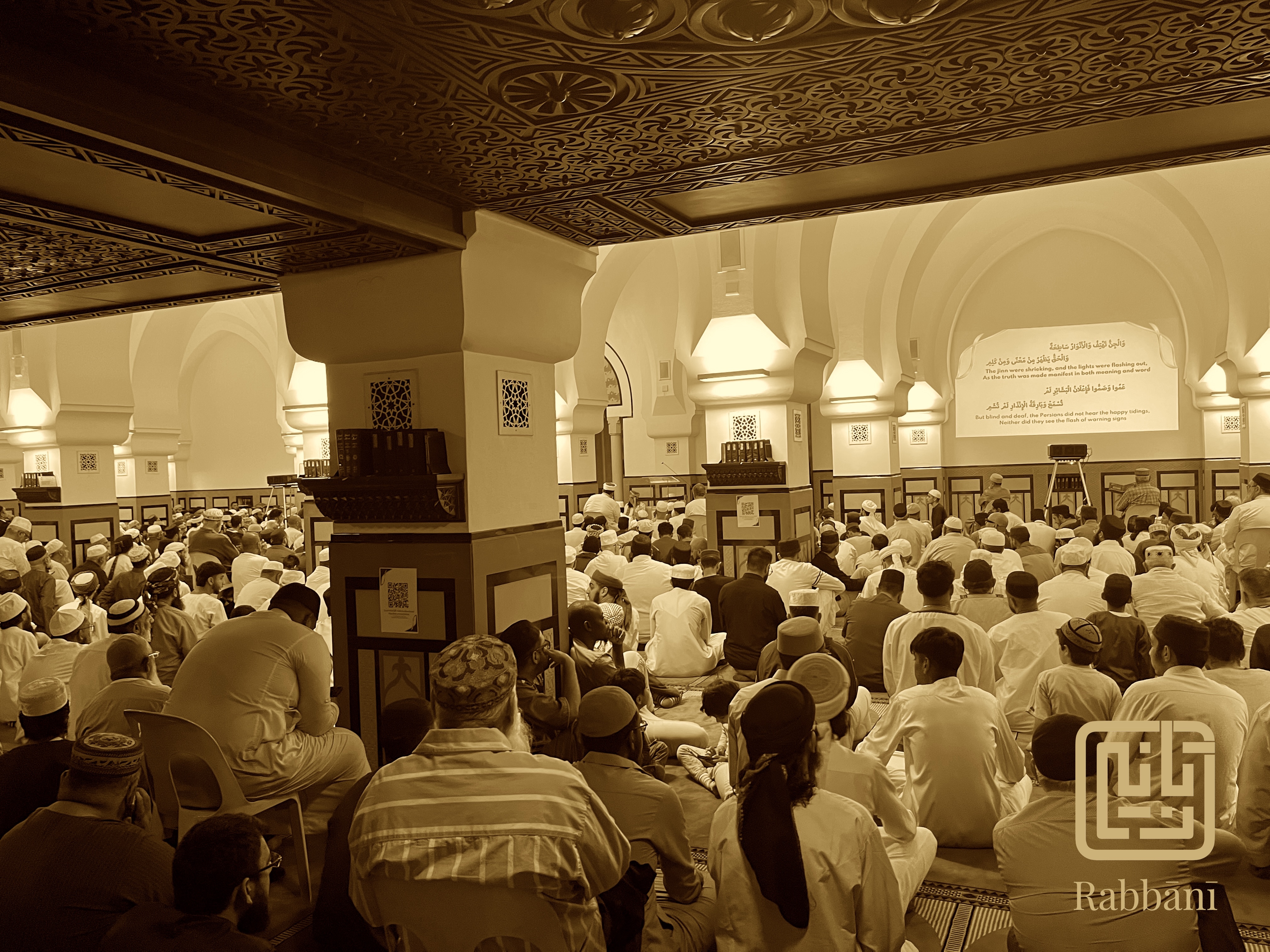
Friday night at Houghton Mosque was a different scale. The mosque was full: elders in white, young men with turbans, children by their fathers’ sides. Groups from different mosques took their turns, each with its own melody and rhythm.
Later my daughter Lala asked me, “What is this story of the Burdah? I’ve never heard this before.” I told her: “This is pure poetry! Almost like the Riwayah — the Prophet’s ﷺ life in song. But here, in the Burdah, different groups recite in turn, and together they weave a chorus.”
When I arrived at Houghton Mosque, I noticed something new. On the poster it had said: “Ladies Facilities Available.”Inside, the organisers had placed a new screen, expanding the women’s section for those who wanted to attend. It was unusual — there is already a women’s section — but this night, they anticipated more women. They made space.
That small act struck me as part of the remembrance itself: a recognition that devotion lives in inclusivity, in the care we show each other when we gather.
Before each group began, Ml Abu Hurairah Bobat guided the gathering, introducing the chapters and themes of the Qasidah Burdah. With warmth and clarity, he explained how the verses moved from praise of the Prophet ﷺ’s birth, to his struggles, to his intercession. His words opened the door for those less familiar, making the Burdah not just recited, but understood.
And then came the moment that will stay with me: as each group finished its verses, the entire jamaat — young and old — spontaneously joined in the chorus:
مَوْلاَيَ صَلِّ وَسَلِّمْ دَائِمًا أَبَدًا
عَلَى حَبِيبِكَ خَيْرِ الْخَلْقِ كُلِّهِمِ
Mawlaya ṣalli wa sallim dāʾiman abada
ʿalā ḥabībika khayril khalqi kullihimi
O my Lord, bless and grant peace always and forever
Upon Your beloved one, the Best of all Creation.
It was not performance but inheritance. The refrain rose again and again until it felt as though the very walls of Houghton Mosque were singing with us.
The Lion and the Fortress
From the Qasidah Burdah, Imām al-Būṣīrī sings of the strength carried by those tied to the Prophet ﷺ:
Those whose help comes from the Messenger of Allah —
Even lions encountering them in their dens would be struck speechless with fear.He established his community within the fortress of his religion,
As the lion settles down with its cubs in its lair.
Hearing the jamaat echo the chorus, I felt that same fortress. This was not nostalgia — it was strength and mercy alive in Johannesburg.
Fragrance and Victory
Later, another passage rang true to what I saw and smelled:
The winds of victory would present to you their fragrance,
So that you imagine each valiant one of them to be a beautiful flower in bud.As if, riding their steeds, they were flowers blooming upon a height,
Held there not by the tautness of their saddles, but by the firmness of their resolution.
The Burdah does not only narrate victory — it perfumes it. Just as our Cape homes once scented with sandalwood and rampies, so here the fragrance of victory was carried in chorus.
Majestic Presence
And in the majesty of the Prophet ﷺ, the Burdah declares:
Like a flower in freshness and a full moon in eminence,
Like an ocean in pure generosity and like time itself in strength of resolution.Just from his majestic bearing, even when he was alone,
He seemed as if amongst a great army and entourage.
At Houghton there was no standing qiyām — the tradition differs from the Cape. But the chorus of Mawlaya ṣalli wa sallim… still lifted the gathering, as if the walls themselves joined in remembrance.
Dress and Identity – From Kurta to Thobe
As I looked around, I noticed another change. When I was younger, men in Joburg mosques wore kurtas — Indian style. Now the children, young men, and elders were dressed in thobes and turbans, a celebration of the Prophet’s ﷺ attire.
Was it the influence of hajj and ʿumrah, Gulf media, or the aspiration to be closer to sunnah? Perhaps all of these. Styles shift, but the devotion remains.
Closing – Joburg Remembers Too
This Rabiʿ al-Awwal, in Heritage Month, Joburg reminded me that Cape Town does not own memory. Dhikr lives here too — in family homes, in gaajahs for birthdays, in mosques filled with Burdah echoes.
Heritage is not just remembrance, it is continuity. Not only in books, but in chorus. Not only in Cape Town, but in Joburg.
The Prophet ﷺ is in our veins and in our graves. In sandalwood tasbihs, in rampies leaves, in choruses that rise like fragrance. Remembered not only in words, but in song.
🔗 Cross-links (to add at the end of the blog)
You may also like:
- The Prophet in Our Veins – Devotion in Cape memory, rhythm, and inheritance.
- In Our Veins, In Our Graves: Mawlud and Memory – Rabiʿ al-Awwal reflections on riwāyah and remembrance.
 Adli Yacubi