The Forgotten Tongue of Remembrance
Afrikaans in Arabic Script and the Ratib al-Haddad
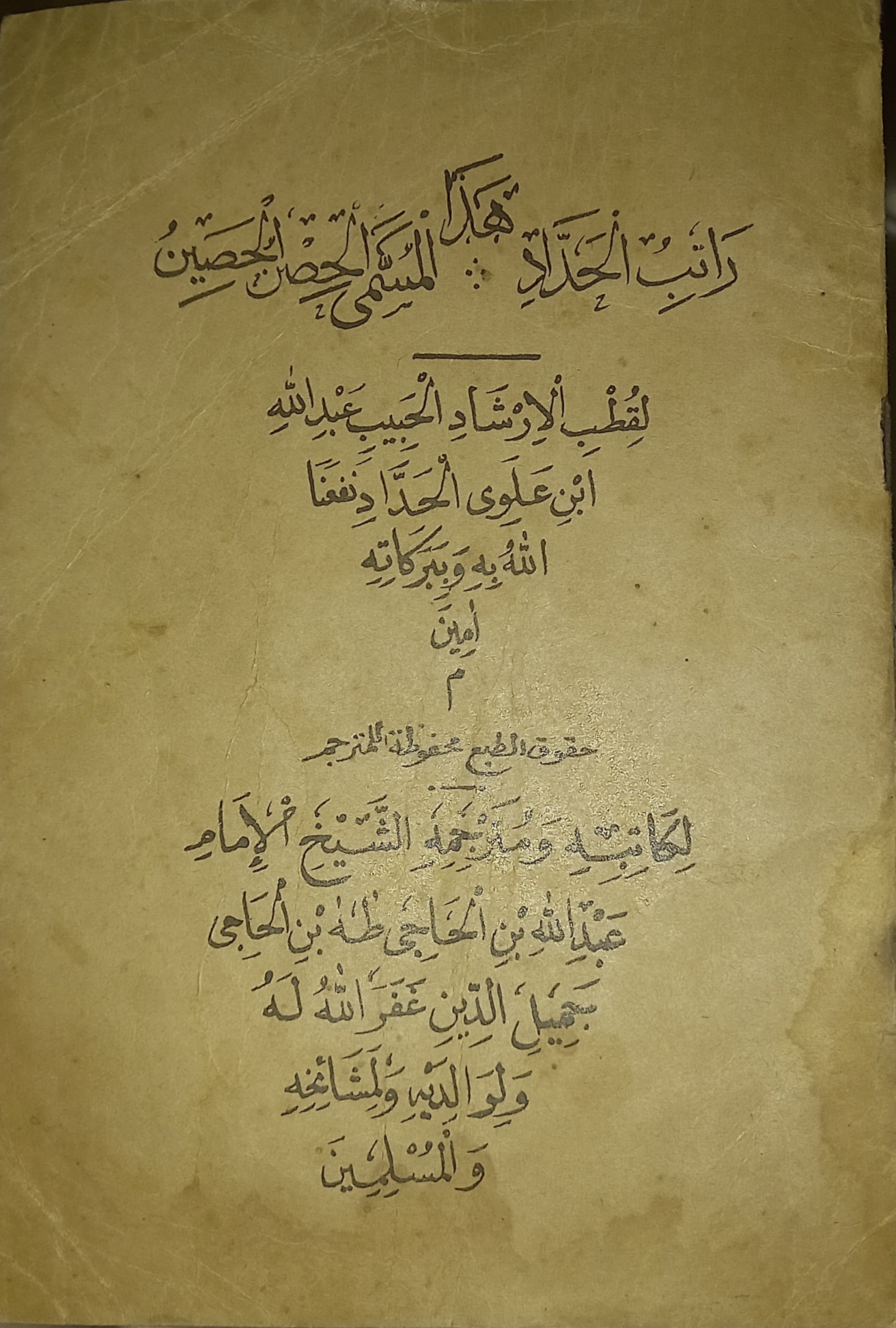
Bismillah. Among the rarest cultural gems of the Cape is this handwritten or printed Ratib al-Haddad in Arabic script — and beneath each sacred verse, a transliteration and translation in Afrikaans, also in Arabic script. This devotional work bears the title:
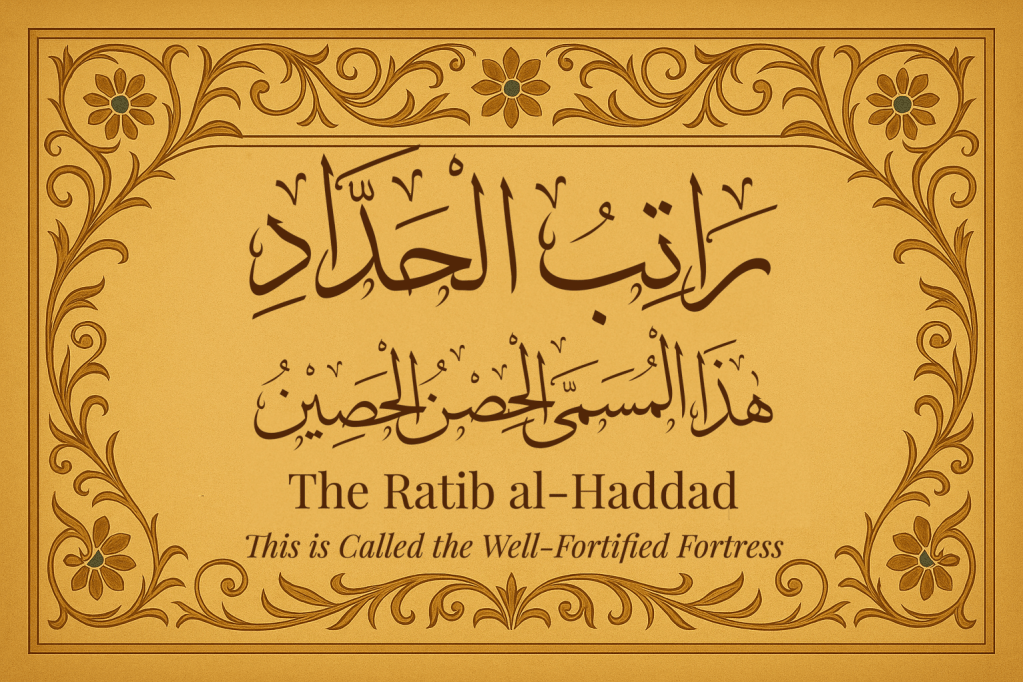
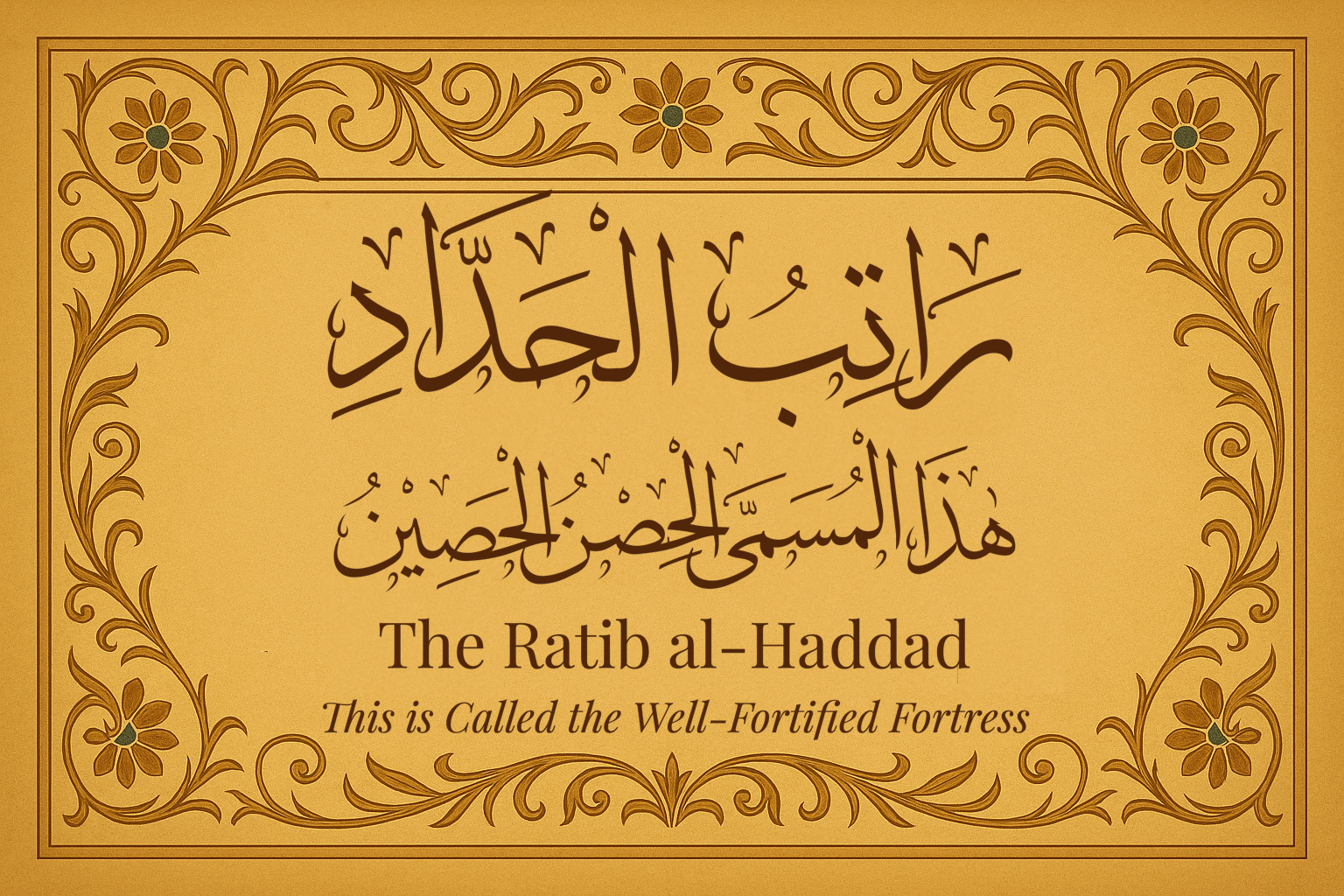
رَاتِبُ الْحَدَّادِ
هَذَا الْمُسَمَّى الْحِصْنُ الْحَصِيْنُ
The Ratib al-Haddad – This is Called the Well-Fortified Fortress.
It is more than just a document — it is a linguistic relic, a spiritual practice, and a memory map of how Qur’anic dhikr was carried across generations, even when Arabic as a language was no longer spoken fluently. The presence of Afrikaans — lovingly scribed in Arabic letters — reminds us that remembrance found its voice even in colonised tongues. This text is proof: the Divine was praised in the language of those who suffered, resisted, and healed.
This is no ordinary translation. It is a trace of the Cape’s earliest Muslim educational systems, where a now-suppressed form of Kaapse Afrikaans was used to teach, explain, and transmit the Qur’an and dhikr — long before formal Arabic learning was accessible.
This copy, sourced and shared by Sheikh Jamiel Abrahams, is one of the most exquisite I have seen. It is more than a relic. It is the visual embodiment of a living legacy.
The Arabic-AfriKaaps hybrid in these pages is not just linguistics — it is resistance, devotion, and adaptation in motion. A tongue formed in the shadows of empire, now remembered in the radiance of dhikr.
This post offers a glimpse — a few carefully selected lines, an image scroll, and finally, the full PDF. We will not translate every line, for that would dilute the power of seeing, hearing, and feeling them in their original form. But we will linger on a few pages to taste the spiritual flavour of this inheritance.
One of the first lines to appear in the Ratib is the luminous opening:
بِسْمِ اللهِ الرَّحْمـٰنِ الرَّحِيمِ
Bismillāhir-Raḥmānir-Raḥīm
In die Naam van Allah, die Meest Genadige, die Meest Barmhartige
Even this sacred formula, transliterated and translated into Afrikaans using Arabic script, glows with the care and creativity of the Cape’s early Muslim scribes. It reveals how rahmah—Divine Mercy—was not only recited, but lovingly inscribed in the mother tongue of those who carried it. A tongue made tender through hardship, and made holy through remembrance.
🕯️ Download the complete PDF of the Afrikaans–Arabic Ratib al-Haddad here.
Epilogue: The Ink of the Ancestors
These pages are not just recitations — they are archives of survival.
The Cape’s Muslim community, born out of bondage and exile, did not merely memorize. They engraved, translated, sounded out — in their own accents, on their own terms. They bent Arabic script to capture the cadence of their Afrikaans. They bent Afrikaans to serve the memory of Allah.
In this Ratib, we witness the divine echo across generations.
To read it is to hear our grandparents whispering in candlelight, gathering children close, turning pages that looked like home.
This is not nostalgia. It is testimony.
May we become worthy inheritors of their voices.
Living Chains: A Note of Gratitude and Transmission
We are humbled to acknowledge those who have preserved and transmitted this treasure across generations.
Our deep thanks to Zaid Nordien, who reminded us that this version of the Ratib al-Haddad — written in Arabic-Afrikaans script — was transliterated and rendered by Shaykh Taha Gamieldien, the grandfather of Shaykh Faiek Gamieldien. It was widely copied and circulated in Cape Town, including in black-and-white prints. Zaid shared that his own journey began at the age of three, attending Gadat with his uncle, the late Boeta Faldie Behardien, and that his grandfather, Galiefa Ebrahim Nordien (Brayma Bokbaard), had received ijāzah for the Ratib from Shaykh Ismail Ganief. His father also received ijāzah from Shaykh Omar Abdullah of the Comoros — known throughout Africa as Mwyini Baraka — as well as from the late Shaykh Muhammad Alawi al-Maliki.
And here the circle returns home:
Zaid Nordien relayed that Shaykh Omar Abdullah gave express permission to grant ijāzah to all who recite the Ratib, all who love it, and all who seek it. He conveyed this instruction to me personally in Glen Austin, Midrand, during my recovery from a stroke. Now, alḥamdulillāh, it is finally recorded.
Even more striking: the ancestor of this very Shaykh — the deposed Sultan Abdallah II ibn Alawi of Anjouan, from the noble Ba ʿAlawī lineage — was exiled to Cape Town around 1834. Local oral tradition holds that he met Carel Pelgrim (Hassanuddin), the Cape’s first known Muslim pilgrim to Makkah, and may have encouraged him on his sacred journey. The silsila, both spiritual and historical, reveals itself in astonishing ways — alive, pulsing, and unfolding across time.
The Salawāt of Mwyini Baraka
We close with a salutation upon the Prophet ﷺ, taught by Shaykh Omar Abdullah — a direct descendant of the Messenger ﷺ through Sayyid Abu Bakr bin Salim.
Here is the salawāt he shared:
Arabic:
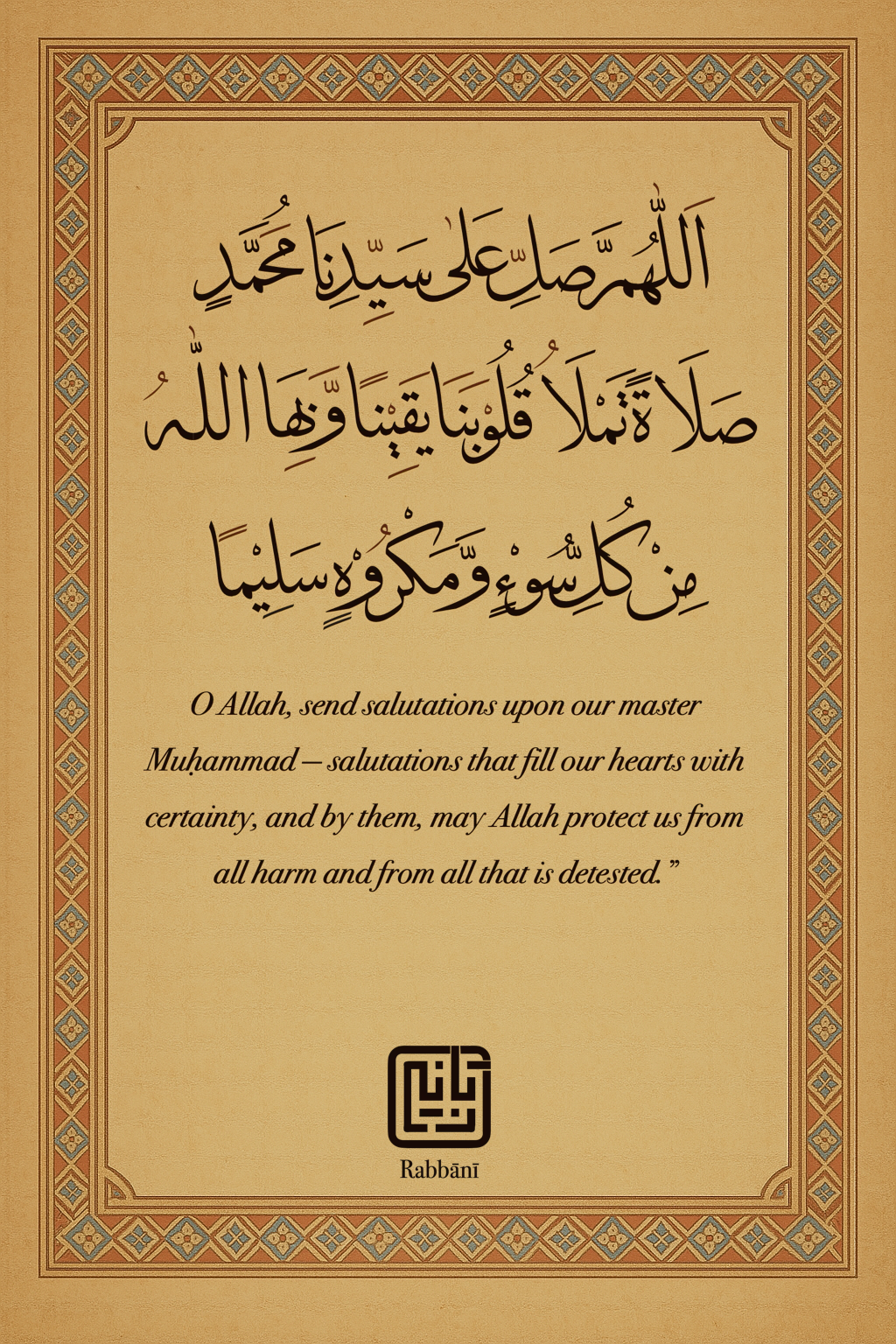
اللّهُمَّ صَلِّ عَلَى سَيِّدِنَا مُحَمَّدٍ صَلَاةً تَمْلَأُ قُلُوبَنَا يَقِينًا وَبِهَا اللهُ مِنْ كُلِّ سُوءٍ وَمَكْرُوهٍ سَلِيمًا
Transliteration:
Allāhuma ṣalli ʿalā Sayyidinā Muḥammadin ṣalātan tamlaʾu qulūbanā yaqīnan
wa bihā Allāhu min kulli sūʾin wa makrūhin salīmā.
Translation:
“O Allah, send salutations upon our master Muḥammad — salutations that fill our hearts with certainty, and by them, may Allah protect us from all harm and from all that is detested.”
📜 Other Paths of Remembrance
This scroll is only one leaf in a growing tree of spiritual memory.
If this piece stirred something in you, you may also wish to explore:
🌿 “Tamat: A Sacred Completion, A Living Beginning” – A reflection on the Cape tradition of tamat and Qur’anic memorisation
🌿 “The Ratib al-Haddad: A Symphony of Spiritual Resilience” – A celebration of the sonic and spiritual power of this litany
🌿 “The Verse That Faces Outward” – A meditative scroll on the hidden verses engraved above the Rawḍah, and the inner legacy of Imām al-Ḥaddād
These are threads in a larger weave — remembering the divine through the tongues of our mothers, the melodies of our fathers, and the whispered prayers of the unseen saints who still walk among us.

 Adli Yacubi
Leave a comment